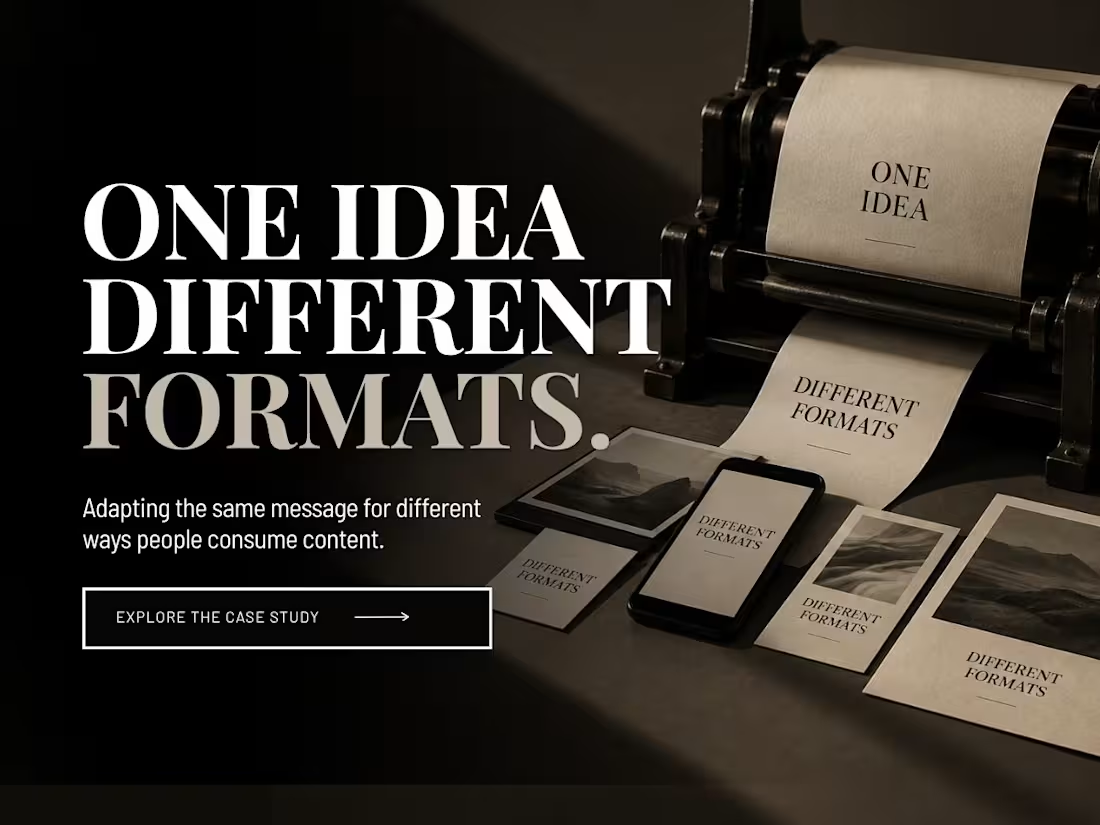
riting isn't one skill. It's knowing how to adapt voice, structure, and emotional tone to the format and audience. My range using INFLOIX™:
Book (Poetry/Emotional): Long-form, intimate, reflective. Words that sit with you. Written for depth and resonance.
LinkedIn (B2B/Professional): Problem-solution structure. Clear value proposition. Conversational authority that builds trust.
Ecommerce (Landing Pages/Email): Action-driven. Emotional triggers + urgency. Copy that converts.
What stays consistent: Strategic intent. Understanding behavior. Knowing what the format demands and what the audience needs.
This is INFLOIX™ for writing: adapting behaviour triggers to each format, sequencing information for the platform.
Different formats. Different voices. Same strategic foundation.
21
143
Most affiliate programs treat everyone equally. That's a missed opportunity.
My approach using INFLOIX™:
Super Affiliates: Base commissions + bonus + target agreement extras to maintain position and growth.
Midtail Affiliates: Reduce reliance on super affiliates by growing this tier through base commissions + monthly target bonuses.
Longtail Affiliates: Nurture through long-term investments: brand engagement and content support.
What this creates: Balanced revenue streams. Less dependency on top performers. Scalable growth across all tiers.
This is INFLOIX™ for affiliate strategy: understanding partner behaviour at each level, sequencing incentives to drive performance, and creating output that builds sustainable partnerships.
Segmentation turns affiliates into a system, not just a list.
17
121
Here's the thing about economies of attention: behaviour dictates sequence, and sequence dictates output. I converted the same brand message into two formats:
UGC style video (raw, human-centered)
Static image converted to video (designed, motion driven)
Same core message. Different behavioral triggers. One taps into parasocial trust. The other leverages visual momentum. Both create different sequences in how audiences process information.
This is how I apply INFLOIX™, my proprietary method that focuses on behavior, sequence, logic, and output to build attention economies.
Which one would you choose for your brand? (And more importantly, why?)
12
130
There's always a disconnect between website branding and LinkedIn presence.
Your website has signature colours, design language, visual cohesion. Then LinkedIn? Random backgrounds. Inconsistent graphics. No brand thread.
What I do when optimising LinkedIn profiles: Translate brand identity across platforms. Use signature colours consistently. Maintain visual language through typography, layouts, and design elements. Create graphics that feel like extensions of the website, not afterthoughts.
This is INFLOIX™ for brand ecosystems: understanding how recognition builds through visual consistency, sequencing brand touchpoints across platforms, and creating output that makes every channel feel connected
Your LinkedIn should be an extension of you and your website, not a separate identity.
2
18
304
Storytelling isn't just what you post. It's how you place it.
Grid composition creates mood, rhythm, and continuity. Each image flows into the next, building narrative through sequence and placement.
AI + Purple Theme Grid: Brain, planets, headphones. Each element tells a story about creativity and technology through pattern and cohesion.
This is INFLOIX™ for visual storytelling: understanding how viewers follow visual patterns, sequencing content to create momentum, and knowing when contrast enhances vs. when repetition builds brand.
Your grid isn't random. It's your storyboard.
8
34
473
Most CRO focuses on what to test. Button colors. Headlines. CTAs.
But the biggest lever? When you ask.
I embedded a mortgage calculator into a property portal journey, right after floorplan review, at peak buyer intent. What we tested using INFLOIX™:
Placement: After floorplan performed best (highest desire) 2: Button psychology: Orange won within brand limits
Language: "Partnership" vs "Sponsor" (partnership = trust, sponsor = paid placement)
Geo-split: NatWest in England/Wales, RBS in Scotland for local trust
The result? Higher opt-in, faster qualification, stronger brand trust. We removed friction by timing the ask to match peak intent.
This is behavioral CRO: understanding where users are in their decision journey and placing the right tool at the right moment.
ROI: £30M–£40M in attributable mortgage pipeline.
22
166
Sometimes you're working with limited information: one static logo and the words that need to be in the creative. No established design direction. No tested visual language. This is where strategic guidance matters.
I turned this into 4 complete campaign concepts for a tech company's recruitment push each with its own strategic approach.
Using INFLOIX™, I built variation from minimal input: trend-aligned visuals, portfolio-inspired layouts, minimalist metaphors, and standard recruitment formats. Each balanced playful brand identity with professional messaging.
The result? Four scalable directions with immediate testability. Concept #3 became the lead creative.
100% pilot budget maximised. 4x creative variations. 1 file → 4 opportunities.
23
184
Email is wildly underrated.
When someone gives you their email, intent is already there, whether it's in-the-moment curiosity or ongoing interest. But here's where most brands miss: they treat email like performance marketing instead of brand building.
I designed three email flows that prioritize retention over reaction:
Welcome Flow: Setting brand tone from day one. Not "here's 10% off" but "here's who we are and why you'll want to stay."
Abandoned Cart: "Still in your bag?" A gentle reminder that acknowledges the pause and makes returning feel natural, not pressured.
Win-Back: "Your style, your shade" re-engagement that reminds them why they came, not why they left.
Each flow uses storytelling to build habits. Less hype, more connection. More reasons to stay.
21
164
Most creators publish long-form posts and restack others. That's it. They're using 20% of the platform.
Here's how to maximize Substack's real estate using INFLOIX™
Diversify content formats: Long-form posts + YouTube embeds + podcast episodes
Activate chat feature: Create dialogue, not just announcements
Engage in the feed: Comment meaningfully on others' work (not just restack) C
ross-platform integration: Connect social media, embed multimedia
Use Notes strategically: Short-form content that drives to long-form
What this creates: Multiple touchpoints. More discovery paths. Deeper community connection. Real growth, not just restacks.
Substack has the tools. Most people just don't use them.
17
175
Copy isn't just about catchy phrases or clever wordplay. It's about creating a reading experience that captivates people. The difference between copy that gets skimmed and copy that gets read? Structure.
Paragraph breaks that give the eye room to breathe Subtitles that guide readers through sections Font choices that reinforce tone Visual hierarchy that shows what matters most Spacing that makes dense information feel accessible
This is INFLOIX™ applied to the writing experience: understanding the behavior of how people read, the sequence of how they scan for meaning, the logic of when to break information into digestible chunks, and the output that keeps them engaged.
Words matter. But so does how those words are presented. When copy feels effortless to read, that's strategic design working alongside strategic writing.
24
186
100 followers. <1% engagement. Static before/after posts. Stuck.
What I repositioned using INFLOIX™:
Cadence: 3-4 posts weekly (consistent authority)
Content Design: Unified aesthetic identity (credibility + recognition)
Voice Shift: Transactional → conversational authority Engagement Signals: Reels + human content = organic reach
The results: +1,400% likes (2 → 30 avg) +9,000% comments (0-1 → 10-15 avg) +282% followers (~100 → 400+) 7.5% engagement rate (2× industry benchmark)
Followers moved from passive viewing to active dialogue. The account repositioned from "clinic ads" to "community driven expert."
Growth isn't about posting more. It's about posting strategically.
25
220
Tested Reddit as a growth channel: one post on tariffs hit 104K views, 478 upvotes, 160+ comments in 24hrs. Took a trending topic, reframed it simply, and sparked debate. Proof that intentional framing, not luck, drives engagement and traffic to owned platforms.
29
368
Substack is one of the most accessible platforms for growing an engaged audience, but a lot of people approach it like a broadcast channel.
Here's the shift: Substack is still a social platform. It's reader-first in how it presents itself, but it operates on the same social currency as any other platform. That means:
Engage meaningfully in comments, not just on your posts but across the platform
Use tags, keywords, and strategic phrases so people can discover you
Create content that invites conversation and connection
Build relationships through how you show up, not just what you publish
You don't need to follow hundreds of people or subscribe to everything. You need to show up with intention and create an immersive experience, both through your content and how you engage with others.
27
243
Brand voice gets overlooked until you realize it's the thread holding everything together.
It's not just sounding professional or friendly. It's having a voice snapshot, the essence of how you show up. Understanding your cultural inputs. Knowing you have a voice quadrant that flexes by context.
Strong brand voice includes:
Key phrases that become recognizable
Audience modulation: internal vs. external voice
Tone + structure alignment
Color in copy: emotional resonance
When your voice is intentional, it becomes the core of storytelling and community building. People remember how you make them feel.
This is INFLOIX™ applied to copy: understanding the behavior you want to evoke, the sequence of how messaging builds connection, the logic of when each voice variation serves you best, and the output that creates lasting relationships.
3
22
261
Not every brand moment needs a full production. Sometimes the assets already exist, they just need a different treatment.
I took two event photos and converted them into immersive video experiences, frame-by-frame motion synced to music beats, creating depth and energy from static images. Same brand moment. Now it breathes.
The difference? Understanding when motion serves the message versus when it distracts from it. Knowing how to build attention economies with the assets you already have.
This is how I apply INFLOIX™, my proprietary method that focuses on behaviour, sequence, logic, and output.
25
265
The most underrated part of Instagram isn't the algorithm, the Reels trends, or even the content itself.
It's the comments.
I see brands obsessed with going viral, but when I scroll through their engagement, it's just hearts. No conversation. No depth. No community actually invested in what they're sharing.
Comments with substance tell you what resonates. They give you insights into why people connect with your work. They enrich your brand in ways vanity metrics never will.
That's actually how I started writing, people kept commenting on my captions, telling me they valued the words as much as the visuals. The comments revealed what mattered.
If you're chasing virality but ignoring the conversations happening (or not happening) in your comments, you're missing the real signal.
Build for conversation, not just for reach.
3
18
249
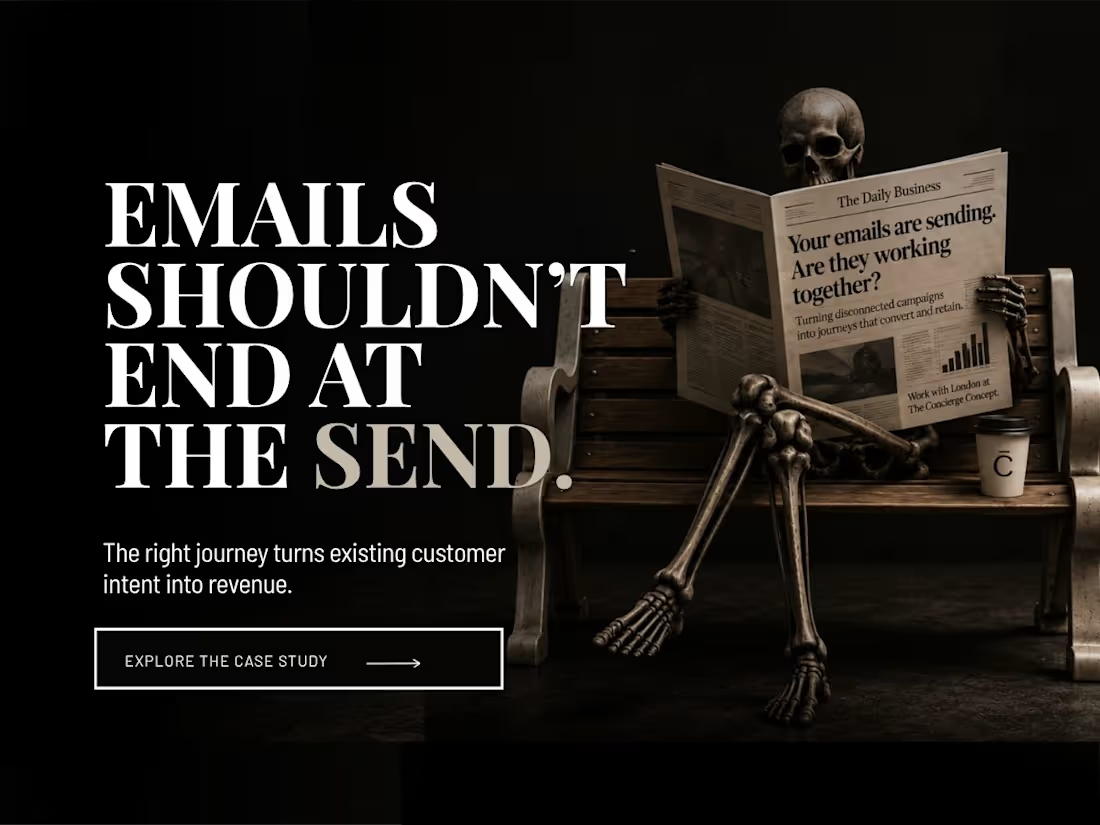
I see a lot of email campaigns that lead with "10% off" and wonder why open rates are declining.
Here's what's missing: the story. The psychology. The understanding that people don't just want products, they want to belong, to feel seen, to be part of something.
Email should be treated as brand-building, not just performance marketing. Someone already gave you their attention when they signed up. That's intent. That's interest. Your job isn't to shout discounts. It's to nurture that connection.
The subject line captures attention. The pretext builds intrigue. But the body? That's where you create an experience through words, copy that understands behavior and desire, CTAs that feel personal, not transactional.
Design matters. But without a story that aligns with your audience's desires, it's just a pretty template.
13
185
Here's the thing about economies of attention: behavior dictates sequence, and sequence dictates output. I converted brand messaging into two formats:
UGC-style video (raw, human-centered)
Static image converted to video (designed, motion-driven)
Different behavioral triggers. One taps into parasocial trust. The other leverages visual momentum. Both create different sequences in how audiences process information.
This is how I apply INFLOIX™, my proprietary method that focuses on behavior, sequence, logic, and output to build attention economies.
Which one would you choose for your brand? (And more importantly, why?)