
pro
Jasper Rexford
AI agents and integrations for businesses


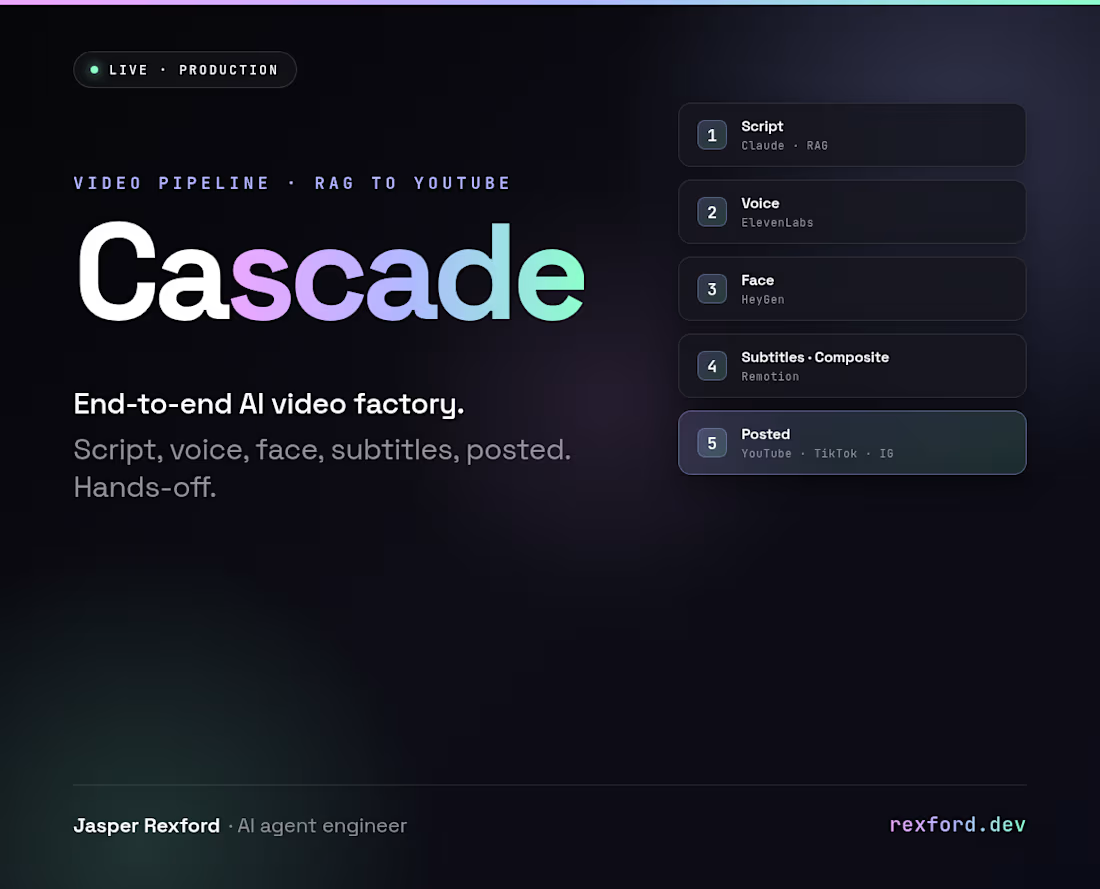
Cascade
Daily branded video · agency quality, agency throughput, without an agency
Most brands ship video like it's expensive. One every two weeks, a long approval chain, four-figure cost per finished asset. The competitor next door is shipping daily and the maths feels impossible, until you look at what the workflow actually costs.
Cascade is the whole video pipeline as one system.
Topic in. Finished, captioned, posted video out. Script written in your voice from your positioning docs. Voice rendered against a cloned brand voice. Talking-head avatar lip-synced to the audio. Subtitles styled to your brand. B-roll, meme cuts, and music laid in. Posted directly to YouTube, TikTok, and Instagram with the right aspect ratio per platform. Five minutes of wall-clock time per finished video.
What you get
Daily branded video output without a video team
Consistent brand voice across every script, every video, forever
Per-platform aspect ratios and metadata handled automatically
Direct posting to YouTube, TikTok, and Instagram Reels
A pipeline you own, not a tool you rent
Marginal cost per finished video lands around £2 in API spend
Who it's for
Solo founders and creators with one face and ten distribution channels. Agencies producing for multiple brands without hiring more editors. B2B teams turning technical knowledge into shorts. SaaS and ecom brands whose content cadence is bottlenecked on editor capacity, not ideas.
What it replaces
A £4k/month video editor, a £15k agency retainer, or the calendar slot you don't have. Cascade delivers the same finished output, on schedule, every day.
Production reality
End-to-end pipeline, live and shipping. The hard part isn't any single API call. It's the orchestration: failure handling at every stage, idempotent retries, graceful degradation when one provider rate-limits, and consistent brand voice across thousands of outputs. Cascade ships finished videos rather than a half-baked pipeline.
2
135
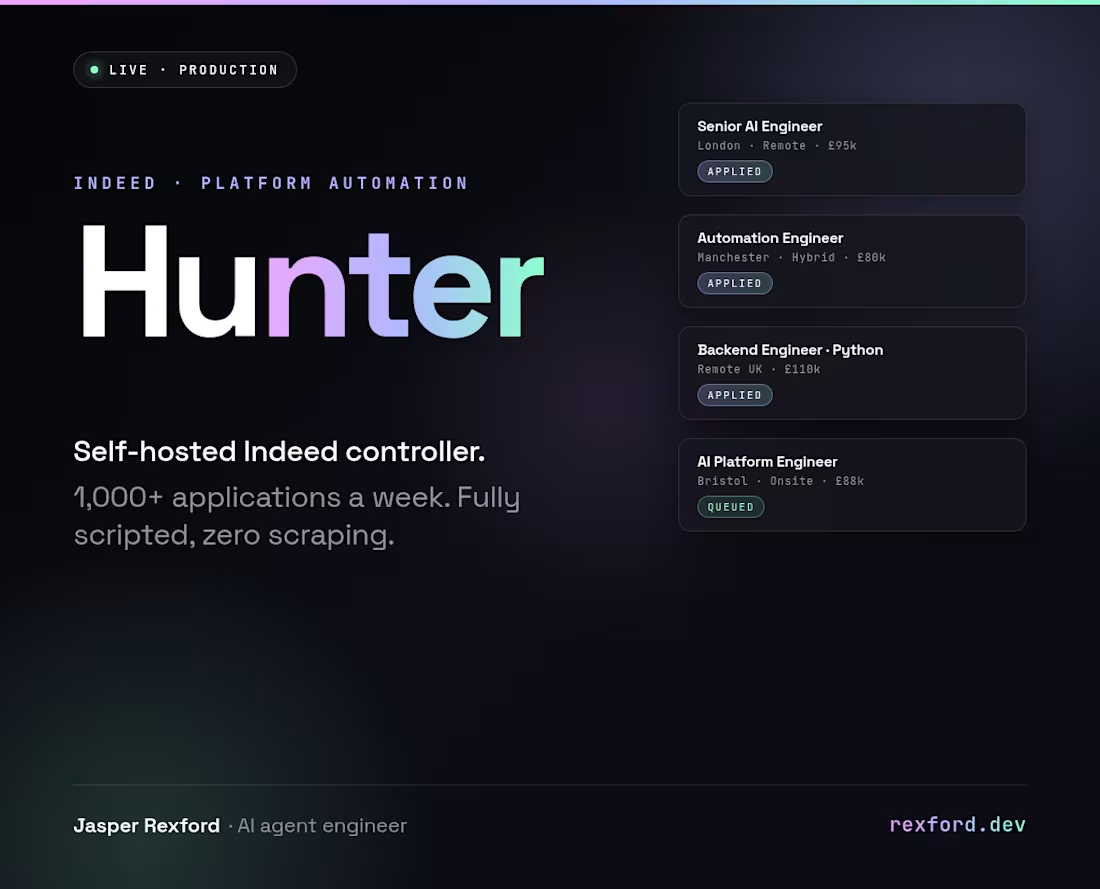
Hunter
Automate anything with a UI · structured actions at scale against no-API platforms
Half the platforms that matter to a business have no public API. Indeed, LinkedIn, Companies House, supplier portals, council planning sites, competitor dashboards. The data is right there on the screen, the action you need to take is a click away, but you can't get to it programmatically without scraping, and scraping breaks every time the platform updates.
Hunter solves that, properly.
It drives the real browser against the real API behind the UI, using the real session cookies. Same calls the platform's own frontend makes. Drift-resistant by construction. Built originally as a self-hosted Indeed controller running 1,000+ applications a week, the same pattern is live against LinkedIn and Contra, and works against any platform with a JS frontend and a backend API.
What you get
Programmatic access to any web product, including ones with no public API
Drift detection that alerts you before changes upstream break the flow
A pipeline rather than a spreadsheet: every action tracked, retried, audited
Native rate limiting and session handling so the platform doesn't notice
A general capability layer rather than a one-off scraper
Who it's for
Recruitment teams sourcing or applying at scale. Lead-gen teams hitting platforms that won't sell API access. Compliance, planning, or research teams pulling from government and corporate portals. Any operation where "we'd love to automate X but the vendor doesn't support it" is the blocker.
What it replaces
A team of VAs clicking through portals, a brittle scraper that breaks every fortnight, or a project that never got started because "there's no API." Hunter ships the capability and survives the platform's next UI change.
Production reality
The Indeed deployment runs 1,000+ structured applications a week with cover letters generated per posting. Same controller pattern is live against LinkedIn and Contra in parallel. Drift on the backend is detected at the schema layer, not the rendered HTML, so a Contra UI redesign doesn't break the integration.
2
124
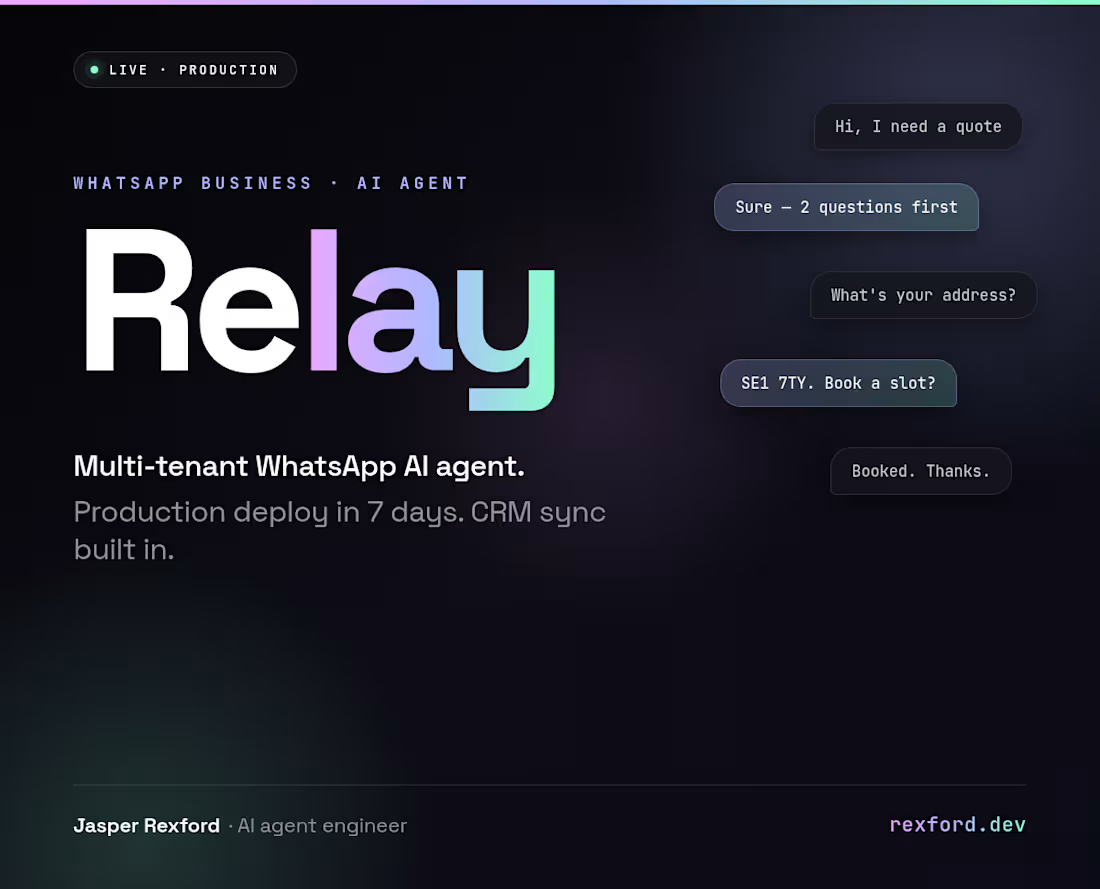
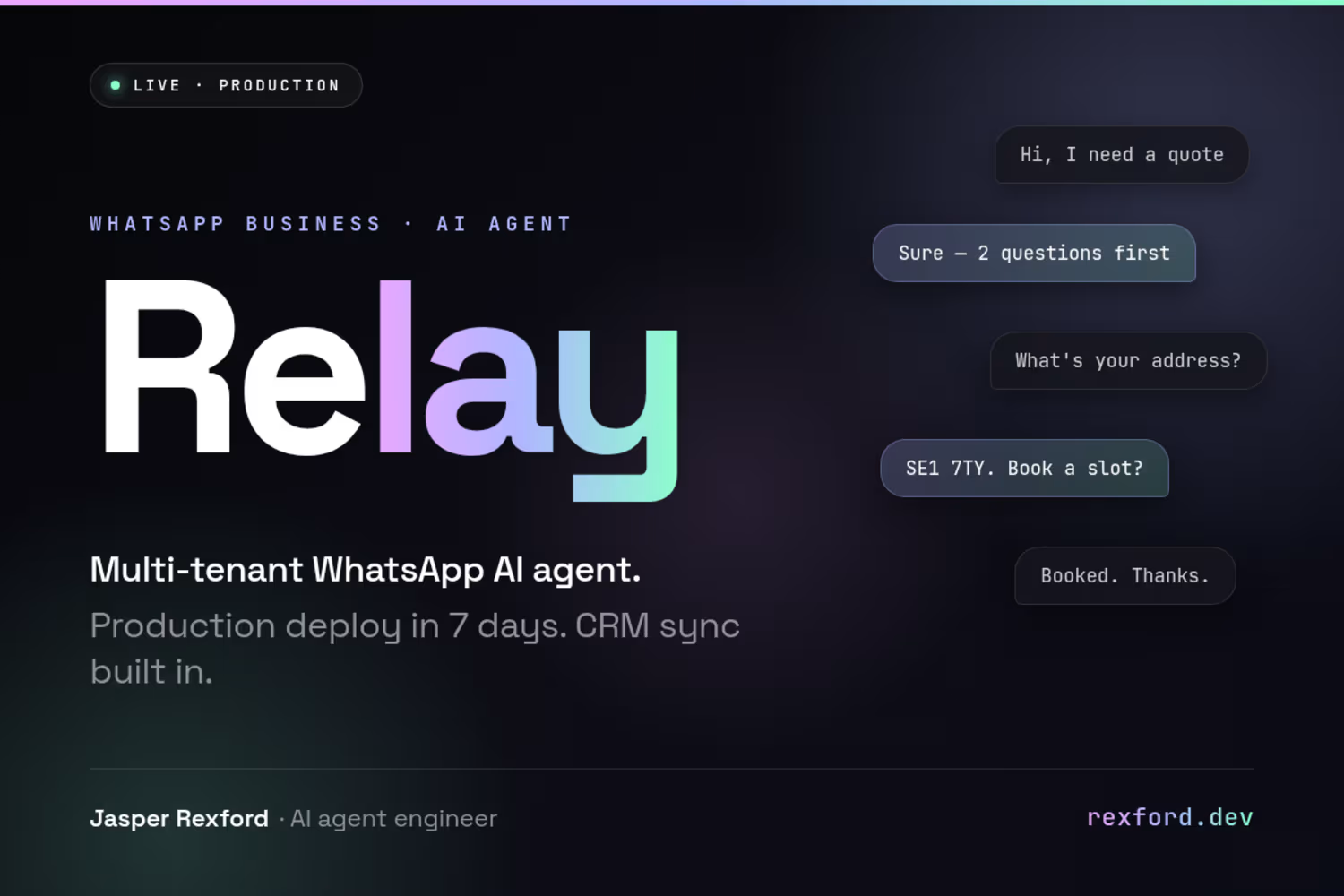
Relay
WhatsApp on autopilot · books, quotes, qualifies, never misses a message
Most service businesses lose money in WhatsApp. The phone sits on someone's desk, replies happen between meetings, the same five questions get asked all day, and half the leads never make it to the CRM. By the time anyone gets back to a new enquiry, the customer has booked with whoever replied first.
Relay turns WhatsApp into a real channel.
The business gets a number. Customers message it. An AI agent answers in your tone, in any language, around the clock. It qualifies leads against your rules, books straight into your calendar, sends quotes from your price list, takes deposits via Stripe, and writes everything back to your CRM. A human only steps in when the conversation actually needs them.
What you get
24/7 first response on every WhatsApp enquiry, in your voice
Bookings landing directly in your calendar, not in someone's notebook
Quotes sent in seconds with your pricing rules applied
Deposits collected before the customer hangs up
Full conversation history per customer, searchable, in your CRM
Clean human handover when a conversation needs you
Who it's for
Service businesses where WhatsApp is the main inbound channel. Car rental, salons, clinics, trades, removals, holiday lets, restaurants. Anyone whose customers expect a reply faster than email allows.
What it replaces
A part-time receptionist, a £200/month chatbot, or you answering at 11pm. Same outcome, one-off setup, no per-message charge.
Production reality
Live with paying businesses today. Multi-tenant from day one, so each business gets its own tone, prices, calendar, and bank account, fully isolated. Standard deploy from kick-off to live in 7 days.
2
127