
pro
Ivam Marchon
Creative Director | Ads Videos That Convert with 3D and AI
- $1k+
- Earned
- 2x
- Hired
- 56
- Followers



Over the past month, I had the chance to work on some really exciting projects and one of them was this visualizer for October London's new album "Love Me for Me", out now via Death Row Records.
The objective was to balance the vintage late-night soul mood of the record with a sleek, modern motion pipeline built specifically for mobile screens and digital distribution.
Huge thanks to Death Row Records, Snoop Dogg and October London for bringing us on board! Also, a big shoutout to Miguel Saporetti for collaborating on the visual delivery.
Art Direction & Motion: Ivam Marchon
Visual Assistant: Miguel Saporetti
Death Row Records
A&R: Teff Mogus, Frank Vasquez
Marketing: Fuzzy West, Tomeka Harris
Coordinator: Kaiya Lawrence
2
7
320
An editorial visual exploration for Lacoste, blending sportswear aesthetics with graphic illustration and dynamic motion. The goal was to create a high-fashion golf concept that bridges brand luxury with modern visual storytelling.
4
4
608
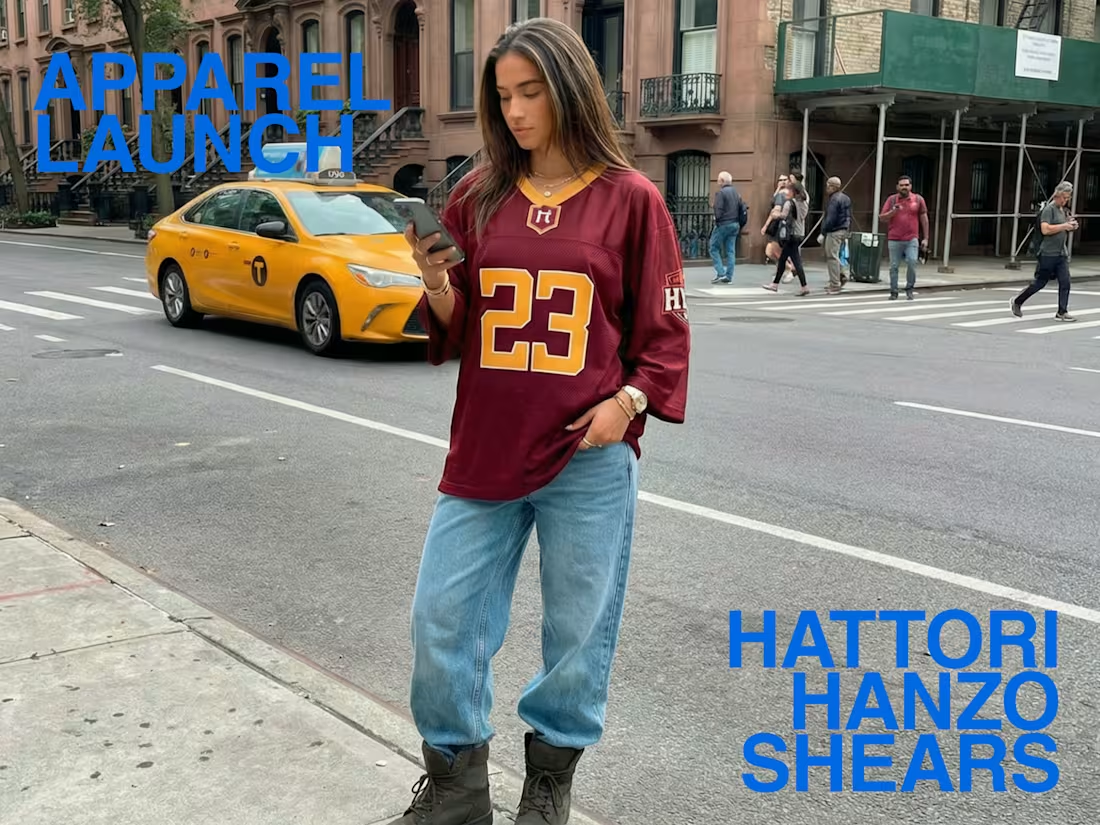
Hattori Hanzo Shears needed to market their new apparel line, but physical samples were weeks away.
The Solution: A hybrid pipeline merging 3D precision with AI realism. I created accurate "Digital Twins" in CLO3D and Blender directly from tech packs. Then, using Gen AI, I integrated these garments into hyper-realistic lifestyle scenarios with virtual influencers.
The Result: We bypassed casting and photography costs entirely, delivering a high-end campaign and 360º assets before the factory even finished the first batch.
Check out the full breakdown here: https://ivammarchon.com/3daihattorihanzo/
17
1.1K

A visual exploration focused on cinematic storytelling, dramatic lighting and atmosphere.
The main goal of this project was to push character and environment consistency across shots while maintaining a premium and editorial aesthetic tailored.
2
259