I designed it as a premium application for shaping the emotional quality of a private interior through light. Instead of treating lighting like a smart-home settings panel, the concept treats light as an architectural material.
From a single responsive surface, the user can:
adjust luminous intensity
tune atmosphere / bloom
scrub the solar meridian across the day
switch material emphasis
compare states
save a preset
open a commission summary
Prototype:
https://stitch.withgoogle.com/preview/11025185860304544382?node-id=d326bee735504c7382712f3311866d8a
I used Stitch inside a multi-agent workflow orchestrated through Codex CLI + MCP. Stitch handled the interface generation and iterative design passes, while the agent workflow helped pressure-test directions, validate interaction states, and keep the concept moving toward a working product surface instead of a static mockup.
What I especially liked:
fast concept generation
strong visual exploration
quick iteration on layout and interaction direction
What I’d still like to improve:
stronger material-response differences
a more ownable room identity
even richer visual transitions between light states
Built for the Google Stitch Challenge on Contra.
2
1
94
I made this short video in ElevenLabs to show one small part of what I’m building at Sell.Systems (http://Sell.Systems).
The idea is simple:
too much work still disappears in handoffs.
research → planning → building → testing → delivery
every step protects quality, but it also leaks context.
So I’m building a different setup:
a private AI workspace with a web terminal,
separate execution lanes for different jobs,
and one protected core that stays under control.
One lane can handle web work.
Another can test ideas.
Another can do lead research, content, or reporting.
They can connect when needed.
They can stay isolated when they should.
The goal is not “more AI everywhere.”
The goal is better architecture:
clear boundaries,
controlled execution,
and a system that gets more useful after every run.
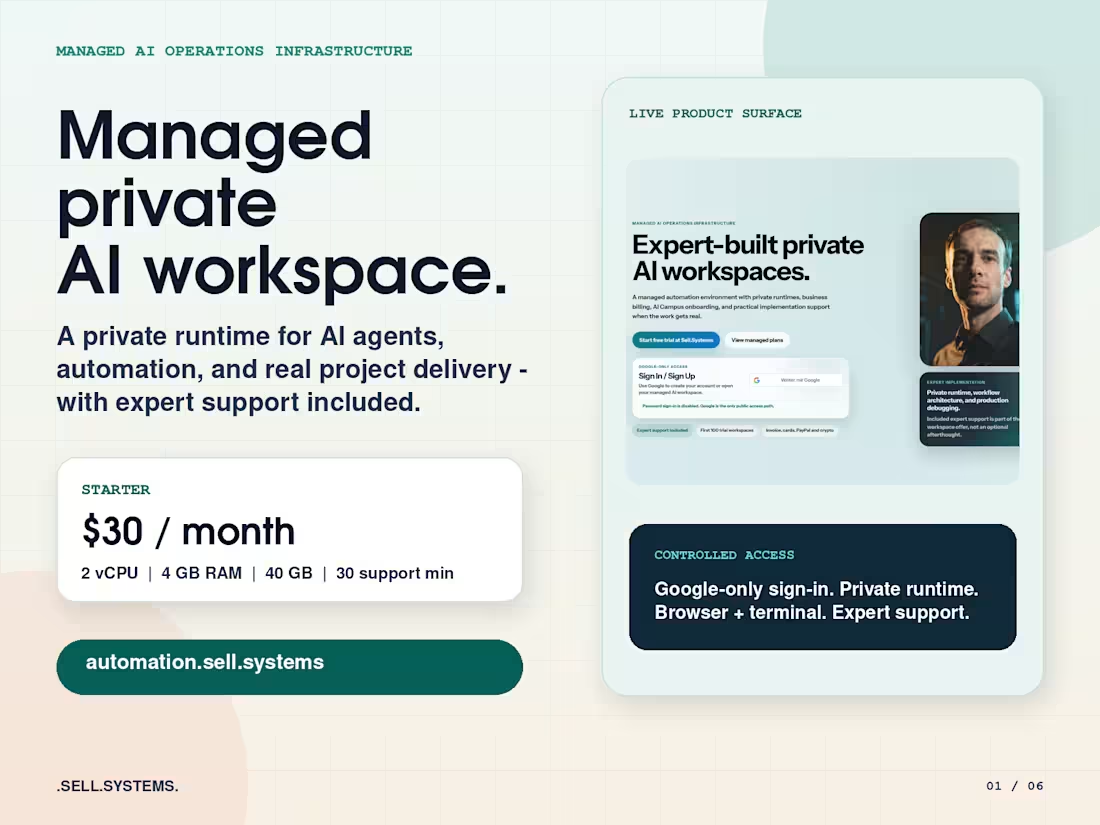
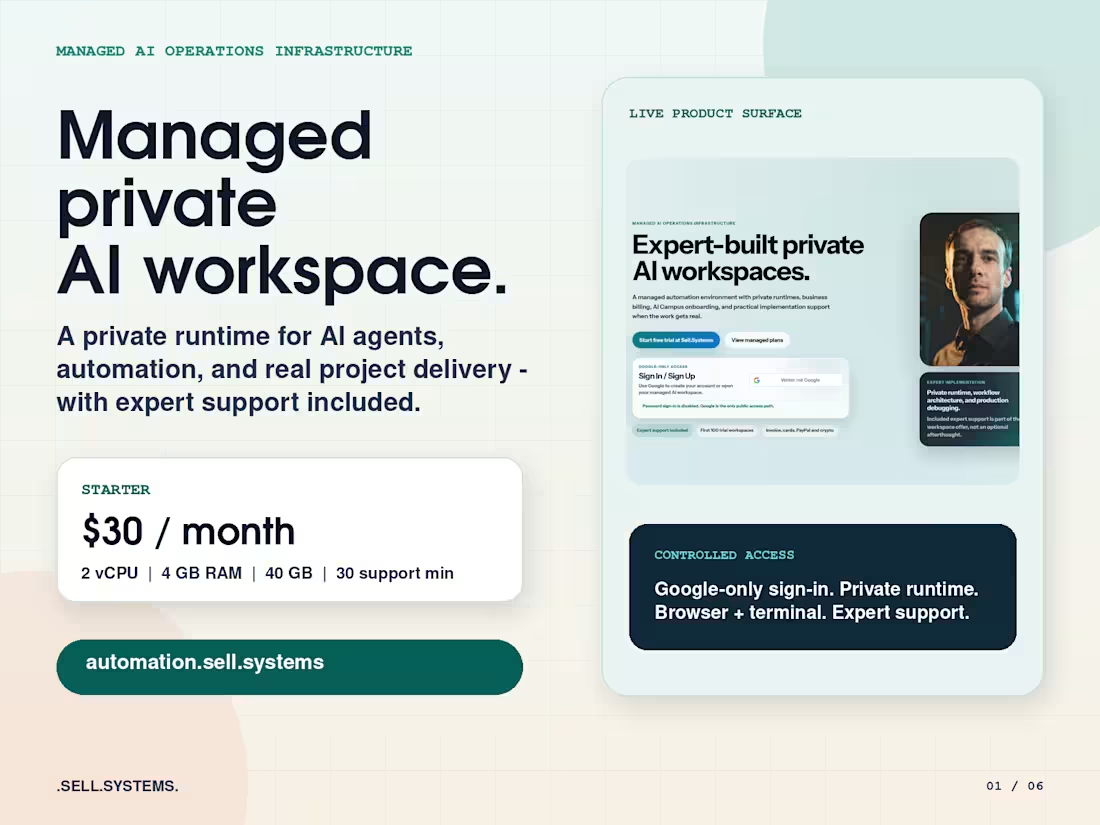
Sell.Systems (http://Sell.Systems) is the build layer.
Automation.Sell.Systems (http://Automation.Sell.Systems) is the managed layer.
Not another chatbot.
More like a private operating layer for real AI work.
Which workflow in your business still has too many handoffs?
1
41
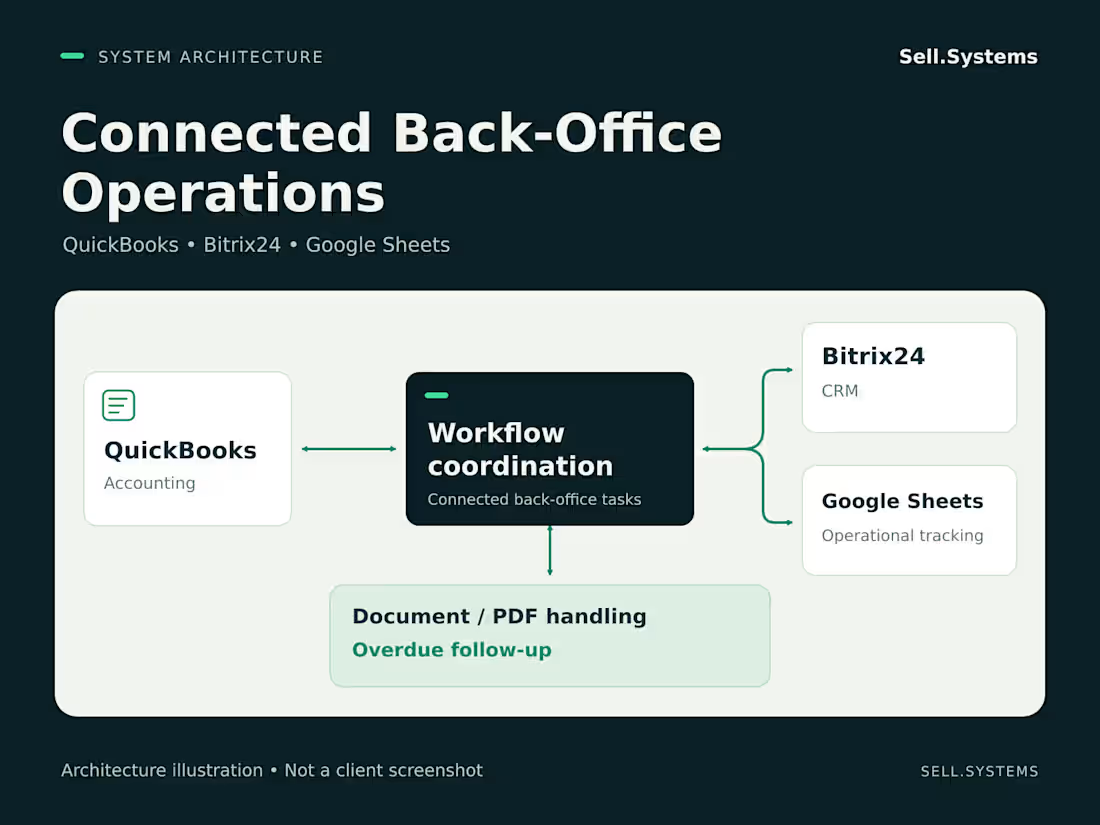
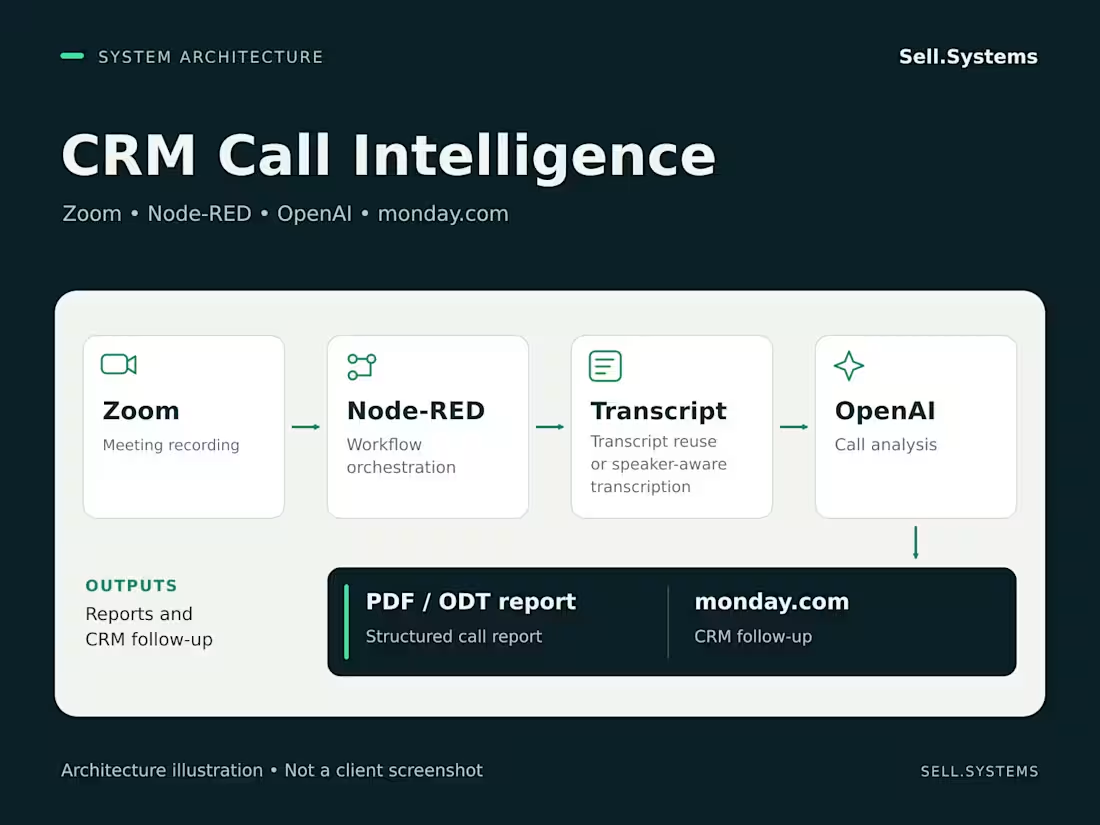
Built this around a direction I care about a lot: moving from generic AI demos toward AI business automation systems that feel operational, controlled, and real.
Most AI visuals still stop at interfaces, prompts, or output shots.
I wanted this pack to point at a different layer:
the environment where AI business automation actually becomes usable for teams.
That means showing a world that suggests:
control
consequence
continuity
real delivery infrastructure.
I review one real workflow and show where manual work, fragmentation, and execution risk can be reduced through a managed AI automation approach.
2
42
I just tested the new EL studio today and asked AI to make a short story about our business😃