The network for creativity
Join 1.25M professional creatives like you
Connect with clients, get discovered, and run your business 100% commission-free
Creatives on Contra have earned over $150M and we are just getting started
Back to feedPost


Most AI automation projects do not fail because the model is weak. They fail because the operating system around the model is missing.
Before I let an agent touch a live workflow, I define four things:
01 / The source of truth.
02 / The decisions the model may make.
03 / The actions a deterministic gate must approve.
04 / The evidence that proves the result.
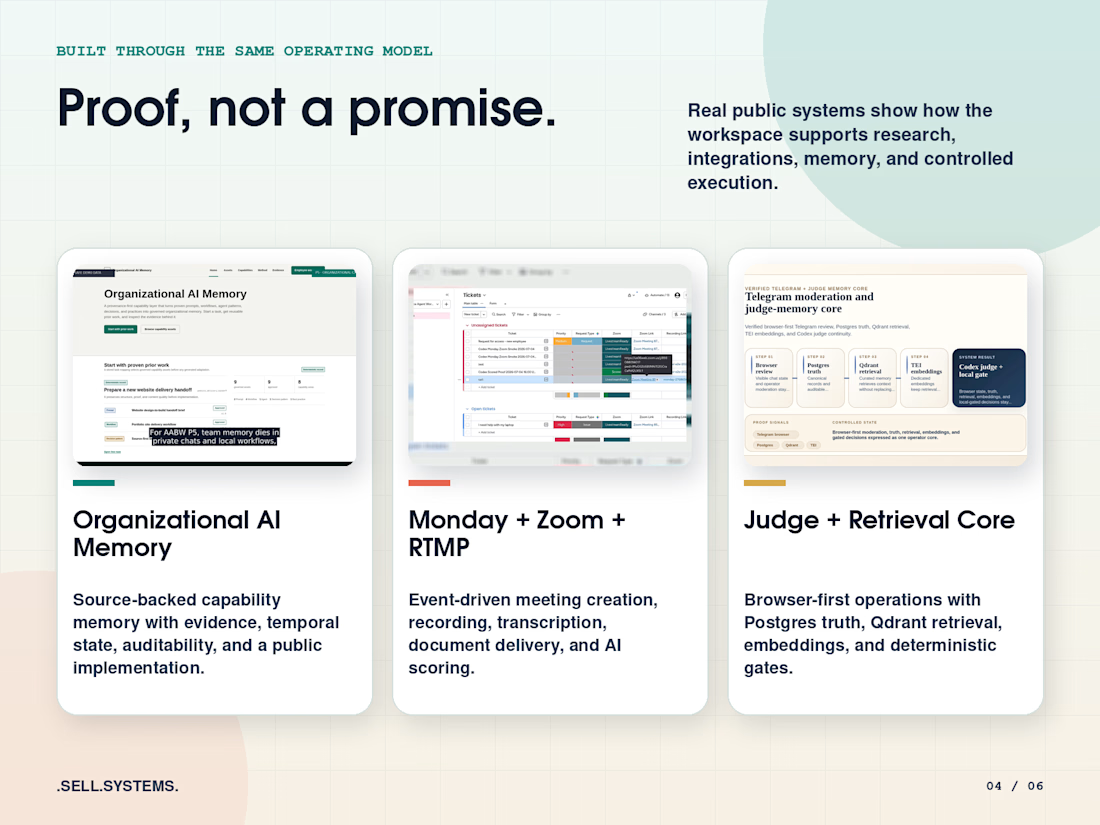
That pattern now runs across three public builds:
BUILD 01 / Organizational AI Memory with source-backed retrieval.
BUILD 02 / Monday + Zoom + RTMP meeting automation with transcription and AI scoring.
BUILD 03 / Browser-first Telegram operations with Postgres truth, Qdrant retrieval, and deterministic gates.
I have packaged the entry point as a focused AI Workflow Audit: one process, one success metric, a risk map, and a 30-day implementation roadmap.
What is the first workflow in your business that is still held together by copying, checking, and chasing?


The network for creativity
Join 1.25M professional creatives like you
Connect with clients, get discovered, and run your business 100% commission-free
Creatives on Contra have earned over $150M and we are just getting started





Related posts

Testing my app! 🧰🚀 Everything is finally coming along.
I’ve been working on this project for a little over two weeks. Initially it was just me working with one AI agent, but I was still manually coding most of it, so I was moving like a turtle 🐢very slow.
Then I decided to implement Codex into my project to automate more of the development and it has been amazing. Now I can focus more on prompting, testing, reviewing the code and making the technical decisions instead of manually coding everything.
I also created my own AGENTS.md bible with all my project rules and instructions to make sure Codex follows them as the final authority when working on my code.
The idea is simple: create one useful and intuitive ecosystem of tools that Shopify merchants can add to their stores to help customers make purchasing decisions faster and with more confidence.
Still testing, building and adding more tools. Let’s see where this goes! 🚀
And if anyone finds the idea interesting. I’m definitely open to collaborations, ideas or partnerships. Feel free to reach out!


Seeing you shift from hand coding to Codex and let the agent handle the grunt work really speeds up iteration.

AI Billing & Case-Note Automation from Email (TraceFlow)
Support coordinators were losing billable hours because the work happened in email and meetings and never got recorded. I designed and built TraceFlow, a live SaaS that connects a coordinator's Google or Microsoft mailbox. It uses AI to draft case notes and capture billable activity from emails and calendar meetings, and prepares it for invoicing. It includes Stripe subscriptions with a 14-day free trial.
Skills: Next.js, PostgreSQL, Claude API, Gmail API, Stripe, AI data extraction


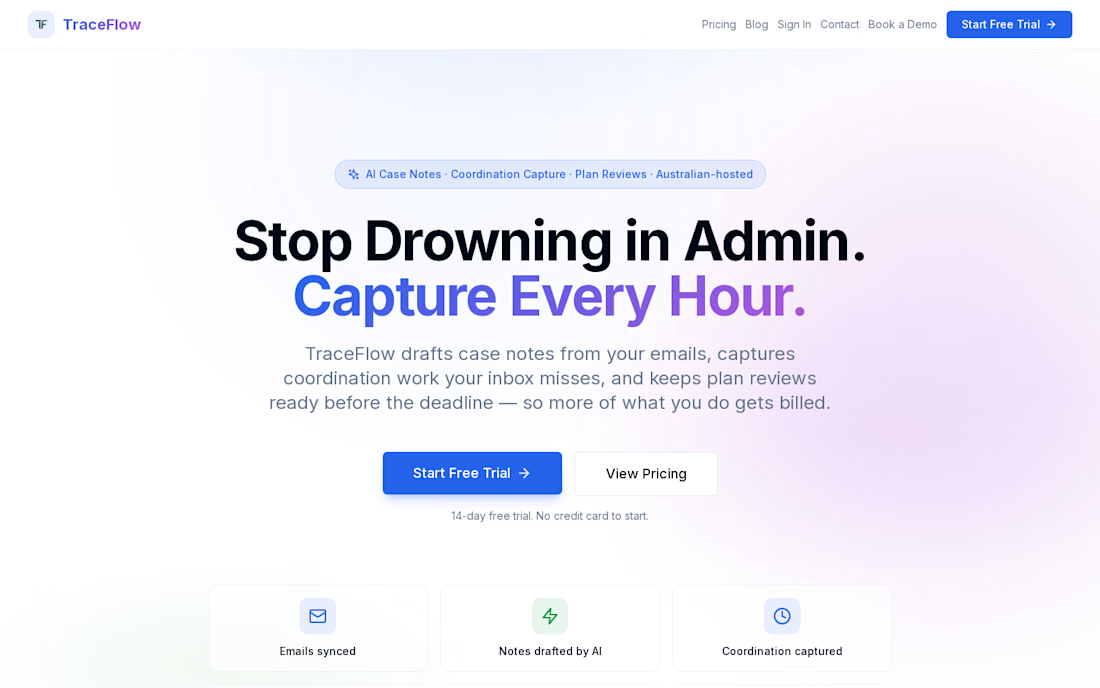

I'd want each drafted case note to show the email or meeting it came from before anyone approves billing. How do you stop the same activity being counted twice when it appears in both an email thread and a calendar event?

Full-Stack Developer & AI Automation Engineer
I build scalable web applications, SaaS platforms, mobile apps, custom dashboards, and AI-powered automation systems that turn complex business workflows into reliable digital products.
My core stack includes Next.js, React, Node.js, NestJS, Python, PostgreSQL, MongoDB, and AI APIs.
I specialize in turning ideas into production-ready systems—from architecture and development to deployment, automation, and optimization.
Available for:
AI Automation • SaaS Development • Web Development • Mobile Apps • Custom Dashboards • API Development • Business Automation


Seeing how you stitch AI APIs into custom dashboards really cuts the manual data wrangling. The stack choice keeps the deployment pipeline smooth.