
Isabella De Cuppis
Designer & Creative Director


There's a moment every designer knows. You've been staring at the same file for three days and you can't see it anymore. You need someone to tell you the truth, but everyone around you is either too polite or too busy.
The signs were always there. Ask the universe. ✨
Tarot critique is the Major Arcana, reread for designers. You paste your portfolio URL, turn the cards, and somewhere between a few centuries of borrowed wisdom and the thing you already knew but wouldn't admit, the reading finds you.
Not your love life. Your work. The hierarchy that isn't working, the story you're not telling, the thing that has to go.
Draw your cards. The deck has been waiting. 🌙
https://tarot-critique.figma.site/
Made in Figma Make ✺ cards in Reve ✺ assets in Figma Weave
Figma community: https://www.figma.com/community/file/1649526102616790249
Twitter post: https://x.com/isadc_/status/2067697682773102721?s=20
2
2
307
I've been building a tiny illustrated room where you can play around with little interactions.
Honestly, getting everything to click into place was harder than I expected. There's a particular kind of stubbornness that kicks in when something is 90% there and you keep nudging pixels until 2am.
And still, every time I do one of these I'm a little amazed. The fact that I can have an idea in the morning and a working thing by evening (okay, several evenings), as a designer with no dev background, is wild.
A new home for my portfolio, you can play with it here: https://isadecuppis.com/
1
268

Visual Brand Identity for Universo 42
0
13
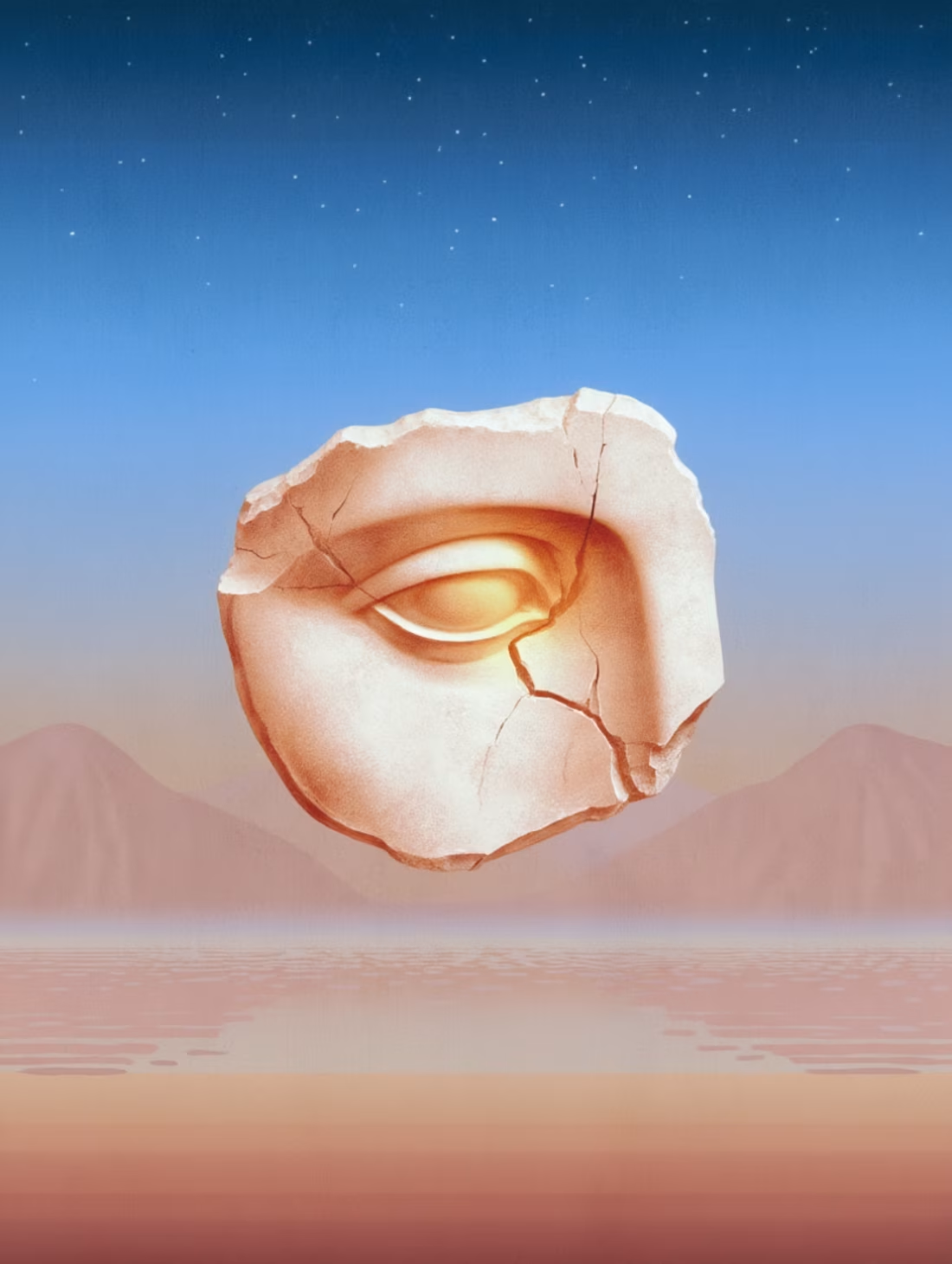
A brand system built around ideas needed images that could hold abstract thinking without turning literal. So I went looking for dreamlike spaces: small worlds a concept could live inside, recognisable as a family but never quite repeating.
Reve made the exploring genuinely fun, and most of the work was in the nipping and tucking, chasing the small details until everything clicked.
18
52
1K