
pro
Idris Lamina
AI Automation & Web Design | n8n · Vapi · Claude API


Suds & Scruff Mobile Dog Grooming, Walthamstow, East London
Nia is made up. Her problems aren't.
She grooms dogs from a van across Walthamstow, Leyton and Chingford, and she works an area a day. Enquiries come in by DM while she's mid-groom, so she answers them at 9pm. Getting one dog booked takes about six messages. Two dogs a week don't turn up, and she's already driven there.
What I built:
Customers book themselves. Size and coat set the price and the time, and they only see days when the van is in their area.
If someone would rather message, the message gets a price, real slots and a booking link back in seconds.
The evening before, every customer gets a one-tap "still on?". Say nothing and the slot goes to the next dog on that area's waitlist. Nia gets one line she can undo.
Customers move or cancel their own bookings inside the same rules.
Nia's dashboard only lists what needs her. Everything else is logged with the minutes it saved: about five hours a week.
To see her side, click "See what Nia sees" at the top of the site. It signs you in to a demo account. Texts are simulated and every one is in the Outbox. Demo data resets every night.
2
97
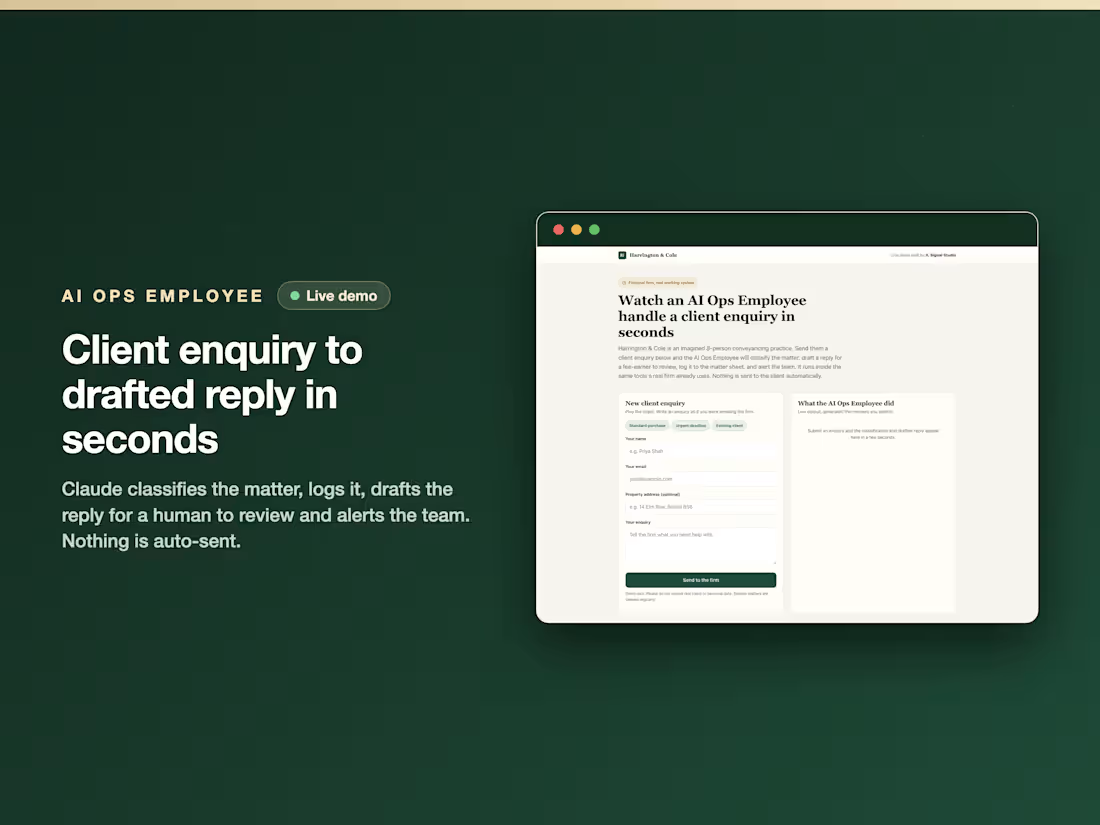
AI Ops Employee: Professional Services Intake (Live Demo)
0
7
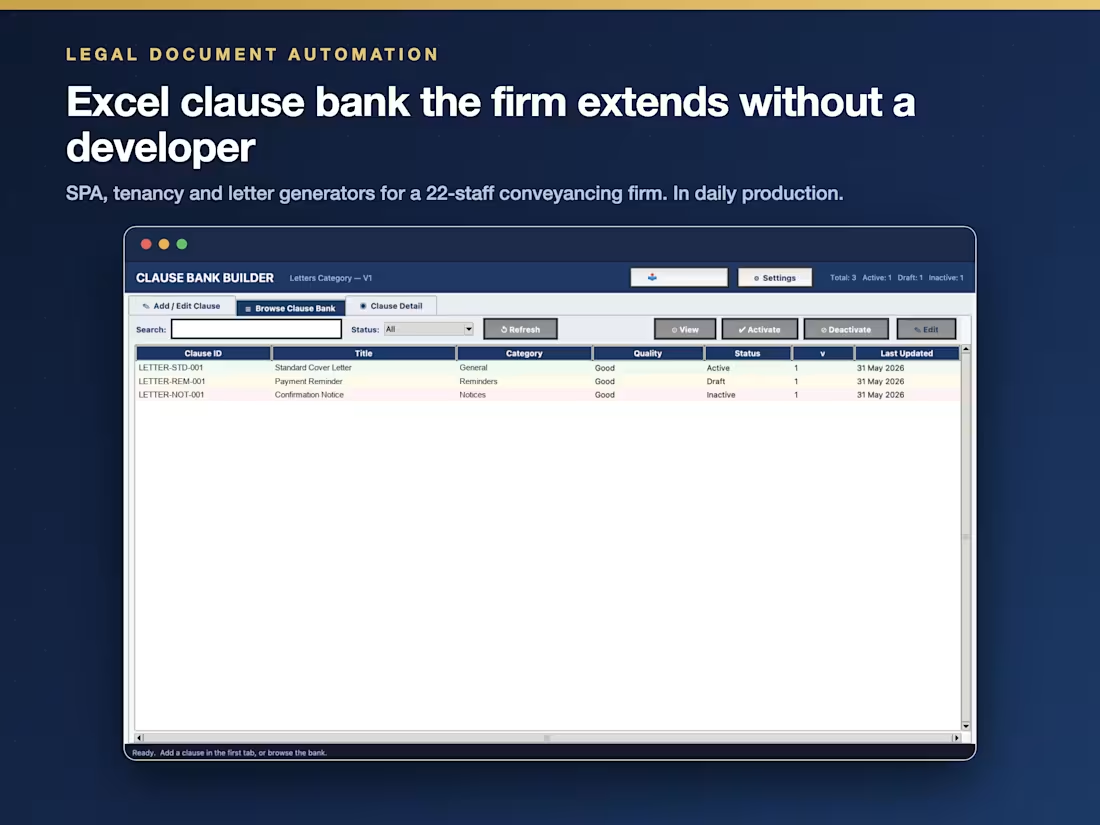
Document Automation for a 22-Staff Conveyancing Firm
0
12
Veranda, a luxury residential concept landing page
Veranda is a concept build I created for a fictional luxury residential brand. It is not client work or a real property. The images and hero motion were generated with AI as part of the creative process.
I wanted to explore something that matters when building high-fidelity landing pages: after several rounds of changes, how do you make sure the final page still looks like the design that was approved?
The site is built in Next.js with responsive layouts, self-hosted fonts, GSAP motion and an interactive walkthrough. I also built in a proper QA process around it, not just checking that the page loads and the buttons work.
It compares 12 sections across five screen sizes against approved visual baselines. It flags visual drift, missing baselines and changes that have not been reviewed. I also tested interactions, accessibility, contrast, performance, browser behaviour and reduced-motion states.
The main lesson for me was simple: a page can pass functional tests and still no longer be the page that was agreed.
22
26
1.3K