
pro
Yassin Hkiri
Senior Software Engineer | SaaS, Web & Backend
New to Contra
Yassin is ready for their next project!

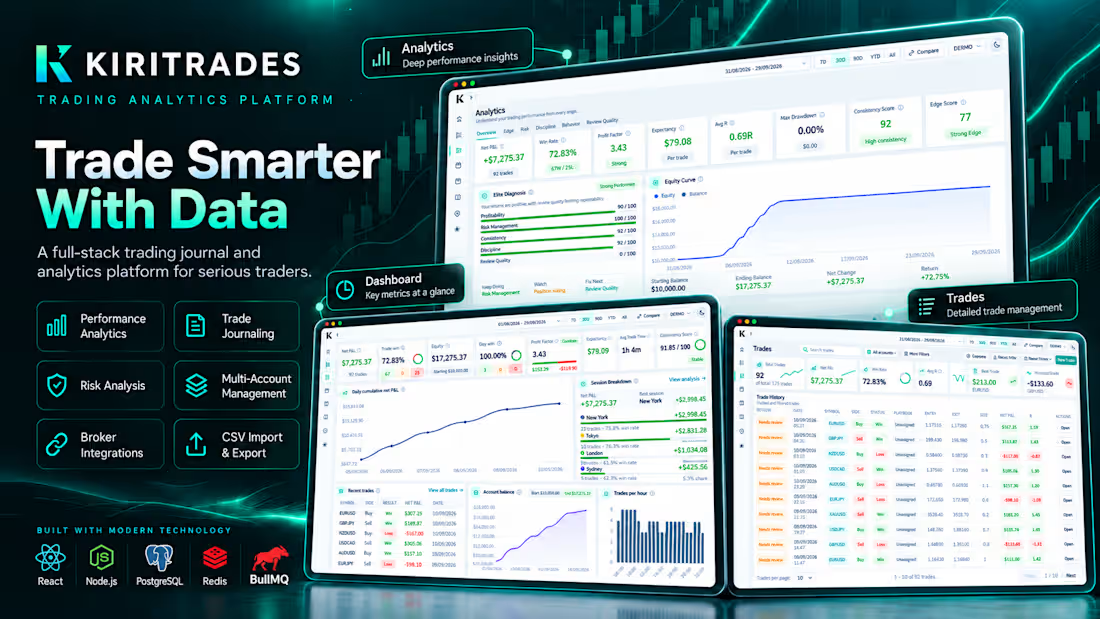
KiriTrades — Trading Analytics SaaS
Overview
I designed and built KiriTrades end-to-end as a full-stack trading journal and analytics platform that helps traders track trades, analyze performance, review risk, and identify patterns across multiple accounts and strategies.
Core Features
The platform includes multi-account management, trade imports, broker synchronization, detailed trade journaling, screenshots, strategy organization, rule-based reviews, CSV import/export, and advanced performance analytics.
Analytics
Traders can analyze P&L, win rate, profit factor, expectancy, R-multiples, equity curves, drawdown, consistency, risk-per-trade, session performance, and strategy-level results.
Architecture
Frontend built with React and Vite, backed by Node.js and Express, with PostgreSQL for application data and JWT authentication. Redis and BullMQ handle asynchronous processing.
Background Processing
Background workers handle broker synchronization, CSV imports, analytics rebuilding, and screenshot processing, keeping longer-running operations outside the main request flow.
Engineering Decisions
I implemented server-side filtering and pagination for growing trade histories, account-scoped data access, authenticated APIs, and targeted analytics updates after trade synchronization.
My Role
Product design, frontend development, backend development, database architecture, integrations, background processing, and deployment — built end-to-end as an independent full-stack project.
1
141
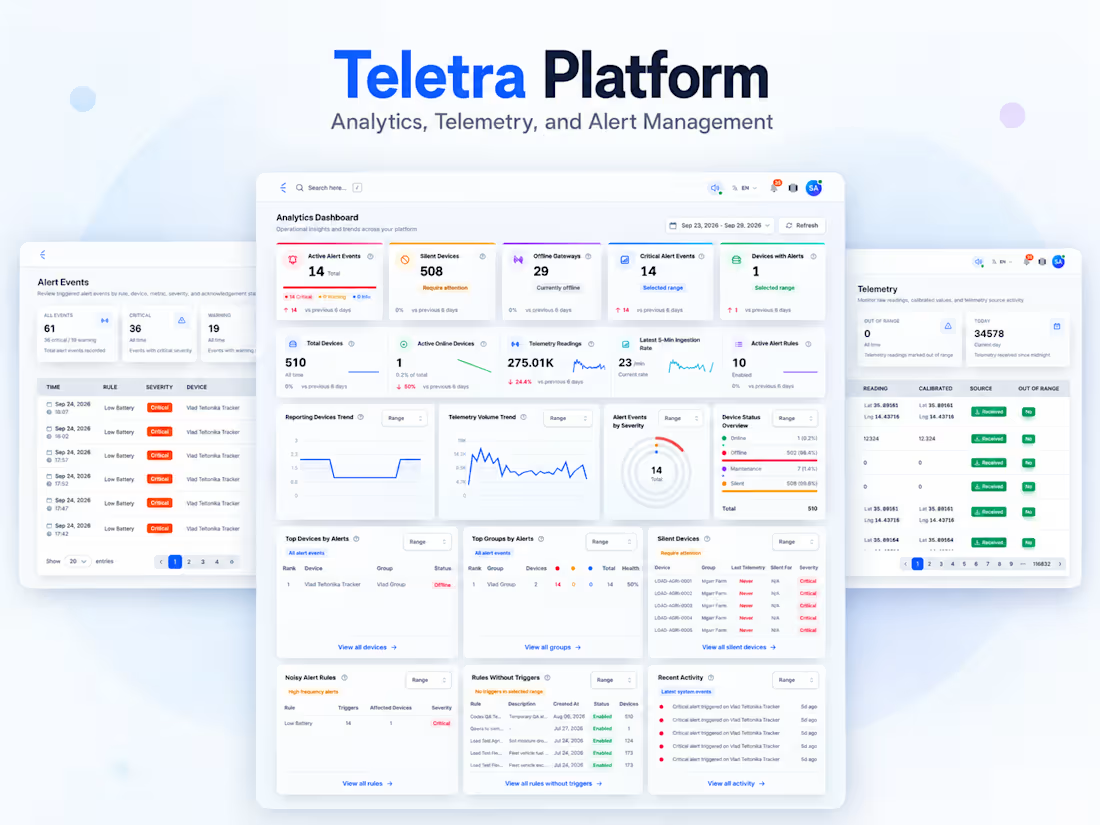
Teletra - Tracking and analytics platform
Project Overview
Tele-Tra is a connected-device monitoring platform that brings device and machine data into one central system. It supports the full telemetry workflow, from receiving raw messages across different communication channels to making normalized readings available for monitoring, alerts, dashboards, and analytics.
Client Challenge
The client needed to manage a diverse fleet of connected devices, each potentially sending data through different transports and payload formats. This made it difficult to consolidate telemetry, configure device-specific measurements, monitor activity consistently, and act quickly when readings or device conditions required attention.
Solution Delivered
A modular, microservices-based platform that accepts telemetry over MQTT, HTTP, and TCP. The system identifies the source device, interprets incoming payloads using configurable decoders and metric mappings, validates and normalizes readings, and makes the resulting events available to downstream services. This creates a consistent foundation for device management, monitoring, rule evaluation, alerting, and analytics.
Core Platform Features
Centralized management of devices, machines, users, and platform configuration
Telemetry ingestion across MQTT, HTTP, and TCP connections
Configurable decoding and metric mapping for different device payloads
Normalized telemetry events for consistent downstream processing
Rule configuration and alert handling for operational monitoring
Dashboard configuration, report metadata, and analytics support
Separate services for core management, ingestion, rules, alerts, and reporting Technical Stack Node.js microservices, React, PostgreSQL, Apache Kafka, MQTT, Redis, and Docker Compose.
0
95
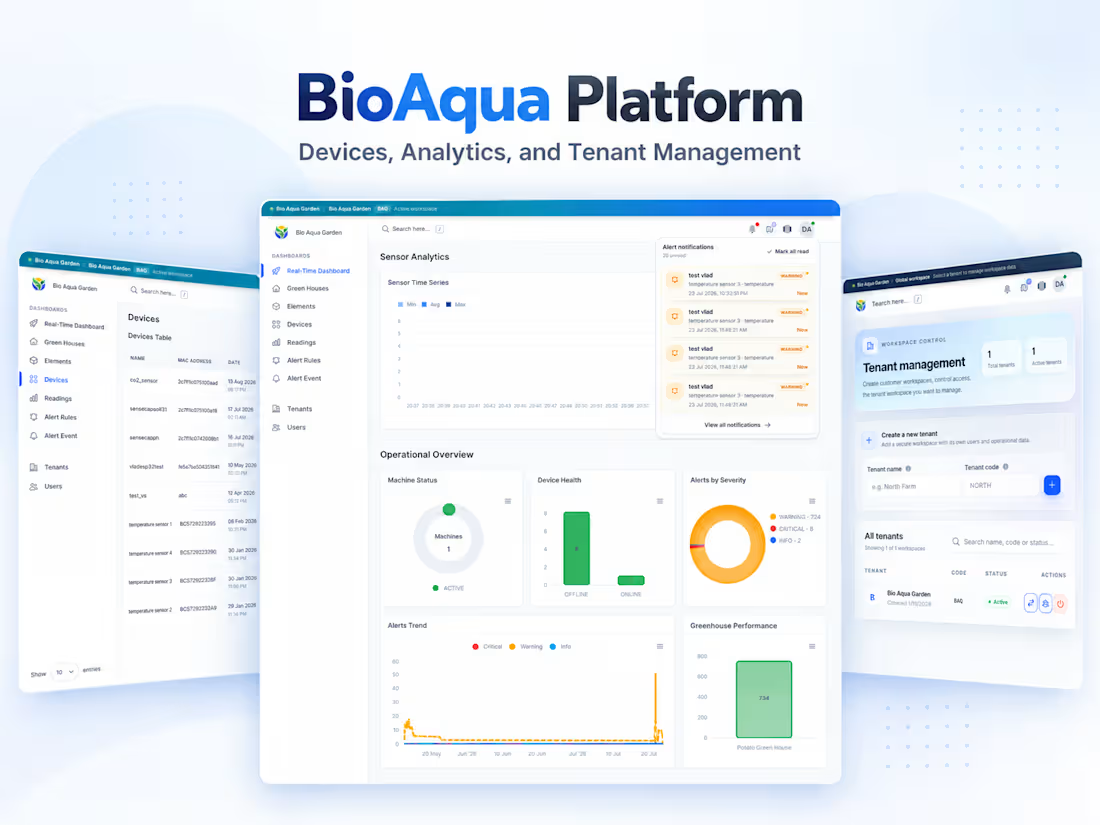
BioAqua — IoT Monitoring Platform
Project Overview
Developed BioAqua, a full-stack IoT monitoring and automation platform for managing connected agricultural environments. The system collects sensor data from distributed devices, visualizes operational conditions through real-time dashboards, and allows users to define monitoring rules that can trigger alerts or automated actions.
The platform combines device management, sensor analytics, alerting, greenhouse monitoring, and multi-tenant administration within a single web application.
Client Challenge
The platform needed to provide a centralized way to monitor multiple IoT sensors and agricultural environments without relying on fragmented device interfaces or manual data analysis.
Users needed to be able to:
Monitor sensor readings and device health
Identify offline or low-battery devices
Analyze environmental data over time
Configure alert rules for important sensor conditions
Receive operational notifications
Manage multiple greenhouses, devices, and users
Separate customer environments through tenant-based workspaces The system also needed to support automated responses based on user-defined rules and incoming sensor data.
Solution Delivered Built a centralized IoT management platform that brings device information, sensor readings, operational analytics, alerts, and administration into a single interface. Users can monitor connected devices in real time, inspect historical readings, configure alert rules, review system events, and manage separate tenant workspaces from the same platform. Core Platform Features Real-Time Monitoring Dashboard: Visual dashboards for sensor activity, machine status, device health, greenhouse performance, and operational trends. Device Management: Manage connected sensors and virtual sensors with device identifiers, machine assignments, battery status, calibration information, decoders, and online/offline status. Sensor Analytics: Analyze sensor readings through time-series charts and operational dashboards to understand changing environmental conditions. Alert Rules & Events: Configure monitoring rules and receive notifications when sensor conditions require attention. Notification Center: Centralized notification interface for warnings and operational events generated by connected devices. Greenhouse Monitoring: Organize and monitor sensor infrastructure across greenhouse environments. Automated Actions: Support user-defined rules that can trigger automated actions or notifications based on incoming sensor data. Multi-Tenant Management: Create and manage independent customer workspaces with separate users and operational data. User Administration: Manage users and access within individual tenant environments. Operational Visibility: Track machine status, device health, alert severity, historical trends, and greenhouse performance from centralized dashboards. Technical Stack Frontend: React.js Backend: Node.js Database: MongoDB Cloud Infrastructure: AWS Architecture: Full-stack IoT platform supporting sensor-data collection, analytics, monitoring rules, and automated notifications. Data Visualization: Real-time and historical dashboards for sensor readings, device health, alert trends, and operational performance. Multi-Tenant Administration: Tenant-scoped workspaces for separating customer users and operational data.
0
35
BioAqua — IoT Monitoring Platform
Project Overview
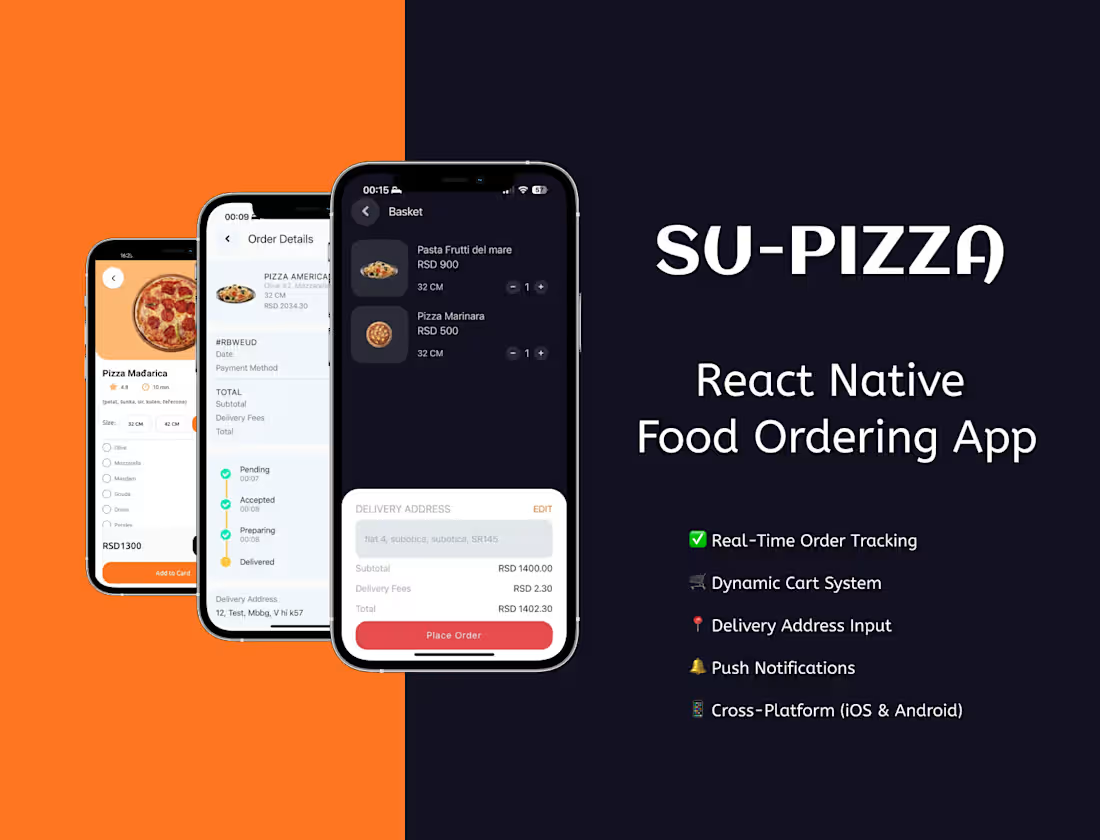
Developed Supizza, a full-stack food ordering and delivery platform designed to connect customers, restaurant operations, and delivery workflows through a unified web and mobile ecosystem.
The platform includes a customer-facing ordering experience, administrative tools for managing products and orders, and mobile applications for Android and iOS. The system was built to support the complete ordering journey, from browsing the menu and placing an order to backend processing and delivery management.
The project involved development across the frontend, backend, database, mobile, and cloud infrastructure, creating a connected platform that could serve multiple user experiences from the same backend services.
Technical Implementation
Web Frontend
Built the customer-facing web application using React.js, providing a responsive experience for browsing products, managing selections, and placing orders.
Mobile Applications
Developed cross-platform applications for Android and iOS using React Native, allowing the mobile experience to share a common codebase while supporting native device functionality.
Backend & APIs
Implemented backend services using Node.js, providing REST APIs used by the web application, mobile applications, and administrative interfaces.
Database
Used MongoDB to manage application data including users, products, orders, and other operational records.
Admin & Operations
Built administrative functionality for managing application content and operational workflows, allowing the platform to be controlled without direct database access.
Cloud Infrastructure
Hosted and operated the platform using AWS, supporting backend services, application infrastructure, and production deployment.
Architecture
Designed the system as a multi-platform architecture where the web application, React Native mobile apps, and administrative tools communicate with shared Node.js backend services and MongoDB data storage.
Technical Stack
Frontend: React.js
Mobile: React Native
Platforms: Android, iOS
Backend: Node.js
Database: MongoDB
Cloud: AWS
Architecture: REST API-based full-stack platform
Product Type: Food ordering & delivery / e-commerce platform
0
36