
pro
Faadil Boussari
Product Designer for AI & Digital Products



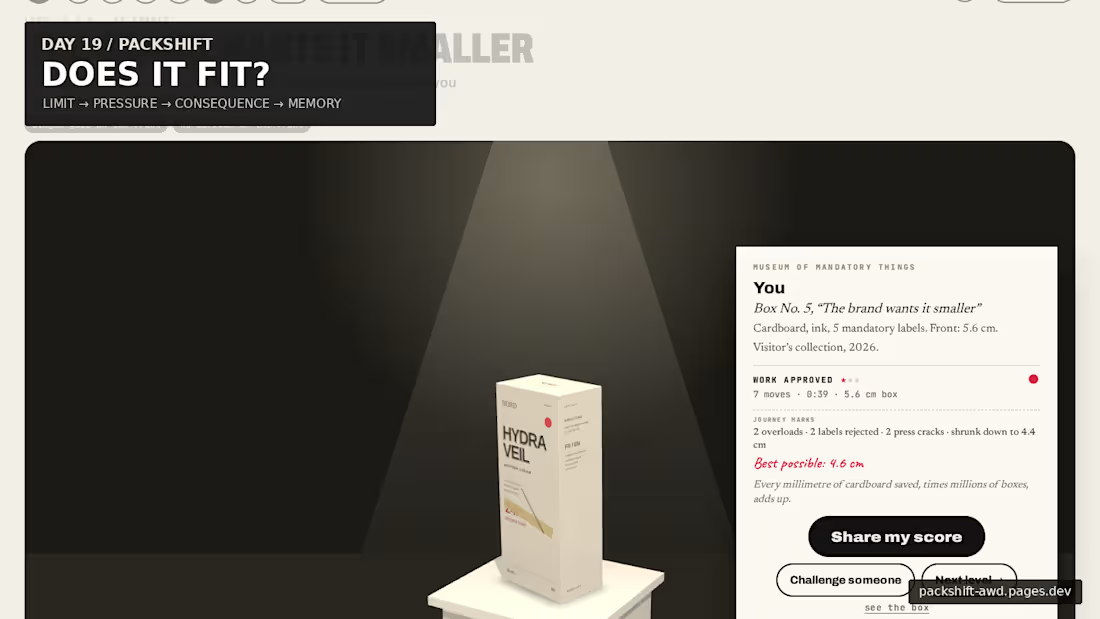
Packaging looks like graphic design. But every word takes physical space.
For Day 19, I built PACKSHIFT an interactive packaging experience where claims, languages, warnings and data become pressure on a finite surface.
It starts with the real 56 mm width of the carton.
Then you try to make everything fit.
Make the box smaller and the pressure becomes physical:
56 mm → pressure → CRACK → recovery → museum
The final package doesn’t just show the solution — it remembers the negotiation that produced it.
Underneath the public game is a deeper spatial compiler built with Blender + Three.js / React Three Fiber, where the same package can open, decompose, expose its dieline, redistribute information and refold.
Packaging is not a file. It is a compiled surface.
Full case study ↓
https://contra.com/p/3WBccUlM-packshift-packaging-is-a-compiled-surface
Live experience ↓
https://packshift-awd.pages.dev/
GitHub ↓
https://github.com/Faadil1/PACKSHIFT
Would love to know which moment lands most for you: Actual Size, the Hydraulic Press, or the Museum?
1
79
PACKSHIFT: Packaging Is a Compiled Surface
0
4
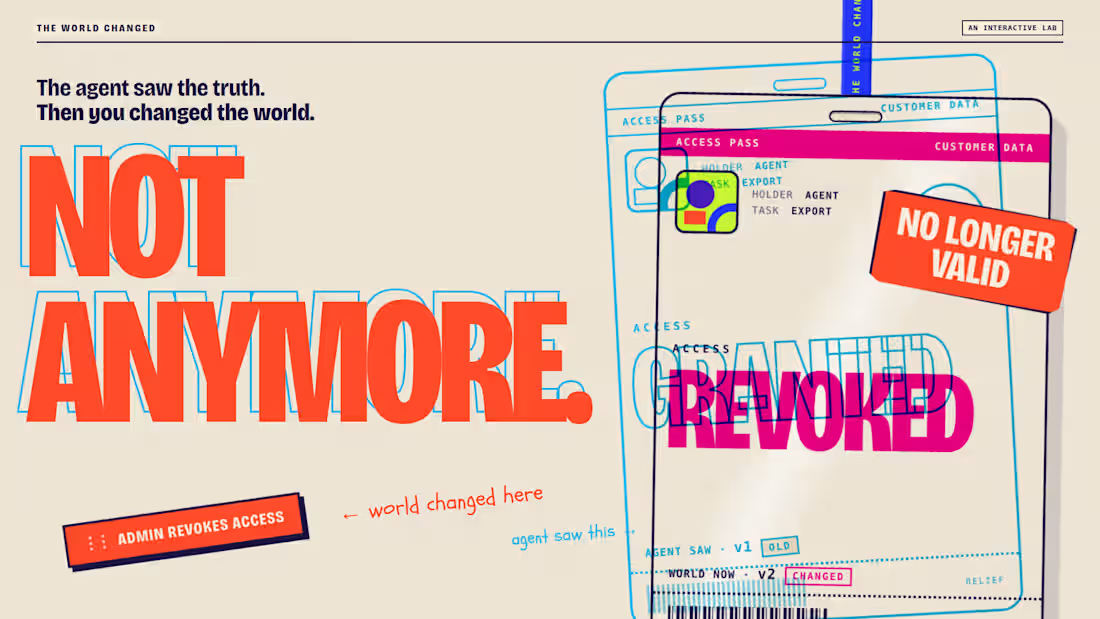
The agent saw the truth. Then I changed the world.
Just published THE WORLD CHANGED, an interactive AI agent lab where you change reality after an agent has observed it, then see whether it notices before it acts.
The core interaction is simple:
LOOK → PULL THE GAP → CHANGE THE WORLD → ACT
From there it expands into multiple worlds, a timed challenge, replayable receipts, checked vs. unchecked outcomes, and a genuine recorded Claude Opus 5.5 run.
I wanted the idea to feel physical rather than technical, so the whole visual system is built from passes, tickets, stamps, paper and print misregistration.
Would love feedback on the interaction and art direction.
🔗 https://contra.com/p/FXvqOAEA-the-world-changed-an-interactive-ai-agent-lab
1
80
Contra Community Post
Day 17/30: COMMON ROOM
What if a library card could reveal belonging instead of simply proving access?
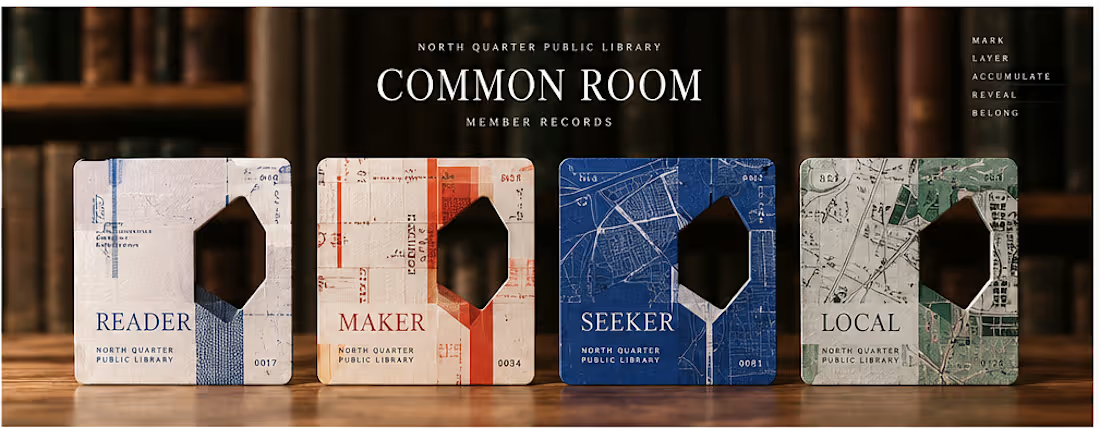
I built COMMON ROOM, a speculative membership system for the fictional North Quarter Public Library.
Instead of asking members to choose an identity or complete a personality quiz, the system lets their actual behavior inside the library leave the evidence.
Read in the Stacks → leave a margin.
Make in the Workshop → leave a registration mark.
Follow a question through the Index → leave a reference path.
Explore the Quarter → leave a civic trace.
Those traces gradually build a unique Member Record.
The card remembers in layers. Its physical Accession Aperture later becomes a lens into hidden library memory, and completed cards can optionally become part of a Living Collection that begins to reveal the shape of the neighborhood itself.
The project eventually became a system about:
BEHAVIOR → EVIDENCE → OBJECT → MEMORY → COMMUNITY
And the line that defined the whole thing:
You don’t receive a card. You accumulate one.
I also built the launch film around the same visual logic instead of doing a traditional product walkthrough using the card’s traces, layers and aperture as the motion language.
Would love feedback on one thing in particular:
Does the relationship between behavior, the physical card, and belonging read clearly without needing the concept explained first?
Day 17 of my 30 Days of Real Business Problems challenge.
#ProductDesign #InteractionDesign #CreativeDevelopment #DesignEngineering #MotionDesign #CreativeCoding #ThreeJS #Remotion
3
5
316