


Customer Review Analysis – Charts Sample
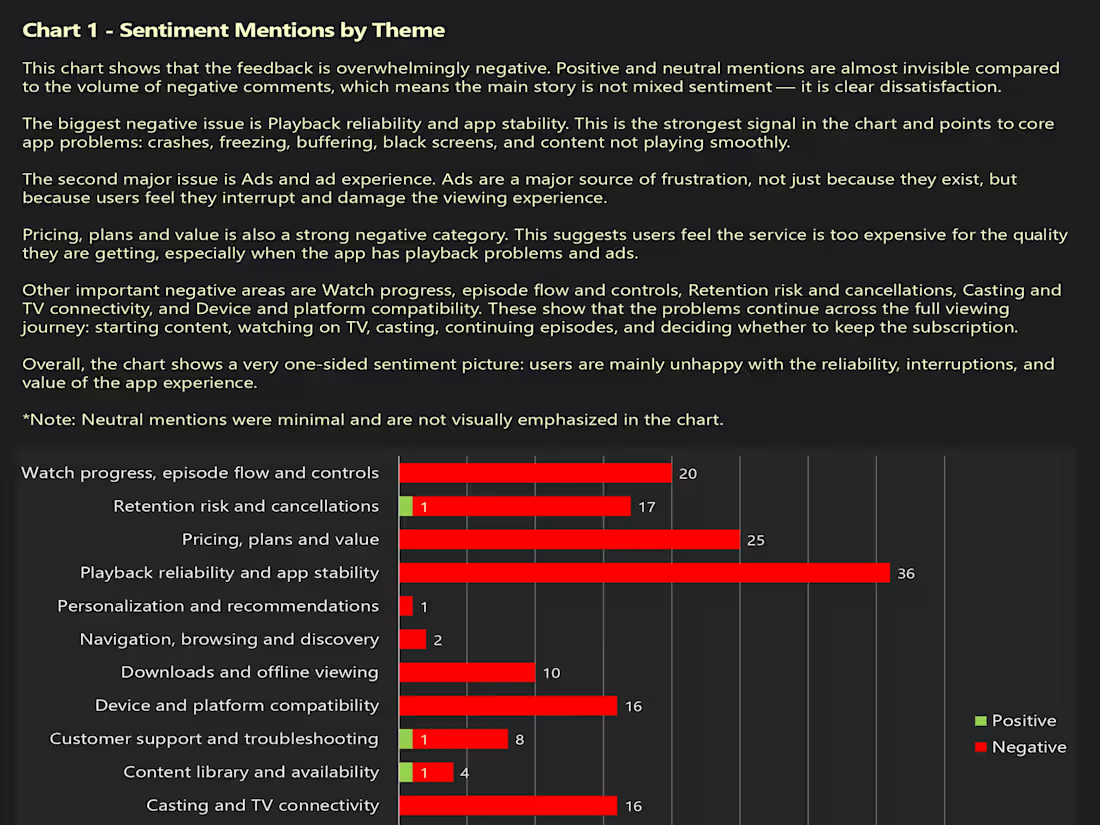
Short visual sample from a customer review analysis report, showing how review data can be grouped by sentiment and themes to identify the strongest sources of customer dissatisfaction. This chart sample is part of a broader framework that can be adapted to any business with public customer reviews.
0
100
While working on an app review analysis sample, I noticed something important:
Not every negative app review is actually a bug report.
Some complaints point to engineering.
Some point to pricing.
Some point to platform compatibility, UX, support, or content availability.
A few real examples from the review sample:
“… They just hiked their prices, even with all these bugs. Will be canceling if not fixed by next month. Just Frustrating.”
Theme: Pricing, plans and value
"Doesn't seem to matter what device you're using it on, phone, native television app, streaming device, it's complete garbage. Constant "unable to connect" or "Internet not available" messages when every other app works perfectly fine."
Theme: Device and platform compatibility
"This app is still broken. When chrome casting it doesn't remember where I've left off in a show if I pause it, then come back to it later and try to cast.”
Theme: Casting and TV connectivity
All three are negative reviews, but they describe different types of problems.
When every negative review is treated simply as an “app problem,” the real priorities can get lost.
That is why I classify reviews by theme and sentiment before writing the analysis.
View full sample report: https://drive.google.com/file/d/1vt1qA-u5wASMt2UrpExM2W3KlJuMdqku/view?usp=sharing
#AppReviews (https://www.linkedin.com/search/results/all/?keywords=%23appreviews&origin=HASH_TAG_FROM_FEED) #UserFeedback (https://www.linkedin.com/search/results/all/?keywords=%23userfeedback&origin=HASH_TAG_FROM_FEED) #SentimentAnalysis (https://www.linkedin.com/search/results/all/?keywords=%23sentimentanalysis&origin=HASH_TAG_FROM_FEED) #ProductAnalytics (https://www.linkedin.com/search/results/all/?keywords=%23productanalytics&origin=HASH_TAG_FROM_FEED) #CustomerExperience (https://www.linkedin.com/search/results/all/?keywords=%23customerexperience&origin=HASH_TAG_FROM_FEED) #DataAnalysis (https://www.linkedin.com/search/results/all/?keywords=%23dataanalysis&origin=HASH_TAG_FROM_FEED)
0
163
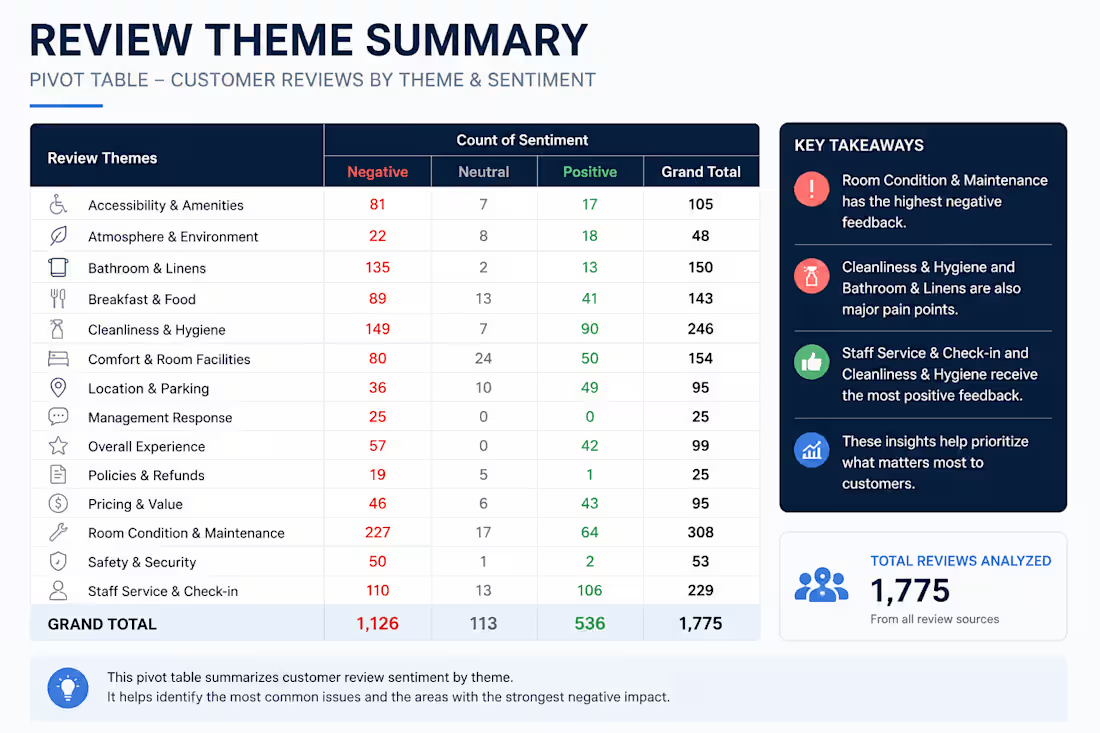
I used a pivot table to summarize customer reviews by theme and sentiment.
This helped organize the review data into a clear overview of negative, neutral and positive mentions across different customer experience areas.
The summary makes it easier to see which themes appear most often, which issues generate the strongest negative feedback, and which areas should be reviewed first before creating the final report.
0
218
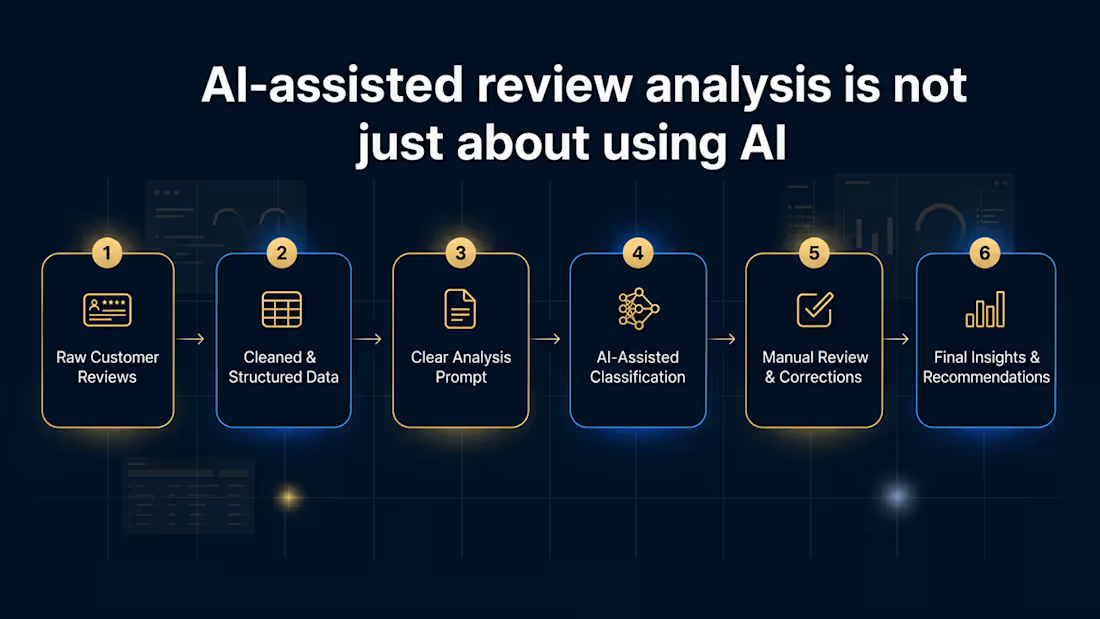
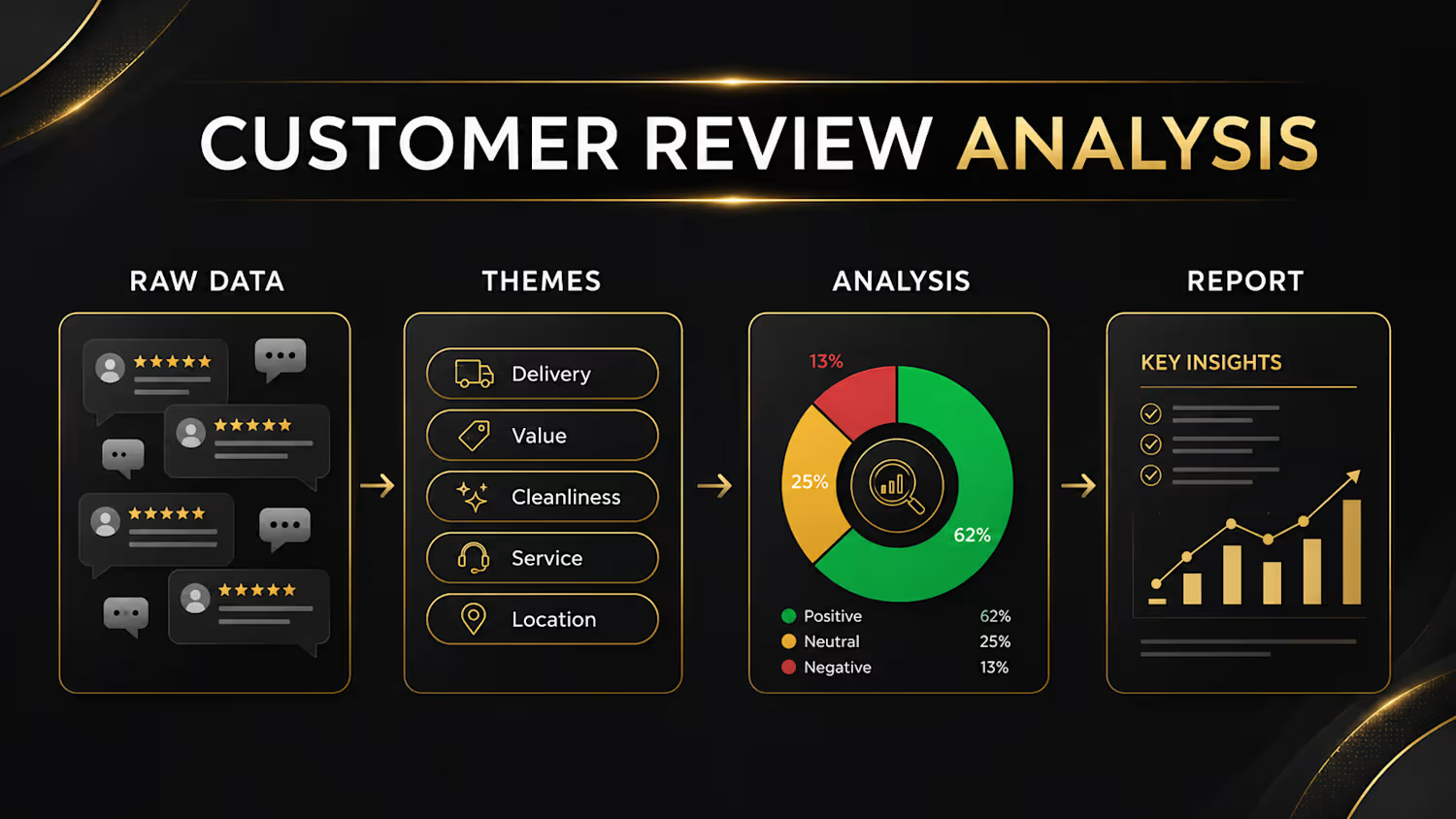
AI can be very useful in customer review analysis, but the quality of the output depends heavily on the quality of the input.
The process is not just asking AI to “analyze reviews”.
It starts with cleaning the dataset, organizing review text, ratings, dates and sources, and defining the right categories before the analysis begins.
A precise prompt matters, but so does knowing what output to expect: recurring complaints, sentiment patterns, repeated customer experience issues, strong positive themes, and the areas that affect customer perception the most.
After the AI-assisted classification, the results still need to be reviewed manually, checked for accuracy, and corrected where needed.
A useful review analysis report is not just an AI output.
It is a structured process:
Raw data → Cleaned data → Prompt design → Classification → Manual review → Final insights
0
242