Freelancers using Google Scholar
Sign Up
Post a job
Sign Up
Log In
Filters
1
Projects
People
Quinn Foster
pro
Lafayette, USA
Mission-Driven Copywriter, Journalist, and Researcher.
$25k+
Earned
19x
Hired
5.0
Rating
236
Followers
Top
Follow
Message
Mission-Driven Copywriter, Journalist, and Researcher.

3
According to The 19th, the Supreme Court sided with the Trump administration, prohibiting transgender people from choosing the gender markers on their passports. For over 30 years, transgender people could change their gender marker. But in January 2025, the Trump administration became determined to take this right away. This puts transgender people at an even higher risk for discrimination, harm, harassment, and heightened anxiety. LGBTQ+ discrimination, transmisogynoir, racism, and other factors tend to place Black and Brown Queer communities in harmโs way. These stressors can lead to mental health challenges, substance use and abuse, โhigh-riskโ sexual behavior, and more. Learn more about harm reduction! https://theblackwallsttimes.com/2025/11/19/human-rights-campaign-advocates-for-harm-reduction-in-queer-communities/
3
413
0
Prairie Stories: Art and Ecological Restoration
0
15
0
Dr. Karla Robinson shares tips to improve Black American health
0
8
0
Interview with Nicole Johnson on Fightingville Fresh Market
0
7
Google Scholar
(12)
Follow
Message
Uduak Eti
Abuja, Nigeria
I help health brands write content anyone can understand.

New to Contra
Follow
Message
I help health brands write content anyone can understand.

2
๐๐๐ ๐ ๐๐๐๐๐๐๐๐ ๐๐๐๐ ๐๐๐ ๐๐๐?๐ฆ A mosquito bites someone with HIV, then bites youโฆ So what next? Many people believe mosquitoes can spread HIV from one person to another. ๐๐ก๐ข๐ฌ ๐ข๐ฌ ๐๐๐ฅ๐ฌ๐. Mosquitoes transmit several diseases, but HIV isn't one of them. HIV spreads when certain body fluids from a person with HIV enter another person's body. These include blood, semen, pre-cum, vaginal fluids, rectal fluids and breast milk. It's mainly transmitted through sex, sharing needles or other injection equipment, and in some cases from parent to child during pregnancy, birth or breastfeeding. ๐๐จ๐ฐ๐๐ฏ๐๐ซ, ๐ ๐ฆ๐จ๐ฌ๐ช๐ฎ๐ข๐ญ๐จ ๐๐ข๐ญ๐ ๐ข๐ฌ๐ง'๐ญ ๐จ๐ง๐ ๐จ๐ ๐ญ๐ก๐จ๐ฌ๐ ๐ซ๐จ๐ฎ๐ญ๐๐ฌ. Knowing how HIV is actually transmitted helps us protect ourselves based on facts, rather than fear. But wait... If a mosquito drinks blood from someone with HIV, isn't that blood still inside it? And when it bites you, doesn't it inject it into you? Here's what actually happens. A mosquito doesn't inject the blood of the last person it bit into its next victim. Its mouthparts have separate channels for sucking blood and releasing saliva. When she bites, she draws your blood through one channel and injects saliva through another. The saliva helps keep your blood flowing so she can feed. So no, she's not injecting someone else's blood into you. She's injecting her saliva. ๐๐ง๐ ๐๐๐ ๐ข๐ฌ๐ง'๐ญ ๐ญ๐ซ๐๐ง๐ฌ๐ฆ๐ข๐ญ๐ญ๐๐ ๐ญ๐ก๐ซ๐จ๐ฎ๐ ๐ก ๐ฆ๐จ๐ฌ๐ช๐ฎ๐ข๐ญ๐จ ๐ฌ๐๐ฅ๐ข๐ฏ๐. There's another problem for HIV: a mosquito simply isn't the right environment for it to multiply. HIV is a little picky. It needs specific human immune cells to make more copies of itself. Mosquitoes don't have those cells. So the virus can't infect mosquitoes. Instead, once HIV gets into a mosquito, it is broken down and digested in its stomach. Scientists have found no evidence that mosquitoes transmit HIV to humans, even in places where both mosquitoes and HIV are common. ๐๐ก๐ ๐ฌ๐ข๐ฆ๐ฉ๐ฅ๐ ๐ญ๐ซ๐ฎ๐ญ๐ก? HIV needs the right human cells to multiply. A mosquito simply doesn't have what it needs. ๐๐จ ๐ฆ๐จ๐ฌ๐ช๐ฎ๐ข๐ญ๐จ๐๐ฌ ๐๐จ ๐ง๐จ๐ญ ๐ฌ๐ฉ๐ซ๐๐๐ ๐๐๐. And that's one less health myth to worry about. What's a health myth you believed for years before finding out it wasn't true? #HealthWriting #PublicHealth #Research #Healthcare #ContentWriting #HealthEducation #MedicalWriting #HealthCommunication #Contra
2
216
1
๐๐ก๐ฒ ๐๐ซ๐ ๐๐จ๐ซ๐ ๐๐จ๐ฎ๐ง๐ ๐๐๐จ๐ฉ๐ฅ๐ ๐๐๐ฏ๐๐ฅ๐จ๐ฉ๐ข๐ง๐ ๐๐ฒ๐ฉ๐ ๐ ๐๐ข๐๐๐๐ญ๐๐ฌ? ๐๐ก๐๐ญ ๐ญ๐ก๐ ๐๐๐ฌ๐๐๐ซ๐๐ก ๐๐๐๐ฅ๐ฅ๐ฒ ๐๐๐ฅ๐ฅ๐ฌ ๐๐ฌ I wrote this research-based article to explain why more young people are developing type 2 diabetes. The article covers what the research says about the causes, who is most affected, why the condition is a growing concern, and what can be done about it. I turned complex health research into clear, easy-to-understand information for a general audience. Link to the article. (https://drive.google.com/file/d/1bQRRsU4y4YovvNHfiGeCs6j3JxcmrbH2/view?usp=drivesdk) ๐๐ญ ๐๐ฌ๐๐ ๐ญ๐จ ๐๐ ๐๐๐ฅ๐ฅ๐๐ ๐๐ง โ๐๐ฅ๐๐๐ซ ๐๐๐ซ๐ฌ๐จ๐งโ๐ฌ ๐๐ข๐ฌ๐๐๐ฌ๐โ Type 2 diabetes was once considered mainly a disease of adulthood. That narrative is changing. More children, teenagers, and young adults are being diagnosed with type 2 diabetes, a condition that was once much less common in these age groups. In the United States, the SEARCH for Diabetes in Youth Study found that the incidence of type 2 diabetes among 10-to-19-year-olds nearly doubled between 2002โ2003 and 2017โ2018, rising from 9.0 to 17.9 cases per 100,000 young people. So, what is changing? The answer isn't as simple as saying young people are eating too much sugar or not exercising enough. Type 2 diabetes develops through a combination of factors, including insulin resistance, obesity, genetics, sleep, stress, physical activity, and the environments in which people live and make health choices. To understand why more young people are getting this condition, we first need to understand what happens inside the body. ๐ ๐ข๐ซ๐ฌ๐ญ, ๐๐ก๐๐ญ ๐๐๐ญ๐ฎ๐๐ฅ๐ฅ๐ฒ ๐๐๐ฉ๐ฉ๐๐ง๐ฌ ๐ข๐ง ๐๐ฒ๐ฉ๐ ๐ ๐๐ข๐๐๐๐ญ๐๐ฌ? When you eat, your body breaks down much of the food into sugar (glucose) and releases it into your bloodstream. Your pancreas then releases insulin, a hormone that helps move the sugar in your blood into your cells, where it can be used for energy. In type 2 diabetes, that system starts to struggle. Your body develops insulin resistance, meaning your cells don't respond to insulin as well as they should. At first, your pancreas tries to make more insulin to keep your blood sugar under control. But over time, it may not be able to make enough to keep up, causing sugar to build up in your bloodstream. For young people, there is another piece to the story: puberty. During puberty, hormonal changes make the body temporarily more resistant to insulin. In most young people, the pancreas can make more insulin to compensate and keep blood sugar under control. But in those who already have risk factors such as obesity or a family history of diabetes, the pancreas may not be able to keep up with the body's increased need for insulin. This can contribute to prediabetes or type 2 diabetes, or make existing diabetes harder to control. That is one reason youth-onset type 2 diabetes is more complicated than simply saying, โSomeone ate too much sugar.โ ๐๐จ, ๐๐ก๐ฒ ๐๐ซ๐ ๐๐จ๐ซ๐ ๐๐จ๐ฎ๐ง๐ ๐๐๐จ๐ฉ๐ฅ๐ ๐๐๐ฏ๐๐ฅ๐จ๐ฉ๐ข๐ง๐ ๐๐ญ? ๐. ๐๐๐๐ฌ๐ข๐ญ๐ฒ ๐ข๐ฌ ๐ ๐๐๐ฃ๐จ๐ซ ๐๐ข๐๐๐ ๐จ๐ ๐ญ๐ก๐ ๐๐ฎ๐ณ๐ณ๐ฅ๐ Obesity is one of the strongest risk factors for insulin resistance, especially in young people. When a young person has obesity, their body has excess fat, particularly around the abdomen and in organs such as the liver and pancreas. These fat cells can become stressed and release substances, including excess fatty acids, that interfere with how insulin works. This makes it harder for the body to move sugar from the blood into cells. As a result, young people with obesity can have much higher fasting insulin levels than their peers without obesity, showing that their bodies may need to produce more insulin just to keep blood sugar within a normal range. Research also shows that young people with obesity tend to be more insulin-resistant throughout puberty. Not everyone with obesity will develop the condition. ๐. ๐๐๐ง๐๐ญ๐ข๐๐ฌ ๐๐ง๐ ๐ ๐๐ฆ๐ข๐ฅ๐ฒ ๐๐ข๐ฌ๐ญ๐จ๐ซ๐ฒ ๐๐๐ญ๐ญ๐๐ซ Genetics also influences who develops type 2 diabetes. Some people inherit genetic changes that affect how much insulin their body produces or how well it uses insulin. This can make them more likely to develop the disease, and at a younger age. Family history matters too. A young person's risk of developing type 2 diabetes is about 2โ3 times higher if a parent or sibling has the condition. The risk is even higher when both parents have it. ๐. ๐๐ฎ๐ซ ๐๐ง๐ฏ๐ข๐ซ๐จ๐ง๐ฆ๐๐ง๐ญ ๐๐ก๐๐ฉ๐๐ฌ ๐๐ฎ๐ซ ๐๐ก๐จ๐ข๐๐๐ฌ What people eat or how active they are isn't always about personal choice. Sometimes, the environment around us shapes our decisions. Cheap, heavily marketed processed foods and sugary drinks are everywhere, while healthier foods can be more expensive or harder to access. This can make healthy living more difficult. Many teens are also getting less physical activity, walking less and spending more time on screens. They may also get too little sleep and face high levels of stress, anxiety, or depression, which can affect eating patterns and metabolic health. Sadly, the COVID-19 pandemic made many of these challenges worse. So we shouldn't look only at individual choices. We also need to look at the conditions that influence those choices. ๐. ๐๐ก๐ ๐๐ญ๐จ๐ซ๐ฒ ๐๐๐ง ๐๐๐ ๐ข๐ง ๐๐๐๐จ๐ซ๐ ๐๐ข๐ซ๐ญ๐ก: ๐๐๐ญ๐๐ซ๐ง๐๐ฅ ๐๐ข๐๐๐๐ญ๐๐ฌ If a mother has diabetes or obesity during pregnancy, her child has a higher risk of developing type 2 diabetes at a young age. High blood sugar in the womb can affect the baby's developing metabolism and increase their risk of insulin resistance and obesity later in life. As more women enter pregnancy with obesity or diabetes, more children may be born with factors that put them at higher risk. ๐๐ก๐จ ๐ข๐ฌ ๐๐จ๐ฌ๐ญ ๐๐๐๐๐๐ญ๐๐? Some groups are more likely to develop type 2 diabetes, sometimes at lower body weights. This includes some racial and ethnic groups. Poverty, food insecurity, unsafe neighbourhoods, limited access to healthcare, and discrimination can also increase risk. They affect what people eat, how active they are, their stress levels, and whether they can get the care they need. In the United States, SEARCH data found that youth type 2 diabetes increased particularly quickly among non-Hispanic Black, Asian/Pacific Islander, and American Indian youth. So this isn't just about individual choices. Where people live, what they can afford, and the care they can access can also affect their risk. ๐๐ก๐ฒ ๐๐จ๐ฎ๐ญ๐ก-๐จ๐ง๐ฌ๐๐ญ ๐๐ฒ๐ฉ๐ ๐ ๐๐ข๐๐๐๐ญ๐๐ฌ ๐๐๐ญ๐ญ๐๐ซ๐ฌ When young people get type 2 diabetes, their bodies may lose the ability to produce enough insulin more quickly. The disease can also be more aggressive in young people than in older adults, with complications affecting the eyes, kidneys, nerves and heart appearing earlier and progressing faster. And because these young people have more years ahead of them, they may spend much longer living with the disease and its complications. That makes the rise in youth-onset type 2 diabetes more than a concern about blood sugar. It is a long-term public health problem. ๐๐ก๐๐ญ ๐๐๐ง ๐๐ ๐๐จ ๐๐๐จ๐ฎ๐ญ ๐๐ญ? A healthy diet also plays an important role in preventing and managing type 2 diabetes. But preventing the disease in young people isn't just about telling them to eat better or exercise more. Effective prevention needs both personal support and stronger policies. Families can support healthy food, physical activity, good sleep and stress management, while healthcare providers can identify young people at higher risk and offer support early. At a wider level, we need healthier food systems, safe places to be active, protection from harmful food marketing and equitable access to healthcare. Prevention can start even before a child is born and continue through pregnancy, infancy, childhood and adolescence, with particular attention to those at higher risk. The goal isn't to blame young people for developing type 2 diabetes. It is to create conditions that make it easier for them to stay healthy. ๐๐ก๐ ๐๐๐ค๐๐๐ฐ๐๐ฒ Type 2 diabetes isn't just for adults anymore. More young people are developing it, and it's not only about personal choices. Family history, obesity, health before birth, and the environments young people grow up in all matter. If we want fewer young people to develop type 2 diabetes, we can't just tell them to โeat betterโ or โexercise more.โ We need to make healthy food and physical activity easier, identify those at risk early, and create healthier environments for young people to grow up in. Preventing type 2 diabetes isn't just about helping people live longer. It's about helping young people be healthier from the start. ๐๐จ๐ฎ๐ซ๐๐๐ฌ 1. CDC/SEARCH: Trends in Incidence of Youth-Onset Type 1 and Type 2 Diabetes, 2002โ2018 https://pmc.ncbi.nlm.nih.gov/articles/PMC10091237/ 2. American Diabetes Association: Evaluation and Management of Youth-Onset Type 2 Diabetes https://diabetesjournals.org/care/article/41/12/2648/36602/Evaluation-and-Management-of-Youth-Onset-Type-2 3. Youth-Onset Type 2 Diabetes: Burden of Complications and Socioeconomic Cost https://pmc.ncbi.nlm.nih.gov/articles/PMC10037371/ 4. Rising Tide: The Global Surge of Type 2 Diabetes in Children and Adolescents Demands Action Now https://pmc.ncbi.nlm.nih.gov/articles/PMC11099374/ 5. Association Between Intrauterine Exposure to Maternal Diabetes and Obesity With Type 2 Diabetes in Youth https://pmc.ncbi.nlm.nih.gov/articles/PMC2453655/ 6. CDC MMWR: Trends in Incidence of Type 1 and Type 2 Diabetes Among Youths, 2002โ2015 https://www.cdc.gov/mmwr/volumes/69/wr/mm6906a3.htm 7. Youth Physical Activity and the COVID-19 Pandemic: A Systematic Review https://pmc.ncbi.nlm.nih.gov/articles/PMC9394097/ 8. NIDDK: Study Shows That Diabetes in Young People Under the Age of 20 Continues to Rise https://www.niddk.nih.gov/news/archive/2023/study-shows-that-diabetes-young-people-under-age-20-continues-rise
1
99
1
๐๐ก๐๐ง ๐๐๐ฅ๐๐ซ๐ข๐ ๐๐๐๐๐๐ญ๐ฌ ๐ญ๐ก๐ ๐๐ซ๐๐ข๐ง: ๐๐ก๐ฒ ๐๐๐ซ๐๐๐ซ๐๐ฅ ๐๐๐ฅ๐๐ซ๐ข๐ ๐๐๐ง ๐๐จ๐จ๐ค ๐๐ข๐ค๐ โ๐๐๐๐ง๐๐ฌ๐ฌโ A public health article explaining how cerebral malaria attacks the brain and why it can turn life-threatening. I broke down the science behind the condition, from how it develops to symptoms like confusion, seizures, and loss of consciousness, and explained it in plain language that a general reader could follow without losing what makes it credible. This piece shows my ability to translate complex medical research into clear language without losing the science. Link to the article. (https://drive.google.com/file/d/1JpqugZqCngM6AIbQH9Oh-YhrupnthcbZ/view?usp=drivesdk) ๐๐ก๐๐ง ๐๐๐ฅ๐๐ซ๐ข๐ ๐๐ฌ ๐๐จ๐ซ๐ ๐๐ก๐๐ง ๐ ๐ ๐๐ฏ๐๐ซ Is it malaria, typhoid, or something else? Confusion can be a medical emergency. When malaria is severe, it can go beyond fever and chills and affect the brain. This can cause dramatic changes in behaviour, consciousness, and thinking that may look frightening or confusing to an untrained observer, and could be mistaken for madness. This condition is called cerebral malaria. ๐๐ก๐๐ญ ๐๐ฌ ๐๐๐ซ๐๐๐ซ๐๐ฅ ๐๐๐ฅ๐๐ซ๐ข๐? Cerebral malaria is a very serious form of malaria that affects the brain. It is caused by ๐๐๐๐ ๐๐๐๐๐ข๐ ๐๐๐๐๐๐๐๐๐ข๐, the deadliest malaria parasite. This parasite is responsible for most severe malaria and malaria deaths. And yes, it is caused by the same parasite that causes malaria. But this isn't just a case of someone having a high fever and feeling weak. Cerebral malaria can cause a person to become confused, act very differently from normal, have seizures, or even lose consciousness and fall into a coma. The WHO defines cerebral malaria as an unarousable coma that persists even after other temporary causes, such as low blood sugar or the temporary effects of a recent seizure, have been corrected. In simpler terms, the person's brain has been affected so severely that they become completely unresponsive. They cannot be woken up by normal stimulation, such as loud sounds or shaking. That is what makes cerebral malaria so dangerous. ๐๐ก๐ฒ ๐๐๐ง ๐๐ญ ๐๐ก๐๐ง๐ ๐ ๐๐จ๐ฐ ๐๐จ๐ฆ๐๐จ๐ง๐ ๐๐๐ก๐๐ฏ๐๐ฌ? So, how can malaria make someone confused, behave strangely, or even become unconscious? Remember, ๐๐๐๐ ๐๐๐๐๐ข๐ ๐๐๐๐๐๐๐๐๐ข๐ is a parasite that lives in red blood cells. The parasites do not go directly into the brain tissue. Instead, as the infection becomes severe, these infected cells stick to the walls of the tiny blood vessels in the brain and get trapped there.ย This blocks blood flow and reduces oxygen to the brain. It causes inflammation, swelling, and changes that can damage brain function.ย Chemicals in the brain get out of balance.ย All this causes the brain to function poorly. And when the brain is not functioning well, the effects can be dramatic. ย ๐ ๐ฉ๐๐ซ๐ฌ๐จ๐ง ๐ฆ๐๐ฒ: ย ย โข Become confused or disoriented.ย ย ย โข See or hear things that are not there (hallucinations).ย ย ย โข Act aggressively, violently, or very strangely.ย ย ย โข Have seizures and then be very drowsy or agitated.ย ย ย โข Talk in a way that does not make sense. So, what may look like a sudden change in someone's personality or behaviour may actually be a sign that their brain is in serious trouble. ๐๐ก๐ฒ ๐๐ญ ๐๐๐ง ๐๐ ๐๐ข๐ฌ๐ญ๐๐ค๐๐ง ๐๐จ๐ซ โ๐๐๐๐ง๐๐ฌ๐ฌโ In many communities, especially where mental health literacy is limited, these sudden changes can look like the person is having a mental health crisis. Others may think it is typhoid or even that the person is possessed by spirits. But cerebral malaria can cause some of these same outward signs. The important difference is that these changes can be caused by a severe infection affecting the brain. They do not automatically mean that the person has a mental illness. This is why it is dangerous to make assumptions based only on what you can see. Many people may not recognise that these symptoms require urgent medical attention. If the behaviour is mistaken for a mental health problem, typhoid, or something supernatural, the person may not receive the medical treatment they urgently need. Don't dismiss the behaviour as โmadnessโ. It could be the brain signalling that something is seriously wrong. ๐๐ก๐๐ญ ๐๐ก๐จ๐ฎ๐ฅ๐ ๐๐จ๐ฎ ๐๐จ? If a person with suspected or confirmed malaria becomes confused, unusually sleepy, very weak, unconscious, has seizures, or has trouble breathing, treat it as an emergency. ๐๐ก๐๐ญ ๐ญ๐จ ๐๐จ: โข Don't wait to see if they get better. โข Take them to the nearest hospital immediately for urgent medical assessment and treatment. โข Don't assume it is only a mental health problem, typhoid, or something supernatural. โข Don't try to manage severe symptoms at home. โข Don't restrain the person unless it is necessary to prevent immediate injury. A sudden change in behaviour should not be assumed to be purely psychiatric without urgent medical assessment. โข If a seizure happens, move nearby objects away to prevent injury. Do not put anything in the person's mouth, and do not force food or drink. Most importantly, get medical help quickly. ๐๐ก๐ฒ ๐ ๐๐ฌ๐ญ ๐๐ซ๐๐๐ญ๐ฆ๐๐ง๐ญ ๐๐๐ญ๐ญ๐๐ซ๐ฌ Cerebral malaria is an important public health problem because it can be life-threatening and can leave lasting effects, especially in children. Surviving is not always the end of the story. Even when a person survives cerebral malaria, some may have long-term problems, such as: ย ย โข Trouble concentrating, learning, or remembering. ย ย โข Behavioural changes, mood problems, or lasting mental health effects.ย ย ย โข Difficulty at school or at work. Children who survive cerebral malaria may be particularly affected, and some may need follow-up care for learning and behaviour problems. This is why recognising the warning signs early and getting medical care quickly can save lives and help reduce the risk of long-term brain damage. ๐๐ก๐ ๐๐๐ค๐๐๐ฐ๐๐ฒ Malaria is more than a fever. When it becomes severe, it can be life-threatening. And while children are particularly affected by severe malaria, adults can also become seriously ill, including travellers visiting malaria-endemic regions and pregnant women. When we recognise sudden changes in behaviour, we shouldn't delay urgent medical care. Cerebral malaria needs immediate antimalarial treatment and supportive care in the hospital. This is also why continued investment in malaria prevention, including treated mosquito nets, indoor spraying, and malaria vaccines, matters, alongside early diagnosis and rapid treatment. Sometimes, what looks like a change in behaviour is actually a medical emergency. ๐๐จ๐ฎ๐ซ๐๐๐ฌ [World Health Organization (WHO) โ Malaria] (https://www.who.int/news-room/fact-sheets/detail/malaria) [WHO Guidelines for Malaria]ย (https://www.who.int/publications/i/item/guidelines-for-malaria) [Neuropsychiatric Profile in Malaria: An Overview] (https://pmc.ncbi.nlm.nih.gov/articles/PMC5020222/) [Cerebral Malaria and Neuronal Implications of Plasmodium falciparum Infection: From Mechanisms to Advanced Models](https://pmc.ncbi.nlm.nih.gov/articles/PMC9798991/) [Human cerebral malaria and the blood-brain barrier](https://pubmed.ncbi.nlm.nih.gov/16616145/)
1
274
2
๐๐ฅ๐๐๐ซ ๐๐ง๐จ๐ฎ๐ ๐ก ๐ญ๐จ ๐๐๐๐, ๐๐จ๐ญ ๐๐ฅ๐๐๐ซ ๐๐ง๐จ๐ฎ๐ ๐ก ๐ญ๐จ ๐๐๐ญ This article looks at why plain language alone isn't always enough to make health information clear and useful, and how we can help people really understand it by testing with intended audiences, being specific about what to do, using examples that fit their culture, and checking understanding with teach-back. This piece shows how I take complex health research and turn it into clear, practical content that helps readers understand what health information means and what to do with it. Link to the article. (https://www.linkedin.com/pulse/clear-enough-read-act-uduak-eti-bcule) People donโt always struggle with health information and services because they canโt read. Health information can be medically accurate and easy enough to read, yet still fail to help people understand what it means or what they should do. We often talk about health literacy as though it is simply about communication between doctors and their patients or about medical writers developing written materials in plain language. Health literacy begins in early childhood, long before a child can read or write. Children develop it through interactions with caregivers, family members, schools, and communities. It involves the ability to find, understand, evaluate, and use health information and services to make informed health-related decisions and take appropriate action for ourselves and others. People can misunderstand health information even when it's written in plain, simple language because understanding depends on more than just simple words and short sentences. ๐ ๐๐๐ญ๐จ๐ซ๐ฌ ๐๐ก๐๐ญ ๐๐๐๐๐๐ญ ๐๐จ๐ฐ ๐๐ ๐๐ง๐๐๐ซ๐ฌ๐ญ๐๐ง๐ Plain language can reduce misunderstanding, but it doesn't put an end to it. It can make it easier to understand risks, recognise misinformation, and respond to warnings about severe weather or environmental hazards. Several factors can affect how someone understands and uses a health message. A personโs health literacy skills can affect how easily they find, understand, and act on information. However, understanding does not depend on individuals alone. Healthcare organisations also shape whether people can understand and act. Different cultures hold different beliefs about sickness, risk, and treatment, and these beliefs can affect how people understand health information. A reader may struggle to understand a health message when they are unfamiliar with the language, when there is a translation error, or when vague wording is used. Medical terms and instructions can also confuse a patient, even when the information uses clear and simple words. Information about dosage should specify the amount to take and when to take it. Numbers can be especially tricky to understand. People may interpret a โ50% increase in riskโ very differently from โrisk rises from 2 in 1,000 to 3 in 1,000,โ even though both describe the same relative change. The second example makes the actual difference easier to see. Pain, fear, stress, time pressure, and information overload can affect attention, memory, and decision-making. These factors show why plain language is important, but not always enough. ๐๐จ๐ง'๐ญ ๐๐ฌ๐ฌ๐ฎ๐ฆ๐: ๐๐ก๐๐๐ค ๐๐ง๐๐๐ซ๐ฌ๐ญ๐๐ง๐๐ข๐ง๐ For health communication to be effective, professionals and writers should combine plain language with practical ways of checking understanding. Be specific about what you want people to do. Instead of saying โTake twice dailyโ, say โTake one tablet in the morning and one in the eveningโ, when that schedule is appropriate for the medicine. Explain symptoms, side effects, and warning signs using simple examples. It is also important to use the language your intended audience prefers and understands, along with culturally relevant examples. Before you publish, test your written materials with members of the intended audience. Ask them what they think the message is about, what they will do next, and which parts remain unclear. Teach-back is a way to check whether the information was understood. It tests whether the explanation was clear; it is not a test of the patient. Ask the person to explain, in their own words, what they understand and what they will do. For example: โI want to be sure my explanation was clear. Can you please tell me how you will take this medication when you get home?โ ๐๐จ๐ง๐๐ฅ๐ฎ๐ฌ๐ข๐จ๐ง Plain language is a good starting point, but clear words do not always guarantee clear understanding. We should not assume that people understand us simply because we have explained something clearly. A better test is whether they understood what we meant, know what to do next, and can act on it. ๐๐จ๐ฎ๐ซ๐๐๐ฌ World Health Organization (WHO). Low health literacy is costing health (2025). https://www.who.int/publications/i/item/B09619 Centers for Disease Control and Prevention (CDC). Plain Language Materials & Resources. https://www.cdc.gov/health-literacy/php/develop-materials/plain-language.html Swedish Agency for Health Technology Assessment and Assessment of Social Services (SBU). Interventions to Promote Health Literacy in Children, Adolescents, and Supporting Adults (2025). https://www.sbu.se/en/publications/sbu-kartlagger/interventions-to-promote-health-literacy-in-children-adolescents-and-supporting-adults/ NIH/PMC. Health promotion through reading in the first thousand days (2025). https://pmc.ncbi.nlm.nih.gov/articles/PMC12716577/
2
211
Google Scholar
(3)
Follow
Message
Sudhir Ahluwalia
Dadri, India
AI Knowledge Strategist | Researcher | Course Architect
10
Followers
Follow
Message
AI Knowledge Strategist | Researcher | Course Architect
2
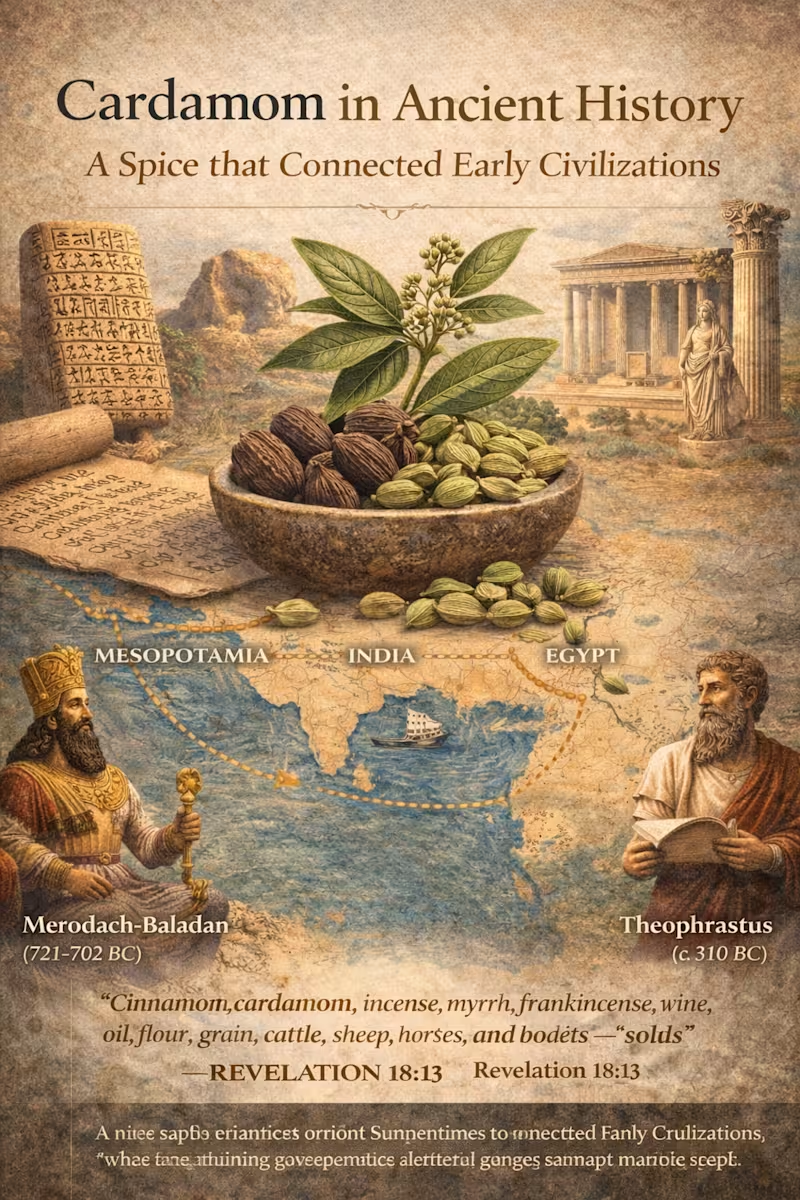
Cardamomโs story spans thousands of yearsโfrom the gardens of Mesopotamian rulers to the spice routes linking India, Egypt, and the Mediterranean. Ancient texts, archaeological evidence, and botanical research reveal how this small aromatic pod influenced trade, medicine, and cuisine across civilizations. Transforming historical research into engaging narratives is one of the most rewarding aspects of writing about food, culture, and science. If you are working on a book, article, or research project in history, food culture, herbs, or natural products, I help turn complex material into clear, compelling writing. #Ghostwriting #BookWriting #HistoryWriting #FoodHistory
2
125
0
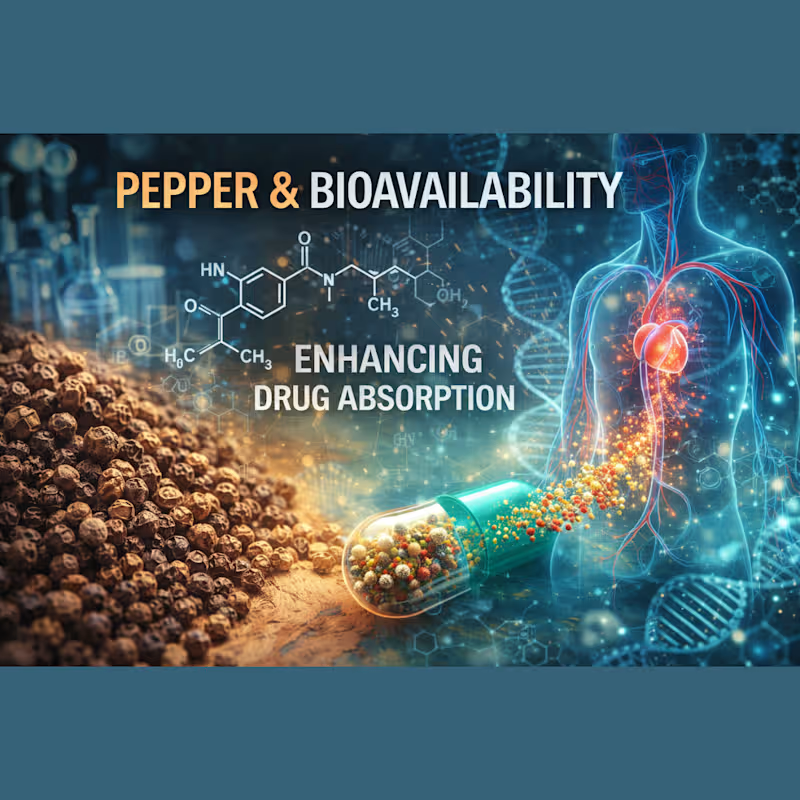
Black pepper (Piper nigrum) is more than a culinary spiceโit is a pharmacological bioavailability enhancer. Its active compound, piperine, modulates drug-metabolizing enzymes and transport pathways, increasing systemic absorption of co-administered compounds such as curcumin. Long recognized in traditional formulations and now supported by pharmacokinetic research, pepper illustrates a core principle of therapeutics: efficacy depends not only on potency, but on delivery dynamics.
0
74
3
GenAI has changed cybersecurity. Itโs no longer just about protecting systems. Itโs about protecting reality. AI can now clone voices, fake videos, and automate phishing at scale. For digital government, that means: โข Identities can be spoofed โข Messages can be fabricated โข Trust can be manipulated Cybersecurity must move from IT function โ public trust function. Digital transformation without embedded security is exposure. #GovTech #Cybersecurity #DigitalGovernment #GenAI #PublicPolicy
3
138
0
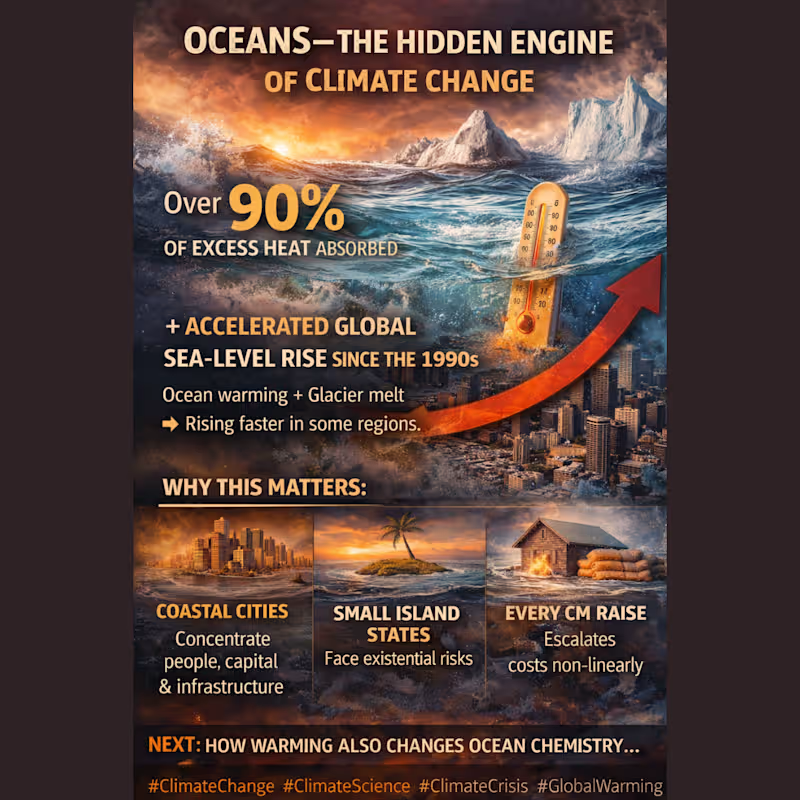
90% of the excess heat from climate change is absorbed by the oceans. That single fact explains why: โข Sea levels are rising faster since the 1990s โข Coastal risks are accelerating โข Some impacts are now locked in for centuries Climate change isnโt just in the air. Itโs unfolding in the oceansโquietly, relentlessly. Next: how warming oceans also change chemistry. #ClimateChange #ClimateScience #ClimateCrisis #GlobalWarming #EarthSystems #ClimateRisk #ExtremeWeather #ClimateAction
0
72
Google Scholar
(19)
Follow
Message
Dr. Shashank V
Delhi, India
Medical professional and writer.
Follow
Message
Medical professional and writer.
0
A Man with a Rare Heart Infection and Its Effects on His Body
0
12
0
How Obesity and Genetics Lead to Insulin Resistance and Type 2 โฆ
0
17
0
Diabetes-A Global Epidemic: Types, Risk Factors, and Complicatiโฆ
0
33
View more โ
Google Scholar
(3)
Follow
Message
Naim Syed
London, UK
Academic writer, editor and proofreader

Follow
Message
Academic writer, editor and proofreader
0
Theory on Bypassing Heisenberg Uncertainty Principle
0
18
0
Wearable Devices and Insomnia Management Study
0
8
0
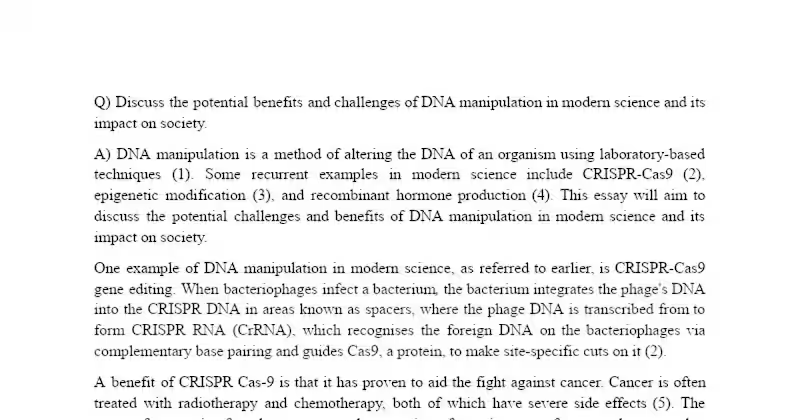
Exploring DNA Manipulation
0
5
0
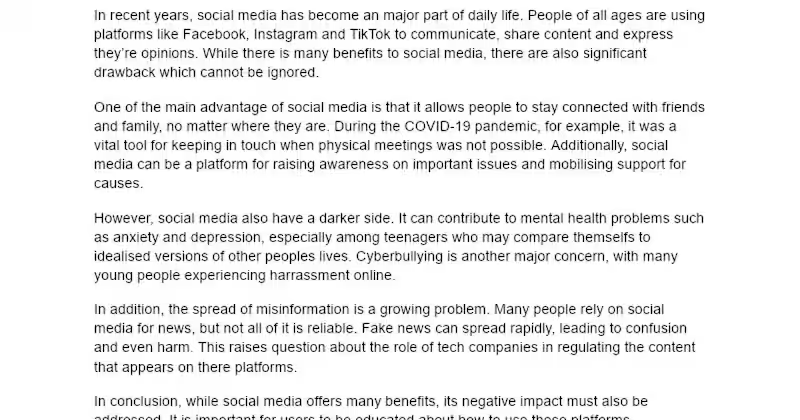
Proofreading Articles on Social Media and Exercise
0
8
Google Scholar
(3)
Follow
Message
Dr. Anuj Shukla
Haridwar, India
Stanford-Certified Medical Writer | Expert in Health Blogs|
Follow
Message
Stanford-Certified Medical Writer | Expert in Health Blogs|
1
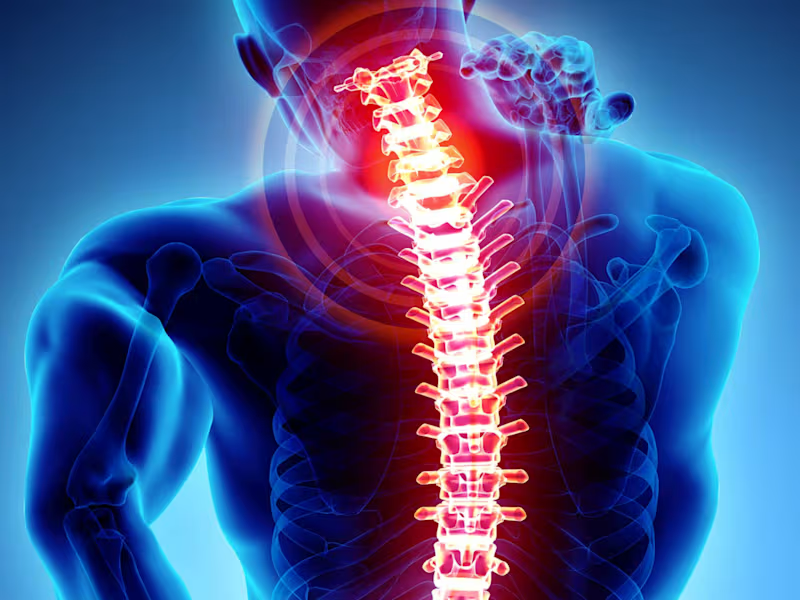
Chiropractic Care Comprehensive Overview
1
2
1
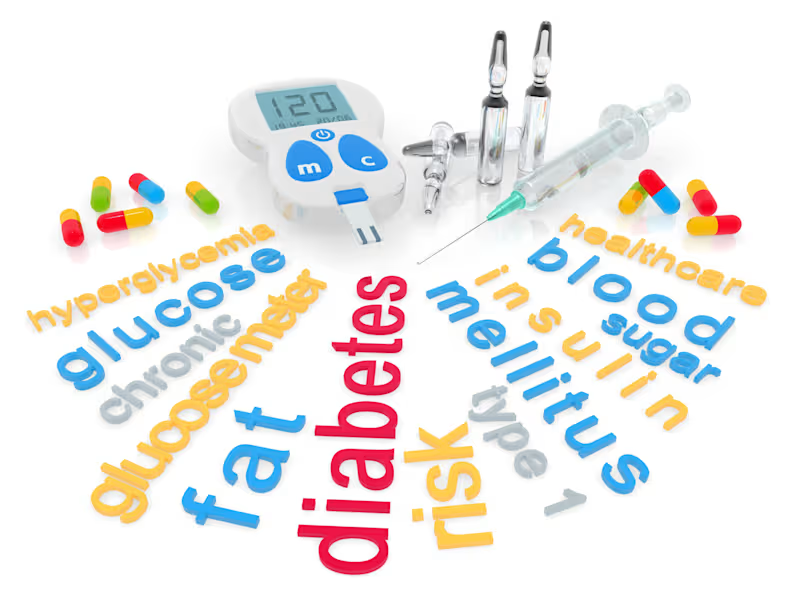
Lifestyle Modifications in Type 2 Diabetes Management
1
2
1
Silent Myocardial Infarction in Diabetic Elderly Patient-
1
2
1
Understanding Your Fasting Insulin Test Results
1
3
Google Scholar
(4)
Follow
Message
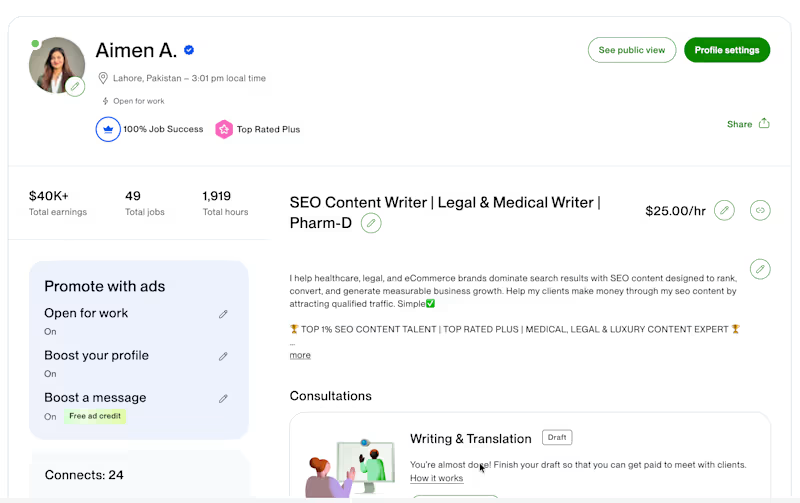
Aimen Arij
pro
Gujranwala, Pakistan
SEO Content Writer | Legal & Medical Writer | Pharm-D
New to Contra
Follow
Message
SEO Content Writer | Legal & Medical Writer | Pharm-D

0
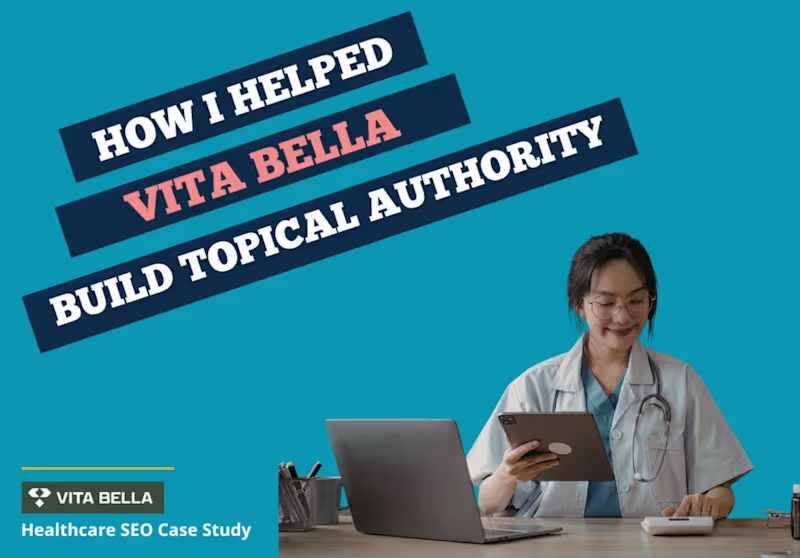
I led the healthcare SEO content strategy for Vita Bella, a wellness and longevity brand specializing in hormone optimization, weight management, and preventive care. My role included keyword research, content planning, topical authority development, and SEO-focused content creation. By building content around patient search intent and core service areas, I helped strengthen the brand's online authority, improve search visibility opportunities, and create a scalable content framework designed for long-term organic growth and patient trust.
0
91
0
5+ years of SEO experience. 100+ projects. Top Rated Plus on Upwork. I turn websites into growth engines through SEO strategy, content, technical optimization, and search-focused execution. From keyword research and content strategy to technical SEO, on-page optimization, website improvements, and AI-assisted content workflows, Iโve worked across competitive industries to help businesses build stronger organic visibility. What I bring: โ 5+ years of hands-on SEO experience โ 100+ SEO & content projects โ Top Rated Plus freelancer on Upwork โ Technical + on-page SEO expertise โ Content strategy & topical authority โ Search-intent driven content โ Website & performance optimization โ Data-driven SEO execution I donโt believe in SEO for the sake of rankings. I build strategies that connect search visibility with real business growth. Now showcasing my work on Contra. ๐ #SEO #SEOSpecialist #TechnicalSEO #ContentStrategy #OrganicGrowth #SEOContent #DigitalMarketing #Contra
0
11
0
๐ $40,000+ earned on Upwork! Happy to share a milestone that means a lot to me. ๐ From sending my first proposals to building long-term client relationships, every project, revision, deadline, and challenge has been part of the journey. Today, Iโm officially at $40K+ in total Upwork earnings, with 49 completed jobs, 1,900+ hours worked, 100% Job Success, and Top Rated Plus status. ๐ But honestly, the number isnโt the most exciting part. What Iโm most proud of is the trust behind it, clients trusting me with their brands, content, SEO strategies, and growth. My journey has taught me that freelancing isnโt just about getting projects. Itโs about showing up consistently, delivering quality, learning constantly, and turning one opportunity into the next. And this is just another milestone, not the finish line. Next goal: bigger projects, stronger partnerships, and even more value for the clients I work with. ๐ Grateful for everyone who has been part of the journey. โค๏ธ #Freelancing #Upwork #Freelancer #SEO #ContentWriting #Copywriting #RemoteWork #FreelanceJourney #CareerGrowth
0
16
0
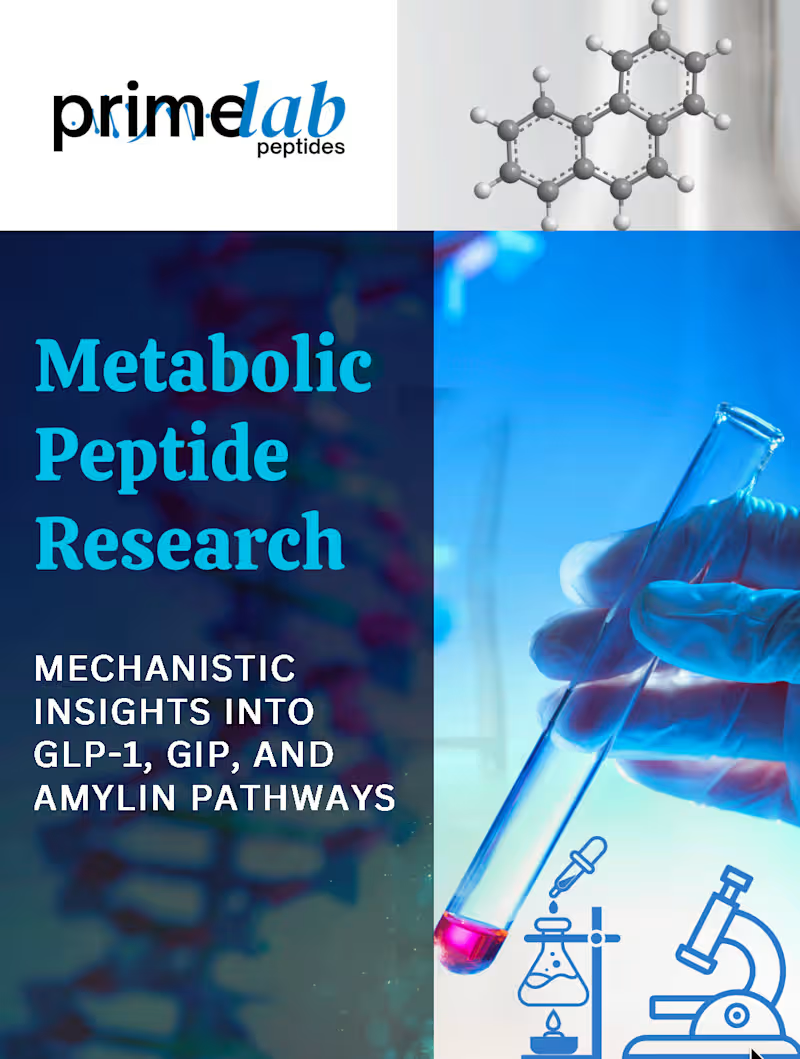
Medical E-book for Prime Lab Peptides Wrote and structured a comprehensive, research-backed e-book for Prime Lab Peptides, translating complex peptide science into clear, accessible content for a mixed audience of researchers and informed consumers. Leveraging my clinical pharmacy background (Pharm-D), I ensured every claim was accurate, well-sourced, and compliant with the sensitivities of writing in the peptides space โ balancing scientific credibility with readability. The e-book covered mechanisms of action, research applications, and safety considerations, and was designed to strengthen the brand's authority while supporting its content marketing and lead-generation goals.
1
0
43
Google Scholar
(1)
Follow
Message
Isbah Studio
Atlanta, USA
Copywriter, Content Writer, Paralegal

5.0
Rating
8
Followers
Follow
Message
Copywriter, Content Writer, Paralegal

0
Paralegal & Public Policy Portfolio
0
90
0
SEO Blogging Skills
0
42
0
Copywriting - Fame Flame (Social Media Service)
0
24
0
Copywriting - Therapist & Social Worker
0
29
Google Scholar
(1)
Follow
Message
Explore people