Explainer Video Agency | 4,000+ Videos Created 🚀





Principal Engineer, PHP Backend specialist, Article Writer
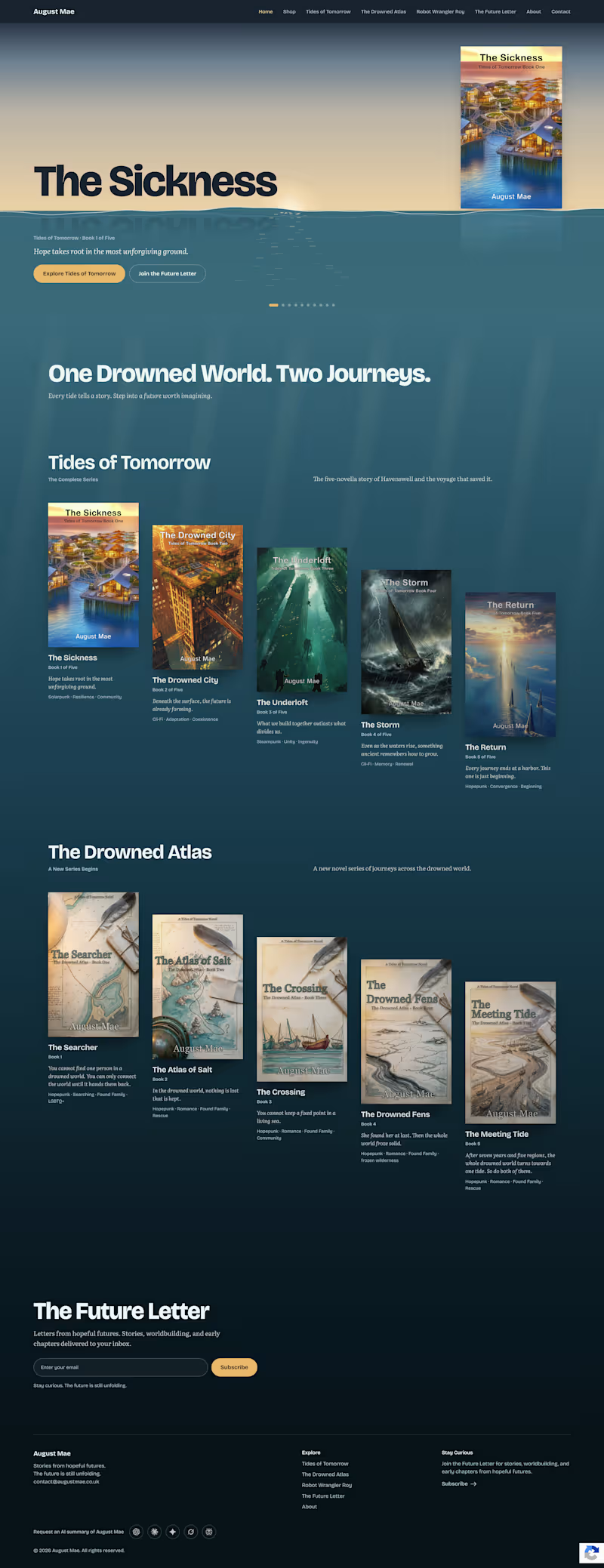
Repeat client work, this time the brief was a bit more specific. Client's original site had done it's work, but his body of work has grown to an extent now that the site needed a refresh. This time the client wanted a more obvious theme, and as their books are based around a flooded world then the theme was a no brainer. Getting the precise palette for the above sea elements was difficult and we went through a good number of iterations to get it right. It's amazing how if you make the sky too deep or add too much purple then the sea with these colours starts taking on a Disney look and feel! Definitely not what was wanted.
Gently animated water to give undulating rhythm to the page without making it memory intensive or overly distracting.
augustmae.co.uk (https://augustmae.co.uk)
1
78
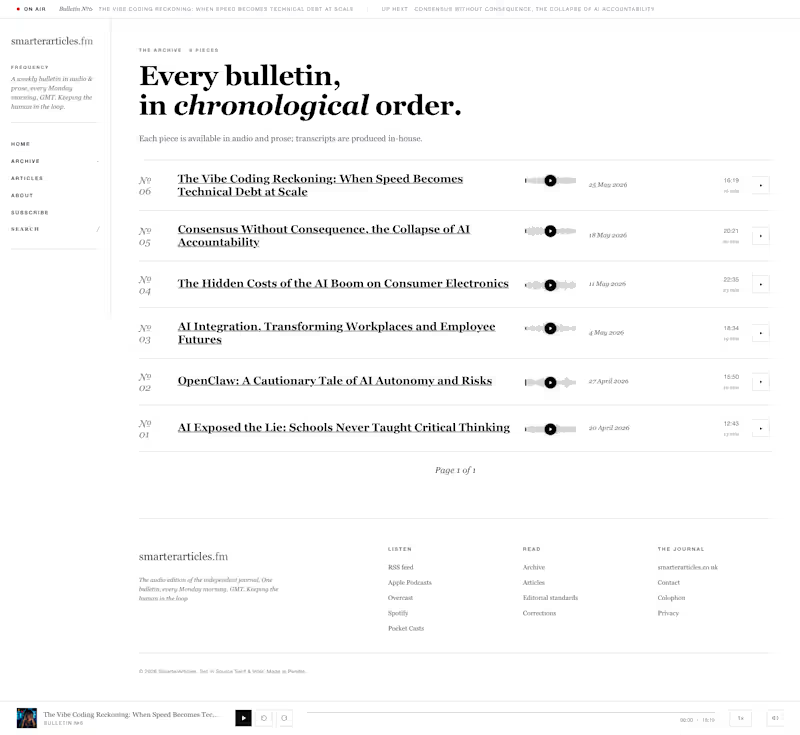
Today I've launched the next evolution of my non-fiction written work. For just over a year I've been writing long-form daily articles about Technology, Governance and the Human cost of the things we build at smarterarticles.co.uk (https://smarterarticles.co.uk)
Six weeks ago I launched a podcast, taking one of my published articles, and reworking it for the podcast format, with a new episode weekly.
Today I launched the accompanying website: smarterarticles.fm (https://smarterarticles.fm)
My spec was simple:-
1. Keep it simple, and minimalistic. My articles are published on a simple site, headlines, and content, and nothing more. I wanted to keep that simplicity.
2. Clean, professional, broadsheet-style publication.
3. No admin system. The site and its content take care of itself. I publish articles on a site that has an RSS feed, and I publish a podcast that has an RSS feed, so this site consumes both and the source of truth is where the content is originally published.
4. Plain English. Clear, precise, human. Read the About page or the Privacy Policy. I'm not trying to hide behind technobabble, only clarity.
5. No Cookies. No Tracking. No Analytics. No Recommendation Engine. No Profiling. No Selling or Sharing of Personal Data, clearly stated as a deliberate decision not an oversight seeking correction.
Here are some example pages, I'd encourage you, if you so wish, to visit the site and let me know your thoughts: smarterarticles.fm (https://smarterarticles.fm)
0
111

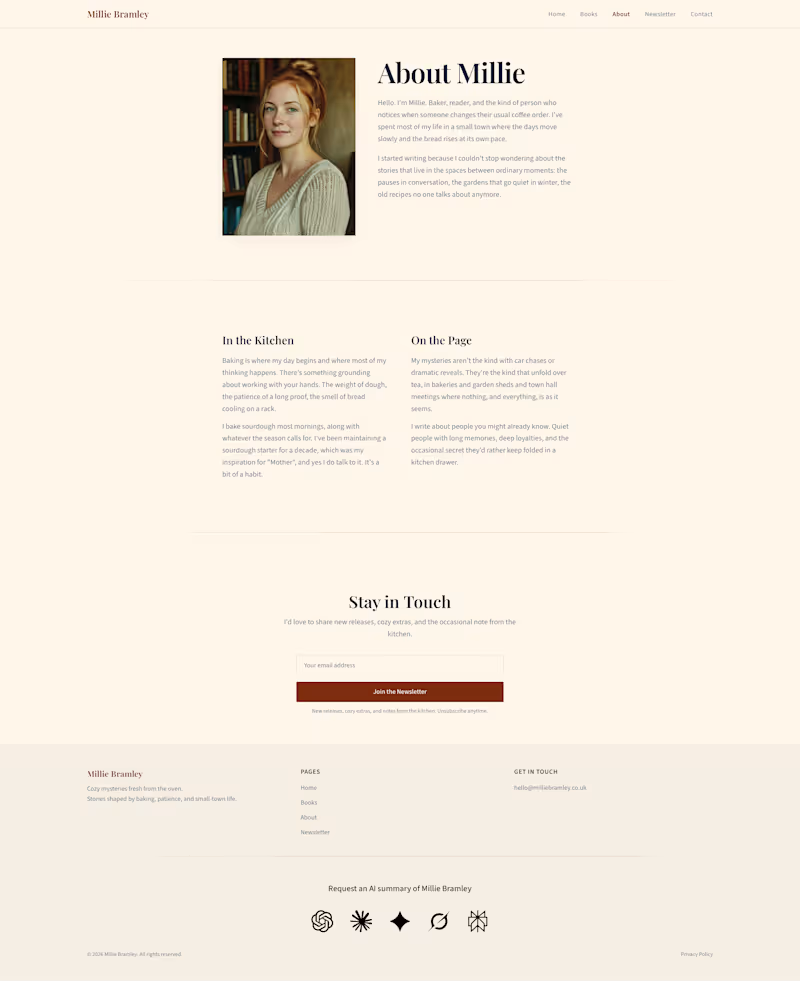
Another Indie Author project, completely different vibe for Millie Bramley. Cosy Mystery author with a very definite vision for what she wanted, but with a minimal budget. Death & Sourdough (https://www.amazon.com/stores/Millie-Bramley/author/B0GMK7DZ9Y) is a great premise and she's got such a refreshing attitude. Basic Author website, automations to pull in book data for minimal administrative overhead, MailerLite integration for newsletters. A real pleasure. https://www.milliebramley.co.uk
1
3
198

Graphic Designer and Content Creator
- $1k+
- Earned
- 1x
- Hired
- 5.0
- Rating
- 44
- Followers
Graphic Designer and Content Creator

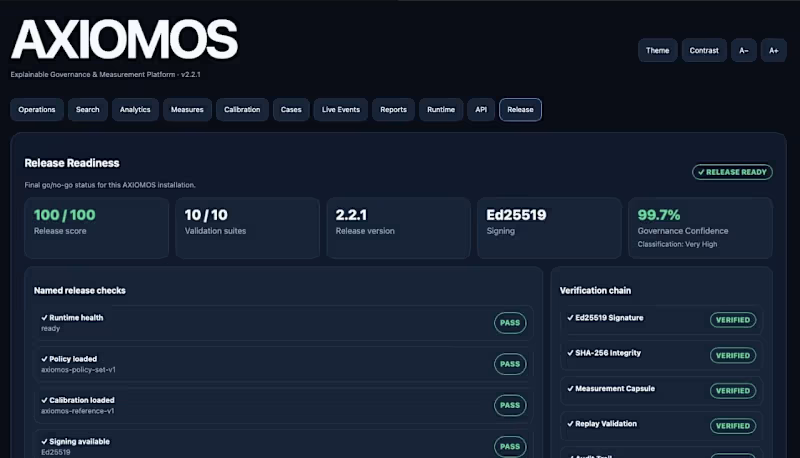
AI Governance Auditor for Agents & Product Teams

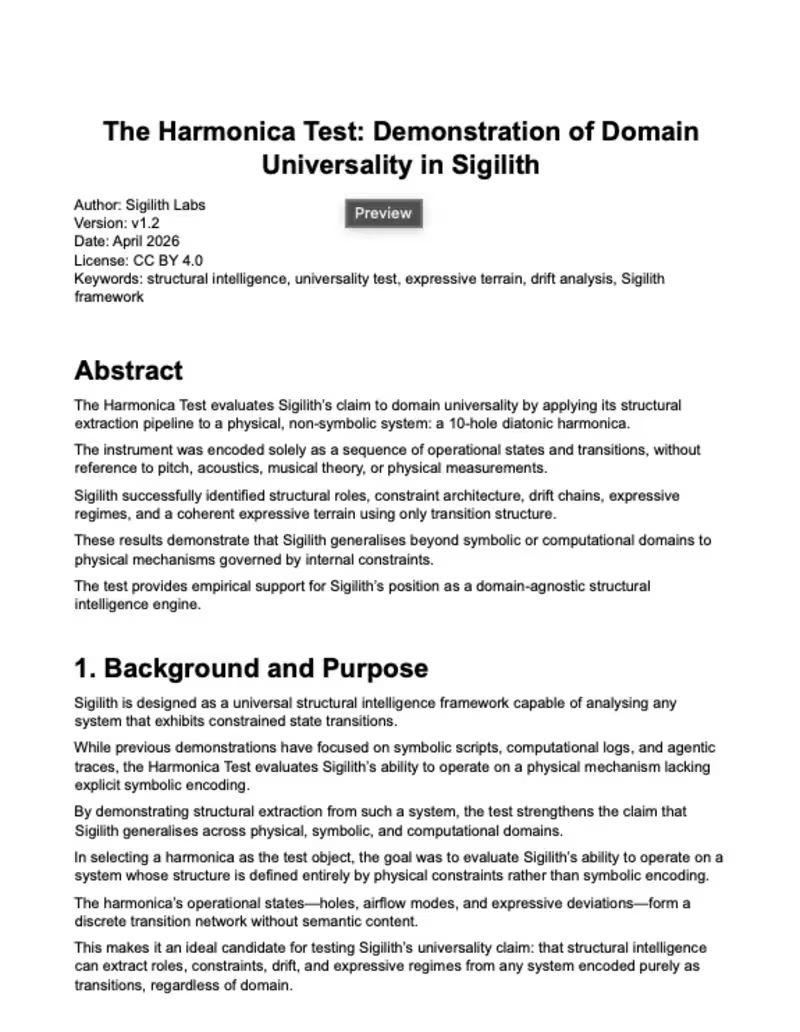
Sigilith Harmonica Test — Domain-Agnostic Structural Analysis
I designed the Harmonica Test to evaluate whether Sigilith could generalise beyond symbolic and computational systems. A 10-hole diatonic harmonica was encoded purely as operational states and transitions, without using pitch, acoustics, musical theory or physical measurements. Sigilith then identified structural roles, constraints, drift chains and distinct operating regimes from transition topology alone. The experiment demonstrates how the same structural-analysis methodology can be applied across fundamentally different domains.
3
195
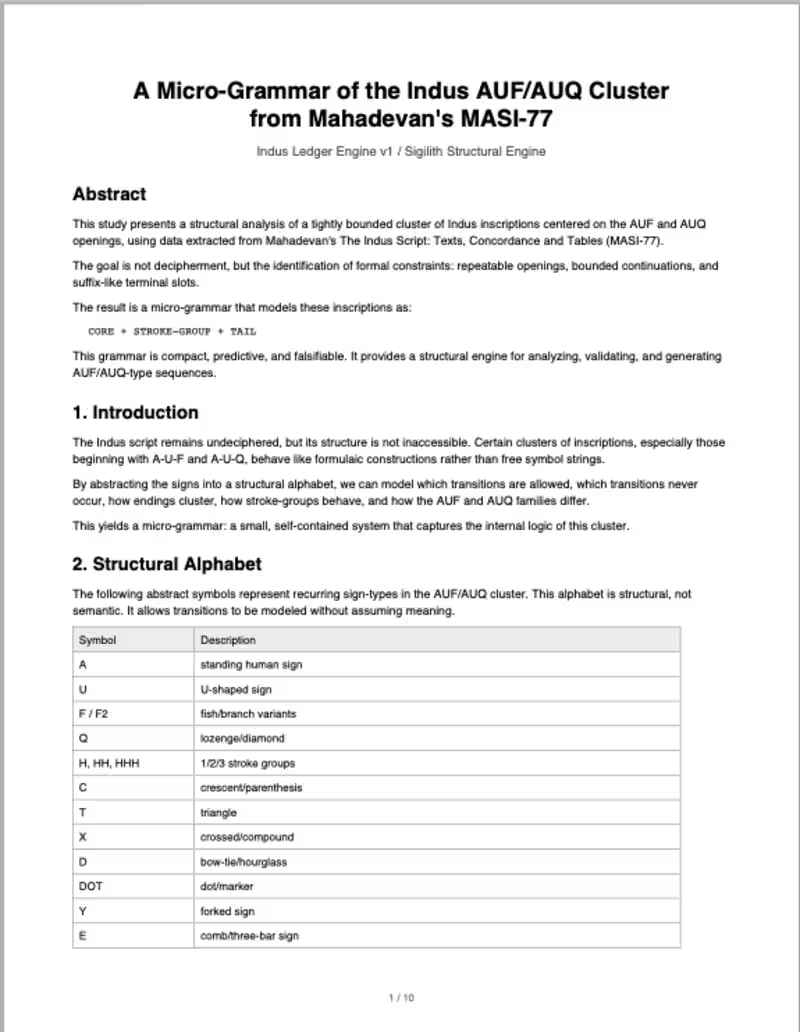
Sigilith — Indus AUF/AUQ Structural Micro-Grammar
I developed a computational micro-grammar for a bounded cluster of Indus inscriptions using the Sigilith Structural Engine. Rather than attempting decipherment, the project models recurring structural behaviour through normalized symbols, transition rules and finite-state constraints. The resulting CORE + STROKE-GROUP + TAIL architecture can classify legal and illegal sequences, calculate structural stability, detect collapse points and generate or predict structurally valid sequences. The work demonstrates how formal computational methods can investigate an undeciphered symbolic system without making semantic claims.
2
80

Composer • Film & Visual Media • Music Producer
Composer • Film & Visual Media • Music Producer




Email Marketing with Confidence

View more →

Designing impactful digital experiences through web-design


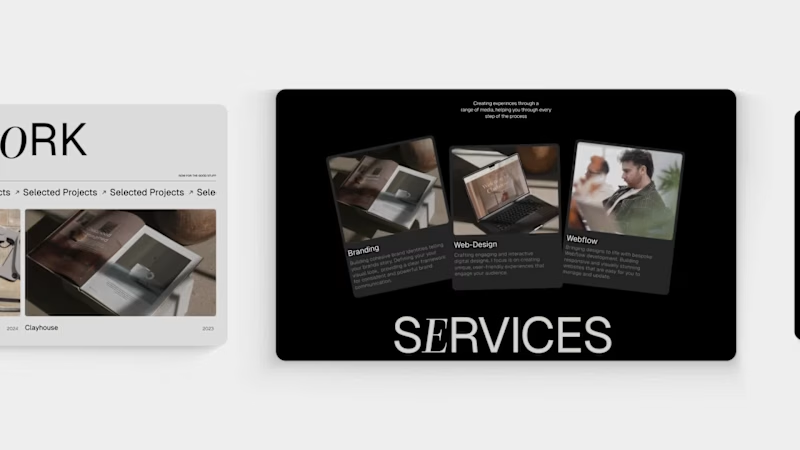

PakDesign.net: High-impact, building interact web solutions.
PakDesign.net: High-impact, building interact web solutions.