Freelance Consultants in MiamiFreelance Consultants in MiamiAmplify - Advocacy, Referral & Communication Infrastructure
Project category
Client Retention / Communication Infrastructure / Lifecycle Strategy
Short description
Built communication infrastructure for relationship-dependent businesses to strengthen client retention, increase advocacy, and create more consistent referral momentum after delivery.
Overview
In relationship-dependent businesses, the work is only part of what clients evaluate. They are also evaluating responsiveness, consistency, follow-through, and how the business feels between major deliverables. I built Amplify to strengthen the communication infrastructure behind that experience so strong client relationships did not quietly fade after the initial engagement, but instead turned into repeat business, referrals, advocacy, and long-term relationship value.
The problem
Many companies assume that if the service was strong, the relationship will naturally continue. In reality, a lot of client loss happens in the space between deliverables - when follow-up is inconsistent, wins are not reinforced, referrals are never invited, and the relationship is left to run on memory instead of design. For relationship-dependent businesses, that creates a hidden retention risk because revenue depends on clients staying, returning, and speaking well of the business long after the core project is complete.
What I built
I built a lifecycle communication infrastructure that made post-delivery relationships more intentional, visible, and repeatable. The project included communication touchpoints designed to reinforce trust, surface advocacy opportunities, and make it easier for satisfied clients to stay connected to the business instead of quietly drifting away.
Deliverables
Client lifecycle communication map
Post-engagement follow-up sequence
Referral and advocacy request timing framework
Testimonial and proof capture workflow
Relationship-nurture messaging for past and current clients
Communication standards for keeping the business visible between engagements
My role
I designed the strategy, structure, messaging, and touchpoint logic for the project. That included identifying where communication was breaking down after delivery, clarifying the moments that most influenced retention and referrals, and building a more durable system the business could use consistently without relying on memory or individual follow-up habits.
Outcome
The result was a stronger client communication rhythm that supported retention beyond the initial scope of work. Instead of leaving referrals, re-engagement, and advocacy to chance, the business had a clearer infrastructure for staying top of mind, protecting relationship value, and turning strong delivery into compounding trust.
Your clients experience your business through your people. I build the communication infrastructure that reinforces trust after delivery - so strong relationships turn into repeat business, referrals, and advocacy. 90-Day Onboarding System for a Relationship-Driven Team
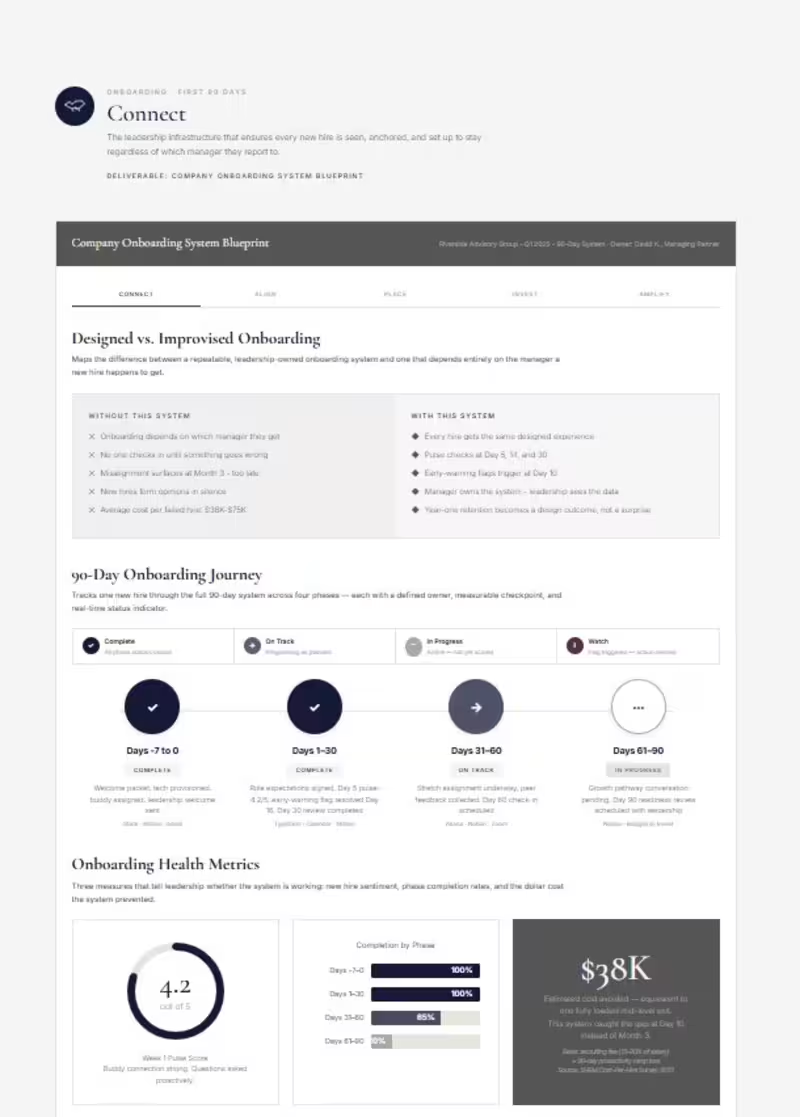
A lot of onboarding breaks because it is improvised instead of designed. This project turned a vague “first 90 days” into a visible system: a blueprint that compares designed vs. improvised onboarding, a phase-based 90-day journey, and a simple set of metrics that show whether the system is working. The goal was to give leadership a way to see onboarding at a glance and catch risk before it turned into turnover.
Problem
Onboarding depended heavily on individual managers. Some hires got a great experience; others got silence. There was no shared view of what should happen by when, no early-warning signals when something was off, and no way to quantify the cost of late or failed onboarding.
What I built
Company Onboarding System Blueprint: “designed vs. improvised” view that shows what changes with a real system
90-day onboarding journey broken into phases with owners, actions, and checkpoints
Early-warning detection timeline showing when risk flags should appear and how quickly they are resolved
Onboarding health metrics: pulse score, completion by phase, and estimated cost avoided when issues are caught early
My role
I designed the onboarding system end to end: mapped the 90-day journey, defined which actions needed to be leadership-owned vs. manager-owned, designed how risk would be surfaced, and created a simple metrics view leadership could actually use.
Outcome
The company moved from “every manager does something different” to a repeatable onboarding experience with clear expectations and visibility. Leadership could see where each new hire was in the journey, which actions were complete, and where any risk signals were appearing.