
Freelance Fullstack Engineers in LondonFreelance Fullstack Engineers in London
Full-Stack & AI Dev | TypeScript, Next.js, React, Node
$50k+
Earned
5x
Hired
5.0
Rating
92
Followers
Full-Stack & AI Dev | TypeScript, Next.js, React, Node
Frontend Dev & Web Designer | Framer, Figma, Decks

$1k+
Earned
2x
Hired
5.0
Rating
13
Followers
Frontend Dev & Web Designer | Framer, Figma, Decks
Creative code → Apps ✦ Research ✦ Events

$5k+
Earned
1x
Hired
105
Followers
Creative code → Apps ✦ Research ✦ Events
AI Engineer | LLM Agents - RAG & Evals - Full Stack
5.0
Rating
19
Followers
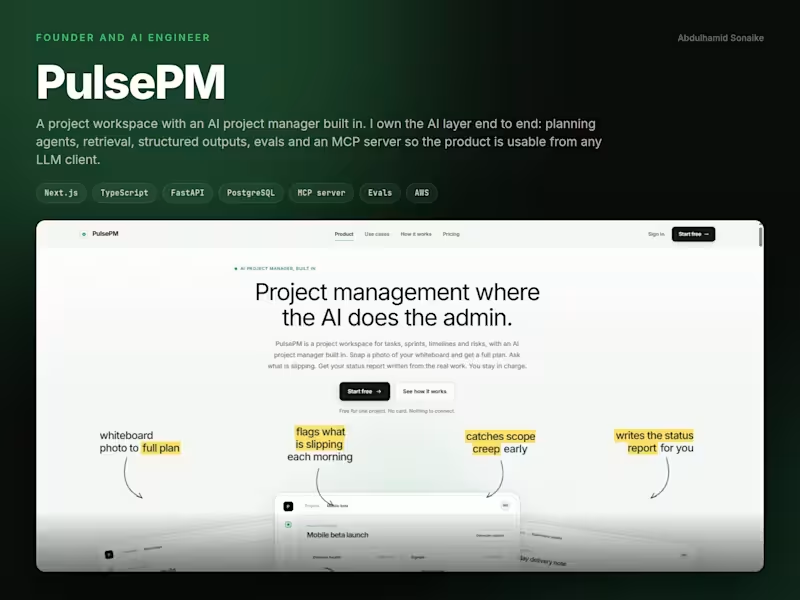
AI Engineer | LLM Agents - RAG & Evals - Full Stack

AI Product Engineer | Building Production Ready AI Apps
23
Followers
AI Product Engineer | Building Production Ready AI Apps
Cover image for The hardest part of AI-assisted
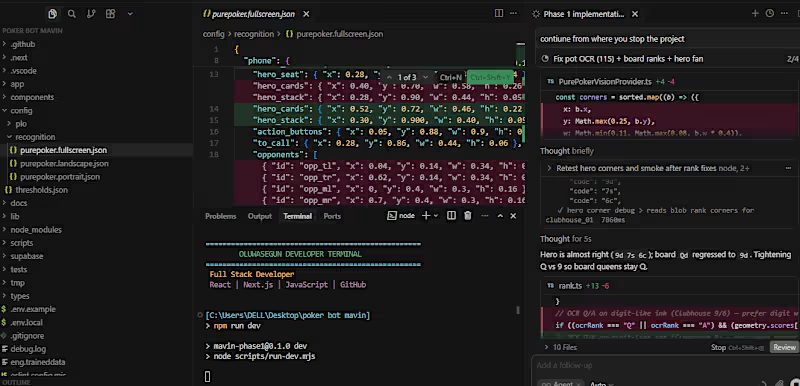
The hardest part of AI-assisted development isn't generating code. It’s knowing when the code is wrong. I’m currently working on a poker-vision project where the system has to interpret what’s happening on the table — including card recognition, board ranks, hero cards, and positional coordinates. And this is exactly where AI-assisted development gets interesting. The agent can make a change. It can tell you the change looks correct. It can even run the code. But then you look at the actual result and realize: “Something is still wrong.” In this case, I was working through an OCR/ranking issue where the system was reading card information and producing an incorrect interpretation. So the workflow became: Inspect → Understand → Change → Run → Compare → Debug → Verify. Not: Prompt → Generate → Ship. That difference matters. AI coding agents are increasingly capable of working across repositories, editing multiple files, running tools and debugging issues. But current engineering discussions increasingly focus on the verification layer making sure generated changes actually produce the intended behavior. CodeRabbit (https://www.coderabbit.ai/guides/coding-agent-workflow?utm_source=chatgpt.com) For me, this is changing how I think about development. The value isn't just how quickly I can generate code. It’s how well I can understand the system, identify the real problem, direct the agent, and verify the final result. That's where engineering judgment still matters. And honestly, some of the best lessons come from the bugs that refuse to disappear after the first fix. 🔥 Developers using AI: what's one bug that looked “fixed” until you tested the actual behavior?
0
20