Freelancers using LinkedIn in LahoreFreelancers using LinkedIn in Lahore
Digital Marketing Expert | SEO, Content & Analytics

New to Contra
Digital Marketing Expert | SEO, Content & Analytics

Cover image for Most e-commerce brands celebrate traffic.
Most e-commerce brands celebrate traffic. But traffic doesn't pay the bills. Revenue does. One of the biggest sources of hidden revenue loss happens in the few moments between "Add to Cart" and "Complete Purchase." Customers have already shown buying intent. Yet many businesses lose them because of avoidable friction. Here are five areas where revenue quietly slips away and how to recover it: 1. Optimize the Checkout Experience (CRO) Every unnecessary field, confusing step, or slow-loading page increases abandonment. Continuous Conversion Rate Optimization (CRO) helps remove these barriers and improve completed purchases. 2. Bring Interested Buyers Back with Remarketing Most visitors won't convert on their first visit. Smart remarketing campaigns remind high-intent shoppers about the products they viewed, keeping your brand top of mind until they're ready to buy. 3. Automate Customer Follow-Up Email and SMS automation ensure potential customers don't disappear after leaving your website. Personalized sequences can recover interest while strengthening long-term customer relationships. 4. Recover Abandoned Carts A well-timed abandoned cart reminder, combined with personalized messaging or limited-time incentives, can recover sales that would otherwise be lost. 5. Let Analytics Reveal the Bottlenecks Platforms like Google Analytics, Microsoft Clarity, and heatmaps show exactly where customers drop off. Instead of guessing what's wrong, you can make data-driven improvements that directly increase conversions. The difference between an average online store and a high-performing one often isn't getting more visitors. It's converting more of the visitors you already have. Before increasing your advertising budget, ask yourself: How much revenue is currently leaking from your checkout funnel? #Ecommerce (https://www.linkedin.com/search/results/all/?keywords=%23ecommerce&origin=HASH_TAG_FROM_FEED) #ConversionRateOptimization (https://www.linkedin.com/search/results/all/?keywords=%23conversionrateoptimization&origin=HASH_TAG_FROM_FEED) #DigitalMarketing (https://www.linkedin.com/search/results/all/?keywords=%23digitalmarketing&origin=HASH_TAG_FROM_FEED) #MarketingAnalytics (https://www.linkedin.com/search/results/all/?keywords=%23marketinganalytics&origin=HASH_TAG_FROM_FEED) #RevenueGrowth (https://www.linkedin.com/search/results/all/?keywords=%23revenuegrowth&origin=HASH_TAG_FROM_FEED)
0
17
Cover image for In digital marketing, we celebrate
In digital marketing, we celebrate the visible milestones: the demo booked, the form filled, the contract signed. But long before a lead converts, something quieter is happening. A click on a headline. A scroll past the 50% mark. A save for later. A return visit after three days. These are micro-conversions: the small signals that indicate attention, intent, and trust forming in real time. Most teams optimize for the macro outcome. Fewer optimize for the behavioral breadcrumbs that lead there. Micro-conversions matter because modern buying journeys are rarely linear. Especially in B2B and high-consideration markets, buyers research silently. They compare. They validate. They revisit. What looks like inactivity is often private evaluation. A scroll depth increase may signal stronger relevance. A content save suggests perceived value. A second click within the same session indicates curiosity turning into exploration. Individually, these actions look insignificant. Collectively, they map intent. The organizations that outperform don’t just track conversions, they study engagement momentum. They identify friction points where scrolls stop. They notice which headlines generate saves instead of just clicks. They analyze what content drives repeat visits rather than vanity impressions. Micro-conversions shift the focus from “Did they buy?” to “Are they progressing?” When you design for micro-wins, you design for momentum: 1) Clear narrative flow keeps scrolls moving. 2) Depth of insight earns saves. 3) Strong internal linking encourages exploration. 4) Value-first content drives repeat engagement. The larger customer journey is built on these small decisions. Trust is rarely a single leap. It is accumulated through dozens of micro-affirmations. The future of performance marketing is not louder funnels. It is smarter observation. Track the small wins. Optimize the quiet signals. Build systems that respect how people actually decide. Big results are rarely one moment. They are the outcome of many small, intentional interactions.
0
67
Full Stack Web & Mobile Dev | Next Js | AI Agent | React

2x
Hired
5.0
Rating
33
Followers
Full Stack Web & Mobile Dev | Next Js | AI Agent | React
Verified B2B Leads & Data Enrichment for Outreach
5.0
Rating
15
Followers
Verified B2B Leads & Data Enrichment for Outreach

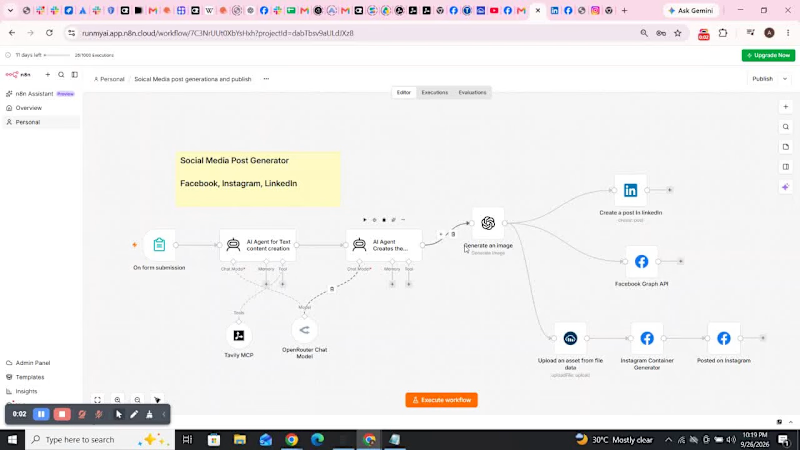
From Websites to Automation Build Systems That Convert
Graphic designer willing to take creative risks
1x
Hired
5.0
Rating
Graphic designer willing to take creative risks