

Data, Automation, AI Agents, Buildship, Framer, Bubble


Data, Automation, AI Agents, Buildship, Framer, Bubble




I install done-for-you analytics in high-ticket businesses.
- $10k+
- Earned
- 3x
- Hired
- 4
- Followers
I install done-for-you analytics in high-ticket businesses.


AI & Data Engineer|Data & AI Architect| AWS|Azure |Snowflake
AI & Data Engineer|Data & AI Architect| AWS|Azure |Snowflake
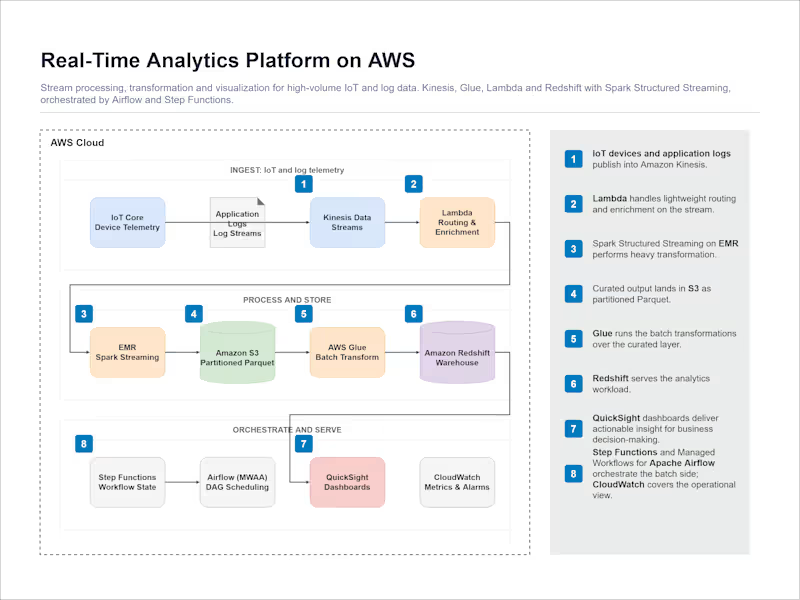
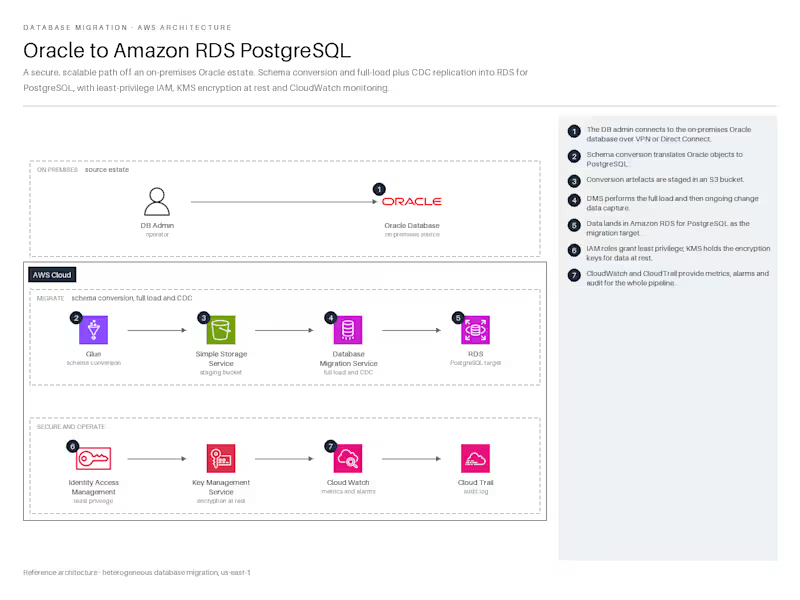
Oracle to Amazon RDS PostgreSQL
Designed and Implemented a secure, scalable architecture to migrate an on-prem Oracle database to Amazon RDS for PostgreSQL.
Data Flow: Modeled end-to-end flow, used AWS Glue (SCT) for schema conversion and DMS for full-load and CDC. Stored artifacts in S3 and loaded into RDS.
Services: Glue for conversion, DMS for Migration , S3 for artifacts, and RDS as target.
Security: IAM roles with least privilege, KMS for encryption at rest.
HA & DR: Architected in us-east-1 with Glue, DMS, RDS, S3, and monitoring via CloudWatch.
0
425
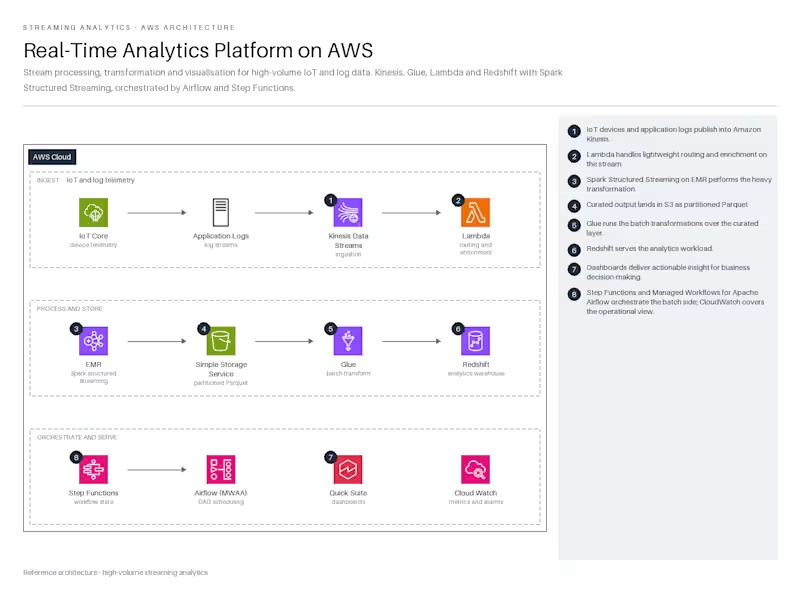
Real-Time Analytics Platform on AWS designed to ingest, process, and visualize high-volume streaming data from IoT devices and application logs.
Ingestion: Device telemetry (IoT Core) and application logs are published into Amazon Kinesis Data Streams, followed by lightweight routing and enrichment using AWS Lambda.
Processing & Storage: Amazon EMR performs heavy data transformations via Spark Structured Streaming, landing the curated output into Amazon S3 as partitioned Parquet files. AWS Glue then handles batch transformations before loading the data into Amazon Redshift for the analytics workload.
Orchestration & Serving: AWS Step Functions coordinate the batch processing workflows. Finally, Amazon QuickSight generates actionable business dashboards while Amazon CloudWatch monitors operational metrics and alarms
0
467
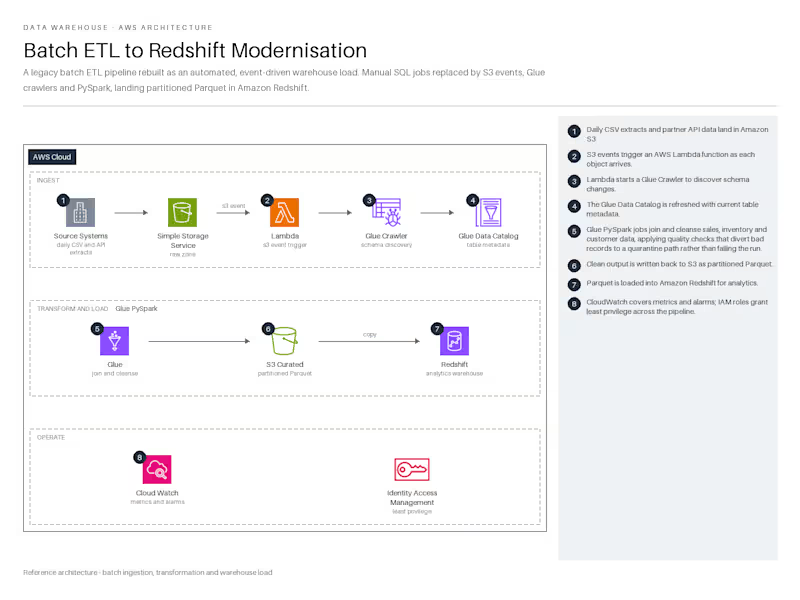
Batch ETL Data Warehouse Modernization
Led modernization of a legacy batch ETL pipeline into a scalable AWS-based data warehouse. Replaced manual SQL jobs with an automated system loading diverse sources into Amazon Redshift.
Ingestion: Daily CSVs and API data land in S3; S3 events trigger Lambda to launch Glue Crawlers and update the Data Catalog.
Transformation: Glue PySpark jobs join and cleanse sales, inventory, and customer data, apply quality checks, and move errors to a quarantine path.
Output: Partitioned Parquet files stored in S3 for loading into Redshift.
0
288

ML AI | Backend | Computer Vision | GenAI | LLM Agents
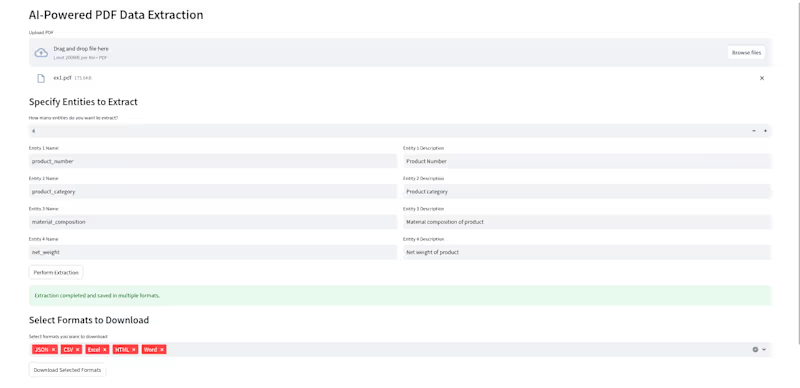
AI-Powered PDF Data Extraction
Organizations often face challenges in extracting useful information from a large volume of unstructured data in PDF format.
The lack of standardized data formats makes it difficult to efficiently retrieve relevant information, when dealing with documents.
The goal of this solution was to develop a flexible automated solution that allows users to specify entities to extract, enabling quick and accurate data retrieval from diverse PDFs.
The demo is available on request.
0
42

AI-Powered PDF Data Extraction
My role: AI Data Processing and Extracton Engineer
Organizations often struggle to extract structured and useful information from large volumes of unstructured PDF documents.
I developed a flexible AI-powered data extraction solution that allows users to define the specific entities and fields they want to retrieve. The system processes different PDF formats, identifies relevant information, and converts it into structured, usable data.
The solution reduces manual document processing, improves retrieval accuracy, and can be adapted to different document types and business requirements.
A working demo link is attached.
0
155
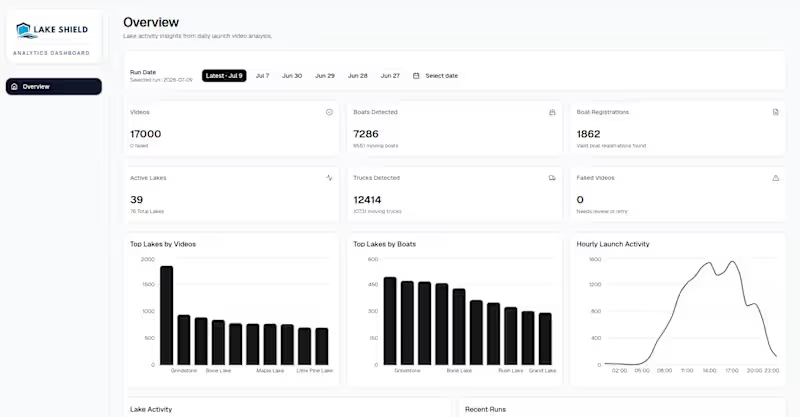
LakeShield - AI-Powered Video Monitoring and Vessel Intelligence Platform
I led the development of LakeShield as the Senior AI/ML Engineer and Lead Developer, taking the platform from initial research and experimentation to a scalable production system.
My responsibilities included:
🔹 Designing the end-to-end AI and video-processing architecture
🔹 Building YOLO-based boat and vehicle detection pipelines
🔹 Developing object tracking and movement-analysis workflows
🔹 Implementing OCR for extracting boat registration information
🔹 Creating scalable pipelines for processing thousands of surveillance videos
🔹 Developing FastAPI backend services and automated data workflows
🔹 Building a Next.js analytics dashboard integrated with Supabase
🔹 Deploying and operating the AI pipeline on cloud GPU infrastructure
🔹 Optimizing model accuracy, inference speed, infrastructure costs, and reliability
🔹 Managing production monitoring, troubleshooting, maintenance, and continuous improvements
The platform transforms raw surveillance footage into structured operational insights, enabling automated vessel monitoring, vehicle activity analysis, registration extraction, and reporting.
This project involved complete technical ownership across Computer Vision, AI/ML, backend development, cloud infrastructure, data engineering, MLOps, and production operations.
#ComputerVision #VideoAnalytics #ArtificialIntelligence #ObjectDetection #OCR #MLOps #FastAPI #NextJS #Supabase #CloudEngineering
2
240

Shelfr - AI-Powered Retail Shelf Intelligence Platform
I led the development of Shelfr as the Senior Computer Vision Engineer and Lead Developer, taking the platform from the initial idea and system architecture through development, deployment, and production operations.
My work included:
🔹 Designing the complete computer vision and backend architecture
🔹 Building product detection, shelf analysis, OCR, and image-processing pipelines
🔹 Developing APIs and scalable data-processing workflows
🔹 Deploying and managing production systems on GCP cloud servers
🔹 Optimizing model accuracy, processing speed, and infrastructure performance
🔹 Managing production monitoring, reliability, troubleshooting, and ongoing improvements
🔹 Leading technical decisions across AI, backend, cloud infrastructure, and DevOps
The platform converts real-world retail shelf images into structured product and shelf-level insights, helping automate retail auditing, product visibility analysis, and inventory workflows.
#ComputerVision #RetailAI #LeadDeveloper #AIEngineering #GCP #MLOps #Python #CloudEngineering
2
229

Data & AI engineer building scrapers, RAG and automations
New to Contra
Data & AI engineer building scrapers, RAG and automations
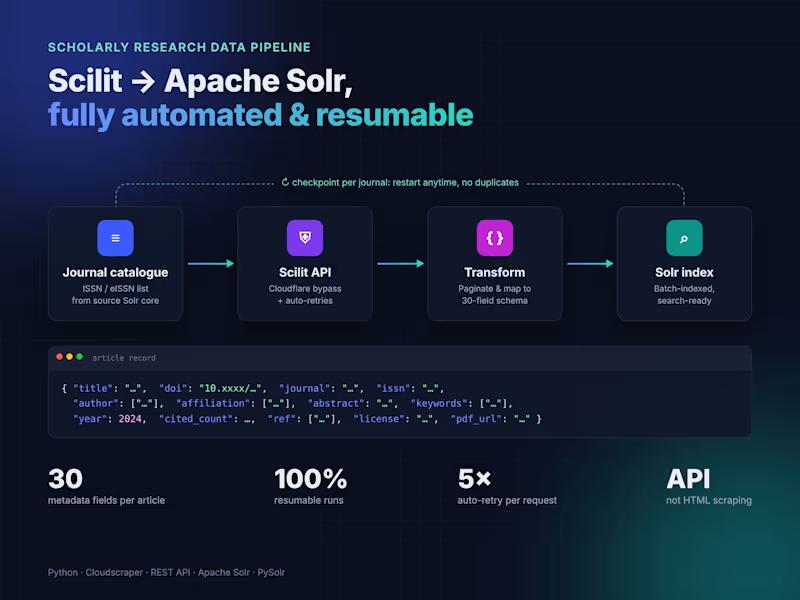
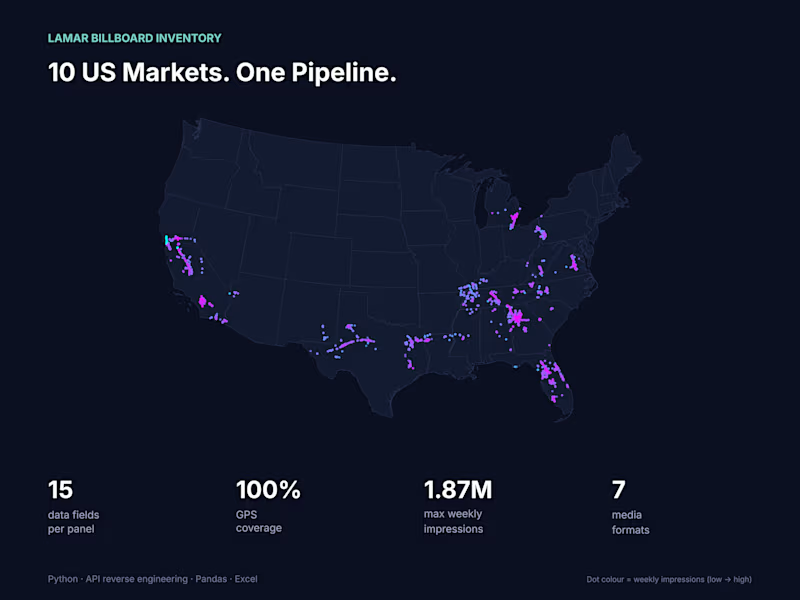

Clean Syntax. Scalable Intelligence
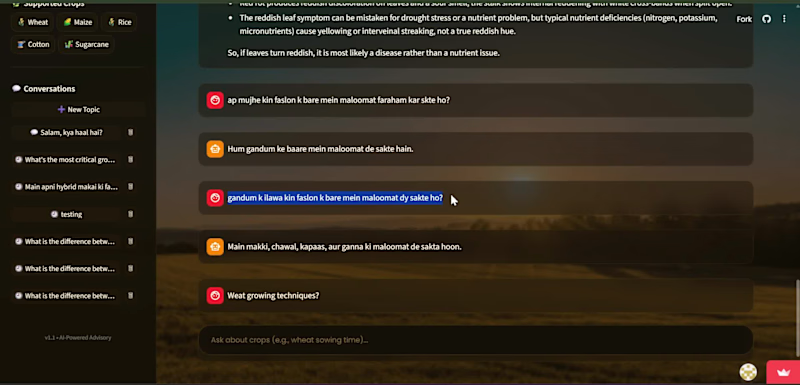
Intelligent Q&A assistant for farmers, powered by retrieval-augmented generation.
Curated 100+ agricultural documents and generated 1,000+ semantic knowledge chunks
Embedded using Sentence Transformers and indexed in ChromaDB for vector retrieval
Integrated Groq-hosted Llama models for accurate, context-grounded responses
Built and deployed a publicly accessible Streamlit application
Optimized retrieval through chunk-size tuning and prompt engineering
Validated retrieval and response quality against a curated test question set
0
33
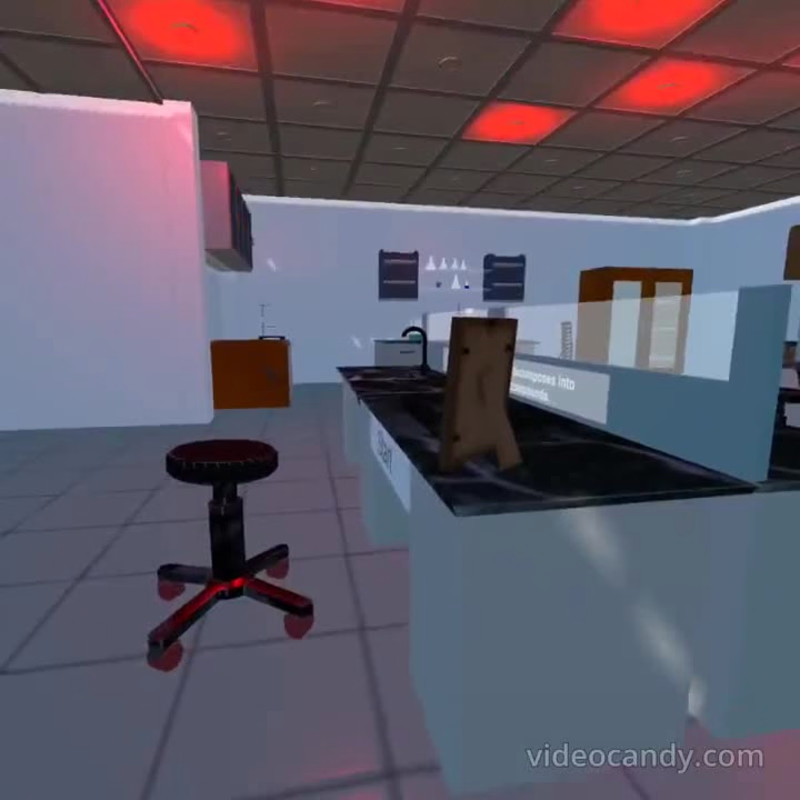
mmersive virtual reality chemistry lab for Meta Quest 2 that enables safe experimental practice and interactive XR simulations of laboratory procedures.
0
21
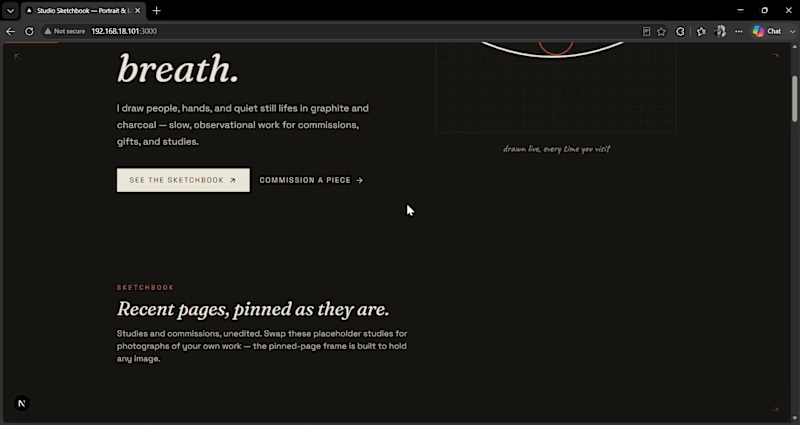
A dark-studio, sketchbook-themed portfolio for a portrait/line artist. Same stack as the AI-engineer portfolio: Next.js (App Router), Tailwind, Framer Motion, lucide-react, react-icons, and a working nodemailer contact form. The big thing is the AI , image to 3d model generator, which uses a tencent cloud API Stable Diffusion model to generate 3D models from 2D images. The models are then exported to GLTF format and displayed in the portfolio using Three.js.
0
24
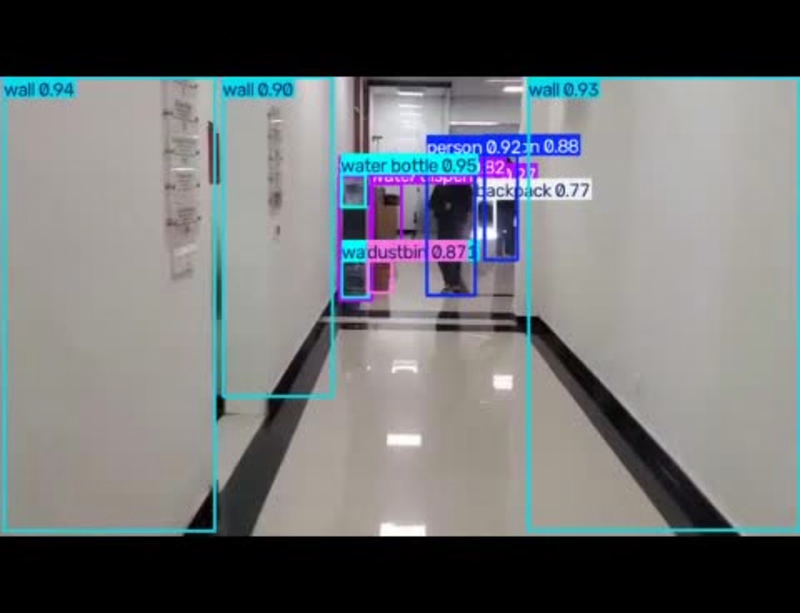
The system is built upon a dual-model hybrid architecture, balancing inference speed with spatial accuracy. The pipeline is heavily optimized to run on local hardware accelerators.
1. Object Detection (YOLOv8) Standardized on Ultralytics YOLOv8 for realtime bounding box generation. Fine-tuned to recognize critical indoor obstacles (doors, benches, people, structural barriers) while maintaining high FPS on edge hardware.
2. Metric Depth Estimation Utilizes Depth Anything V2 (Metric Indoor Small). Unlike relative depth models, this Vision Transformer (ViT) architecture outputs exact physical distances in meters, crucial for accurate collision calculations.
3. Edge Quantization (FP16) To preserve metric distance accuracy, the pipeline avoids INT8 quantization. Models are converted using FP16 (16-bit float) via ONNX/TFLite formats, doubling inference speed without degrading depth measurements.
4. Custom Python Pipeline A unified OpenCV-based tracking and inference loop. It manages frame buffering, selectively triggers the heavier depth model at optimized frame intervals, and computes the Collision Envelope mathematics.
0
27

I build offline AI tools that make documents talk.
I build offline AI tools that make documents talk.
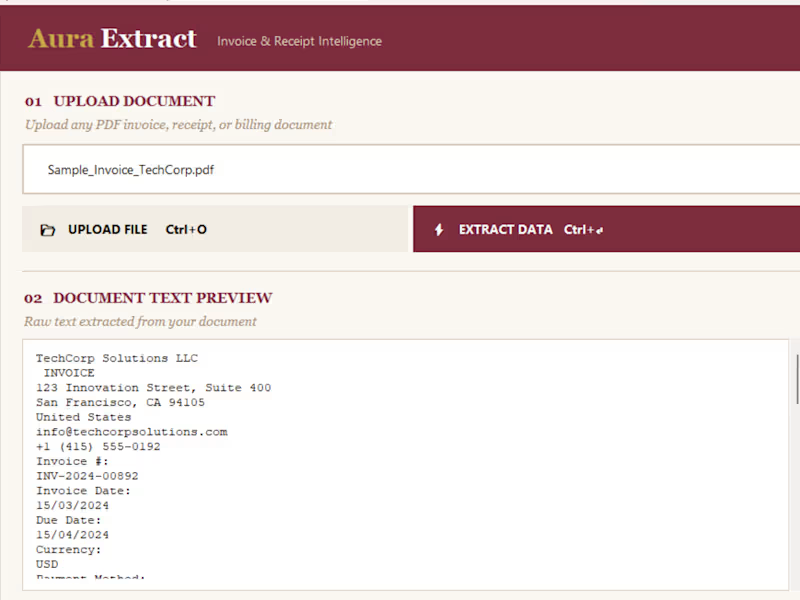
AuraExtract — Intelligent Invoice & Receipt Data Extractor
The extraction engine uses intelligent regex pattern matching that handles real-world invoice layouts — column-per-line PDF formats, inline tabular formats, and plain text documents. It detects 10 fields automatically and parses up to 20 line items per invoice.
Supports PDF, TXT, and DOCX formats. Includes a raw text preview panel so users can verify exactly what the engine is reading. CSV export includes both the summary fields and full line items table — ready to open directly in Excel.
Pure Python. Zero external dependencies beyond pypdf for PDF reading.
3
250
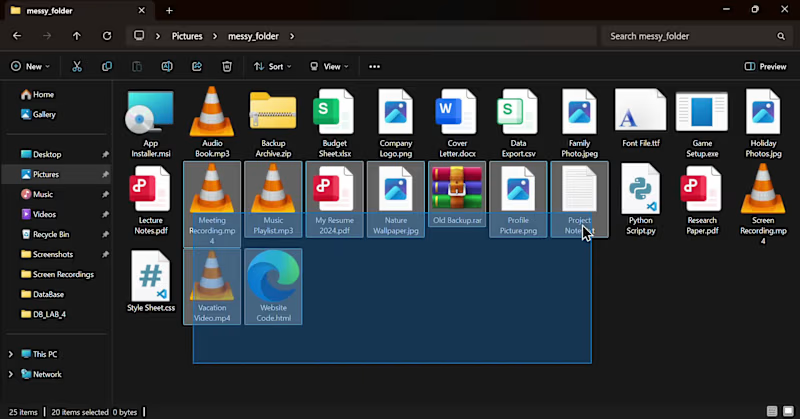
AuraSort scans any folder and automatically sorts files into named subfolders by type — Documents, Images, Videos, Audio, Code, Archives, and more.
Files are renamed to clean, consistent lowercase format. Every operation is logged live on screen as it happens.
Built with a Dry Run mode so users can preview exactly what will move before anything is touched.
Full undo restores every file to its original location with one click. An HTML report is generated after each sort showing every file moved, every category created, and total time taken.
Pure Python. Zero external libraries. Works on any machine without installation.
2
234
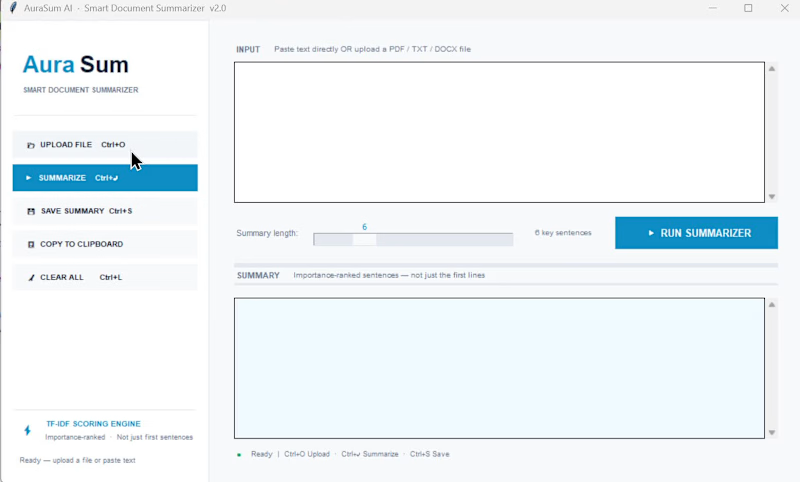
A fully offline document summarizer built in pure Python. Uses TF-IDF scoring, position weighting, and Jaccard deduplication to extract the most important sentences from any PDF, DOCX, or TXT file — each labeled with a relevance percentage.
The result looks like this:
[1] [100% relevance] The algorithm achieved 94% accuracy on benchmark tests.
[2] [81% relevance] Training was performed on 50,000 labeled samples.
[3] [67% relevance] Results were validated using 5-fold cross validation.
Supports PDF, Word, and TXT files. Saves summaries to your computer. Runs completely offline. No subscriptions, no API keys, no internet required.
1
215

Built AuraChat v3.0 — a fully offline Document Intelligence desktop app in pure Python. Users upload any PDF, Word, or TXT file and ask questions in plain English. The system returns cited answers with confidence scores instantly.
Technical highlights:
— Custom NLP engine using TF-IDF scoring + hybrid token overlap analysis
— 1,700× faster indexing than baseline on 500-page documents
— Multi-threaded processing — UI never freezes during heavy indexing
— Supports PDF, DOCX, and TXT file formats
— Zero external APIs — runs completely offline on the user's machine
— 23 production-grade bugs identified and resolved before delivery
This is not a demo. This is production-ready software built with clean architecture, full error handling, keyboard shortcuts, chat export, source citations, and confidence indicators
1
215

Data Visualization & Operations Expert 📊
Data Visualization & Operations Expert 📊


