Freelancers in Jefferson
Sign Up
Post a job
Sign Up
Log In
Filters
1
Projects
People
Farida Amin
pro
Ashburn, USA
UI/UX Web Designer & Web Developer | Graphic Designer

$1k+
Earned
6x
Hired
5.0
Rating
43
Followers
Follow
Message
UI/UX Web Designer & Web Developer | Graphic Designer

4
WordPress Web Design & Development for Real Estate
4
68
$1.5K+ earned
2
Framer Web Design & Development
2
19
2
SaaS Conversion-Focused Web Design & Development
2
45
1
Webflow Design, Development & Animations
1
2
Follow
Message
YOHOsys LLC
pro
Ashburn, USA
Your trusted partner for FlutterFlow excellence
$10k+
Earned
9x
Hired
4.9
Rating
123
Followers
Agency
Certified
Follow
Message
Your trusted partner for FlutterFlow excellence
38
"It’s been an incredible journey since we were first introduced (and gently pushed) to join Contra by FlutterFlow! Since then, I’ve been hired 12+ times and successfully completed a variety of projects covering: UI/UX design in Figma App development using FlutterFlow with Firebase and Supabase Payment integrations including RevenueCat and Stripe AI integrations leveraging OpenAI, ByteDance, Leonardo, Kling, Hugging Face, Luma, and Google APIs Custom automations and Cloud Functions for scalable performance Contra has truly been a game-changer, connecting me with amazing clients and giving me the platform to grow as both a developer and problem-solver.
38
374
2
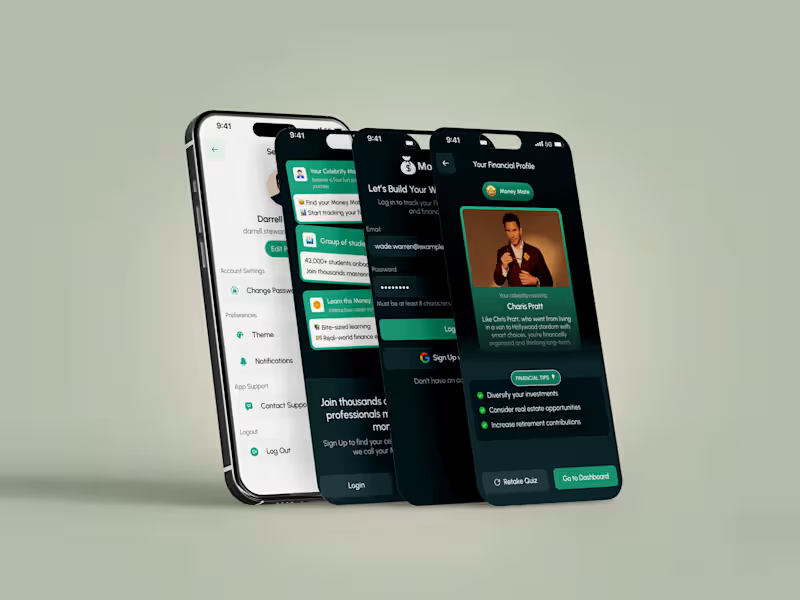
MoneyU – Financial Literacy for College Students
1
2
33
4
XXTRA Seat – Social Ride-Sharing App Development
1
4
86
2
PureBites - Celiac-Safe Dining App Development
2
34
Follow
Message
George Alexander-Pike
pro
Ashburn, USA
Complete motion identities for Podcasters & Creators 🎥
$1k+
Earned
1x
Hired
26
Followers
Follow
Message
Complete motion identities for Podcasters & Creators 🎥
0
Born To Sweat Video Editing/Motion Graphics
1
0
8
0
A recent project for the Keepin It A Blount Podcast. With an audience of almost 200K subscribers & millions of views, it was important to capture the essence of the show in a short, snappy and engaging format. The host/owner shock provided me with pre-existing brand assets, music and B-roll footage to use. The end result is a quick, to the point opener that drives home the key subjects of the show and sets the stage for what to expect.
0
303
20
🎥 Project Spotlight: Lesbicanarias Logo Animation Created this intro animation for Lesbicanarias, a Canary Islands-based LGBTQ+ community platform connecting people to local resources and events. 🔎 The Brief: They had a strong static logo but needed it to come alive for their podcast and social content—something that grabs attention in the first 3 seconds. 📋 The Process: Started with their existing PNG brand assets (logo + elements) Broke down the identity into animated components Built motion around the orbital design language already in their branding Designed for flexibility—works as a video intro, story asset, or standalone brand moment 🤩 The Result: A plug-and-play animation that elevates every piece of content they create. Their brand now has a motion signature. No rebrand required. Just motion that works.
2
20
435
22
Sometimes all a podcast, show, or creator needs is something quick, simple and to the point to make their brand stand out. In the case of my past client, UX En Español, they required just that. Because their content spans the educational genre, infusing their brand in a short impactful was very important to avoid distraction and dive right into their amazing content. A clever use of the logo's x allowed for a snappy, fun and on brand logo animation that has been in use now for years.
22
463
Follow
Message
Ibrahim Babalola
Ashburn, USA
Your go-to webflow guy
11
Followers
Expert
Follow
Message
Your go-to webflow guy
1
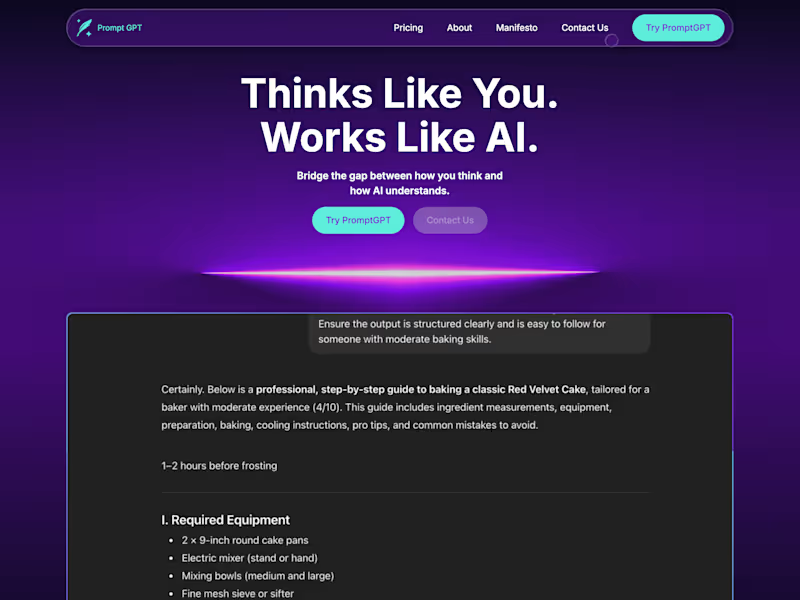
PromptGPT Landing Page Redesign
1
6
1
Kokotide Studio Portfolio Website
1
3
1
Webflow Customization and Optimization for Exponentiel.ai
1
3
1
DriveGlobal Webflow Landing Page Development
1
2
Follow
Message
Ari Wilson
pro
Gaithersburg, USA
Creative Virtual Assistant for various creatives.
Follow
Message
Creative Virtual Assistant for various creatives.
1
Midsummer Comfort Collection
1
3
0
Threads by Taylor Launch
0
7
0
N.S. Calloway, “Paper Birds Book 3”
0
3
0
Carters' Fairytale Wedding
0
9
Follow
Message
Francisco Vargas
Ashburn, USA
Web & Product Designer | Framer, Webflow & Shopify Expert

9
Followers
Follow
Message
Web & Product Designer | Framer, Webflow & Shopify Expert

3
Multi-CMS WEBFLOW WEBSITE DESIGN Advanced Psychology Institute needed a facelift and migration to a more modern and manageable platform, so we designed and built a brand new site in Webflow, utilizing multiple CMS databases to host articles, media, and a full-scale post graduate training program.
3
75
4
UI/UX Designer | AI Fintech SaaS Product Design in Figma for a startup DiWallet aims to provide a decentralized, secure, and user-friendly payment environment. It will combine blockchain technology, smart contracts, AI-powered insights, decentralized identity verification, and cross-platform interoperability. The goal is to revolutionize how people transact in the digital space, creating a more efficient and transparent financial experience.
1
4
150
3
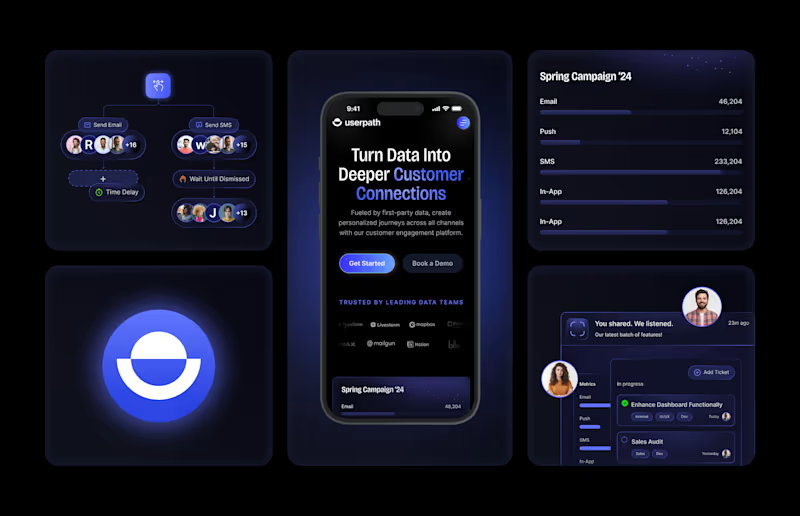
Userpath | UX/UI Design Userpath harnesses data insights to help you build stronger, more personalized customer relationships. By analyzing behaviours, preferences, and interactions, we empower you to craft deeply resonated experiences. The focus was to align consistency with a seamless journey empowering the user to achieve value through simplicity.
1
3
91
2
Custom Wall Panel E-commerce Store I developed and customized the Shopify storefront for Vant Panels, a brand specializing in premium wall panel solutions. I focused on creating a polished, responsive user experience with dynamic product displays, custom sections, and smooth checkout flow. I enhanced product pages with detailed variants and image galleries, while optimizing site speed and SEO for better visibility and conversions.
2
74
Follow
Message
Nathan Minnick
Ashburn, USA
Senior Full Stack Developer | PHP • Vue • React • Angular
New to Contra
Follow
Message
Senior Full Stack Developer | PHP • Vue • React • Angular
23
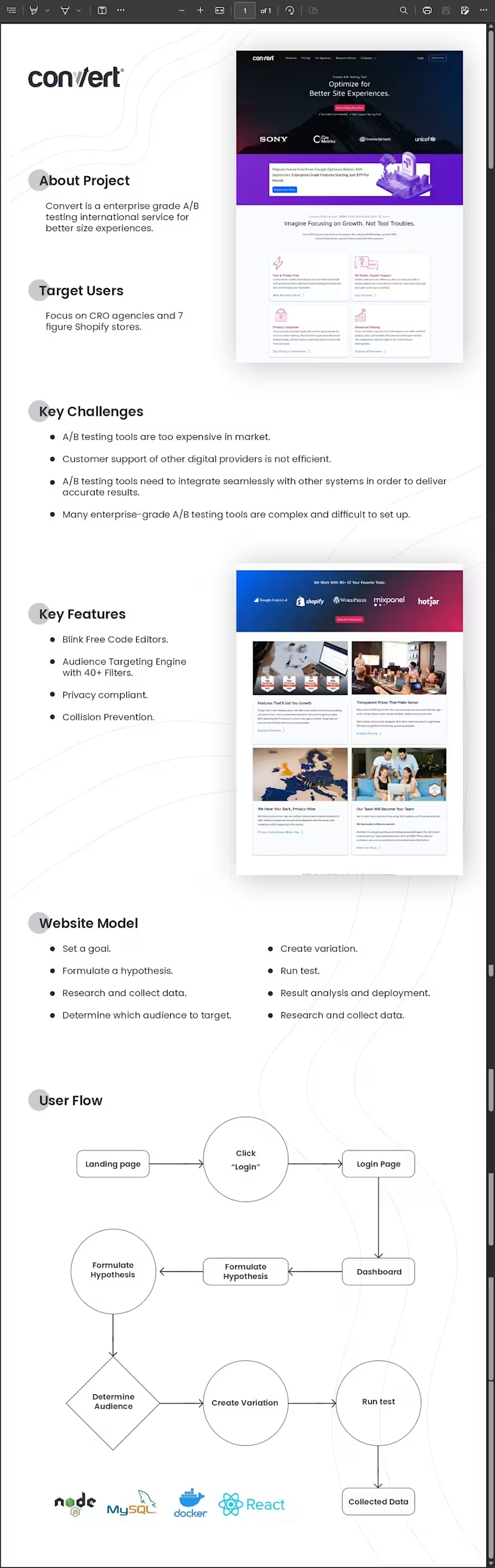
Convert - NodeJS, React, MySQL, JavaScript As a Full Stack Developer on the Convert.com (http://Convert.com) project, I built & optimized an A/B testing tool using React, Node.js, & JavaScript. On the frontend, I developed interactive, high-performance UIs with React, ensuring seamless experiment creation & real-time result tracking. In the backend, I implemented RESTful APIs, authentication, & experiment data processing using Node.js. I optimized performance with caching, asynchronous execution, & scalable architectures. Additionally, I ensured security, role-based access control, & seamless third-party API integrations for analytics & reporting.
23
195
0
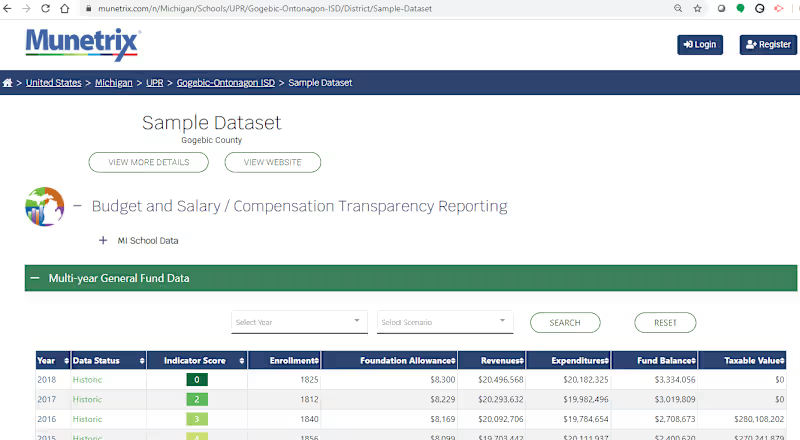
Munetrix - Finance Reporting System Take the burden of report-generating off your hands. We have the manpower, the technology and the personalized service to get your internal information into an online space that is accessible to all stakeholders.
0
62
0
Ticket Create/Print SaaS Tool Revamp We encountered a dysfunctional online SaaS software for ticket printing, which had become useless due to the outdated flash-based ticket editing software. To rectify this, we rebuilt the editor using AngularJS and seamlessly integrated it with the product page, making online editing functional and valuable. As part of the project, we also performed upgrades to the Laravel versions and system packages. MongoDB was utilized for storing all ticket information, while MySQL, integrated into the Laravel software, handled tasks such as authentication and customer information management.
0
47
0
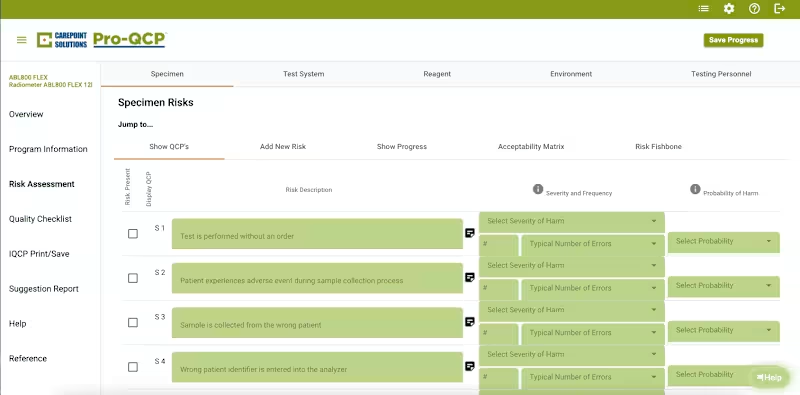
Medical Lab QA software CarePoint Solutions focuses on improving diagnostic accuracy and reducing medical errors. I contributed to the development and maintenance of a SaaS platform featuring an Angular-based frontend and a Drupal/PHP backend. The backend was integrated with MySQL and MongoDB for data handling. Skills AngularJS JasperReports Drupal PHP MongoDB
0
47
Follow
Message
Brian Pyatt
pro
Ashburn, USA
Senior AI Solutions Architect | Agentic Systems & Product
New to Contra
Follow
Message
Senior AI Solutions Architect | Agentic Systems & Product
0
Textpro.ai — AI Universal Concierge Platform
0
0
0
GitHub - spotcircuit/rebar: Rebar — structural memory framework…
0
2
0
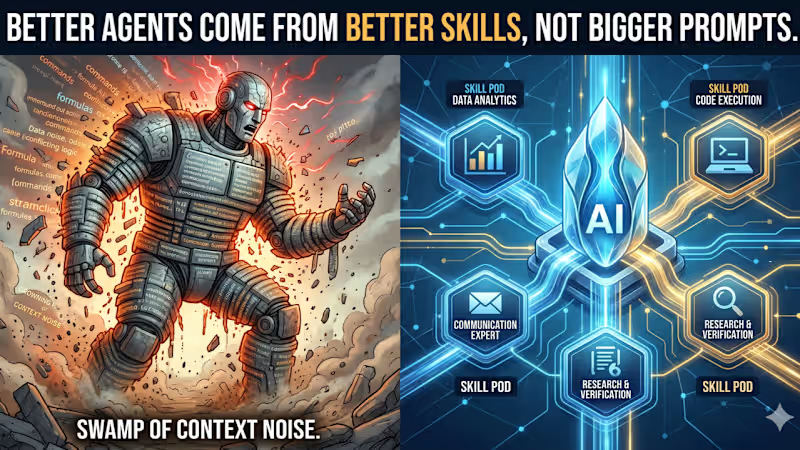
A lot of people building with Claude Code-style agents are still focused on prompt engineering. I get why. It’s the most visible lever. But I think the bigger opportunity is usually somewhere else: the reusable skills, workflows, or slash commands an agent relies on over and over again. Those are what shape behavior over time. And in my experience, improving them is less about piling on new instructions and more about tightening the loop around failure. Watch where the agent breaks. Figure out why. Fix the workflow. Repeat. Sometimes that means adding a rule. Just as often, it means removing one. Over the last couple of days, I rebuilt the /close-loop cycle in my framework, Rebar, and it clarified something I’ve been feeling for a while: A lot of agent systems have evaluation. Fewer have a feedback loop that actually makes them simpler, cheaper, and more reliable over time. That difference matters. In the old version of my loop, a feature could be marked complete because the evaluator returned a PASS. The orchestrator would close the issue, everything looked fine, and only later would I realize something important was still missing — like a Prisma migration file. So the feature wasn’t really done. It just had the appearance of being done. The evaluator had often already pointed at the problem in its follow-up notes. But the system wasn’t treating that kind of language as blocking. “PASS with follow-ups” was getting interpreted too generously. That was the real failure: not bad evaluation, but a weak handoff between evaluation and release. So I rebuilt the loop around four gates, and all four have to pass before “done” means anything: 1 . Evaluator Checks code, scope, and completeness and writes structured findings. 2. Release gate Scans those findings for blocking language like “must generate,” “cannot ship,” or “before any live DB.” If that language shows up, the work is blocked. 3. Cycle-scoped improve step Promotes only the current cycle’s validated observations into the expertise file, instead of dragging in stale backlog noise. 4. Meta-improve Looks across evaluator logs for repeated failure patterns and proposes changes to the templates themselves, with a human review step before anything sensitive gets updated. That last piece is where the compounding effect starts to show up. Because the default instinct in agent systems is usually to add. Add another reminder. Add another caveat. Add another paragraph to the template so the model doesn’t make that mistake again. Sometimes that’s right. But it’s also how workflows slowly turn into bloated instruction stacks that cost more and work worse. Every extra line gets paid for on every future run. And long prompts full of overlapping rules are often harder for models to follow consistently than a smaller number of clear ones. So the better question is not “what else should we add?” It’s “what actually belongs in the workflow?” In the first real cycle of the rebuilt loop, I saw four patterns: - schema changes without Prisma migrations - dirty working tree bleeding across features - orphan Vue refs that were declared but never rendered - Hono context typing debt across multiple routes Only the first two justified workflow changes. The orphan refs were already being caught by the evaluator, so there was no reason to duplicate that logic in the template. The Hono typing issue was real, but it was cleanup work, not a process problem. That distinction matters more than it sounds. If every bug becomes a workflow rule, the system gets heavier every week. If you’re disciplined about separating repeatable process failures from one-off implementation issues, the workflow stays lean. And that’s really the bigger point here. There are two things improving at the same time: First, context gets better. Validated observations get promoted into structured expertise, so the next run starts with better knowledge of the codebase and less repeated discovery. Second, workflow gets sharper. The system looks at repeated failures and changes the reusable commands around the agent — ideally by adding only what consistently matters and cutting what doesn’t. That combination is where the gains compound. The agent starts with better context, but a lighter operating model. That’s a much healthier direction than what a lot of systems drift toward, which is more and more prompt text, more accumulated edge-case handling, and rising cost without much improvement in reliability. The artifact trail is what makes this workable. Each cycle leaves behind evidence: evaluator logs, raw findings, expertise updates, queued template patches, wiki notes. After enough cycles, you’re not just reacting to the last annoying failure. You can actually see what keeps recurring, what was already covered elsewhere, and which instructions are no longer doing useful work. That makes subtraction much easier to justify. And yes, there’s a token-cost argument here too. A 2,000-token template invoked 50 times a day costs 100,000 tokens a day just to load. Trim 500 tokens of dead guardrails and the savings add up quickly. But the bigger win is clarity. In practice, models usually do better with fewer, more coherent rules than with long prompts full of defensive clutter. So shortening the workflow isn’t just cheaper. It often improves quality too. To me, this is the more interesting layer of agent design: not just agentic coding, but skill engineering. The reusable commands around an agent should themselves be under active improvement. Not based on vibes. Not based on one weird miss. Based on repeated observation and actual evidence. If your setup doesn’t have: - an evaluator producing structured findings - a release gate that can interpret blockers - a way to detect recurring failure patterns - and a human review step for sensitive workflow changes then there’s a good chance the system will get more expensive over time, not less. Every miss turns into another sentence. Every edge case turns into another rule. Eventually you’re feeding the model more instructions and getting less leverage out of them. The better path is a tighter loop: less prompt where possible, more signal where it matters, and workflows that get sharper as the system learns. That’s what I’m trying to build into Rebar. Rebar is open-source. The close-loop command, the meta-improve queue, and the release gate are in the repo. Play with it, and if you see a dead instruction in my own templates, send me a pull request.
0
103
0
Rebar — Structural Memory for Claude Code
0
1
Follow
Message
Explore people