Freelancers using Ahrefs in IslamabadFreelancers using Ahrefs in Islamabad
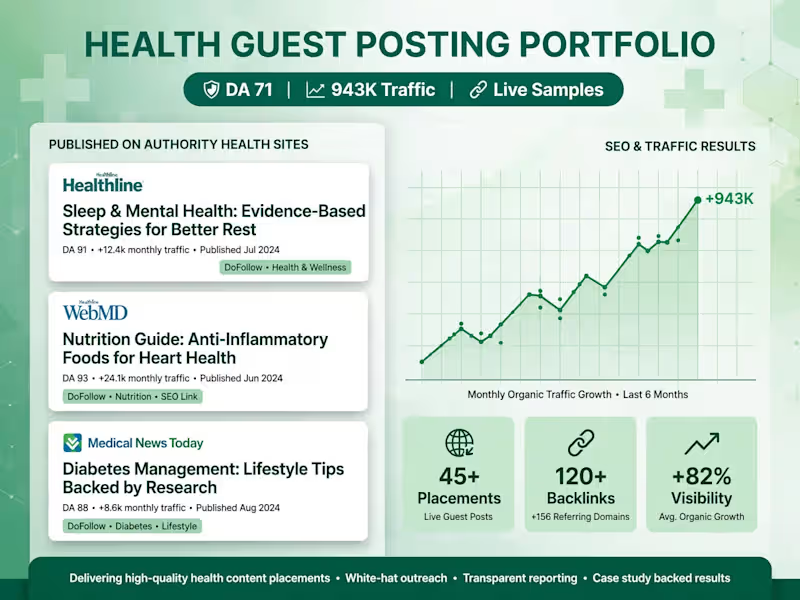
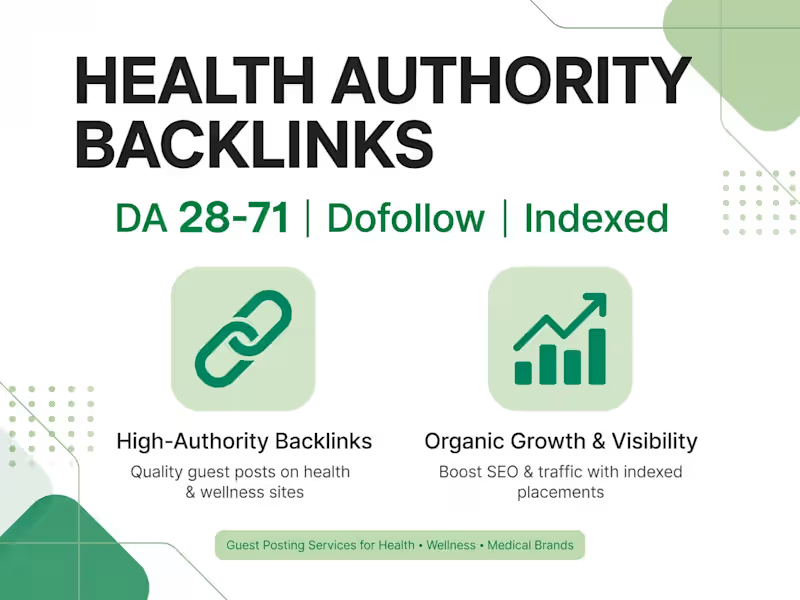
Private DA71 Health Site (943K) | Guest Post

New to Contra
Private DA71 Health Site (943K) | Guest Post
SEO Specialist | SEO Writer | Ranking Brands Higher
New to Contra
SEO Specialist | SEO Writer | Ranking Brands Higher
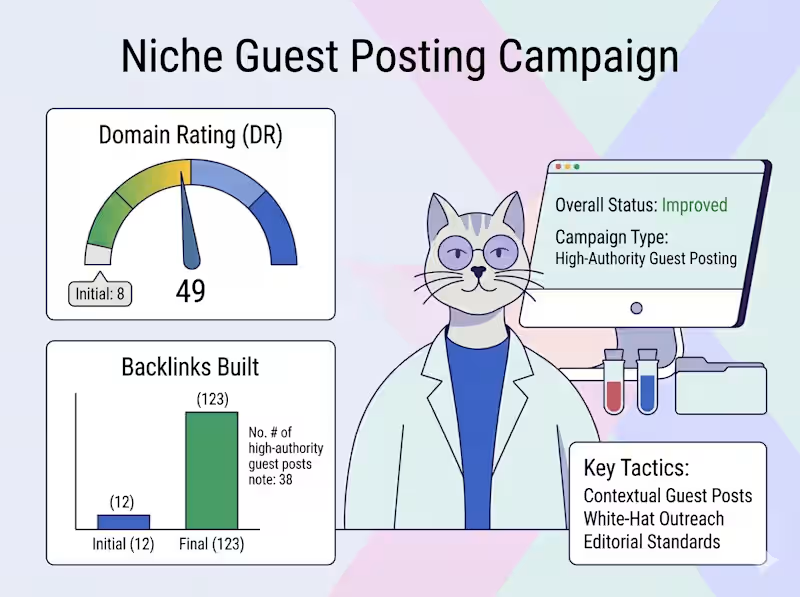
Cover image for Niche Guest Posting Campaign —
Niche Guest Posting Campaign — 108 High-Authority Backlinks Built in 60 Days 🔴 The Problem A digital marketing agency had strong on-page SEO and quality service pages but a critically weak backlink profile, only 12 referring domains, all low authority, several spammy. Their Domain Rating was sitting at 8 while every competitor ranking above them had Domain Ratings between 28 and 45. They had never run a structured link building campaign and had no existing relationships with any publications or blogs in their niche. ⚠️ The Impact Despite excellent on-page optimization and a clean technical foundation, the agency could not break past page 2 for any of their primary target keywords. Every competitor outranking them had significantly stronger domain authority, not better content, not better optimization, just more and stronger backlinks. The authority gap was the single factor preventing rankings from improving regardless of what else was optimized on the site. ✅ What I Did Conducted a full competitor backlink analysis across the top 5 ranking competitors, identified 440 high-value domains linking to competitors but not to the client Built a targeted outreach list of 110 relevant blogs, marketing publications, and industry resource pages meeting strict quality thresholds,  minimum DR 30, real organic traffic, genuine editorial standards Pitched and placed 38 guest posts on marketing, SEO, and business publications over 60 days Each guest post was 900–1400 words of genuine, original content written specifically for each publication's audience — not spun or templated content Anchor text distribution kept natural — branded, partial match, and naked URL anchors balanced to avoid over-optimization signals Executed a diversified white-hat link building campaign, including: Guest Post Backlinks Broken Link Building Forum Backlinks Profile Backlinks Niche Directory & Citation Backlinks Contextual Editorial Backlinks Resource Page Link Building 📈 The Results Domain Rating increased from 8 to 49 within 90 days of campaign launch Referring domains grew from 12 to 123 — all editorially placed, all relevant, zero toxic Primary target keywords moved from position 24 to position 3 within 25 days of first links indexing 11 secondary keywords entered page 1 rankings for the first time Organic traffic grew by 270% quarter over quarter as the authority increase lifted rankings across multiple pages simultaneously
0
19
Cover image for Off-Page SEO
Broken Link Building, Toxic
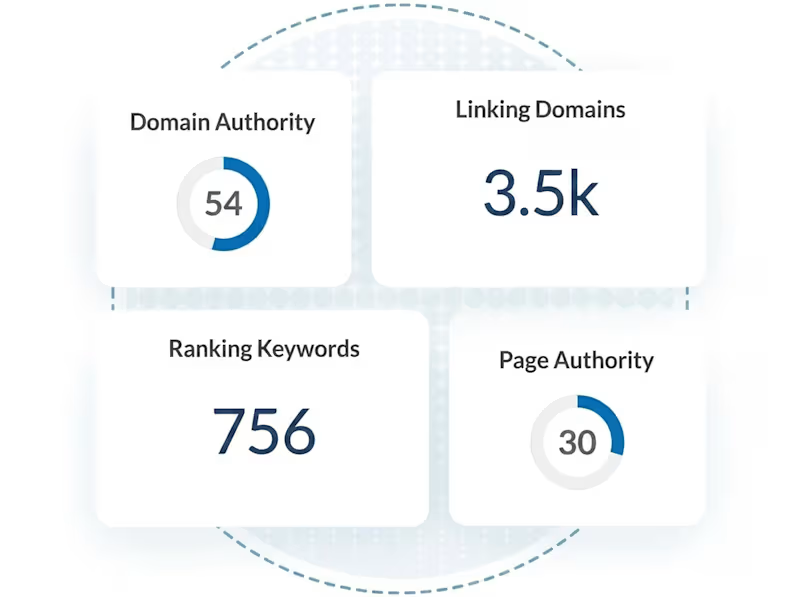
Off-Page SEO Broken Link Building, Toxic Backlink Cleanup & White-Hat Authority Campaign 🔴 The Problem An established eCommerce brand in the home décor industry had been operating for over 4 years and had accumulated 4,800+ backlinks from previous SEO and marketing efforts. While the backlink profile looked strong on paper, a significant portion consisted of low-quality, irrelevant, and spammy links that were weakening the site's authority. At the same time, a brand mention audit uncovered 63 unlinked mentions across blogs, news articles, and resource pages that were providing no SEO value. The website also lacked a consistent white-hat link acquisition strategy, allowing competitors with cleaner backlink profiles to outrank it for valuable commercial keywords. ⚠️ The Impact The high volume of toxic backlinks was suppressing the website's authority and limiting ranking potential. Valuable brand mentions were going unclaimed, and the absence of ongoing authority building meant organic growth had plateaued despite a well-optimized website and quality products. ✅ What I Did Conducted a complete backlink audit using Ahrefs and SEMrush to evaluate over 4,800 backlinks. Identified and removed or disavowed 1,900+ toxic and spammy backlinks, significantly reducing the website's spam score. Created and submitted a Google Disavow file for harmful links that couldn't be removed manually. Performed a web-wide brand mention audit and identified 63 unlinked mentions. Successfully converted 22 unlinked brand mentions into followed backlinks through targeted outreach. Executed a diversified white-hat link building campaign, including: Guest Post Backlinks Broken Link Building Forum Backlinks Profile Backlinks Niche Directory & Citation Backlinks Contextual Editorial Backlinks Resource Page Link Building Earned 200+ high-quality backlinks from relevant and authoritative websites. Maintained a natural backlink profile through diversified anchor text and steady link acquisition. 📈 The Results 1,900+ toxic backlinks removed or disavowed, significantly reducing the website's spam score. 22 unlinked brand mentions converted into followed backlinks. 200+ new white-hat backlinks acquired from authoritative websites. Domain Authority increased to 54 during the campaign. Multiple high-value commercial keywords reached Google's first page. Organic visibility and keyword rankings improved substantially across key product categories. Organic traffic increased steadily as backlink quality, authority, and trust signals strengthened.
0
22
Cover image for On-Page Recovery — Fixing Broken
On-Page Recovery — Fixing Broken Meta Tags, Image Bloat & Schema Errors Killing Rankings 🔴 The Problem A well-written content-heavy blog had strong articles but critical on-page technical failures dragging everything down: Meta titles truncated or missing on 60% of pages Featured images uploaded at 3–5MB each with no compression, wrong format, zero alt text Schema markup existed but was incorrectly implemented — triggering rich snippet errors in Google Search Console No canonical tags on paginated content creating duplicate page issues Image file names were all default camera codes (IMG_4521.jpg etc.) ⚠️ The Impact Despite publishing 3+ articles per week for 8 months, organic traffic had flatlined completely. Google Search Console was showing 23 schema errors and 14 warnings across the site. Page speed score on mobile was 31 out of 100 — firmly in the red zone. Images were the single biggest performance bottleneck. Articles that deserved featured snippets were not triggering them because of broken structured data. The writer was producing excellent content that search engines simply could not properly read or reward. ✅ What I Did Audited and rewrote all meta titles and descriptions — prioritizing pages with highest traffic potential first Compressed entire image library — converted all images to WebP, reduced file sizes by an average of 68% without quality loss Renamed all image files with descriptive keyword-relevant names Wrote descriptive alt text for every image across the entire blog Fixed all 23 schema errors and 14 warnings — corrected Article, FAQPage, and BreadcrumbList markup to pass Google's Rich Results Test cleanly Added canonical tags to all paginated content and category pages to resolve duplicate signals 📈 The Results Mobile PageSpeed score improved from 31 to 87 within 1 week of image optimization All 23 schema errors and 14 warnings cleared in Google Search Console within 30 days 6 articles triggered featured rich snippets within 6 days of schema fixes Average session duration increased by 78% as faster page loads reduced early exits Organic impressions grew by 215% within 40 days as previously suppressed pages gained proper indexing signals
0
24
Cover image for Full On-Page SEO Overhaul —
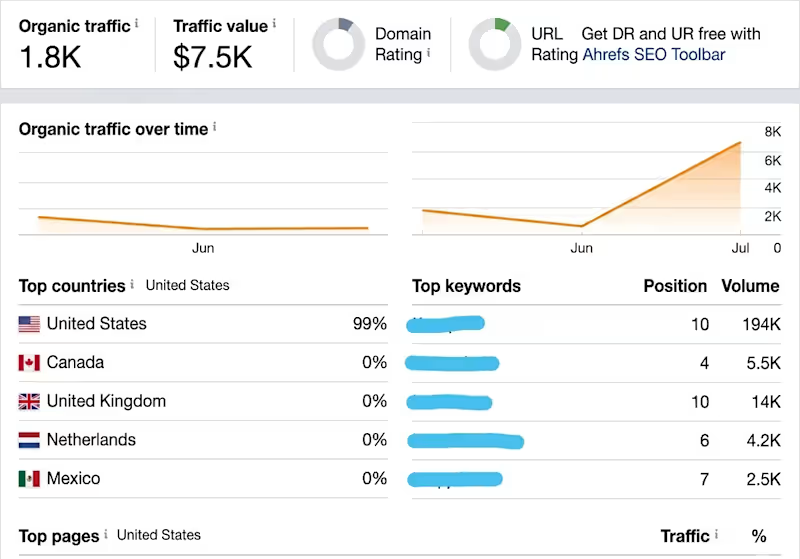
Full On-Page SEO Overhaul — Meta, Content, Schema & Site Structure Optimized 🔴 The Problem A 12-page service business website had been live for over a year with zero on-page optimization implemented. Specifically: Meta titles duplicated across pages, meta descriptions completely missing Multiple H1 tags per page with no heading hierarchy or keyword structure Raw uncompressed images with generic file names and no alt text No internal linking strategy — pages were effectively isolated from each other Messy keyword-stuffed URLs with no structure Zero canonical tags — pages competing against each other No schema markup of any kind implemented ⚠️ The Impact Despite having reasonable content, the site was invisible in search. Most target pages ranked between position 35 and 60. Organic traffic was averaging under 80 visits per month. Page load time was 7.8 seconds on mobile due to uncompressed images alone. No rich results of any kind were appearing in Google. The business was relying entirely on paid ads because organic simply was not working. ✅ What I Did Wrote unique keyword-optimized meta titles and descriptions for all 12 pages within character limits Rebuilt heading structure across every page — one clean H1 per page with supporting H2/H3 keyword hierarchy Compressed and converted all images to WebP, reduced average image size by 74%, renamed files descriptively, wrote alt text for every image Built a full internal linking map with optimized anchor text connecting all key pages Cleaned all URLs — removed stop words, added primary keywords, standardized structure Implemented canonical tags across all pages to consolidate ranking signals Added FAQ, Article, BreadcrumbList, and LocalBusiness schema markup to eligible pages 📈 The Results Page load time dropped from 7.8s to 2.1s on mobile 9 of 12 target pages moved from positions 35–60 to positions 6–18 within 75 days Rich snippets triggered in Google within 40 days of schema implementation Organic CTR improved by 94% from stronger meta titles and descriptions Monthly organic traffic grew from 80 to 1.8k visits within 90 days
0
29
Custom SEO Plans for Real Online Growth

Amazon FBA/FBM Account Manager & SEO Specialist | #1 Rank
New to Contra
Amazon FBA/FBM Account Manager & SEO Specialist | #1 Rank
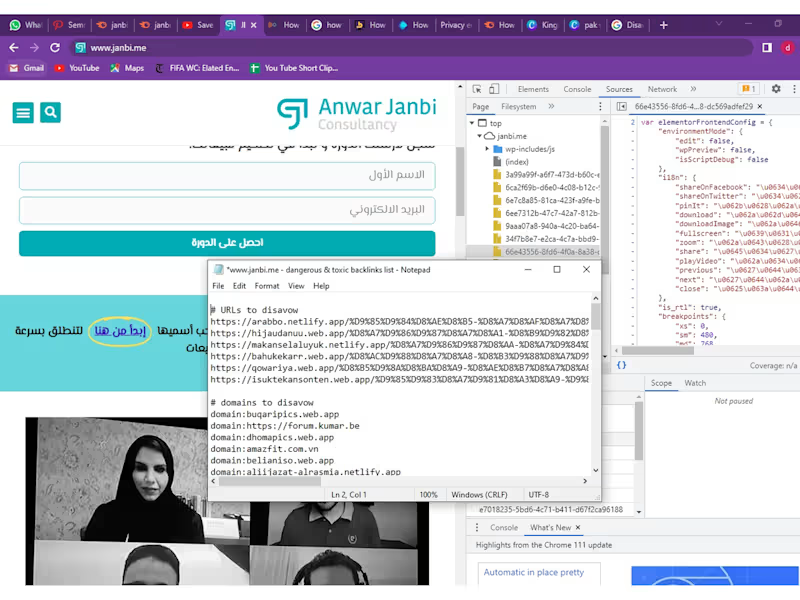
Cover image for SEO Recovery: Boosting Search Rankings
SEO Recovery: Boosting Search Rankings by Disavowing Toxic Backlinks The Challenge A client's website was suffering from suppressed search rankings despite having relevant content and a reasonable on-page SEO foundation. Initial diagnostics pointed to an unhealthy backlink profile, a common but often overlooked cause of ranking stagnation. Toxic, spammy, and low-quality backlinks from unrelated or suspicious domains were sending negative trust signals to Google, actively working against the site's authority and visibility. My Approach I conducted a comprehensive backlink audit to identify every link pointing to the domain, then filtered out the sources posing genuine risk. This involved: Backlink Analysis: Reviewed the site's entire link profile to detect patterns of link spam, including foreign-language spam domains, auto-generated content farms, and irrelevant or low-authority referring sites. Risk Assessment: Evaluated each flagged domain and URL individually to distinguish between naturally low-quality links and genuinely toxic ones that could trigger algorithmic penalties or manual actions. Disavow File Creation: Compiled a structured disavow file, separating specific toxic URLs from entire domains that needed to be disavowed at the root level following Google's exact syntax requirements (domain: prefix for full-domain disavows). Submission via Google Search Console: Uploaded the finalized disavow file through Search Console's Disavow Links tool, effectively telling Google to disregard these harmful links when assessing the site's authority. The Result By systematically cleaning up the backlink profile, the site saw measurable improvements in search visibility and ranking stability. Removing the toxic link signals allowed Google to reassess the domain more fairly based on its genuine authority and relevance, leading to healthier long-term organic growth. Why This Matters Backlink audits and disavow strategies are a critical but often neglected part of technical SEO. Many sites unknowingly accumulate spammy links through negative SEO attacks, old link-building mistakes, or scraper sites and without regular audits, these can silently cap a website's ranking potential. This project reflects my ability to diagnose underlying technical SEO issues, not just surface-level optimization, and execute precise, Google-compliant solutions that protect and strengthen a client's search performance over time.
1
207
Cover image for My Recent Client Was Stuck
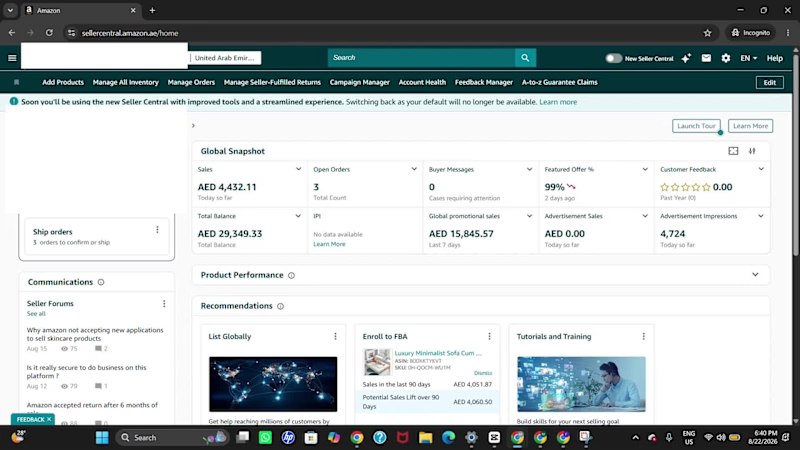
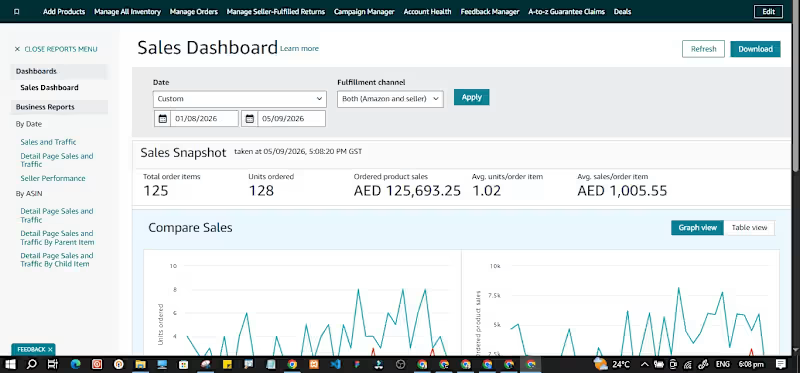
My Recent Client Was Stuck at 1 Lac AED? Here's What Finally Moved It A real look at what actually grows a stagnant Amazon store no hacks, no shortcuts, just a plan executed properly. For three straight years, one of my Amazon FBM clients was stuck. Not failing. Not losing money. Just… stuck. Same 1 Lac AED (roughly 100,000 AED) in yearly sales, year after year. The kind of plateau that's almost worse than a decline, because everything looks fine on the surface, but nothing is actually moving forward. When they came to me, the frustration was obvious: "We're doing everything right. Why aren't we growing?" Turns out, they weren't doing everything right. They were doing the same things right, over and over, and expecting a different result. Here's what we changed and what it did to their numbers. A stagnant Amazon FBM account grew past its three-year sales ceiling through three specific changes: a full listing rebuilds with optimized images, disciplined and timely use of Amazon's Deal tags, and PPC campaigns built around actual buyer intent instead of broad keyword guessing. Within the first months of the new cycle, ordered product sales had already crossed AED 125,000 surpassing what used to take a full year. The Real Problem Wasn't Traffic Most sellers assume a sales plateau means they need more ads, more budget, more everything. That wasn't the issue here. The account was getting traffic. People were clicking. What wasn't happening was conversion, visitors were landing on the product page and leaving without buying. That's a listing problem, not a traffic problem, and no amount of extra ad spend fixes a listing that doesn't convert. So that's where we started. 1. A New, Optimized Listing Built Around How People Actually Shop The old listing was technically complete. Title, bullet points, images all present. But "present" and "persuasive" are two very different things. We rebuilt it from the ground up: • Title restructured around how real buyers search, not how the seller described the product internally • Bullet points rewritten to lead with benefits, not just specs answering the silent question every shopper has: "why does this matter to me?" • Backend search terms cleaned up to close gaps the old listing was leaving on the table. This alone changed how the product showed up in search - and more importantly, how it performed once someone actually saw it. 2. Image Optimization: The Most Underrated Lever on Amazon Here's something I tell every client: on Amazon, your images are your salesperson. Nobody reads the full description before deciding whether to click into a listing. We overhauled the visual set: • A stronger, cleaner main image that stood out in a crowded search grid • Infographic-style secondary images that answered common questions before the customer had to ask • Lifestyle images that helped buyers picture the product in their own life, not just on a white background. This is one of those changes that doesn't show up in a single metric but it shows up in almost all of them. 3. Deal Tags, Timed Right Amazon's Deal badges (Lightning Deals, Best Deal, Coupons) work, but only when they're timed with intent not just switched on whenever a slot opens up. We mapped deal timing to: • Seasonal demand windows • Inventory levels, so a deal never triggered a stockout mid-promotion • Competitor pricing activity, so the discount actually stood out rather than blending in. A Deal tag next to a listing that's already been optimized to convert is a completely different tool than a Deal tag slapped onto a weak listing. Sequence matters. 4. PPC That Targeted Buyers, Not Just Keywords The account already had PPC campaigns running. The problem was that they were built around broad, high-volume keywords that sounded relevant but attracted browsers, not buyers. We rebuilt the campaign structure around: • High-intent, purchase-ready search terms rather than broad awareness keywords • Tight negative keyword lists, cutting spend on searches that were never going to convert • Bid adjustments based on actual ACoS performance, not guesswork The ad spend didn't necessarily go up. It just stopped being wasted. The Result Within the first several months of applying this new listing, new images, properly timed deals, and cleaner PPC the account's ordered product sales had already crossed AED 125,000. To put that in perspective: what used to take this account a full year to reach was now happening in a fraction of that time. No viral moment. No massive new ad budget. Just a listing that finally did its job, images that finally sold instead of just illustrating, deals that landed at the right moment, and ads that stopped subsidizing clicks that were never going to buy. The Actual Lesson Here If your Amazon account feels "stuck" rather than "failing," the fix usually isn't more spend. It's precision. • Is your listing built for how people actually search and decide? • Are your images doing the selling, or just filling space? • Are your deals timed with strategy, or just switched on when available? • Is your PPC chasing buyers, or chasing traffic? Answer those honestly, and a plateau almost always turns out to be fixable not with a bigger budget, but with a sharper one. If your Amazon store has been sitting at the same numbers for longer than it should, the fix is rarely "spend more." It's usually "spend smarter" starting with the listing itself.
0
75
CEO/Founder of SERPorians.com
New to Contra
CEO/Founder of SERPorians.com