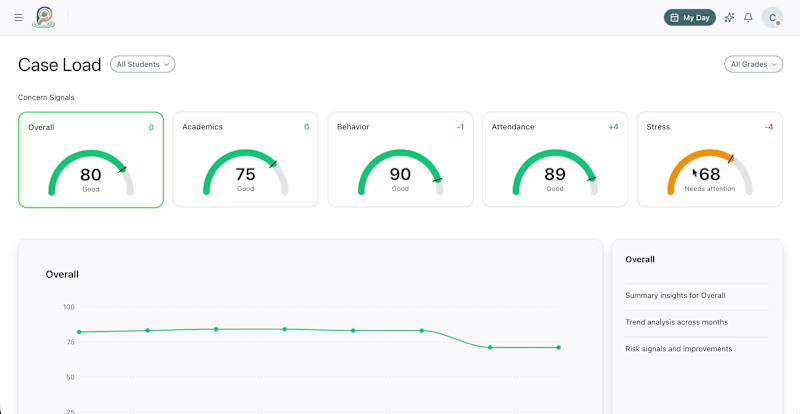
Projects using Claude in CaliforniaProjects using Claude in CaliforniaLed delivery of a cloud-native K-12 student wellness platform that helps counselors monitor wellbeing, surface at-risk students, and act early—balancing product velocity with FERPA/COPPA-aware design and multi-tenant isolation (API RBAC, PostgreSQL RLS, district-scoped analytics).
→ Owned technical direction and delivery rhythm across a TypeScript monorepo (pnpm/Turbo):
backend API, web app, shared packages, DB migrations, CI/CD gates, and staged deploys to GCP (e.g. Cloud Run), aligning engineering work with roadmap and release risk.
→ Orchestrated an AI assistant for counselors on Google Vertex AI (Gemini):
system prompts, safety settings for K-12, function-calling tool design, multi-round tool loops, and strict separation so UI widgets render from verified tool results—not model hallucinations—with tracing/feedback hooks (e.g. Langfuse) for quality and auditability.
→ Drove access-control and compliance posture for sensitive student data:
role/permission middleware, tenant-scoped queries, and defense-in-depth database policies—documentation and evidence suitable for enterprise security reviews (e.g. SOC 2–style narratives).
→ Partnered on product and program management:
phased feature rollout, PR/branch discipline, and clear ownership of scope vs. risk so pilot schools could onboard without compromising data boundaries.
→ Shaped integrations and platform boundaries:
Firebase auth, Neon PostgreSQL + Drizzle ORM, real-time patterns, BigQuery analytics isolation, and operational practices (testing, lint, type-check) that keep the stack maintainable at scale.
→ Established a disciplined, AI-accelerated delivery model—not ad-hoc prompting:
Cursor rules and Claude skills/agents for repeatable workflows; Husky + lint/type-check/test gates; GitHub Actions CI/CD; Cursor Cloud Agents for automated PR review; and daily monitoring of E2E, coverage, and critical issues—owning AI-orchestrated implementation while enforcing accuracy, consistency, and observability New work: I rebuilt my studio site as a real-time 3D experience, then I attacked it.
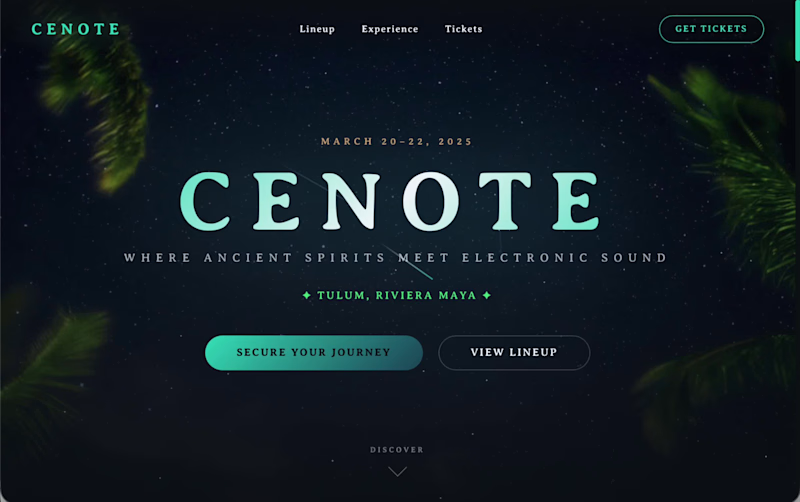
The visual layer is hand-written WebGL and GLSL. GPU particle cores that react to your cursor, morphing transitions between pages, adaptive performance that tunes itself to the device. All custom code, no template, no page builder.
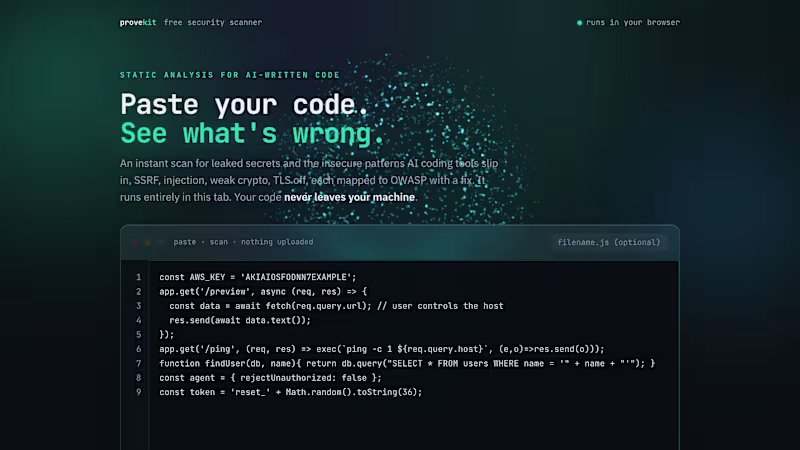
But looking expensive is only half the job. I also build and secure the systems behind sites like this: multi-tenant SaaS, Stripe billing, PostgreSQL row-level security. So I wrote an automated red-team loop in Python and ran it against my own live site: attack, triage, patch, verify. It flagged a couple of hardening gaps, I fixed them, and re-ran until it came back clean.
If you want a site that looks like a high-budget trailer and holds up when someone probes it, that is what I build.
Live: xkaii.studio
(http://xkaii.studio)The security work: xkaii.studio/security There are 100,000+ museums worldwide. Exploring culture, history and art has become more about ticket sales and less about learning.
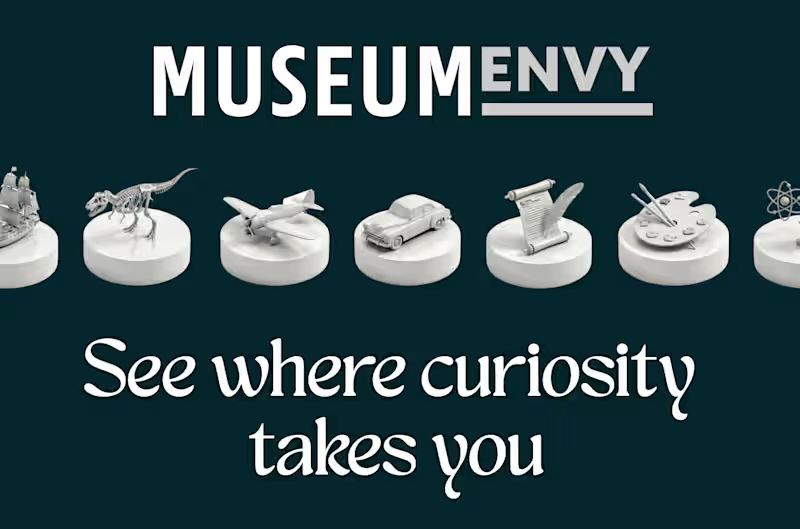
Introducing Museum Envy. A website & mobile app that uses AI-powered data enrichment to help people discover museums and cultural sites using important, typically hard-to-find information like time to visit, kid-friendliness, free days, accessibility and more.
There will also be Journeys and Passports. Offering playlists of museums enriched by history and art. Users can check-in, document and earn badges to share.
It will be free to use with a $30/yr premium subscription offering enriched journeys, offline features, create-your-own journeys, smart planning & more! Revenue will also come from ads and museum partnerships.
Early prototype (much to do!):
https://museumenvy.com/version-test/