Building Brand Systems That Evolve Across Every Touchpoint


Building Brand Systems That Evolve Across Every Touchpoint


B2B Product Designer | SaaS, Fintech, AI
I watched Apple's 108-second event (https://www.youtube.com/watch?v=mO8zBQqpTmY)recap and couldn't stop thinking about one thing.
No voiceover. No presenter. Just words, motion, and rhythm.
Short sentences. Each one a beat. The entire year of Apple products - described in 108 seconds through kinetic typography alone.
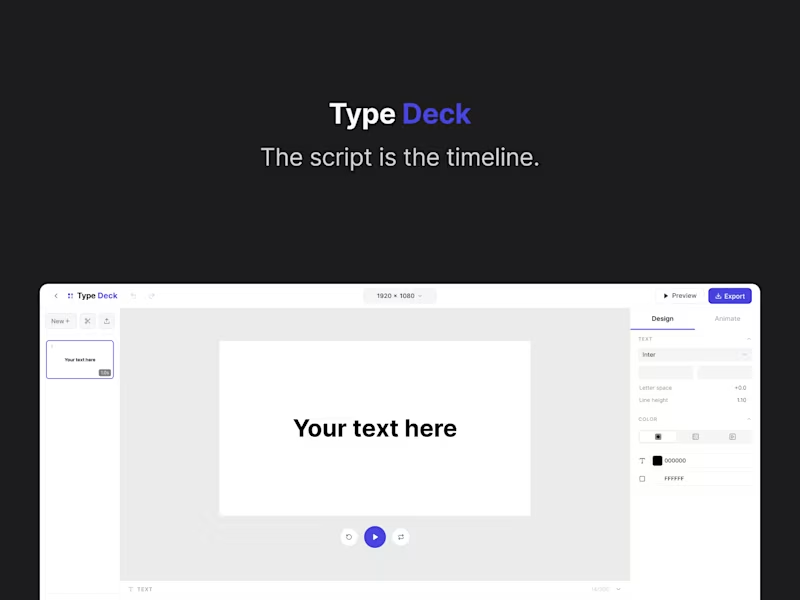
That moment became TypeDeck.
The idea: What if After Effects had a baby with PowerPoint - and it was actually simple enough for anyone to use in minutes?
No timeline. No keyframes. No layers. Just write your script and watch it become a film.
I Built the entire app UI and animation engine from prompt to code. The behavior-based animation architecture, the script editor, the rhythm strip, all of it with use of Figma Make.
What TypeDeck does:
→ Paste your script — every sentence auto-converts into an animated scene.
→ Copy a style with Ctrl+C, paste it across every slide with Ctrl+V.
→ Hook accent words with asterisks — they get a color treatment automatically.
→ Apply flat color, gradients, or drop in images and video as backgrounds.
→ Export and import projects. Built-in music. Everything in one place.
The problem it solves:
After Effects has a learning curve measured in months. Canva has templates but no motion depth. There's nothing in between that gives a founder, marketer, or creator the ability to make a genuinely beautiful motion video in under 20 minutes - until now.
TypeDeck is free to use. Start to create your stunning videos today.
https://www.figma.com/make/oK7XsVbAKpa4LulmGxJ5Py/TypeDeck?t=sKtdidrjE34hmLjQ-20&fullscreen=1
Video Demo:
https://www.loom.com/share/6d621cc245094653baef910544523072
5
11
367
Most travel apps solve booking. None of them solve the reason people never book in the first place.
The problem is not money. Most people who want to travel actually have enough. The problem is that travel has no due date. Your EMI comes out on the 5th. Your insurance renews in March. Your electricity bill arrives every month without asking. They all get paid - because they have a structure that does not accept someday as an answer.
Your dream trip has none of that structure. So it waits. Every year. Until it stops feeling like a plan and starts feeling like a personality trait.
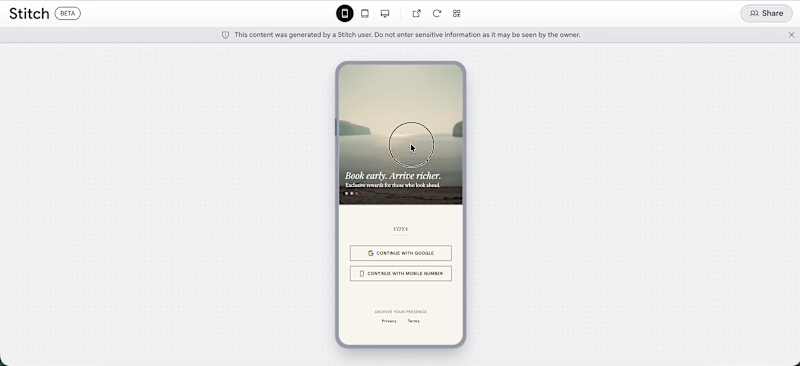
That insight became Voya.
This is the Original Workflow (https://stitch.withgoogle.com/projects/6972276730042508148) but due to certain issues I am not able to create prototype in same file so I duplicate that workflow (https://stitch.withgoogle.com/projects/17661579163113846531) and create new prototype.
Prototype:
https://stitch.withgoogle.com/preview/17661579163113846531?node-id=052829c9edd64f84b05c85db6b5bd998
𝗪𝗵𝗮𝘁 𝗺𝗮𝗸𝗲𝘀 𝗶𝘁 𝗱𝗶𝗳𝗳𝗲𝗿𝗲𝗻𝘁:
→ Saves a fixed amount from your income every month automatically - like an EMI, but for your next trip
→ Shows you where your rupee goes furthest right now based on live currency exchange advantages
→ Monitors flight prices 24/7 and alerts you the moment fares drop on your target routes
→ Tracks hotel pricing cycles so you book the same property for significantly less
→ Forecasts exactly where you can travel with your current savings - and when you unlock better destinations in 3, 6, or 12 months
→ Builds four completely different trip packages for the same destination - one for people who want luxury hotels and economy flights, one for business class comfort with simple stays, one for slow deep travel, one for multi-city discovery - you compare and pick yours
→ Shows you the real cost of waiting - how much more you will pay if you book when you originally planned versus booking now with your savings
→ Gives you back the mental peace of knowing the trip is already funded - so when you return home you return to the exact financial life you left. No investments liquidated. No recovery period.
67
46
1.5K

Framer Web Designer & UI/UX Specialist
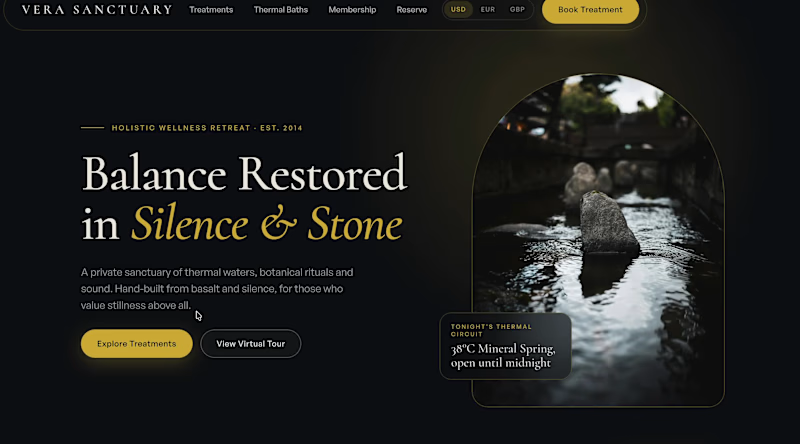
Vera Sanctuary — Designing a Dual-Theme Luxury Spa & Wellness Experience
An editorial, production-ready brand and web platform built for an exclusive thermal wellness retreat specializing in hydrotherapy, bespoke skin rituals, and meditative spaces.
Project overview
Vera Sanctuary was conceptualized and developed to bridge the gap between atmospheric luxury design and frictionless digital hospitality. Designed from the ground up, the platform targets high-end wellness travelers seeking an unhurried, serene digital journey before stepping foot into the physical sanctuary.
As the sole designer and Framer developer, I structured the hybrid visual system, dual-theme architecture, interactive booking workflows, and production deployment.
The challenge
Luxury wellness and hospitality websites face a unique UX challenge: balancing complex transactional features—such as multi-tier membership billing, real-time date and guest selectors, global currency conversion, and instant reservation modals—with an airy, serene, and uncluttered aesthetic.
The challenge was to engineer a hybrid visual system that alternates seamlessly between deep obsidian dark-mode sections and crisp, botanical light-mode containers without compromising loading speed, responsiveness, or emotional calm.
Research and exploration
The visual direction began by analyzing high-end hospitality layouts, thermal spa architecture, and balanced high-contrast UI patterns. I explored a refined color palette pairing deep charcoal/obsidian bases (#0B0D10) with warm champagne gold accents (#D4AF37) for evening/night sequences, transitioning into warm alabaster light containers (#FAF8F5) with sage green highlights (#7A8B7B) for daytime treatment directories.
A central focus was translating booking utilities and membership calculators into intuitive, elegant web components that feel bespoke rather than corporate.
The visual identity & web system
The resulting platform combines structured bento grids, glassmorphism containers, and custom micro-interactions to create a cohesive digital experience:
Hybrid Dark/Light Theme System: Fluid visual transitions alternating between immersive dark obsidian sections and clean botanical light-mode containers.
Cinematic Hero & Booking Engine: Immersive header integrated with a live availability check bar supporting flexible date selection, guest counts, and ritual filtering.
Curated Rituals Bento Grid: A light-mode 3-column interactive gallery featuring signature treatments complete with transparent pricing and modal reservation triggers.
Membership & Day Pass Engine: A sleek obsidian pricing architecture featuring an interactive billing toggle switch (Monthly, Annual, and VIP Day Passes) with dynamic discount calculations.
The Secret Botanical Key: An interactive engagement component near the footer that expands with a glowing gold particle effect upon interaction, unlocking a seasonal guest perk and redemption code.
3
357
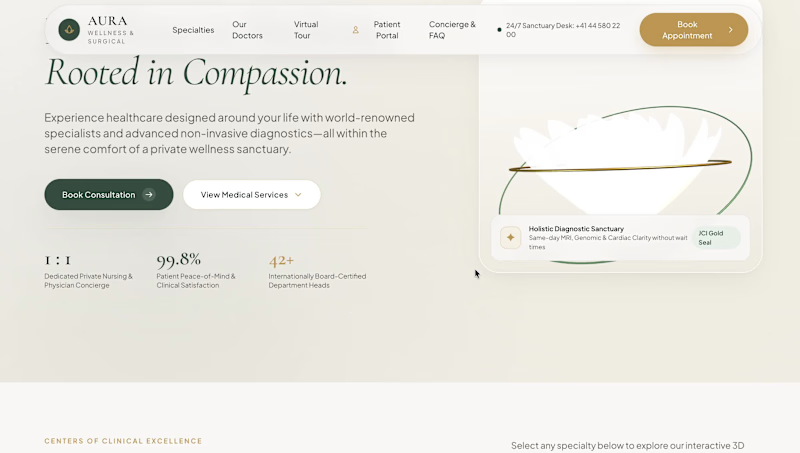
So hey guys, I wanted to share a prototype I’ve been designing and developing over the last two weeks for a luxury medical and longevity institute concept (Aura Wellness & Surgical Sanctuary).
My goal was to completely move away from cold, intimidating hospital templates and instead build something warm, high-end, and deeply functional. the main feature i added were-
Serene Luxury Aesthetic: Warm porcelain tones, soft typography, and glassmorphic UI elements designed to build immediate patient trust.
Interactive 3D Elements: Integrated Three.js interactive touchpoints (like the gentle organic hero sculpture and department previews) that react fluidly to user movement without feeling cluttered.
Full Patient Experience Flow: Fully functional interactive appointment schedulers, a specialist roster directory, a multi-step booking modal, and an AI-assisted patient concierge chat widget.
I'd love to hear your thoughts, feedback, or any areas you think I can refine further as I polish this into a production-ready asset! Let me know what you think, and also if anyone is interested in htese kind of websites for their business they can contact or message me, i will be very glad to make for them.
1
110
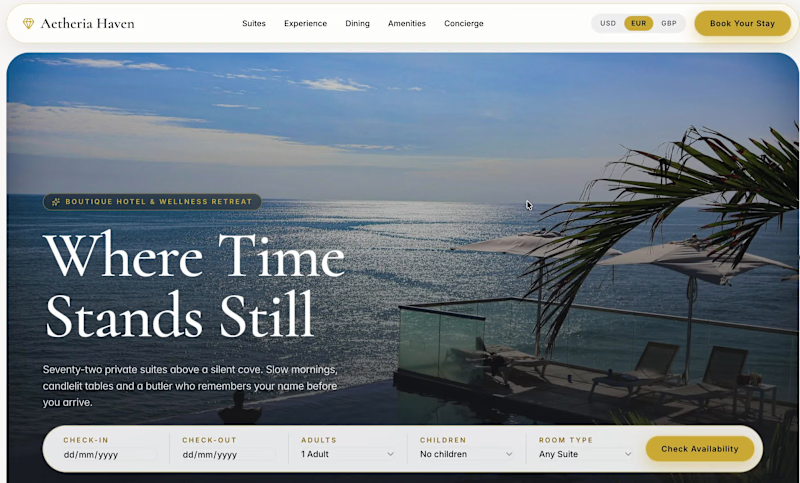
Aetheria Haven — Designing an Immersive Luxury Hospitality & Reservation Experience
An editorial, high-end digital platform and booking ecosystem crafted for an exclusive cliffside boutique hotel and wellness retreat.
Project overview
Aetheria Haven was conceptualized and engineered to elevate digital hospitality branding, moving away from cluttered OTA (Online Travel Agency) templates toward an unhurried, opulent visual experience. Located along the Amalfi Coast, the 72-suite sanctuary required a digital interface that mirrored its physical ethos: serene, bespoke, and meticulously considered.
As the designer and developer, I built the entire web experience in Framer, integrating dynamic currency conversion, live suite modals, environmental estate metrics, and interactive reservation workflows.
The challenge
Luxury hospitality websites often struggle to balance heavy interactive utility such as booking engines, guest counters, and rate calculators with an airy, editorial atmosphere. The challenge was to design a light-mode aesthetic utilizing warm alabaster tones and champagne gold accents that felt exclusive and breathable, while packing high-density functional layers into every scroll.
Design & interactive features
The resulting platform combines cinematic media with subtle micro-interactions to create a frictionless user journey:
Cinematic Hero & Booking Engine: Features an immersive background video view paired with an integrated availability check bar supporting real-time date selectors, guest counts, and room type filtering.
Curated Suite Showcase: A 3-column interactive gallery highlighting exclusive accommodations—including the Executive Penthouse, Oceanfront Villa, and Garden Sanctuary—complete with detailed modal pop-ups displaying square footage, occupancy, and bespoke amenities like private plunge pools and butler service.
Estate Metrics & Bento Grid: High-density data modules showcasing live micro-climate indicators (Aetheria Cove temperature and local weather), Michelin accolades, and a 4:1 staff-to-guest ratio.
The VIP Secret Key (Interactive Surprise): An engagement-driven component placed near the footer. When tapped, it unlocks a glowing gold modal revealing an exclusive seasonal guest perk and reward code.
Global Currency Integration: A seamless multi-currency switcher in the floating header allowing instantaneous translation between USD, EUR, and GBP.
4
354

Strategic Design for Modern Brands | Webflow & Framer
Living in the highly advanced technology era of 2026, it is a tragic irony that we still fail to fully control the devastating effects of global warming for our next generation.
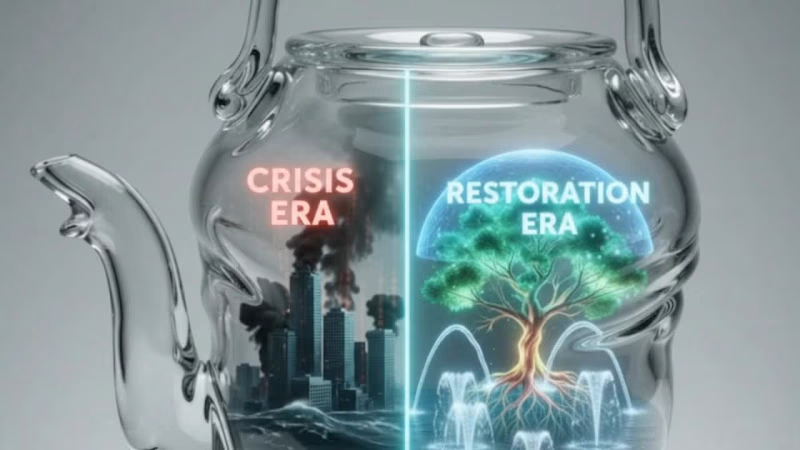
Inspired by the organic, twisted mastery of George Ohr’s earthenware Teapot from The Met Museum Collection, https://www.metmuseum.org/art/collection/search/20144
I wanted to explore how art can bridge the gap between past heritage and a sustainable future.
This reimagined 'Terraforming Core' poses a critical question: If our past generations left us a rich cultural legacy, why can't we leave our next generation a planet where they can eradicate global warming?
Even though our present generation will no longer be around in the year 2125, the innovative carbon-capture solutions we design today will serve as a foundational blueprint and example for them.
Our technology must not replace nature, it must serve as its shield.
Left Side: The Crisis EraDestruction & Pollution: This section depicts a chaotic urban landscape with towering skyscrapers engulfed in thick, black smoke. It visually represents the severe impacts of global warming and air pollution.
Natural Disasters & Hazards: Turbulent ocean waves crash around the city, symbolizing floods and climate-induced catastrophes. A prominent biohazard logo sits at the bottom, hinting at pandemics or extreme environmental crises.
Right Side: The Restoration EraNature & Greenery: This section features a massive, flourishing green tree protected inside a futuristic energy dome. It represents environmental conservation and the revival of nature.
Purity & Balance: Clean, flowing water fountains are shown at the bottom, symbolizing purity, peace, and the sustainable management of natural resources.
Tea pot serves as a powerful warning. If we continue to neglect our environment, we are bound for the devastating "Crisis Era." However, if we actively protect and restore nature, we can build a beautiful, harmonious, and sustainable "Restoration Era."
#floramuseumchallenge #TheMet #ClimateAction #Sustainability #EcoFriendlyTech #ClimateAction #NextGeneration #creativedesign #inspirationdesign #ConceptualArt #VisualStorytelling #AIArtDirection #DigitalSurrealism #CreativeDirection
1
402

Building Scalable Software That Solves Real Business Problem
- 5.0
- Rating
- 2
- Followers
Building Scalable Software That Solves Real Business Problem
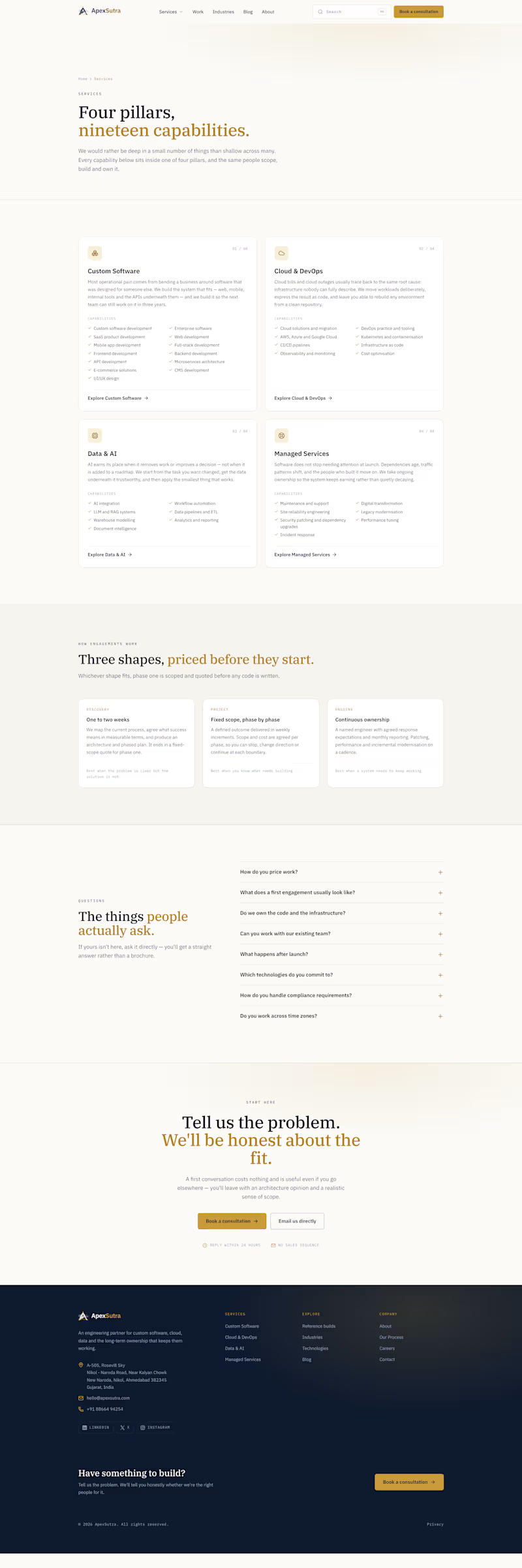
I designed and built ApexSutra's entire digital presence—from branding and design system to a production-ready website.
The challenge was to create a website that demonstrates engineering quality rather than relying on generic marketing. Every decision focused on performance, scalability, maintainability, and user experience.
I developed a reusable design system powered by Tailwind CSS v4, with design tokens for colors, typography, spacing, and motion. The website is fully data-driven, allowing new services and industries to be added through typed content files that automatically generate pages, SEO metadata, sitemap entries, and search integration.
SEO is built into the architecture with structured data, Open Graph metadata, and an auto-generated sitemap, ensuring content and search optimization always stay in sync. Performance was equally important, using CSS-first animations, server-rendered content, and accessibility features like reduced-motion support.
Tech Stack: Next.js 16, React 19, TypeScript, Tailwind CSS v4, Vercel.
0
99
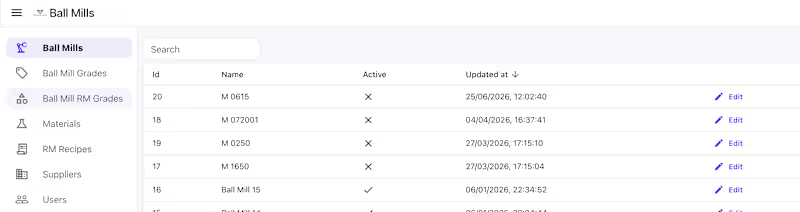
I designed and built the Pristine Admin console, the back-office application that controls all master data behind a manufacturing plant's production system.
The challenge was that master data in a factory setting is unforgiving. A mistyped grade name or a deleted material silently breaks months of historical production records, so the panel had to make the right action easy and the destructive action impossible. I built it as a deliberately constrained interface: records can be deactivated but never deleted, every write is validated on both sides, and access is restricted to admin roles at the authentication layer rather than just hidden in the UI.
The console manages seven resources across the plant: ball mills, ball mill grades, raw material grades, materials, suppliers, users, and raw material recipes. The recipe builder was the most interesting piece. Each raw material grade needs a formula defining how many kilograms of each material go into one batch, so I built a nested form that pulls live material options, enforces a single recipe per grade by filtering out grades already configured, and validates quantities inline. Because the backend keys recipes by grade rather than by their own ID, I mapped the resource identity in the data layer so the standard list, create, and edit flows work transparently over a non-standard endpoint shape.
Most of the engineering went into the data provider. The existing API returns enveloped responses and full collections rather than paginated ones, so instead of reshaping a working production API I wrote a provider that adapts to it: a client-side query engine handling full-text search, boolean filtering, multi-field sorting, and pagination, plus a per-resource field allowlist that strips any key the backend validators would reject before a request goes out. Delete operations throw by design, pointing the user to deactivation instead.
Authentication runs through the same JWT service as the operator app, but the console rejects any account without an admin role at login and re-verifies that on every route change, clearing the session automatically on a 401 or 403. I finished it with a custom MUI theme and layout: an indigo and teal palette, a gradient-washed background, softened surfaces and radii, and a collapsible sidebar reworked to show clean centered icons rather than clipped labels when narrowed.
Tech Stack: React 19, TypeScript, React-Admin 5, MUI 7, Tailwind CSS v4, Vite, Vercel.
0
53
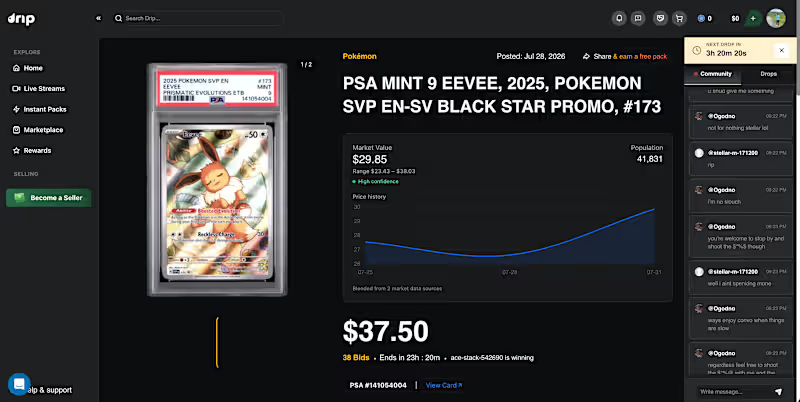
I worked as a Software Engineer on DripShop, a large-scale live-streaming e-commerce platform that enables creators and businesses to sell products through interactive live video experiences. My work focused on building production-ready features that supported high-traffic user journeys while maintaining performance, reliability, and a seamless shopping experience.
The platform combines live video, real-time user interactions, payments, inventory management, and order processing into a single experience. My responsibility was to translate complex product requirements into scalable, maintainable frontend and full-stack solutions, collaborating closely with designers, backend engineers, product managers, and QA throughout the development lifecycle.
I contributed to the development of customer-facing experiences across the platform, building reusable React and Next.js components, integrating backend APIs, implementing responsive interfaces, and improving application performance. Alongside feature development, I resolved production issues, optimized existing workflows, and helped ensure new releases met high standards for usability and reliability.
Working on a product used by thousands of shoppers required careful attention to performance, state management, and code quality. I participated in code reviews, collaborated on architectural decisions, and followed modern engineering practices to keep the application scalable and maintainable as new features were introduced.
This project strengthened my experience building production-scale web applications, working within a large collaborative engineering team, and delivering features that directly impacted real users and business outcomes.
Tech Stack: React, Next.js, TypeScript, Node.js, GraphQL, REST APIs, Tailwind CSS, Git, GitHub Actions, Vercel, Agile Development.
0
69
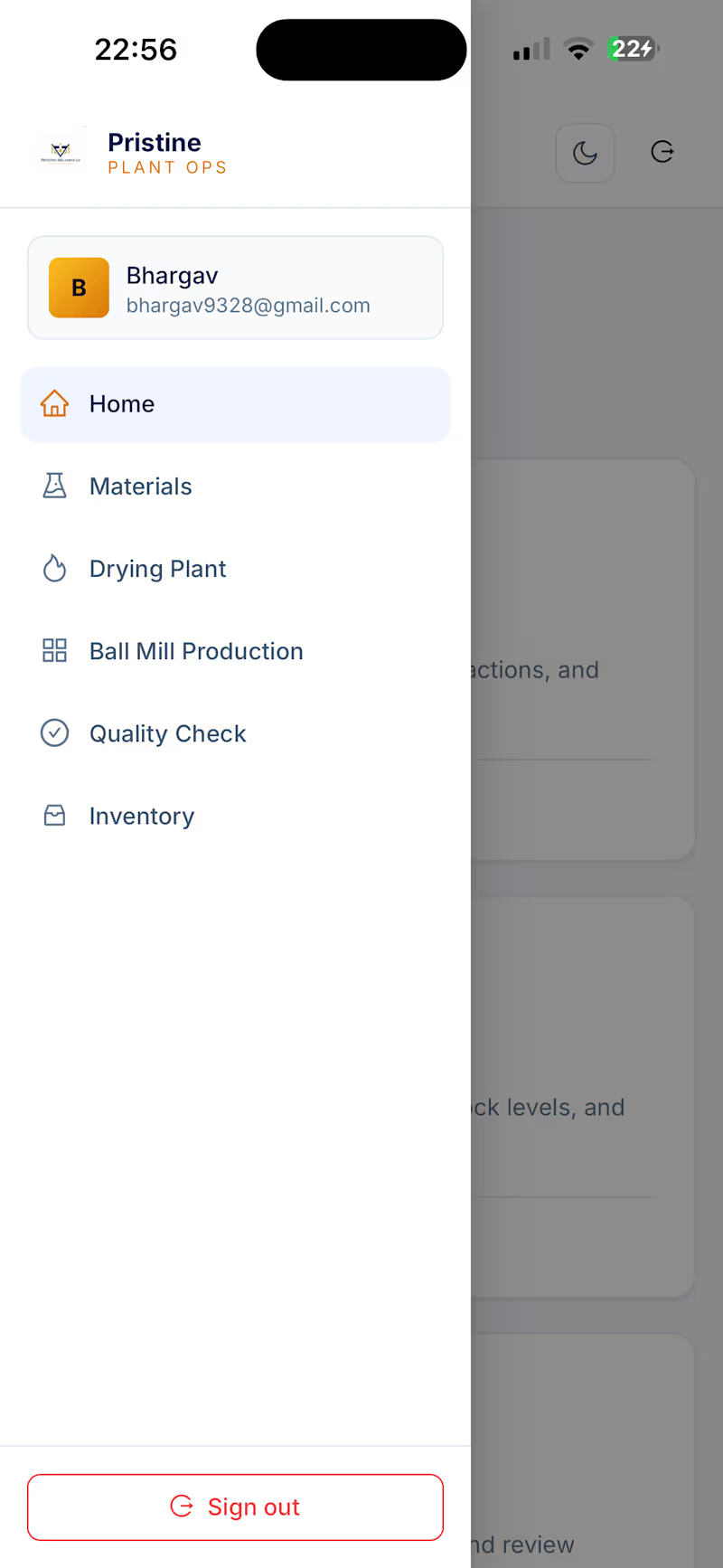
I designed and built Pristine's entire digital operations platform, from database architecture and role-based workflows to a production-deployed web suite and an AI analytics layer.
The challenge was replacing a ceramic processing plant's paper-and-spreadsheet production logs with a system that floor operators would actually use, while giving management the traceability and insight the paper trail never could. Every decision focused on data integrity, least-privilege security, and keeping the interface simple enough for shift operators to work quickly.
I built four services around a single PostgreSQL schema. The operator app handles the full production lifecycle: raw material intake, drying plant shifts, multi-section ball mill batch entry, quality control, and finished-goods inventory, with Excel export throughout and navigation that adapts to each of eight distinct plant roles. A modular Express and Prisma API enforces that access control at the route level. A separate React-Admin console keeps master data (mills, grades, recipes, suppliers, users) out of the operator's way.
The most important piece was traceability. I designed a quality control gate that sits between production output and inventory. QC records are created automatically when a batch completes, reviewed by an inspector, and only generate an inventory entry if quality passes. Every finished bag carries an auto-derived lot number encoding its production date, flow rate, monthly sequence, and bag count, so any outbound shipment can be traced back through inventory and QC to the exact mill batch that produced it.
On top of that I built an AI analytics agent that lets managers query the plant in plain English, architected around a zero-data-to-LLM guarantee. The model only ever sees the database schema and the question, never a row of production data. Five independent layers enforce it: two least-privilege Postgres roles separating read-only queries from insert-only auditing, a sqlglot AST guard that rejects any non-SELECT statement, a per-role table allowlist, the prompt design itself, and a full audit log of every interaction. Answers stream to the browser over Server-Sent Events through a LangGraph pipeline that routes, guards, plans the query, executes, then explains the result in business terms.
Tech Stack: React 19, TypeScript, Ant Design, TanStack Query, Tailwind CSS v4, Node.js, Express, Prisma, PostgreSQL, React-Admin, MUI, Python 3.12, FastAPI, LangGraph, OpenAI, AWS EC2, Nginx, Supabase, Vercel.
1
198

UX/UI & Product Design Expert
UX/UI & Product Design Expert

Sparking up motion & telling visual stories!
Sparking up motion & telling visual stories!



Senior Design Partner for scale-ups · AI design workflows ·
Senior Design Partner for scale-ups · AI design workflows ·