The network for creativity
Join 1.25M professional creatives like you
Connect with clients, get discovered, and run your business 100% commission-free
Creatives on Contra have earned over $150M and we are just getting started
Back to feedPost

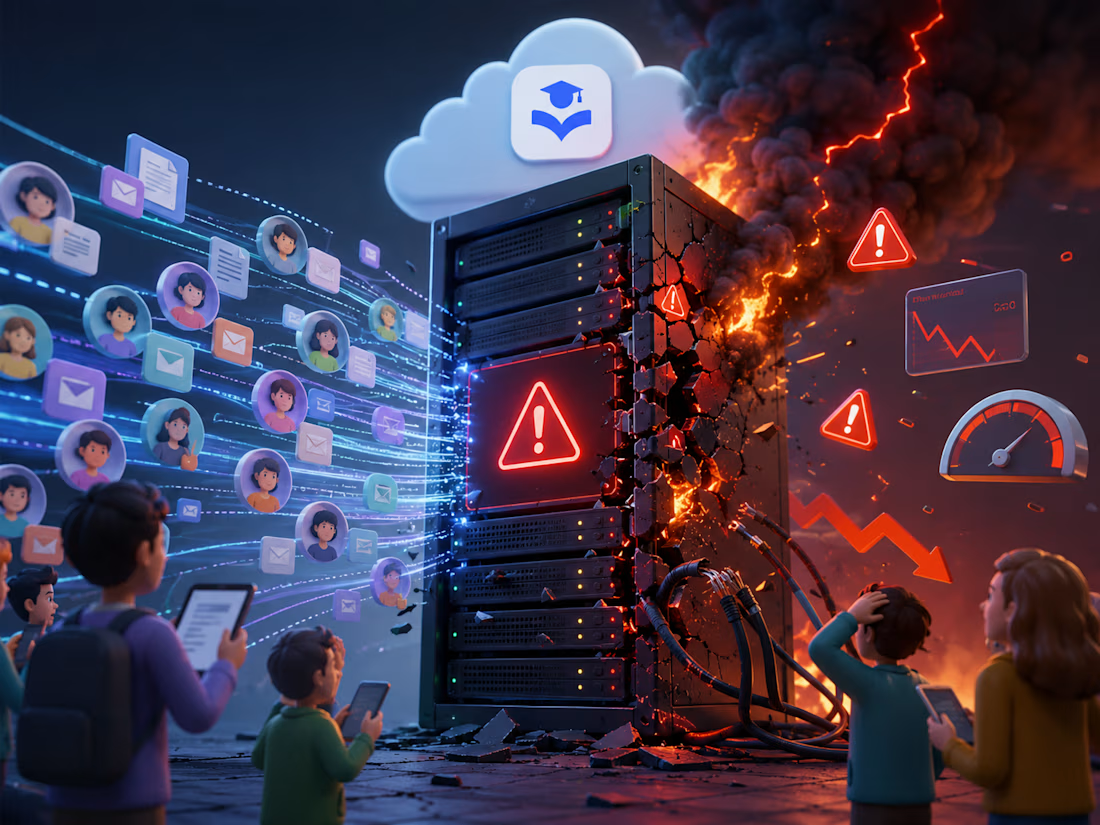
At 8:45 AM on a Monday, 100+ schools tried to mark attendance at the same time. The server crashed.
Not slowed down. Crashed. Teachers staring at loading screens. Admins refreshing dashboards. Parents getting error messages instead of notifications. The entire platform went dark for 11 minutes during the single most important window of the school day.
Here's what was happening under the hood: every attendance mark triggered a chain reaction. Write to the database. Calculate the student's updated attendance rate. Check if the student crossed an absence threshold. Notify the parent. Update the admin dashboard. Generate the daily report.
One teacher marking 30 students present wasn't one action. It was roughly 180 operations hitting the database simultaneously. Now multiply that by thousands of teachers across 100+ schools, all within the same 15-minute window every morning.
The database was doing work it should never have been doing in real time.
The attendance rate for a student who's been present 87 days out of 100 doesn't need to be recalculated from scratch every time a teacher taps "present." The admin dashboard showing school-wide stats doesn't need a fresh database query every time someone opens it. Parent notifications don't need to block the teacher's screen while they're sent.
What we changed:
We put a caching layer between the app and the database. Frequently requested data (attendance rates, dashboard stats, student profiles, fee summaries) gets served from memory instead of hitting the database every single time.
When a teacher marks attendance, the response comes back instantly from cache. The heavy work (recalculations, notifications, report updates) happens in the background through a queue system. The teacher never waits. The parent still gets notified. The dashboard still updates. But nothing blocks anything else.
The result: The platform went from buckling under morning load to handling over 10,000 requests per second without breaking a sweat. That 8:45 AM spike that used to crash the system? It now processes silently while teachers move on to their first lesson.
The part that matters if you're not an engineer: The teachers didn't notice the change. That's the point. They just stopped seeing loading screens. Dashboards started opening instantly. Notifications started arriving on time. The technology became invisible, which is exactly when it's working.
This is a pattern I see in every growing platform. You build the product, it works great with 10 users, then real scale arrives and the architecture that got you to launch can't get you to growth. Schools, clinics, marketplaces, any product with usage spikes and concurrent users hits this wall eventually.
If your platform is slowing down under load, or you're worried it will when real users show up, I've been through this exact scaling problem. Happy to talk through it: https://contra.com/taimoor_khan_hlf9exdh
→ Full case study: https://contra.com/p/Qe7mEsNm-development-of-edu-pilot-pro-ai-powered-school-operating-system
Product Design, Freelance, Small Business
The network for creativity
Join 1.25M professional creatives like you
Connect with clients, get discovered, and run your business 100% commission-free
Creatives on Contra have earned over $150M and we are just getting started











Related posts


Insanely smooth and elegant dashboard concept! Love the color palette and typography. Outstanding work!


EarthHub – A Platform for Nature Expeditions ⛰️
Stumbled upon this project in my hard drive, had to publish!

Top to bottom nice work

Why does every restaurant group fix inconsistency with a bigger logo?
I tried a smaller one with a better schedule
Norr & Co.

This is very nice 👌