The network for creativity
Join 1.25M professional creatives like you
Connect with clients, get discovered, and run your business 100% commission-free
Creatives on Contra have earned over $150M and we are just getting started
Back to feedPost


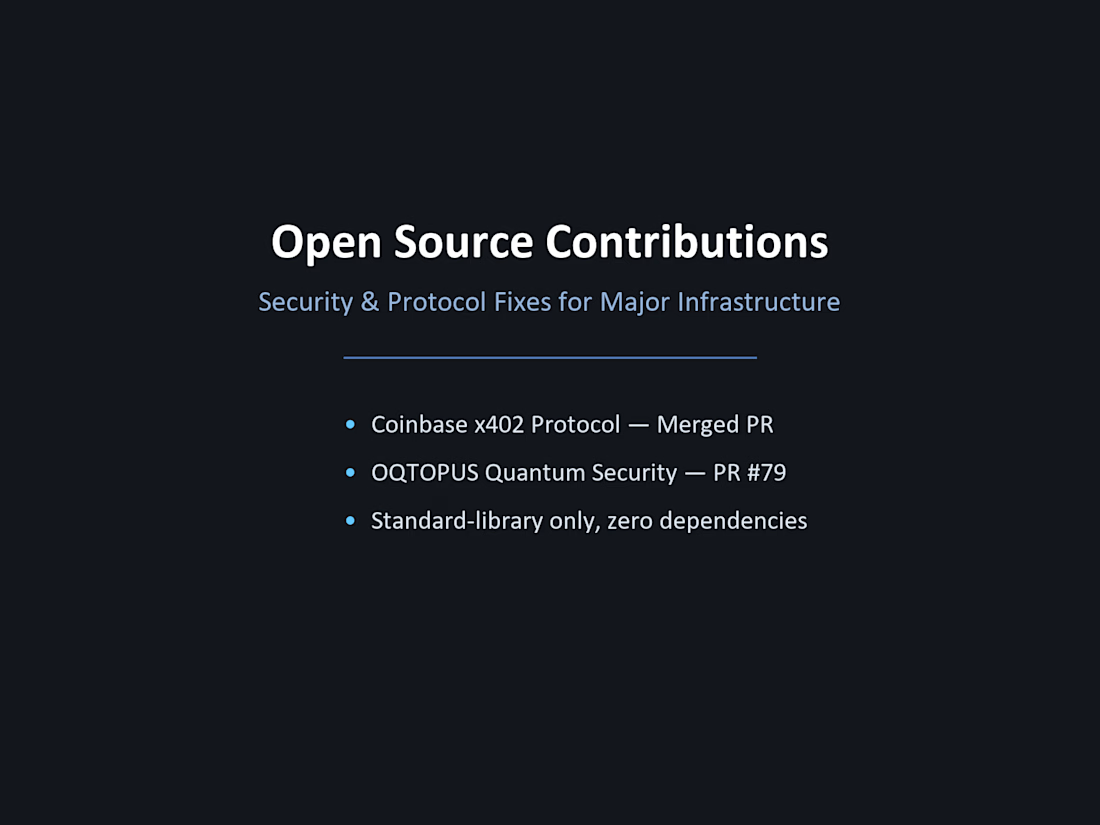
I identify security and protocol gaps in major open-source infrastructure and ship fixes upstream. Contribution to Coinbase's x402 micropayment protocol (merged PR): added a security API built with TypeScript. Contribution to OQTOPUS quantum ecosystem (PR #79): built a zero-dependency Python attestation module using standard-library SHA-256 cryptography that detects tampered quantum hardware jobs. Full details at mbennett-labs.github.io/contributions.html.


The network for creativity
Join 1.25M professional creatives like you
Connect with clients, get discovered, and run your business 100% commission-free
Creatives on Contra have earned over $150M and we are just getting started





Related posts

Designing a developer portfolio that doesn't look like a template
The brief
Build a developer portfolio in Next.js and Tailwind. No generic AI-looking hero. Dribbble-level polish.
The starting point
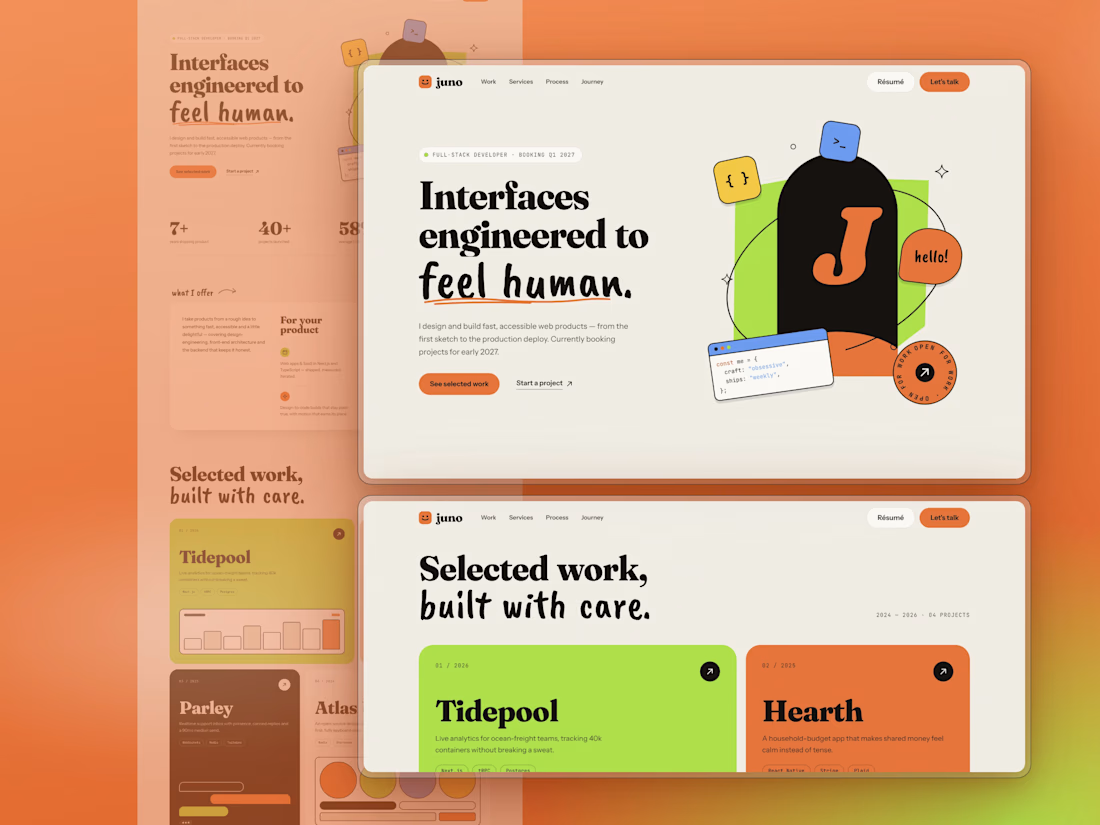
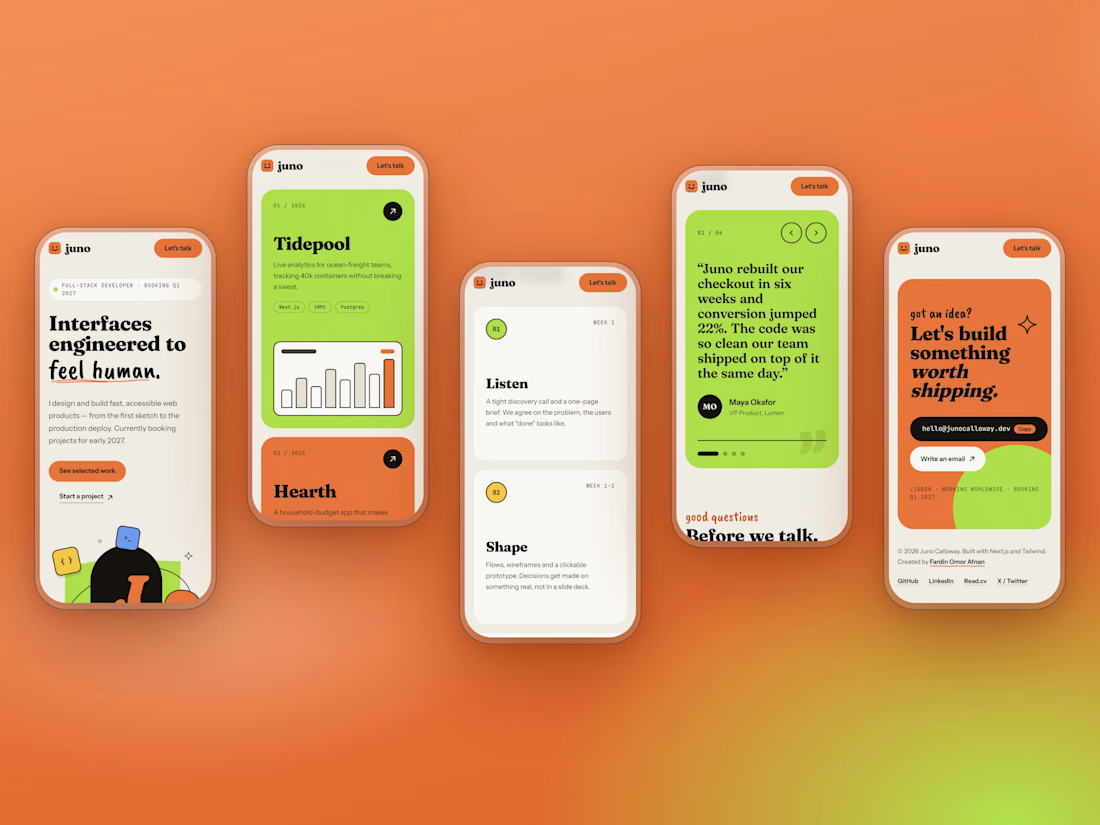
I took a reference site with a warm cream background, a chunky serif, a handwritten accent and a photo cutout over a lime shape. The rule was to take inspiration, not copy: borrow the mood, the type pairing and how elements are placed, then make it a different page.
Decision 1: replace the photo with a composition
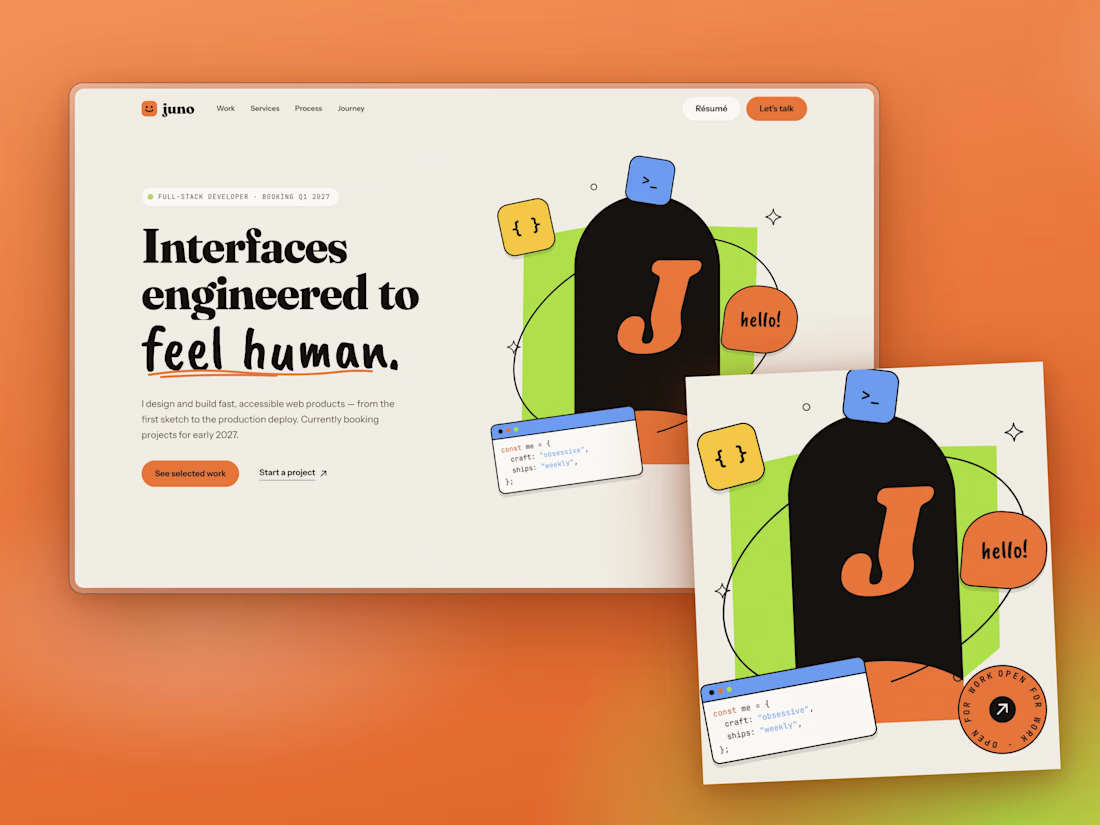
A portfolio template can't ship someone's face, so I built the hero from code instead. A lime slab, an ink arch holding your initial, an orbit line that passes behind the arch and in front of it, and floating stickers: a code window, a "hello!" bubble, a spinning "open for work" badge. They sit on separate depth layers and shift with the cursor. If you drop a transparent PNG into public/, the hero swaps your photo in automatically.
Decision 2: type that does the talking
Fraunces at heavy weight for headlines, a brush script for one phrase per section, Instrument Sans for reading, JetBrains Mono for labels. The script is kept rare on purpose. Overuse makes it a gimmick.
Decision 3: contrast before aesthetics
The reference uses white text on orange. At body size, white on that orange fails WCAG AA, so my buttons use ink text instead. It also reads more editorial.
Decision 4: single-column storytelling
My first journey section used two columns and felt sparse on the right. I moved it to one column with a vertical timeline, full-width roles and stack tags.
A mistake worth sharing
My first testimonials section was a horizontal scroller. On a wide monitor the cards sat flush against the left edge, because I'd written an invalid calc() for the padding and the browser silently dropped it. The staggered offsets made it look worse. I replaced it with one featured quote at a time: arrows, dots and a panel that changes colour per person. Simpler, and it reads better.
What I'd do next
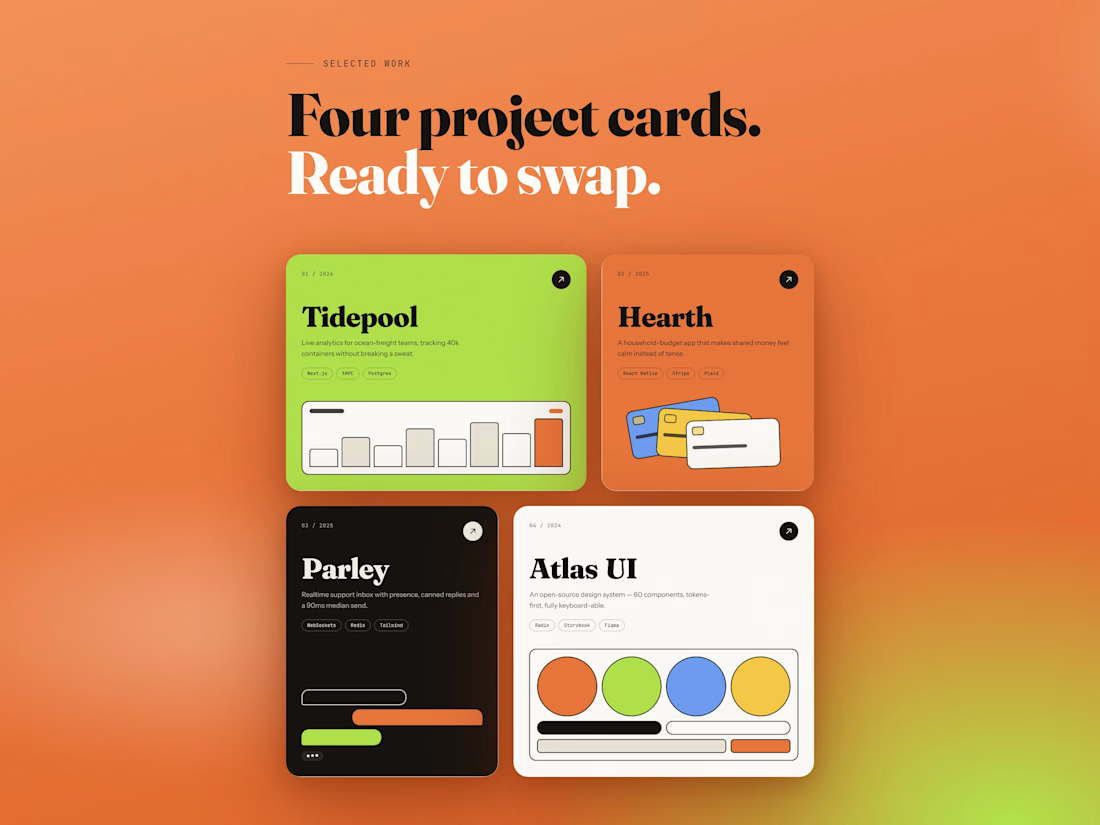
Real project screenshots instead of CSS mock-ups, and a case-study page template for each project.
Built with Next.js 16, React 19, Tailwind v4 and TypeScript. No image files, all SVG and CSS.



Beautiful work

I built 'Fintek', a fintech payments website, on Base44. It presents digital-asset-powered payment rails that settle in local currency, with a live dashboard preview, industry solutions and a compliance section. With my prior fintech experience, I focused on trust and clear design, as demand for functional fintech sites keeps growing.


putting the compliance section up front is what actually earns trust on a payments site

An AI support agent for a coffee shop that answers menu and FAQ questions, takes orders, and raises support tickets in real time. Customers get an order number and then a live notification in the chat when their order is delivered. The menu, FAQs, tickets and chat logs all sync with Google Sheets, so staff can update the menu in a spreadsheet instead of touching code. An admin dashboard shows tickets, orders, past conversations and sales statistics. Built with FastAPI, LangChain and an LLM, and deployed in Docker.


CozyBrew: AI Support & Ordering Agent for Coffee Shops

The Google Sheets sync is the smartest call here — staff can update the menu in a spreadsheet instead of touching code, so the system survives the people who actually run the shop. How do you handle it when a customer orders something that was just taken off the menu mid-conversation?