The network for creativity
Join 1.25M professional creatives like you
Connect with clients, get discovered, and run your business 100% commission-free
Creatives on Contra have earned over $150M and we are just getting started
Back to feedPost

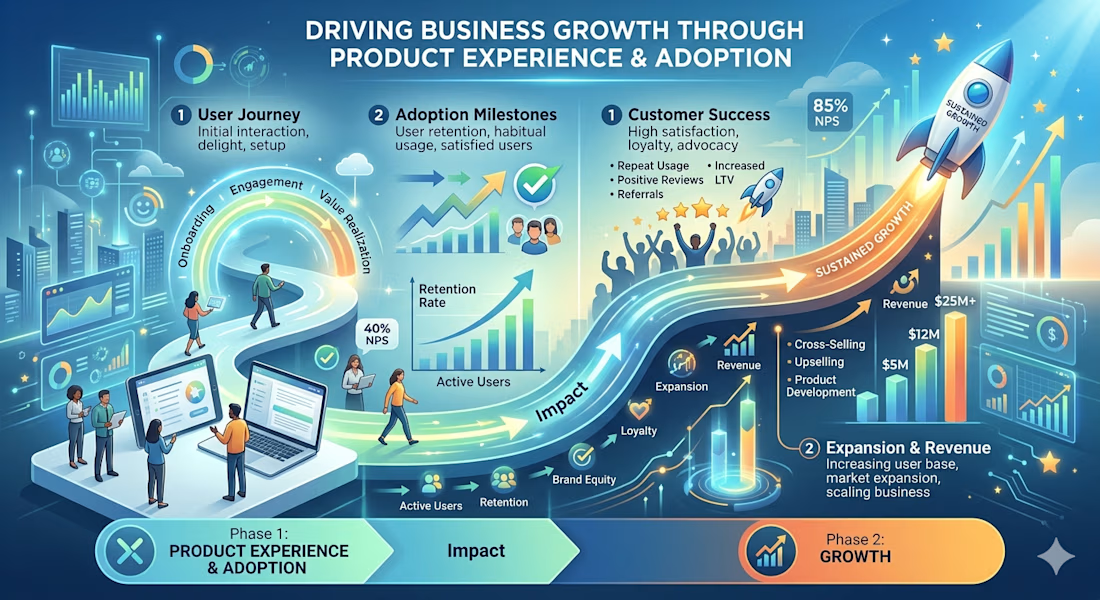
Your product may not have a growth problem.
It may have an experience problem.
Users leave when:
❌ Onboarding feels confusing
❌ value isn’t clear fast enough
❌ journeys create friction
❌ The product feels overwhelming
❌ activation takes too much effort
That’s why I launched my new Services focused on:
🚀 Product Experience & Adoption Strategy
I help SaaS and digital products improve:
✔ User onboarding
✔ Activation & engagement
✔ Product adoption
✔ Retention
✔ UX friction points
✔ Growth-focused experiences
My service combines:
🧠 Strategic UX thinking
📊 Product adoption analysis
⚡ AI-assisted experience reviews
🎯 Human-centered growth recommendations
🔹 Available Services
✅ UX & Growth Snapshot
Fast product experience audit with quick-win insights
✅ Hybrid UX & Adoption Strategy Review
Deep analysis of onboarding, usability, and retention opportunities
✅ Fractional Product Experience Partner
Ongoing UX + growth strategy support for scaling teams
Perfect for:
• SaaS startups
• AI tools
• Learning platforms
• EdTech & HealthTech
• Digital product teams
If you’re building a product and want users to:
→ understand faster
→ activate sooner
→ engage deeper
→ stay longer
let’s connect.
📩 Message me for a product experience review or UX growth audit.
#ProductStrategy #UXStrategy #SaaS #UserExperience #ProductLedGrowth #GrowthStrategy #ProductDesign #Onboarding #Retention #AIProducts #StartupGrowth #DigitalExperience #CustomerExperience #UXAudit
The network for creativity
Join 1.25M professional creatives like you
Connect with clients, get discovered, and run your business 100% commission-free
Creatives on Contra have earned over $150M and we are just getting started

Challenges
View all


Related posts


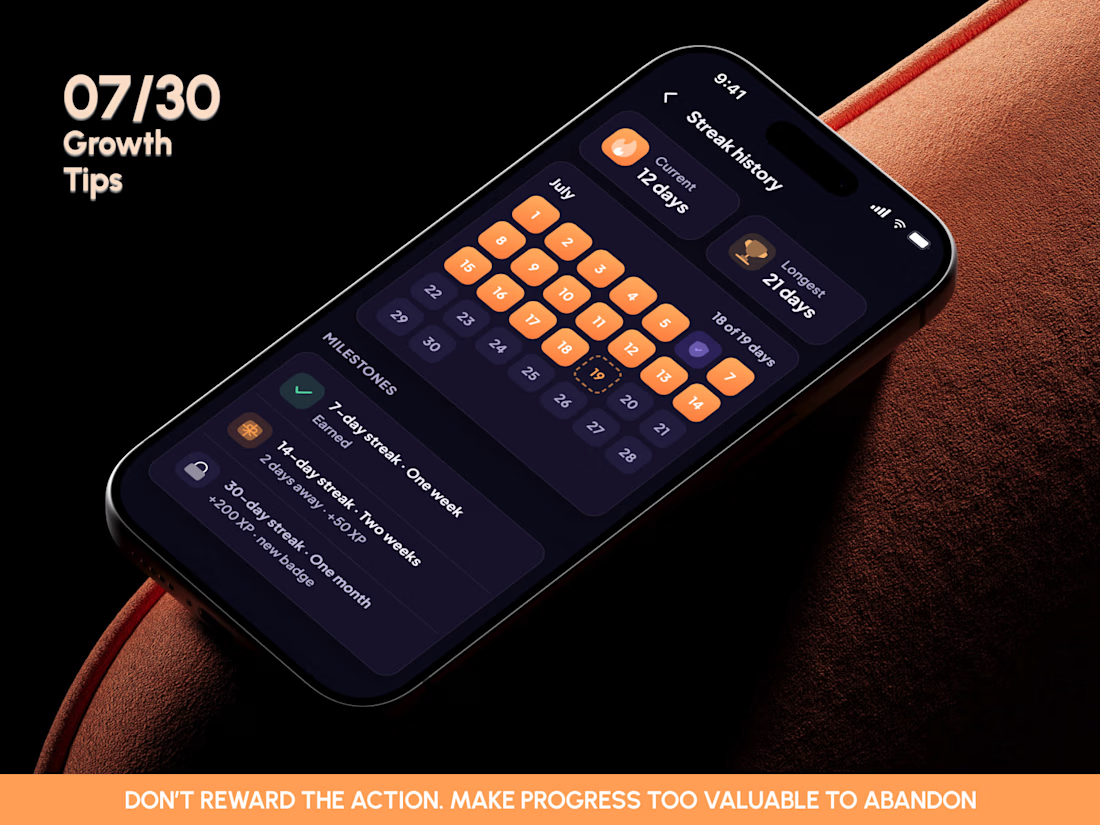
🎓 GROWTH TIP 07/30: DON’T JUST REWARD ACTIONS. MAKE PROGRESS TOO VALUABLE TO ABANDON.
Most learning apps treat gamification as a reward layer.
Complete a lesson → get XP.
Come back tomorrow → extend a streak.
Hit a milestone → unlock a badge.
Useful mechanics. But none of them creates retention on its own.
The stronger growth loop starts when every action makes the user feel like they’ve built something worth coming back to.
In this EdTech concept, a completed lesson doesn’t disappear.
It becomes part of a visible history.
History builds a streak.
The streak moves toward a milestone.
The milestone creates a reward.
And the next locked achievement creates anticipation.
Action → accumulation → anticipation → return.
That’s the difference between adding gamification and designing a progression system.
The goal isn’t to make learning feel like a game.
It’s to make accumulated progress feel valuable enough that leaving means walking away from something the user has already invested in.
The better question isn’t:
“How do we reward this action?”
It’s:
“How does this action increase the value of coming back?”
🔥 Streaks make consistency visible.
🏆 Milestones turn repetition into progress.
⭐ XP gives every session continuity.
🔒 Locked achievements give progress somewhere to go next.
One reward can create a moment.A connected progression system creates a reason to return.
#MobileDesign #GrowthUX #Gamification #EdTech #RetentionUX #ProductDesign #MobileApp #LearningUX #EngagementDesign #HabitDesign
👉 BOOK A MOBILE APP SESSION
https://calendly.com/asol_design/book-diagnostic-call-linkedin-clone


Excellent balance and structure. Keep up the great work!

Onboarding flow for LegWork 👇
Most fitness apps are built around numbers and hitting them starts to feel like homework.
I have always loved walking and traveling for the joy of it, so we are designing an app that celebrates exploring more of the earth while you are here.


Nice work

What happens when Product Management, Business Analysis, UI/UX, and Web Development come together?
You get a different way of building digital products.
I enjoy working across the entire product journey:
→ Understand the problem
→ Analyze the business & user needs
→ Define the product
→ Design the experience
→ Build the solution
I created my Productfolio to showcase not only what I’ve built, but more importantly, how I think behind every product decision.
I don’t just design products.
I think through the problem, define the product, design the experience, and build the digital solution.


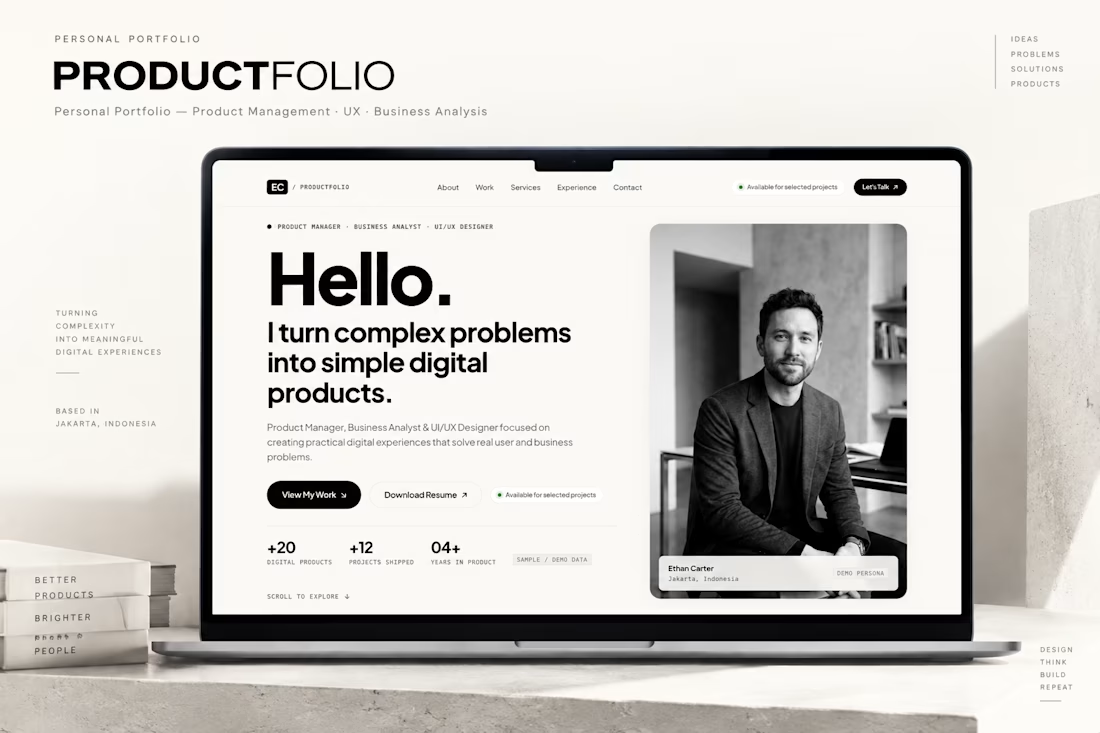
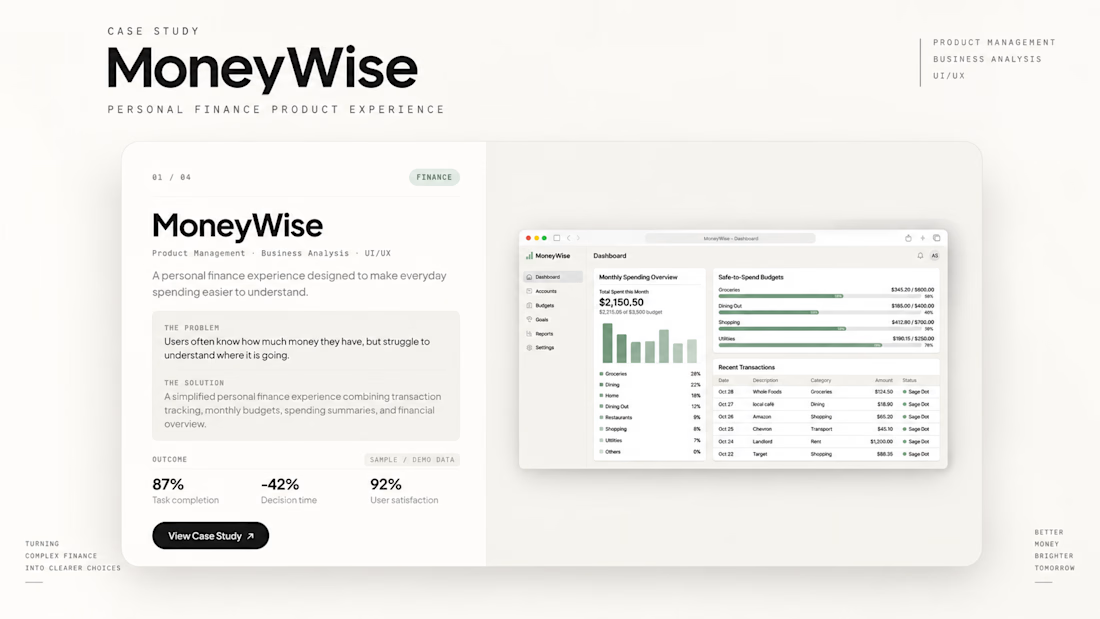
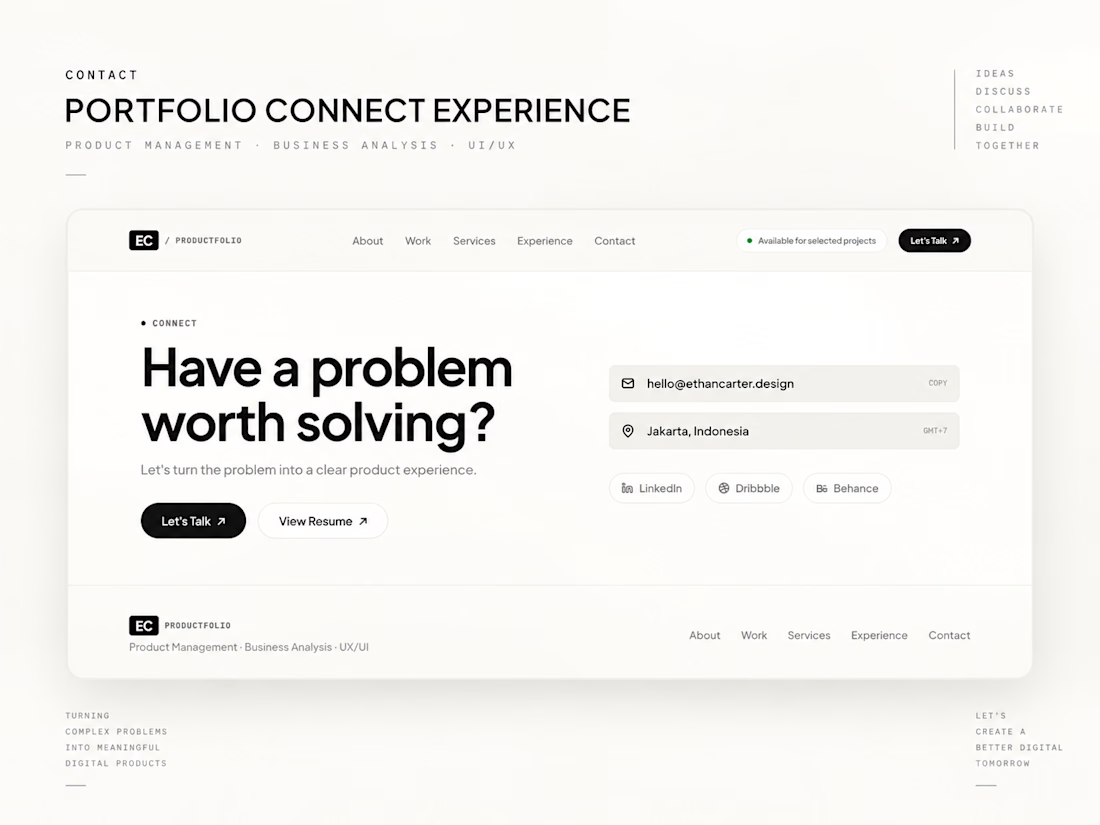

Connecting the problem definition to design and development helps keep the product story consistent. Where do you find the biggest gaps between business requirements and what users actually need?