The network for creativity
Join 1.25M professional creatives like you
Connect with clients, get discovered, and run your business 100% commission-free
Creatives on Contra have earned over $150M and we are just getting started
Back to feedPost
🎓 GROWTH TIP 07/30: DON’T JUST REWARD ACTIONS. MAKE PROGRESS TOO VALUABLE TO ABANDON.
Most learning apps treat gamification as a reward layer.
Complete a lesson → get XP.
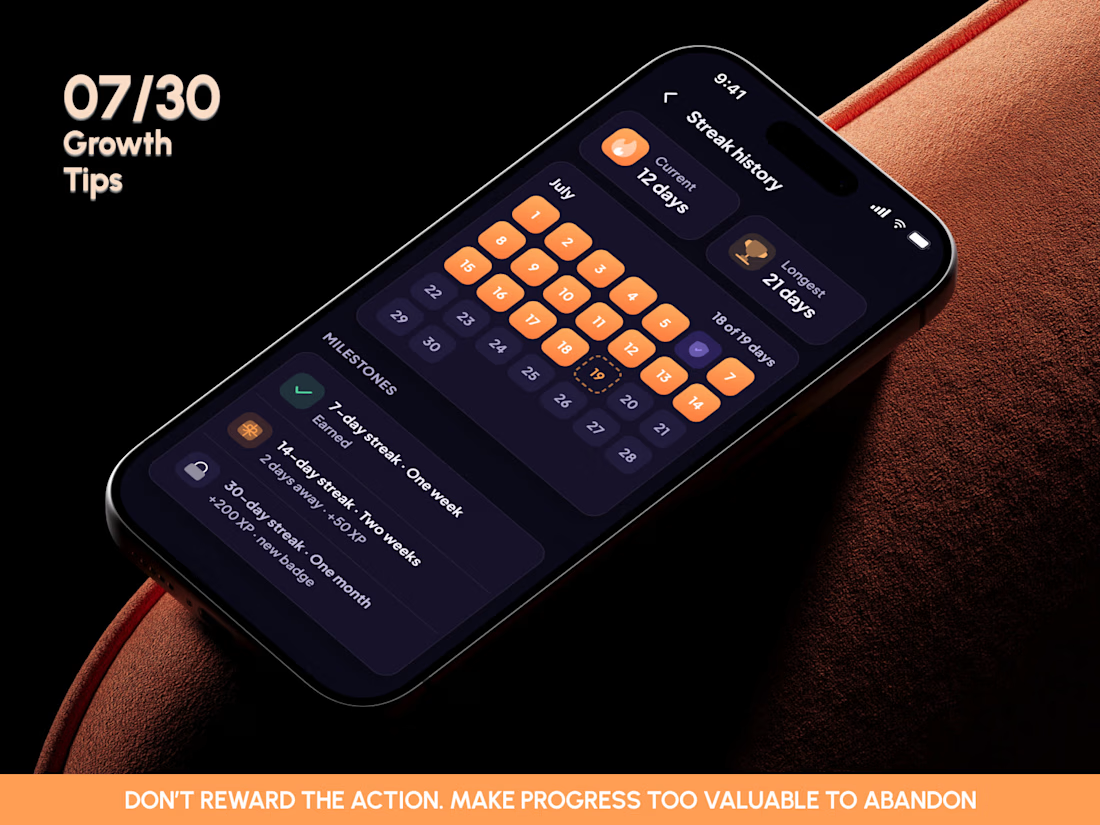
Come back tomorrow → extend a streak.
Hit a milestone → unlock a badge.
Useful mechanics. But none of them creates retention on its own.
The stronger growth loop starts when every action makes the user feel like they’ve built something worth coming back to.
In this EdTech concept, a completed lesson doesn’t disappear.
It becomes part of a visible history.
History builds a streak.
The streak moves toward a milestone.
The milestone creates a reward.
And the next locked achievement creates anticipation.
Action → accumulation → anticipation → return.
That’s the difference between adding gamification and designing a progression system.
The goal isn’t to make learning feel like a game.
It’s to make accumulated progress feel valuable enough that leaving means walking away from something the user has already invested in.
The better question isn’t:
“How do we reward this action?”
It’s:
“How does this action increase the value of coming back?”
🔥 Streaks make consistency visible.
🏆 Milestones turn repetition into progress.
⭐ XP gives every session continuity.
🔒 Locked achievements give progress somewhere to go next.
One reward can create a moment.A connected progression system creates a reason to return.
#MobileDesign #GrowthUX #Gamification #EdTech #RetentionUX #ProductDesign #MobileApp #LearningUX #EngagementDesign #HabitDesign
👉 BOOK A MOBILE APP SESSION
https://calendly.com/asol_design/book-diagnostic-call-linkedin-clone


This reframes streaks in a way that finally clicks for me, the loss aversion is doing more work than the reward ever did. I'd guess it only holds up if the progress feels irreplaceable though, so what happens once someone builds a huge streak and life gets in the way for a week?

The shift from simple rewards to visible progress is such a strong product insight. I especially like how the streak becomes a story the learner can build, rather than just another counter to protect.

The progress too valuable to abandon framing is sneaky good. Streaks work because quitting starts to feel like deleting your own history, not just skipping a day. Loss aversion wearing a friendly badge.

Nice build

Great work 🔥 congratulations 🎉

The interesting case is a missed day. If the built history survives a broken streak the return is cheap; if it resets, the same mechanic starts pushing people out.

Nice !

smooth and polished design. Great job! 🔥👏


Good work🔥👏👏

Excellent balance and structure. Keep up the great work!


Thanks😍


Great work

How would this progression system welcome someone back after a missed week? Keeping completed lessons visible even when a streak breaks seems useful: they can see that their learning still counts and choose a manageable next step.

This deserves more than just liking, this deserves to be featured! 🏆 Making progress too valuable to abandon instead of just handing out surface XP is brilliant product strategy.
The network for creativity
Join 1.25M professional creatives like you
Connect with clients, get discovered, and run your business 100% commission-free
Creatives on Contra have earned over $150M and we are just getting started

Challenges
View all




Related posts


GoTeacher found our Sunbeam template and asked us to make it theirs.
GoTeacher is backed by Harvard Innovation Labs and helps 100+ K-12 school districts see every app they pay for and whether it's safe for student data.
We kept Sunbeam's structure and animations and built the rest: GoBot the 3D mascot, shader clouds, real product dashboards and five product pages. Live in one week.
Full case study on my profile. Want one of our templates turned into your own site? Message me.


The work is interesting


Another exciting project wrapped up! ✨
This time, we worked on Olympian by Design – a premium one-on-one coaching brand focused on personal transformation and high performance.
Our goal was to create more than just a beautiful website. We wanted the entire client journey to feel connected – from the first landing page visit to purchasing the program and going through the coaching experience.
We designed three custom pages from scratch, built them in Kajabi, created a branded member area, set up the coaching program, and refreshed the app with new onboarding screens.
All wrapped in a bold, dark, luxury-inspired design.
Because great design shouldn't stop at checkout. It should follow the client through the entire experience.

Great project

One brand, very different variety products. 👀
BASYX is one of my favorite projects because the packaging had to work across categories, from skincare to food, while still feeling like one cohesive brand.
That’s the fun challenge of multi-product brands: creating a visual system flexible enough to grow without losing its identity.


wow amazing

