The network for creativity
Join 1.25M professional creatives like you
Connect with clients, get discovered, and run your business 100% commission-free
Creatives on Contra have earned over $150M and we are just getting started
Back to feedPost

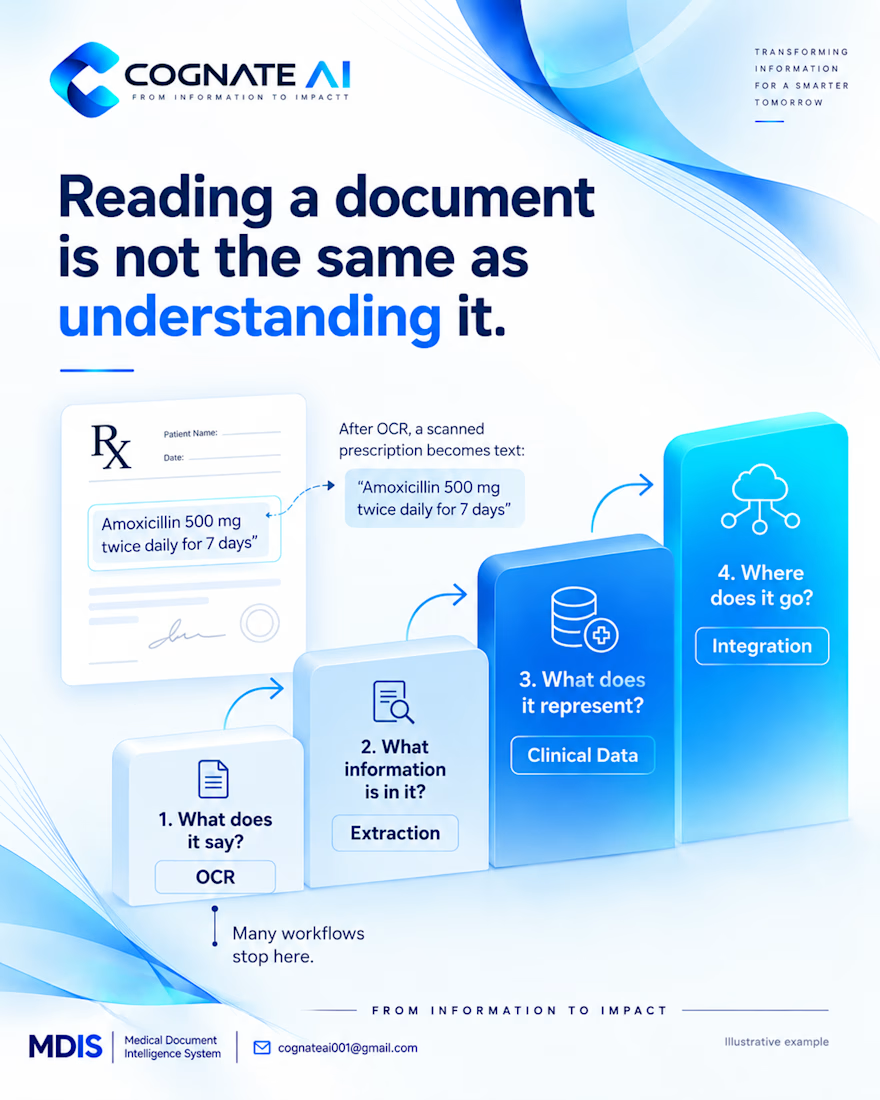
OCR can read a prescription. It can't tell you what the medication is.
That sounds odd, so here's the difference.
After OCR, a scanned prescription becomes text:
"Amoxicillin 500 mg twice daily for 7 days"
That's a real step forward. The page is no longer a flat image.
But to a software system, it's still just a string of characters. It doesn't know which part is the drug, which is the dose, and which is the frequency.
A document workflow really has to answer four questions:
What does the document say? → OCR
What information is in it? → Information extraction
What does that information represent? → Clinical entities such as medication, dosage, and diagnosis
Where does it need to go? → Integration with databases, APIs, and applications
Many projects stop at question one and wonder why staff are still re-typing data.
Reading is not the same as understanding. OCR is an essential foundation, but the value shows up in the steps after it.
At Cognate AI, we treat OCR as the first layer of a longer chain, not the finish line.
(The prescription text above is an illustrative example.)
#CognateAI #DocumentAI #HealthcareAI #HealthTech


The network for creativity
Join 1.25M professional creatives like you
Connect with clients, get discovered, and run your business 100% commission-free
Creatives on Contra have earned over $150M and we are just getting started

Challenges
View all


Related posts


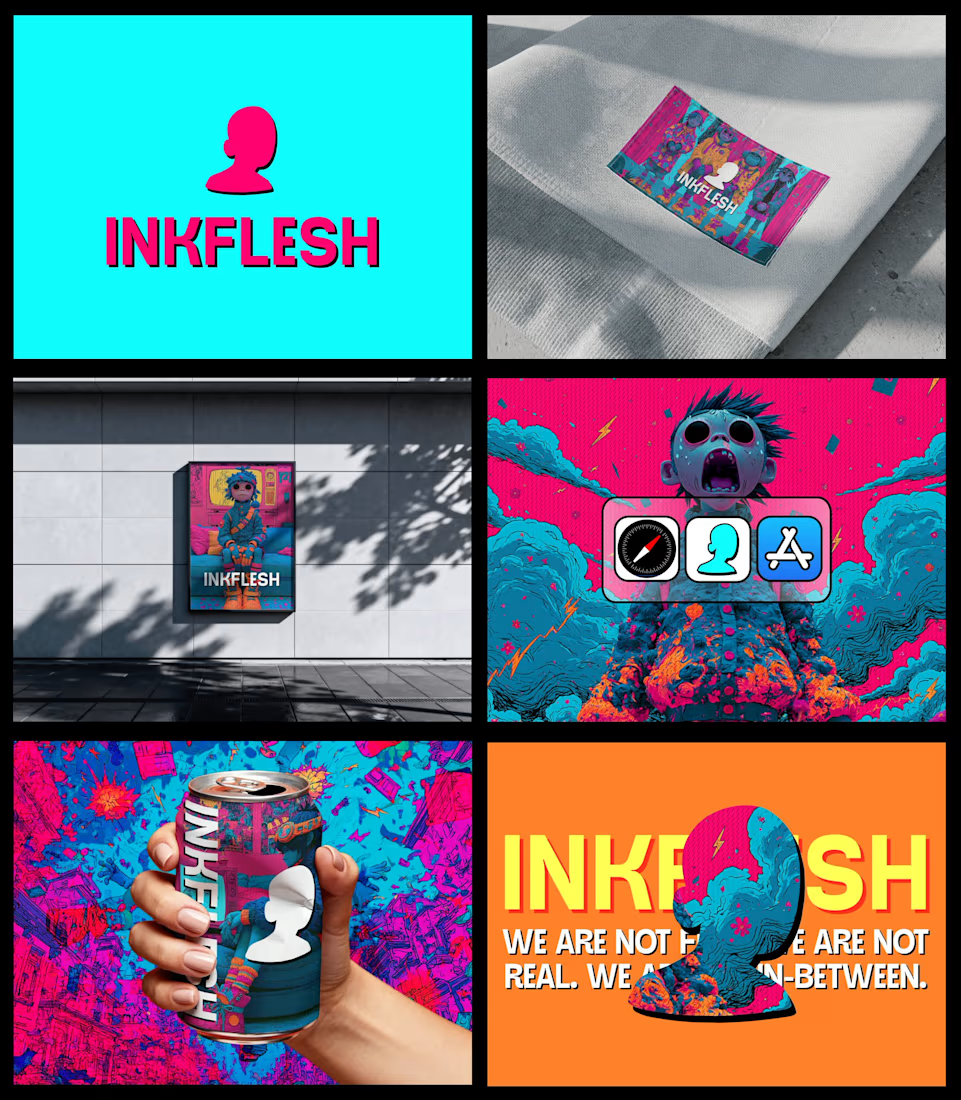
In my INKFLESH identity work, the wordmark runs off the can's curve and gets partly hidden behind artwork on posters. That crop asks the rest of the identity to carry more recognition. The mark has a job when the name is only partly there.


Same data, two different ways to experience it 🤔
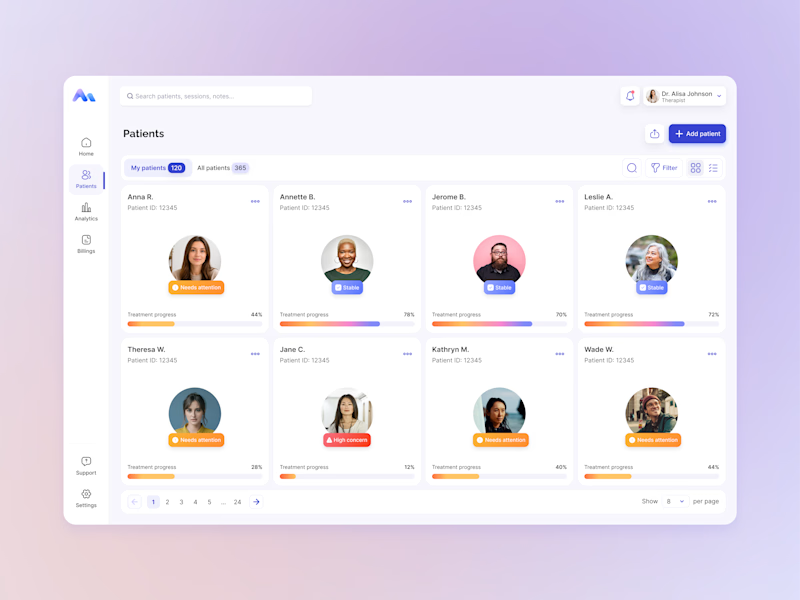
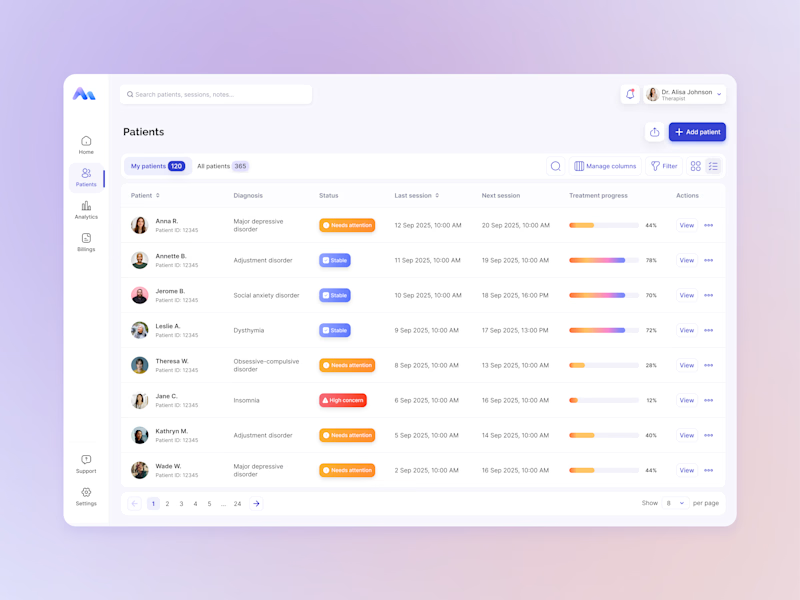
I explored two patient list layouts for a mental health platform: a card view and a table view.
Cards feel more visual and personal, but space is limited and adding more information can quickly make them crowded. For complex enterprise products, I often find tables more practical — they’re easier to scan, compare, sort, and can support more columns when users need greater visibility.
For this kind of workflow, I’m leaning toward the table view. Which would you choose — cards or table?
11 voted
55%
9 voted
45%
20 votes
Closed

For a mental-health patient list the choice isn't really card vs table — it's scan-speed vs context. The card wins the first meeting because the photo and name set the clinician's mental model before they touch the row, but the table is what holds up under the daily rhythm of...

Enterprise RAG AI: Private Doc Intelligence
A fast-growing B2B software firm needed a secure, enterprise-grade Retrieval-Augmented Generation (RAG) system to query thousands of confidential internal documents (legal contracts, technical architecture specs, Notion pages, and employee SOPs) in real time without third-party data leakage.
Key Challenges:
High hallucination risk and irrelevant context retrieval using standard keyword search.
Managing multi-format files (scanned PDFs, tables, markdown) with strict access control based on user hierarchy.
Technical Implementation & Solution:
• Engineered an automated ingestion pipeline in Python with LlamaIndex and LangChain for semantic chunking and metadata preservation.
• Integrated a hybrid vector search architecture pairing dense embeddings (OpenAI text-embedding-3) with sparse BM25 indexing in Qdrant.
• Added a cross-encoder re-ranking layer (Cohere Re-ranker) to prune low-relevance chunks, reducing API token costs by 40%.
• Built robust Role-Based Access Control (RBAC) via FastAPI endpoints, ensuring departmental data isolation.
Results & Impact:
• Dropped internal information retrieval time from 20 minutes to under 4 seconds.
• Attained 98% factual precision with traceable in-line page citations.
• Full on-prem Docker deployment ensuring 100% private data security.



I'd test revoking a user's document access mid-conversation. In your RBAC flow, do cached retrieval results get rechecked against current permissions before they're sent to the reranker or model?