
Malik sajeel Malik Amjad Ali
Web developer building reponsive and modern website
- 3
- Followers


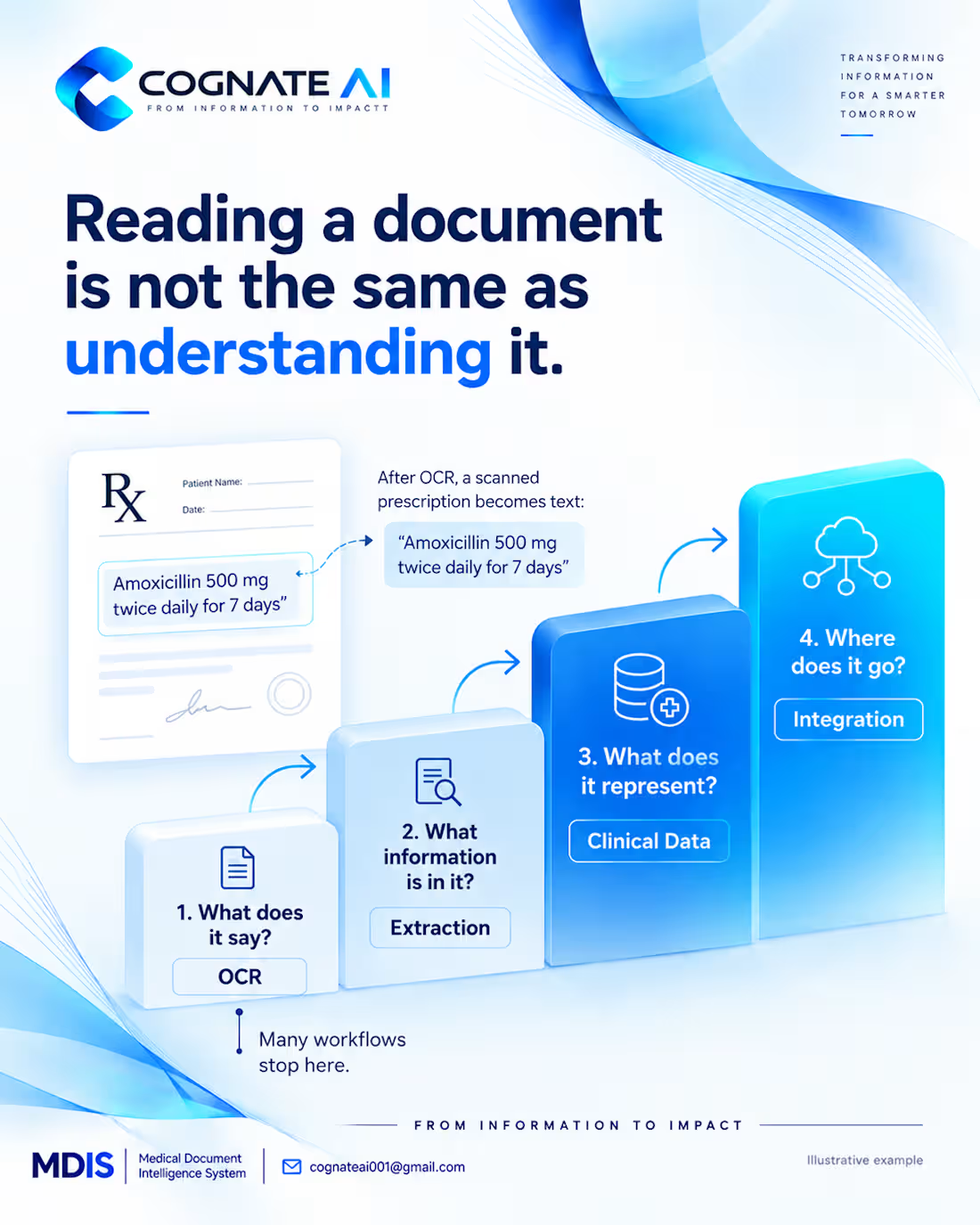
OCR can read a prescription. It can't tell you what the medication is.
That sounds odd, so here's the difference.
After OCR, a scanned prescription becomes text:
"Amoxicillin 500 mg twice daily for 7 days"
That's a real step forward. The page is no longer a flat image.
But to a software system, it's still just a string of characters. It doesn't know which part is the drug, which is the dose, and which is the frequency.
A document workflow really has to answer four questions:
What does the document say? → OCR
What information is in it? → Information extraction
What does that information represent? → Clinical entities such as medication, dosage, and diagnosis
Where does it need to go? → Integration with databases, APIs, and applications
Many projects stop at question one and wonder why staff are still re-typing data.
Reading is not the same as understanding. OCR is an essential foundation, but the value shows up in the steps after it.
At Cognate AI, we treat OCR as the first layer of a longer chain, not the finish line.
(The prescription text above is an illustrative example.)
#CognateAI (https://www.linkedin.com/search/results/all/?keywords=%23cognateai&origin=HASH_TAG_FROM_FEED) #DocumentAI (https://www.linkedin.com/search/results/all/?keywords=%23documentai&origin=HASH_TAG_FROM_FEED) #HealthcareAI (https://www.linkedin.com/search/results/all/?keywords=%23healthcareai&origin=HASH_TAG_FROM_FEED) #HealthTech (https://www.linkedin.com/search/results/all/?keywords=%23healthtech&origin=HASH_TAG_FROM_FEED)
0
7
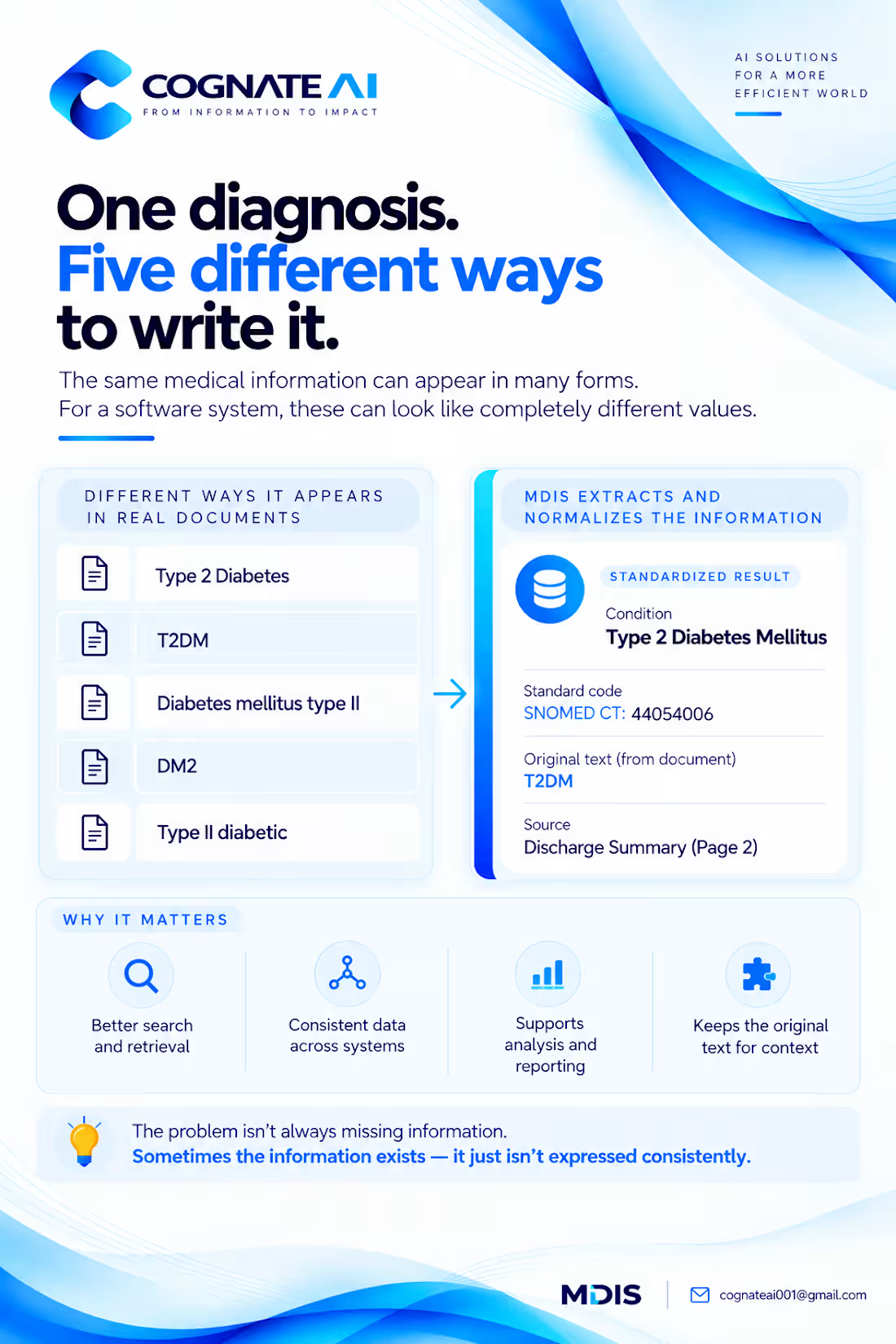
one diagnosis. Five different ways to write it.
Type 2 Diabetes. T2DM. DM2. Diabetes mellitus type II. Type II diabetic.
A clinician sees one concept. A software system sees five different strings, which makes healthcare data hard to search, compare and integrate.
The information often exists. It's just written inconsistently.
MDIS (Medical Document Intelligence System) helps by:
Extracting clinical information from medical documents
Normalizing different wordings into one consistent form
Keeping the original text, so the source is never lost
Extract → Normalize → Structure → Use
Cognate AI | From Information to Impact
hashtag#HealthcareAI (https://www.linkedin.com/search/results/all/?keywords=%23healthcareai&origin=HASH_TAG_FROM_FEED) hashtag#HealthTech (https://www.linkedin.com/search/results/all/?keywords=%23healthtech&origin=HASH_TAG_FROM_FEED) hashtag#MedicalDocuments (https://www.linkedin.com/search/results/all/?keywords=%23medicaldocuments&origin=HASH_TAG_FROM_FEED) hashtag#ClinicalData (https://www.linkedin.com/search/results/all/?keywords=%23clinicaldata&origin=HASH_TAG_FROM_FEED) hashtag#DigitalHealth (https://www.linkedin.com/search/results/all/?keywords=%23digitalhealth&origin=HASH_TAG_FROM_FEED) hashtag#HealthcareInnovation (https://www.linkedin.com/search/results/all/?keywords=%23healthcareinnovation&origin=HASH_TAG_FROM_FEED) hashtag#HealthInformatics (https://www.linkedin.com/search/results/all/?keywords=%23healthinformatics&origin=HASH_TAG_FROM_FEED) hashtag#Interoperability (https://www.linkedin.com/search/results/all/?keywords=%23interoperability&origin=HASH_TAG_FROM_FEED) hashtag#ClinicalNLP (https://www.linkedin.com/search/results/all/?keywords=%23clinicalnlp&origin=HASH_TAG_FROM_FEED) hashtag#DocumentIntelligence (https://www.linkedin.com/search/results/all/?keywords=%23documentintelligence&origin=HASH_TAG_FROM_FEED) hashtag#ArtificialIntelligence (https://www.linkedin.com/search/results/all/?keywords=%23artificialintelligence&origin=HASH_TAG_FROM_FEED) hashtag#CognateAI (https://www.linkedin.com/search/results/all/?keywords=%23cognateai&origin=HASH_TAG_FROM_FEED) hashtag#MDIS (https://www.linkedin.com/search/results/all/?keywords=%23mdis&origin=HASH_TAG_FROM_FEED)
0
4
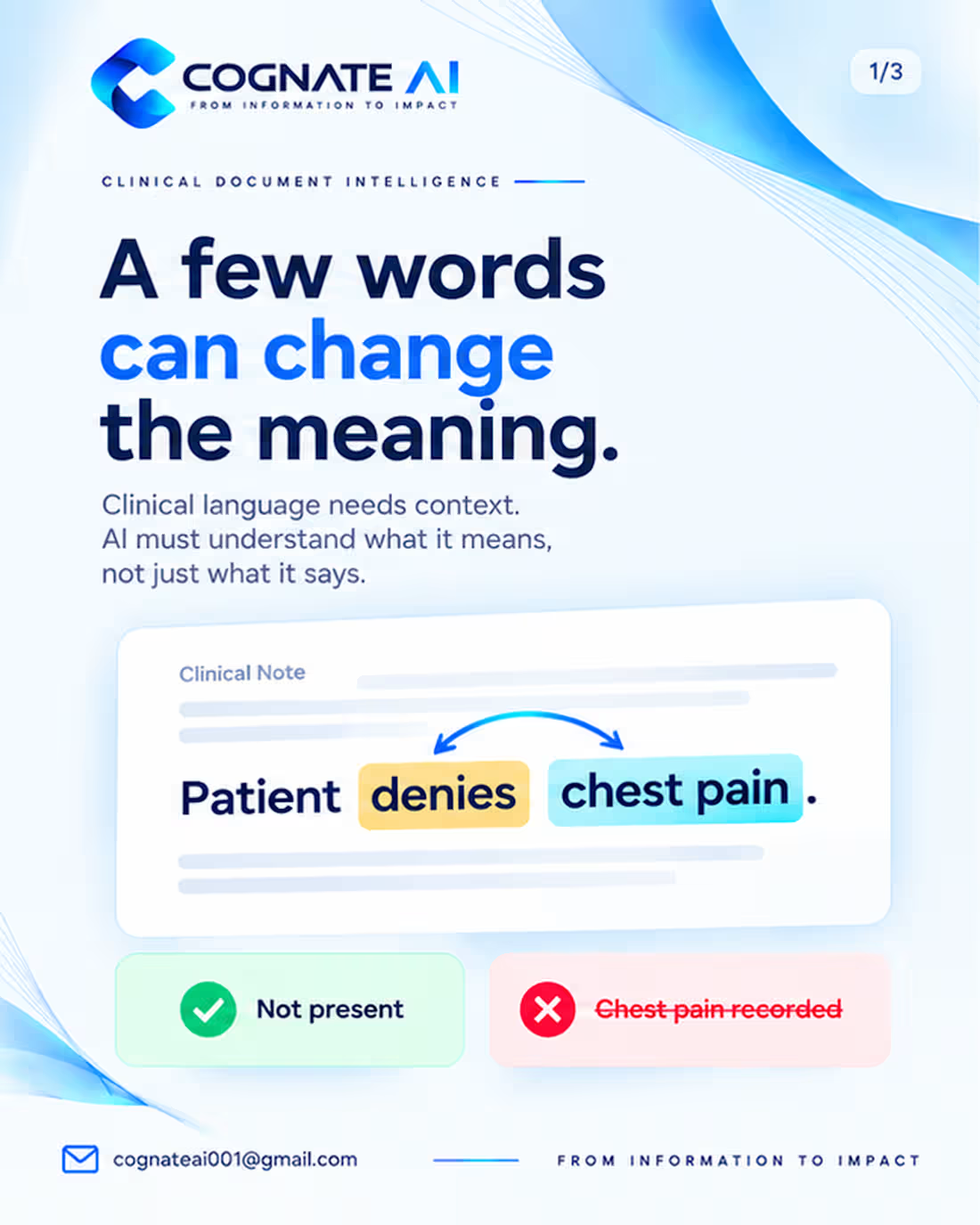
Reading a document is easy. Understanding its meaning is the real challenge.
While building AI-powered medical document intelligence systems, I’ve been learning that extracting words is only one part of the problem.
Consider this sentence:
“Patient denies chest pain.”
A system might recognize the words correctly but still extract the wrong information if it ignores the word “denies.”
The same challenge appears in phrases like:
“No history of asthma”
“Mother had breast cancer”
“Rule out pneumonia”
“Aspirin discontinued”
Each sentence requires more than text recognition. It requires understanding context, negation, uncertainty, relationships, and whether information is current.
This is one of the challenges I’m exploring while building MDIS (Medical Document Intelligence System) at Cognate AI.
My focus is on developing systems that go beyond extracting information—toward structured outputs, validation, evidence traceability, and human review.
Because in healthcare AI, extracting the right words is not enough. The system must preserve what those words actually mean.
I’m continuing to learn, build, test, and improve this system one step at a time.
What do you think is the biggest challenge in making AI understand clinical language accurately?
#AIEngineering #HealthcareAI #MedicalAI #DocumentIntelligence #BuildingInPublic
2
1
73
We build AI-powered healthcare document intelligence solutions that convert medical documents into structured, validated, and traceable clinical data—helping healthcare workflows become more efficient, searchable, and interoperabl
0
18