The network for creativity
Join 1.25M professional creatives like you
Connect with clients, get discovered, and run your business 100% commission-free
Creatives on Contra have earned over $150M and we are just getting started
Back to feedPost

The Anything Ship & Sell Remixathon is LIVE and we cannot wait to see what you build 🚀
Get started with the guidelines here!


how you receive 20k credits?


Hey Bianca - just DM'd you with a fix! Excited to see your creation!

Hey Dylan. I just joined, can I get them too?


Hey Wasim! Just DM'd you to confirm your credits. Excited to see what you create!

Is it just me or is there no way to get 20k credits?? They have no code listed on the competition listing, nor is anything visible on the website.
Hey Garv - looks like some early entrants didn't get the credit link. Just DM'd you the info 😃

Hey Dylan, can you please share with me the credit link? thanks!
Hey @anything team, I still have 23k+ credits from the hackaton but I think there was a bug because I previously had other bonus credits in my account. I was working on it all night and now i am locked out even though I have enough credits - it says I hit the daily limit :) please help? my account name is the same ^^ thanks

how to get that 20,000 free Anything credits ?
how to get that 20,000 free Anything credits,

Anyone figure out where to get the 20k credit?
Just DM'd you a quick fix. Excited to see what you create!

Can I join this challenge as a team of two, or just only me?


Hi w we access free credits?, to create
Just DMd you! Excited to see what you create!

@Contra HQ help with the credits link.
Just DM'd you 😊 Enjoy creating!

Hey! I was having $23K credits yesterday and now it shows like this. Not able to continue working on the idea. Please help!
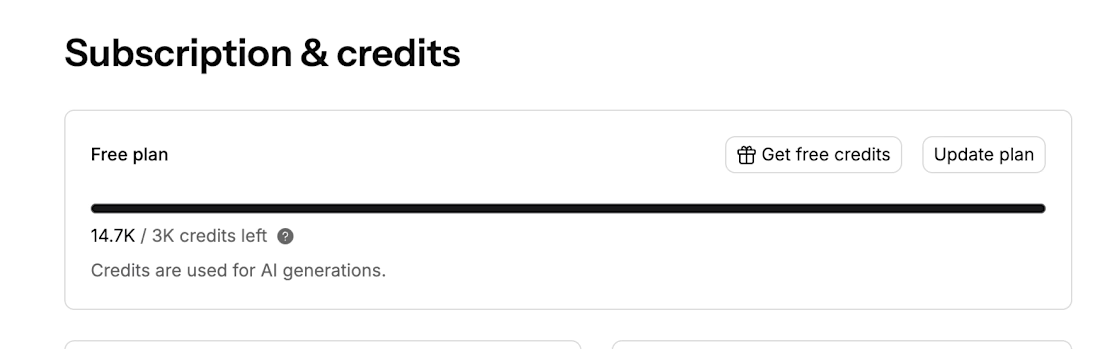
@Contra HQ @Anything can someone please help with this?
@Dylan Siegel Can you help with this?
Hi! Check out the guidelines tab at the top of the challenge page with all the submission info you need! Enjoy creating!

Hello,
As far as I can see, It is showing 3k credits left. It should be 20k credit left, as I haven't used started the project for this challenge yet. May I know, how to fix it or get the written 20k credit for this challenge.
Thank you.
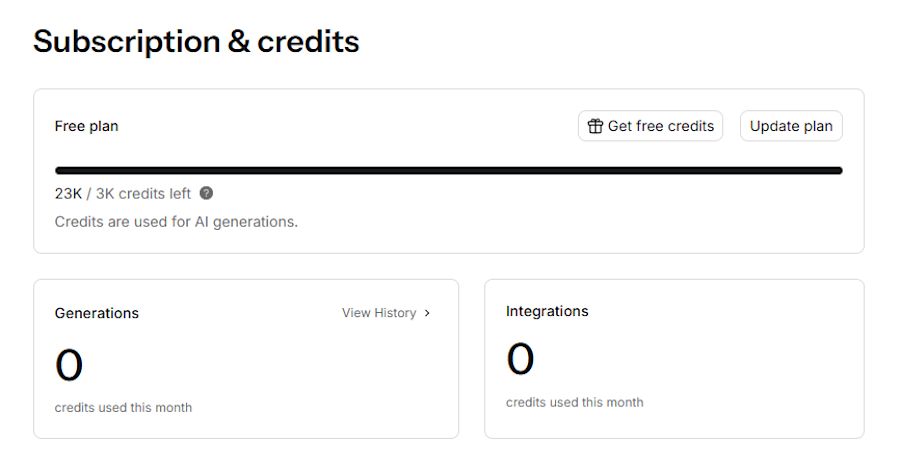


how to get 20k credits????
Hey Tanvi! Make sure to check your inbox for your "welcome to the challenge" confirmation email. You should be able to access your credits there :)

@Contra HQ @anything can you guys tell the steps to claim 20k credits?
Hey Prasoon! Once you join the challenge you'll receive an email with instructions to access your credits. Happy creating!

this site go.anything.com cant be reached, same issue with the IG free credit link.

go.anything.com
Anything - AI app builder
Anything is your AI agent for turning ideas into apps. Build sites, apps, tools, products and more just by describing what you want

For this challenge, the window of reviewing the template is going to be quicker/prioritized or keeps the 1-2 business days?
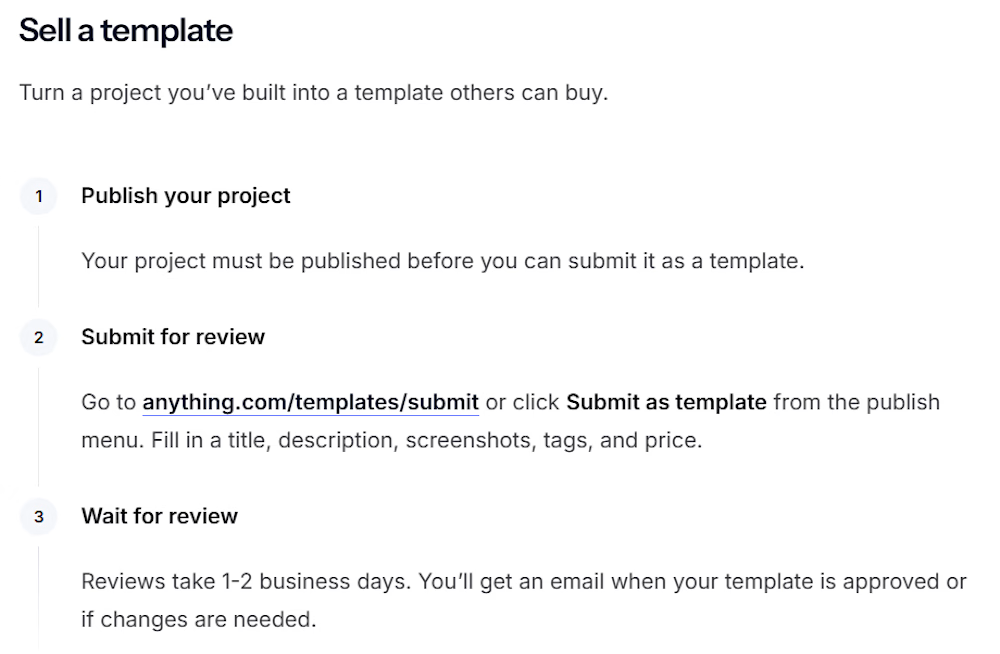

The credit claim expired already ...sucks..I couldn't claim early
Did you confirm it expired or this is an assumption?

it says the same thing for me that it's expired when i try to redeem the credits
How do I access the 20k credit pls
@Anything @Contra HQ I can't seem to access the 20k free credits for the challenge. Kindly help.

i tried to build something on anything https://shipboard.created.app but the free credits they gave ran out before even i could complete the app is there anyway that i could complete this app? @anything

shipboard.created.app
Homepage
https://shipboard.created.app
I have20k remaining credits, but this daily limits :( is so sad! Even worst to publish on marketplace took 1-2 business days, so we have until Friday to publish! 😢


Hi. I need access to the 20k free Anything credits please. Thanks

The 20K credits I received have already been used up, but the app still needs some final touches and bug fixes. How can I get more credits? Or do I need to buy a plan? I don’t really want to upgrade my plan right now.
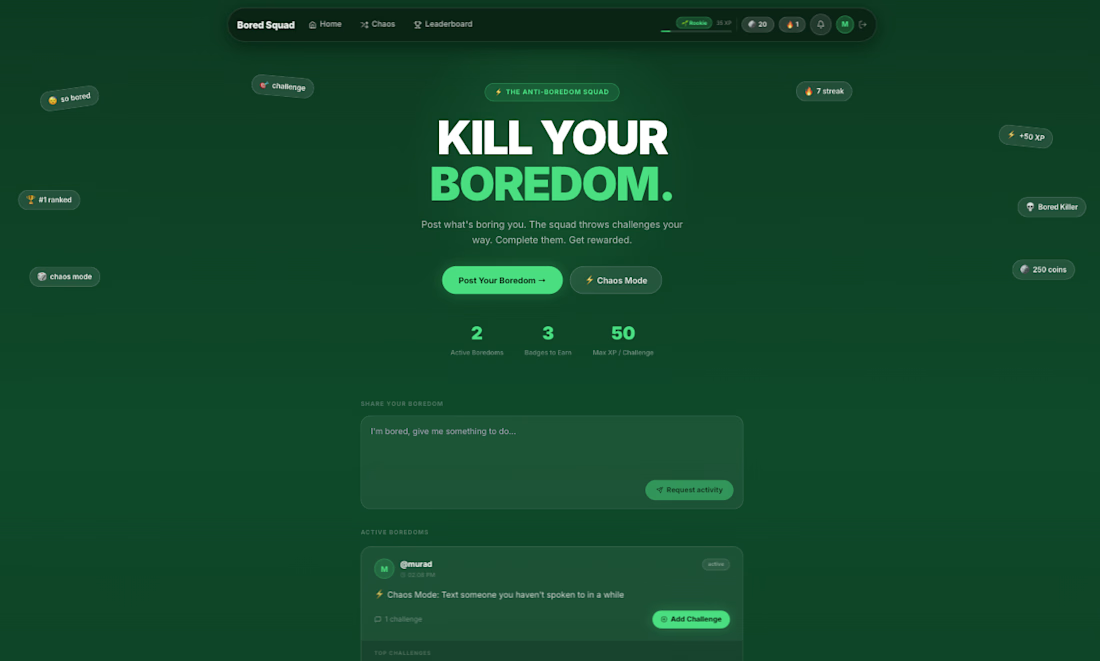

Hi there,
How can get 20k credits?

How does one get access to the 20k credits?

I have entered a challenge, But i could'nt find from where i can get the 20k Credits so i can start building.

It's showing only 3k credits instead of 20k. Any way receive them?
Hi Support Team,
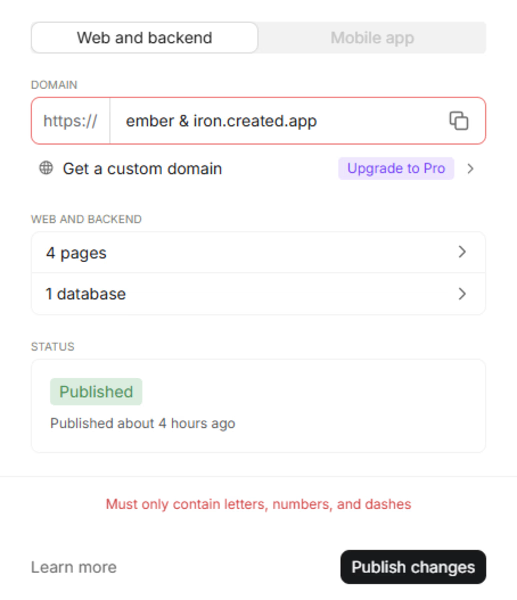
I am writing to request a correction to my free subdomain. Currently, it is being generated as https://ember & iron.created.app/ or https://ember%20& %20iron.created.app/ .
Because the URL contains a space and an ampersand, it is invalid and displays as %20 when...

How do I access the 20K credits?

The network for creativity
Join 1.25M professional creatives like you
Connect with clients, get discovered, and run your business 100% commission-free
Creatives on Contra have earned over $150M and we are just getting started






Related posts

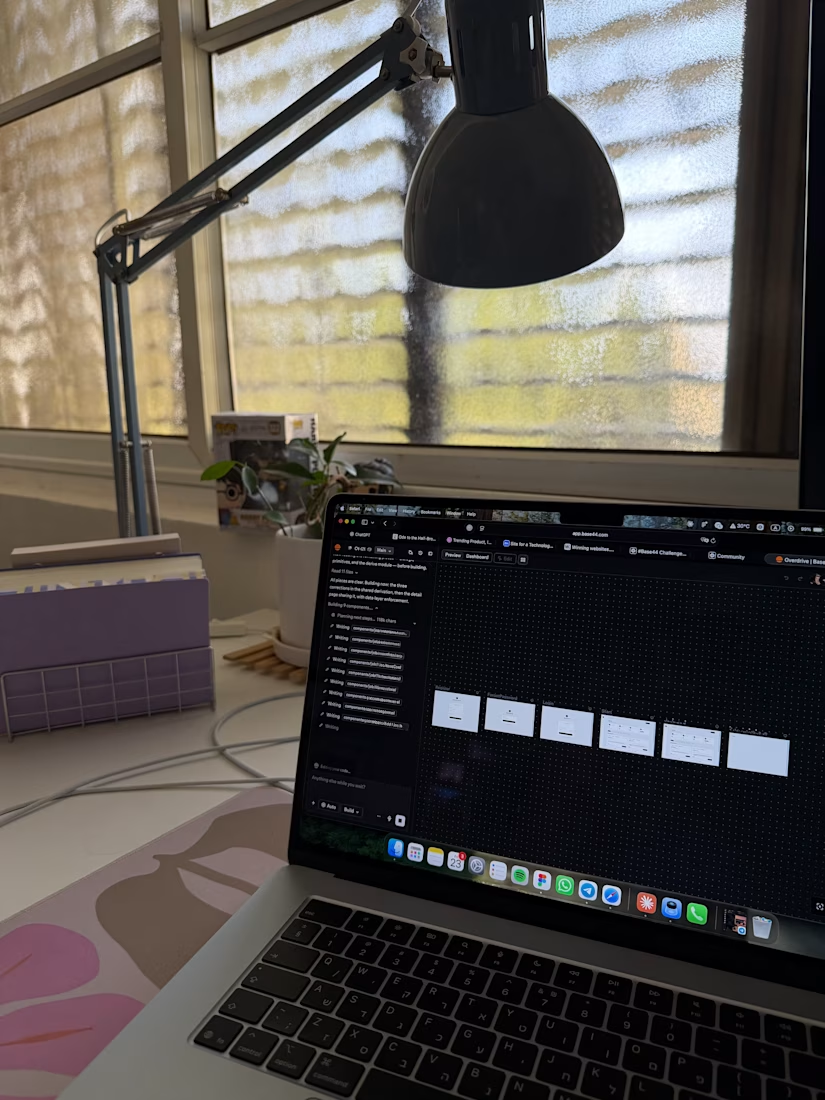
Equal parts excited and anxious about working on my Base44 Challenge submission 🫣
It’s my first time using Base44, so I’m stepping into a new tool, figuring things out as I go, and trying to turn an idea into something real 🙈
There’s something both terrifying and exciting about putting yourself out there and challenging yourself to build something new.
Trying to quiet the overthinking, trust the process, and enjoy the journey (even when my brain has 37 tabs open).
Let’s see what I can create 🚀
Good luck everyone, so many cool submissions already!!


Can’t wait, the beta test was amazing!

SpeedPulse AI V1.2 Update: 1-Click "Save to Gmail Drafts" is Live! 🚀
Huge thank you to the Contra community for pushing SpeedPulse AI to #1 Worldwide with 6,100+ views and 68 likes!
Over the last 48 hours, I gathered feedback from freelancers and agency owners using the live demo. While generating instant audit briefs was a massive time-saver, copying and pasting pitches into email was still creating friction.
Today I just shipped a new workflow integration inside the Agency CRM:
✨ 1-Click "Save to Gmail Draft ↗"
How it works:
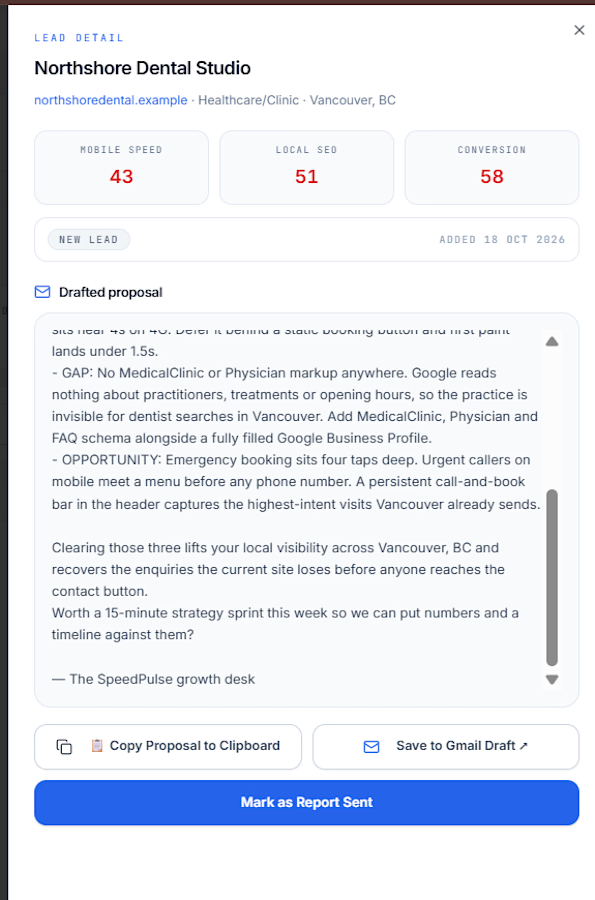
Run an instant website audit or select any lead from the Agency CRM.
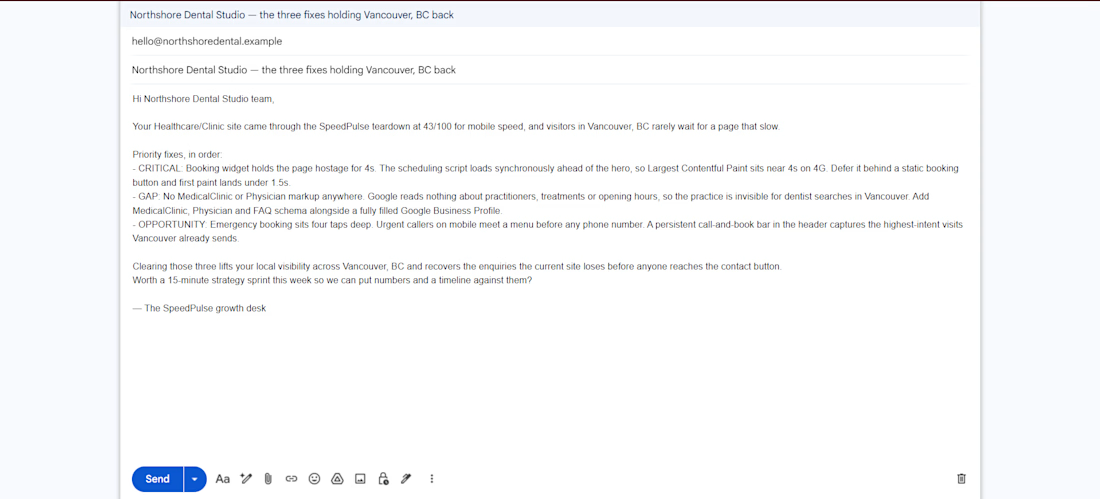
SpeedPulse AI automatically generates a high-converting, personalized teardown email.
Click "Save to Gmail Draft ↗" — it launches your Gmail with the client's email, subject line, and full audit points already filled in and auto-saved into your Drafts folder!
Zero manual copy-pasting. From audit to outreach in under 30 seconds.
Built entirely on Base44. Test out the new live integration in Entry 1 and let me know your thoughts! 🙌
#base44challenge #base44 #webdevelopment #automation



Love seeing how you’re improving the tool based on community feedback! The one-click Gmail drafts feature sounds really useful for saving time.

We can't wait to kick off the Recraft Styles Challenge!
Check out the guidelines to start working on your build ✨
