The network for creativity
Join 1.25M professional creatives like you
Connect with clients, get discovered, and run your business 100% commission-free
Creatives on Contra have earned over $150M and we are just getting started
Back to feedPost

Every AI workflow needs someone officially responsible for catching it when it's wrong.
That sounds obvious, but that human oversight doesn't show up often enough in practice.
A March trial revealed that a government spreadsheet flagged an HVAC grant as a DEI initiative. The wholesale prompt for every line item was, "does this relate at all to DEI?" The model said yes to HVAC — improved climate control would support access to diverse audiences. A $349,000 grant to preserve museum artifacts was canceled and only partially restored later.
No rubric, no domain expertise, and no definition of DEI provided. The prompt was the policy.
The people who could have caught it — NEH's own career staff — had already reviewed the grants and marked them unproblematic, but their assessments were overridden anyway. The expertise was there, and it just wasn't consulted.
That's what everyone should focus on here. Not the chatbot or the politics. It's the unfounded decision to stop asking the people who knew best.
Variations of this pitfall exist in hiring pipelines, content moderation systems, customer service queues, and vendor evaluations across nearly every industry. The question isn't whether AI should be involved in workflows. We should be asking the harder one: What do human staff need to be entrusted with — and what happens when the model is wrong?
If you can't answer that before rolling out AI, the spreadsheet is already running the show.

The network for creativity
Join 1.25M professional creatives like you
Connect with clients, get discovered, and run your business 100% commission-free
Creatives on Contra have earned over $150M and we are just getting started
Trending
retrofuturism
Share your favorite designs from the past exploring the distant future. Or your own take on the aesthetic 🚀
halftone
Dots. Texture. Grain. Let's see your designs using the halftone technique.

Midjourney
Creatives are showing off what they're making with Midjourney.
colorgrade
Video editors sound off: How do you enhance the mood of your video in color grading?





Related posts

I like this because the AI was used as part of the design process, not as a shortcut. The iteration and refinement are what make the final mascot feel usable in a real product.


⚡ FLASH DEMO
Can AI actually design a mascot worth using in a real product?
I used Grok Imagine 2.0 to create a a 'fictional' mascot for ThisDay, my upcoming productivity app.
The first result was honestly pretty bad, but after three iterations we got much closer. From there, I...


The presentation is excellent.

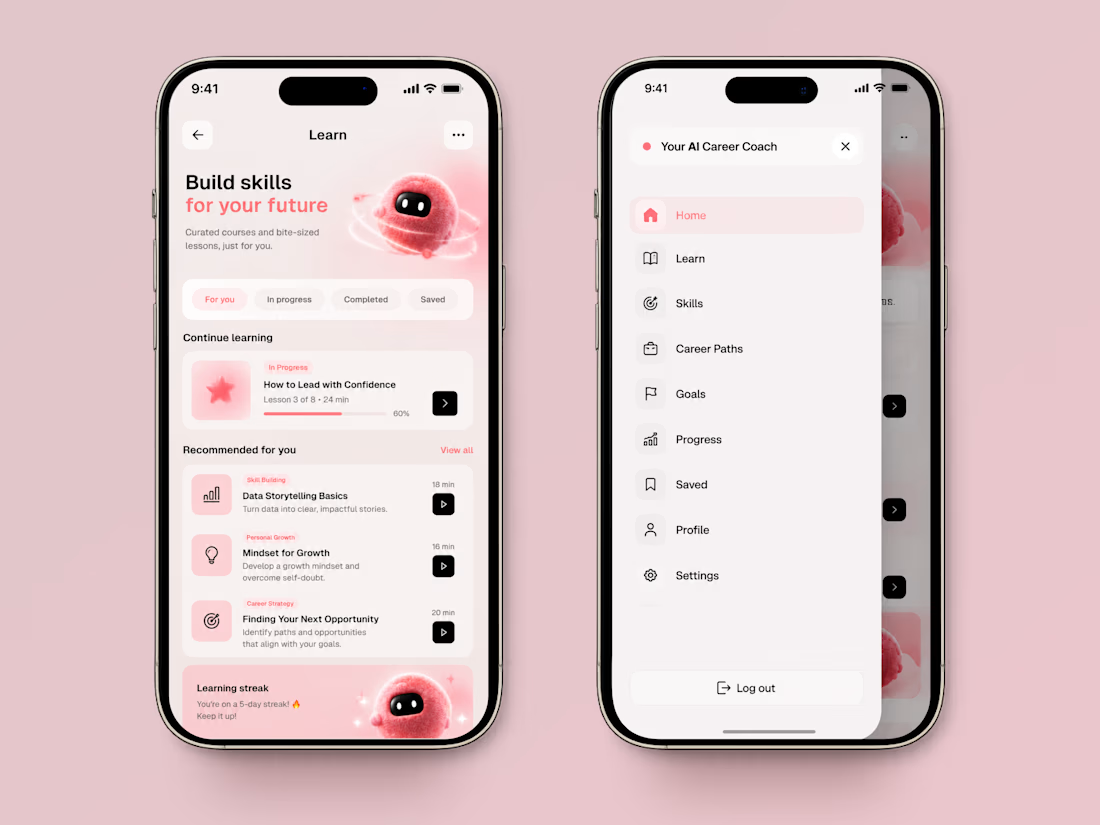
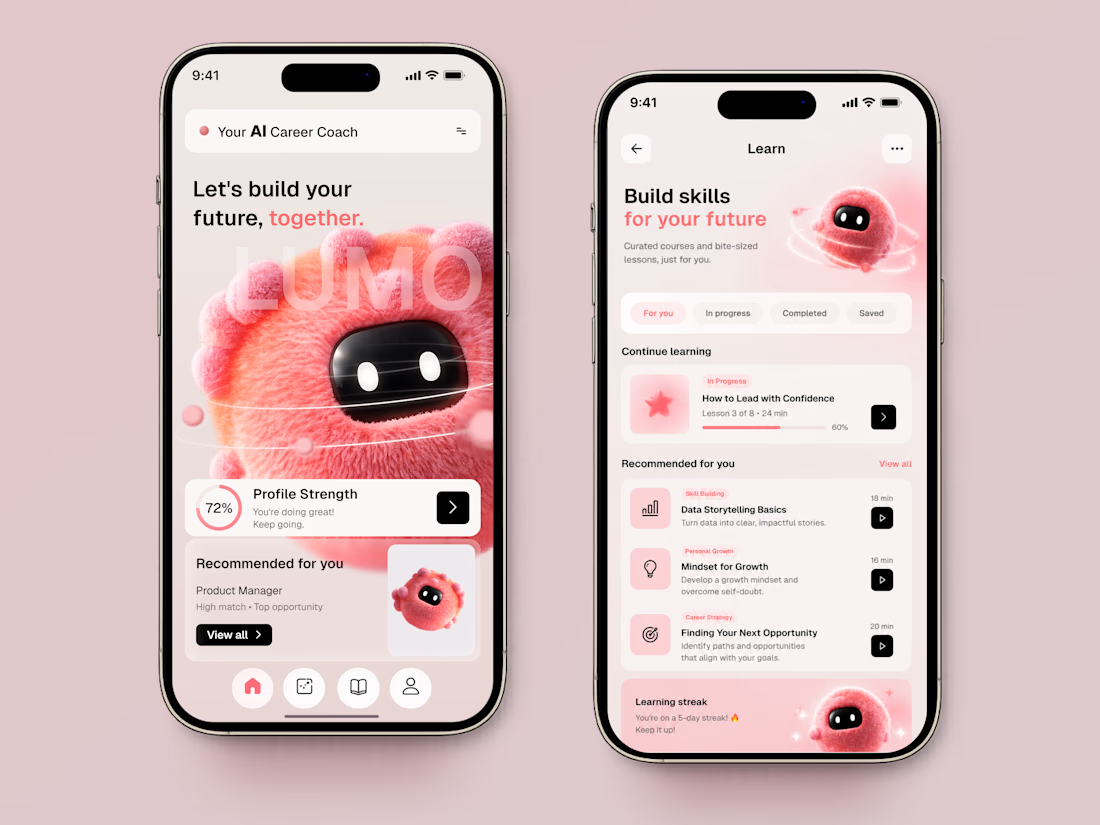
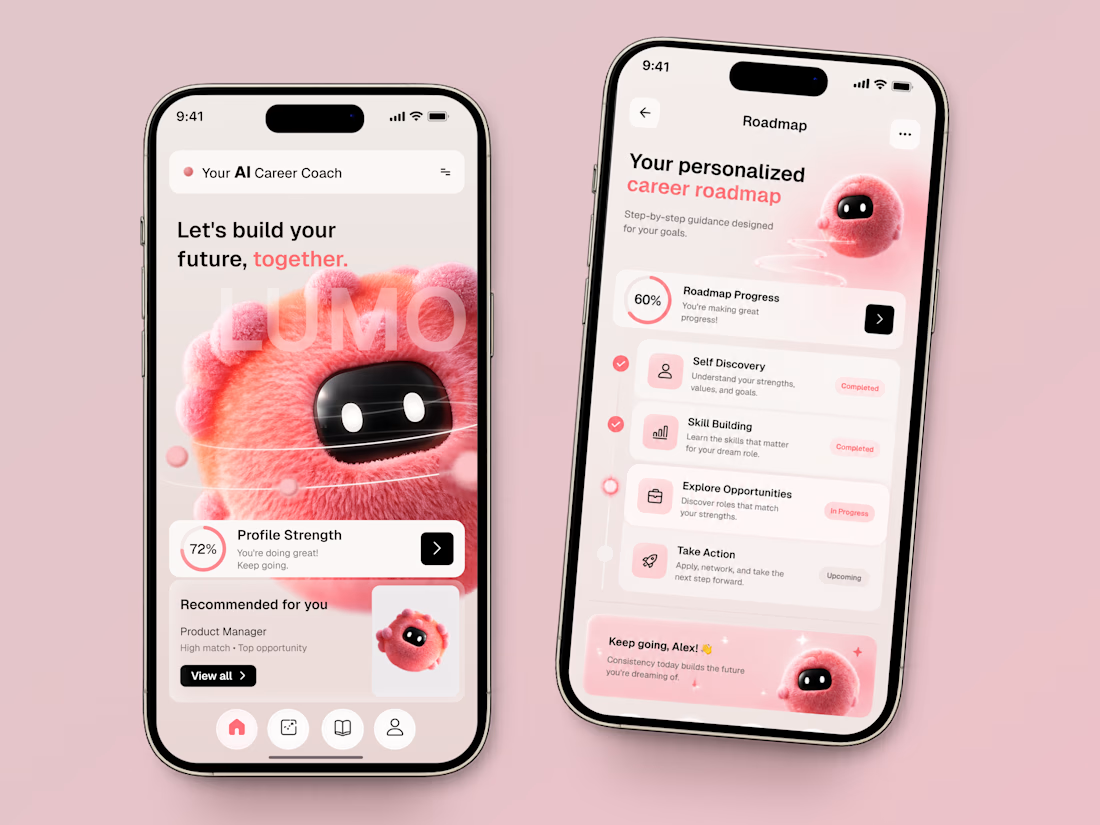
LUMO — AI Career Coach & Learning App 🤖✨
LUMO is an AI-powered career development app concept designed to make professional growth feel more personal, structured, and motivating.
The idea was to move away from the typical “serious career platform” look and create an experience that feels more like a supportive companion — with a friendly AI character guiding users through their next steps.
The product brings career planning and learning into one connected experience:
• personalized career recommendations based on the user’s profile;
• profile strength and progress tracking;
• curated courses and bite-sized lessons;
• personalized career roadmaps with clear milestones;
• skill building and opportunity discovery;
• a friendly AI coach that makes the experience feel more human.
Visually, we balanced a clean product interface with soft gradients, warm pink accents, and a playful 3D AI character to give LUMO its own personality without distracting from the product itself.
The result is a career platform that turns a complex question — “What should I do next?” — into a clear and approachable journey. 🚀
Would you trust an AI coach to help plan your next career move? 👀




The idea of making a career app feel more like a companion than a platform is pretty smart. The 3D character fits that direction really well too.

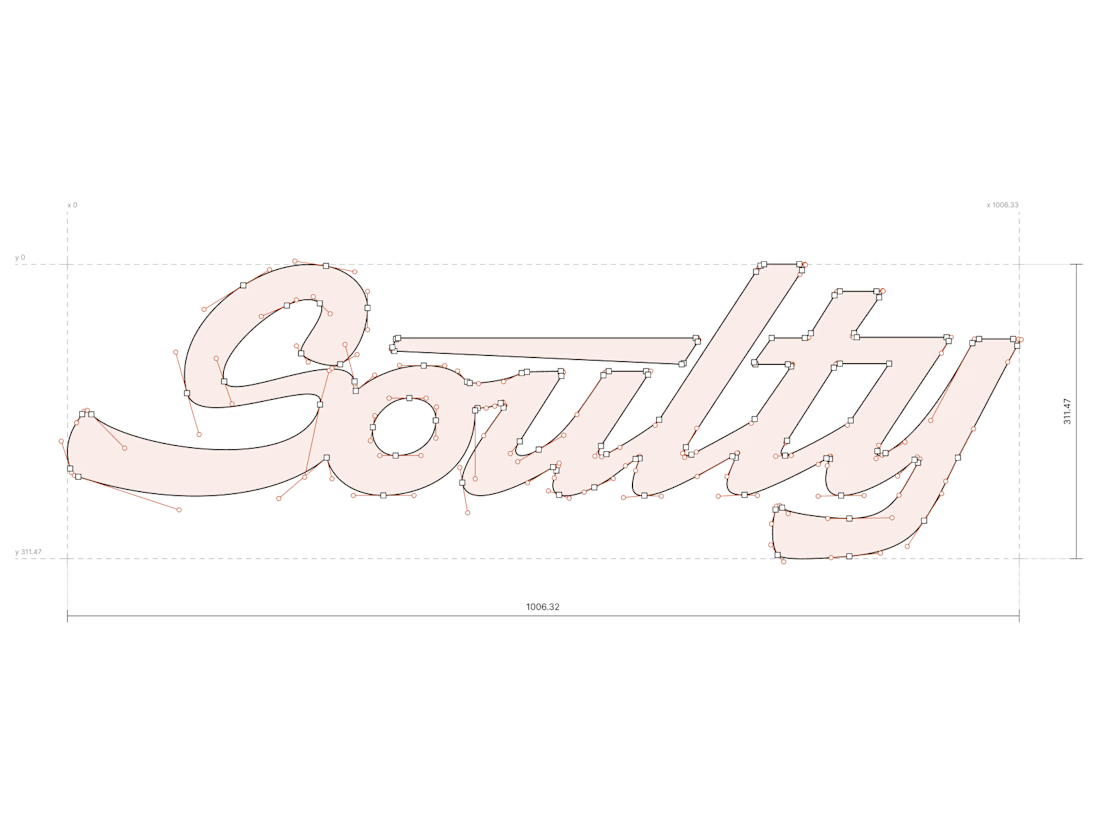
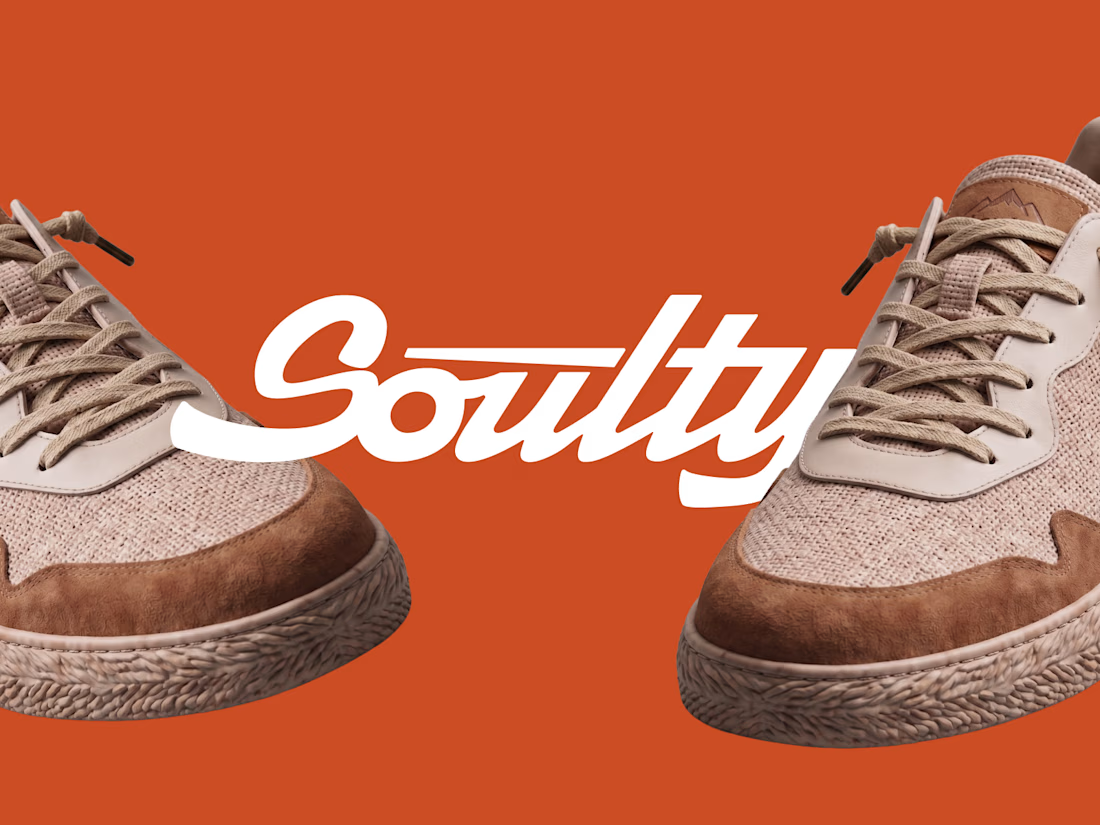
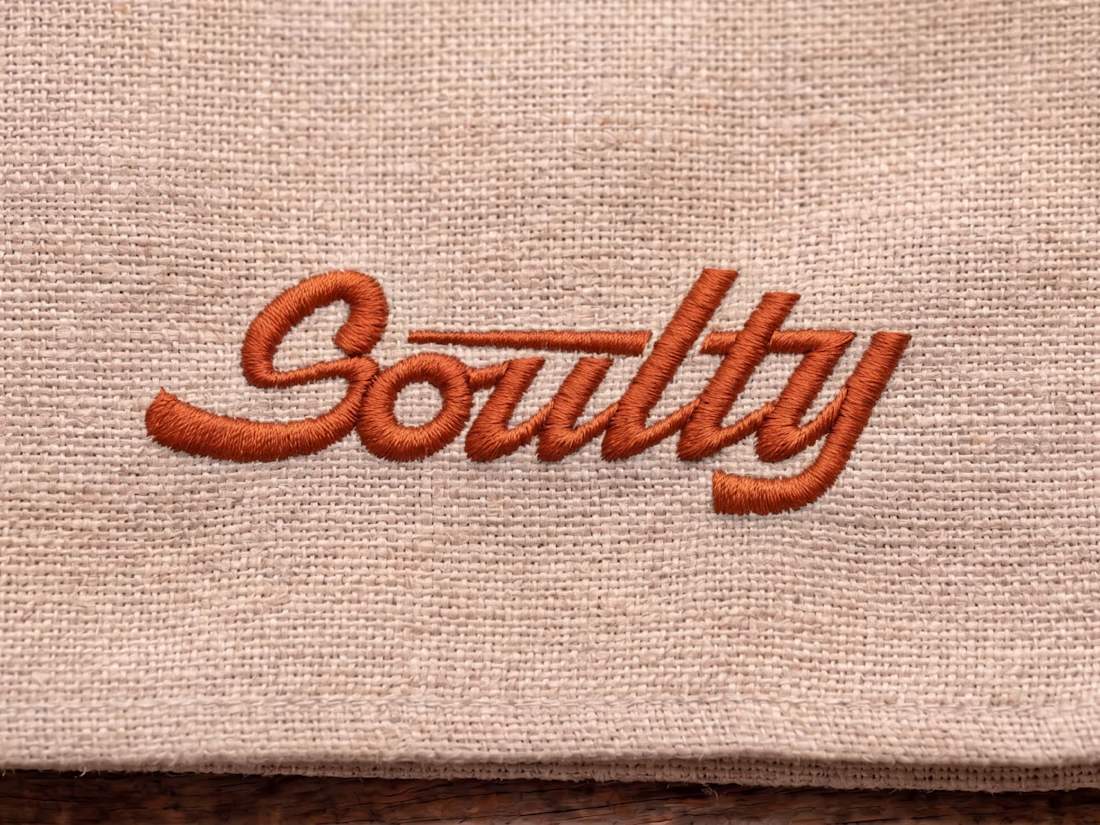
Designing logotypes is one of the things I enjoy most about my job and one of the most rewarding.
This direction wasn't chosen by Soulty, a new Italian summer footwear brand.
We moved on to another proposal that worked better for them, and I agree with that choice.
But I still really like the work done here.