The network for creativity
Join 1.25M professional creatives like you
Connect with clients, get discovered, and run your business 100% commission-free
Creatives on Contra have earned over $150M and we are just getting started
Back to feedPost
Pulseroom — Designing a Social Space That Feels Alive
Built with Google Stitch
When I saw the challenge theme, "Build interfaces that feel alive," I knew I didn't want to create another dashboard, landing page, or e-commerce experience.
I wanted to explore something much more ambitious:
What if an interface behaved like a living organism?
What if emotions weren't hidden behind profile pictures and text posts, but became visible, interactive, and shared in real time?
That idea became Pulseroom.
Pulseroom is a motion-rich emotional ecosystem where users enter shared spaces, express how they feel, and collectively shape living generative worlds together. Instead of scrolling through content, people participate in environments that continuously evolve based on the emotional energy of everyone inside.
The entire experience is designed to blur the line between interface, artwork, and social connection.
What I Built
Pulseroom is a next-generation social experience built around emotional presence.
Users select a mood and immediately influence the visual atmosphere of the room. Every interaction becomes part of a living canvas powered by motion, shaders, AI-driven behaviors, and collaborative generative art.
Core experiences include:
• Live emotional rooms where user moods shape the environment
• Fluid generative art canvases that evolve continuously
• Aura, an AI companion that understands room energy and suggests environmental shifts
• AI-powered avatar generation designed around emotional identity
• Mood analytics and emotional history visualization
• Real-time Pulse interactions that create ripples across the entire room
• Dynamic room discovery based on emotional states
• Saved Moments that capture unique pieces of collaborative art
Rather than designing screens, I designed an ecosystem.
Every screen responds to the same emotional language, making the entire product feel connected and alive.
How Google Stitch Became My Creative Engine
This project would have been extremely difficult to prototype traditionally because almost every interaction depends on motion, atmosphere, and visual feedback.
Google Stitch became the core creative tool throughout the entire workflow.
Creating a Living Design System
Before generating screens, I created a detailed design framework for Pulseroom.
The system included:
• Emotional color mapping
• Dynamic glow systems
• Glassmorphism architecture
• Motion behaviors
• Particle systems
• Shader-inspired visual rules
• Interaction feedback patterns
Once uploaded into Stitch, the consistency was impressive.
Every generation already understood the visual language of Pulseroom, which allowed me to focus on ideas instead of constantly correcting design drift.
Streaming Generations Directly to Canvas
The streaming generation feature completely changed the way I explored ideas.
Watching environments appear in real time felt less like prompting an AI and more like collaborating with a designer.
Instead of generating isolated screens and waiting for results, I could immediately react to what Stitch was building and push concepts further.
For a project built around living interfaces, this workflow felt incredibly natural.
In-Place AI Editing
Most of Pulseroom's best ideas emerged through iterative in-place editing.
I refined:
• Live Room interactions
• Aura AI experiences
• Collective Canvas behavior
• Emotional profile systems
• Discovery mechanics
• Motion-heavy interface components
The ability to point at an existing section and evolve it directly inside the canvas made experimentation dramatically faster.
Motion, Shaders, and Interactive Behaviors
This is where Stitch surprised me most.
Pulseroom depends heavily on motion.
Floating particles.
Animated pulse effects.
Living backgrounds.
Mood-responsive color systems.
Shader-inspired visual environments.
Aura energy effects.
Interactive generative art.
Being able to prototype motion-rich experiences directly inside Stitch made the concept feel real much earlier in the design process.
Instead of treating animation as a finishing touch, motion became part of the product from the beginning.
From Concept to Working Experience
One of my goals was to move beyond static mockups and create something people could actually explore.
Using Stitch's workflow alongside modern deployment tools allowed me to quickly move from concept to a live interactive experience while maintaining the same design language across the entire project.
What Makes Pulseroom Different
Most social products are built around content.
Pulseroom is built around emotional presence.
The room itself becomes the conversation.
The atmosphere becomes the interface.
The artwork becomes the memory.
Every pulse, every mood, every interaction contributes to a shared visual world that no single user controls.
The result feels less like using an app and more like entering a living digital environment.
Feedback on Google Stitch
The biggest strength of Stitch is how quickly it turns imagination into something tangible.
Three things stood out most:
Streaming generations made exploration feel collaborative instead of transactional.
In-place AI edits dramatically reduced iteration time.
Motion-first prototyping allowed me to design experiences rather than static screens.
What impressed me most was how naturally Stitch handled a highly experimental concept.
Pulseroom isn't a traditional app. It's a complex emotional ecosystem with generative visuals, AI-driven interactions, and motion-heavy interfaces.
Even with that complexity, Stitch remained fast, flexible, and surprisingly consistent.
Final Thoughts
Pulseroom began as a question:
Can technology create a social experience that feels more human, more emotional, and more alive?
Google Stitch gave me the ability to explore that question far faster than traditional workflows would have allowed.
The result is Pulseroom — a living emotional ecosystem where interfaces breathe, emotions become visible, and people create shared worlds together.
Live Project:
https://pulsroom.vercel.app/
APK Download:
https://pulsroom.vercel.app/apks/app-debug.apk
Stitch Project:
https://stitch.withgoogle.com/projects/12434356365707266796
#GoogleStitch #BuildWithStitch #UIUX #MotionDesign #ProductDesign #CreativeCoding #GenerativeArt #ArtificialIntelligence #UXDesign #MobileApp




Unbelievable Concept Sir 👍

Thanks Fawn Media

Yes It is.

Make Sure If you Build This App I guranteed you this one will rule over the internet because everyone need someone to share feelings so this is a very cool idea , Good Luck For Your Challenge
Sure I Try To Build

Can U explain About Your App
Every Thing I explained In detailed please read above post capation.

Greate Work, Looks Premium
Thanks.

This concept is so good!
Thanks For Your Appreciate.🔥

Big fan of your style and approach here.
What Are You Talking Sir I am Your Big Fan Really.🙌
Wow, Suraj, this is a beautiful concept! Moving away from standard SaaS dashboards to treat an interface like a living, emotional ecosystem is such a refreshing and ambitious direction for this challenge.
The idea of making real-time, shared emotional energy shape a generative...

on.contra.com
Swipe-to-Shop App Transforming Farmers Market Experience
Connect with next-gen talent and tools to get work underway. Hire more independents. Start more projects. Get more creative.
The network for creativity
Join 1.25M professional creatives like you
Connect with clients, get discovered, and run your business 100% commission-free
Creatives on Contra have earned over $150M and we are just getting started











Trending

Claude
Claude has entered the design space. How are you using Claude Design?

Contra University
Learn from expert creatives how to earn more using next-gen AI tools.
creativeaiflow
Creative AI workflows are evolving. What tools do you use, and what are their strengths and weaknesses?
freelancerlife
Freelancer life is wins, pivots, and everything in between. What’s yours right now?
Related posts

Retro Reel Timer — Minimal Cartoon UI
A playful reinterpretation of a classic reel-to-reel timer, redesigned with a softer colour palette, simplified shapes and a clean cartoon-inspired visual style. The interface keeps the nostalgic character of analogue recording equipment while presenting the controls in a modern, friendly and easy-to-understand layout.
The design focuses on strong visual hierarchy, balanced spacing and clear interaction states. Bold timer typography, rounded controls and subtle depth help the interface feel approachable without becoming visually cluttered, creating a distinctive concept suitable for a mobile timer, audio recorder or productivity application.



The reel spools doubling as eyes is a smart way to add character without adding extra elements, keeps the layout clean while still being playful. Nice fit for a productivity tool that doesn't want to feel sterile.


Just launched my latest Framer template a few days ago. Tensor is a modern marketing website template built for startups, SaaS, and agencies.


Tensor looks well positioned for SaaS and agency marketing sites. For template launches I also find SEO on the product page itself makes a big difference later. Wrote a short guide on that here: https://noel.marketing/blog/digital-product-seo-guide/

Hey Contra Community! 👋
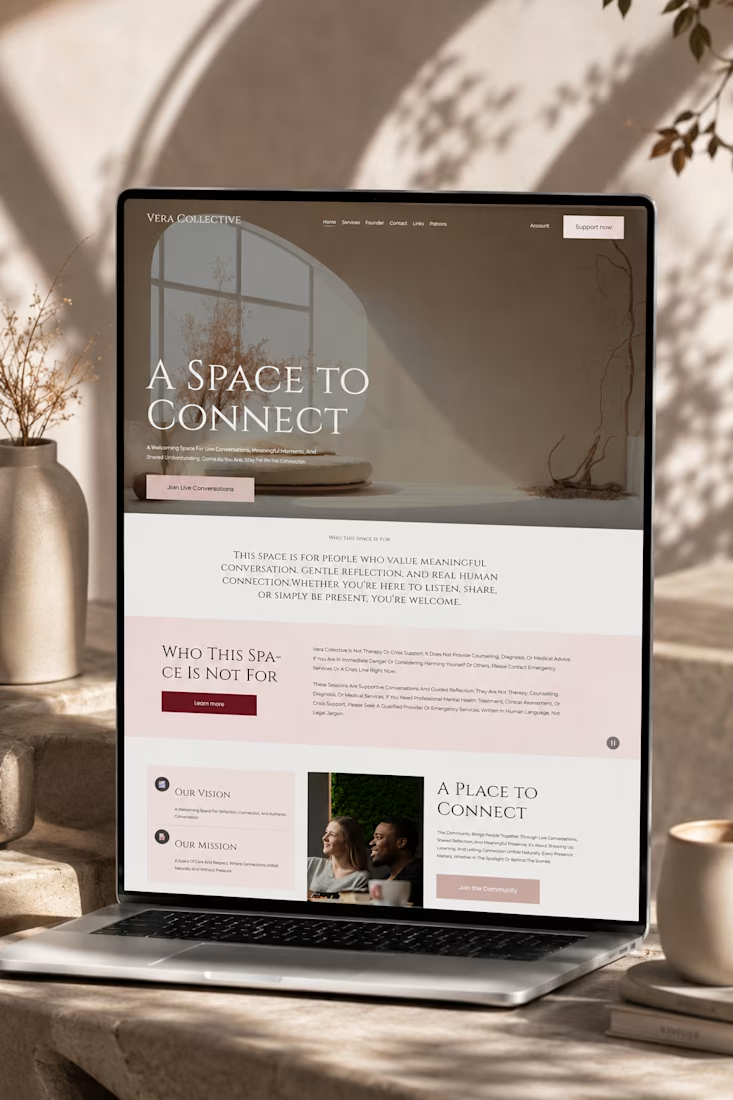
Excited to share my latest Squarespace project, Vera Collective, a unique online space dedicated to fostering meaningful live conversations and genuine human connection. This project was a fantastic opportunity to push the boundaries of Squarespace's design capabilities, especially with the new Finish Layer tools.
The Vision Behind Vera Collective
Vera Collective was born from a desire to create a serene, inviting digital sanctuary where individuals can engage in authentic dialogue and shared understanding. The design needed to reflect this ethos: sophisticated, minimalist, and deeply engaging.
Design Highlights & Finish Layer in Action:
1. Bold, Immersive Aesthetic:
I opted for a striking dark theme with elegant typography to create an immediate sense of depth and focus. This bold choice helps to draw users into the content, emphasizing the intimacy of live conversations.
2. Strategic Use of Block Transforms:
To achieve a dynamic yet refined layout, I extensively utilized Block Transforms. Notice how certain sections, like the prominent "Who This Space Is Not For" area, use subtle transformations to break the grid and add visual interest without compromising readability. This allowed for a more artistic and less conventional presentation of important information.
3. Responsive Stacks for Seamless Experience:
Ensuring a flawless experience across all devices was paramount. I leveraged Stacks to meticulously arrange content blocks, guaranteeing that the site's unique visual hierarchy and interactive elements remain perfectly aligned and accessible, whether viewed on a desktop or a mobile device.
4. Subtle Block Animations for Engagement:
To enhance user engagement and guide their journey through the site, I incorporated Block Animations. These subtle, scroll-triggered effects introduce content gracefully, adding a layer of sophistication and interactivity that keeps the user immersed without being distracting.
5. Custom Typography with Font Uploads:
The brand identity of Vera Collective demanded a distinctive typographic voice. Through Font Uploads, I integrated custom fonts that perfectly complement the site's elegant and thoughtful aesthetic, reinforcing its unique brand personality.
Why Vera Collective Stands Out:
Vera Collective isn't just a website; it's an experience. By combining a bold design vision with the powerful new Finish Layer tools in Squarespace, I was able to craft a platform that is both visually stunning and highly functional, truly embodying its mission of connection and understanding.
I'd love for you to explore Vera Collective yourself and let me know what you think! Your feedback is invaluable.
#squarespacechallenge #webdesign #community #veracollective