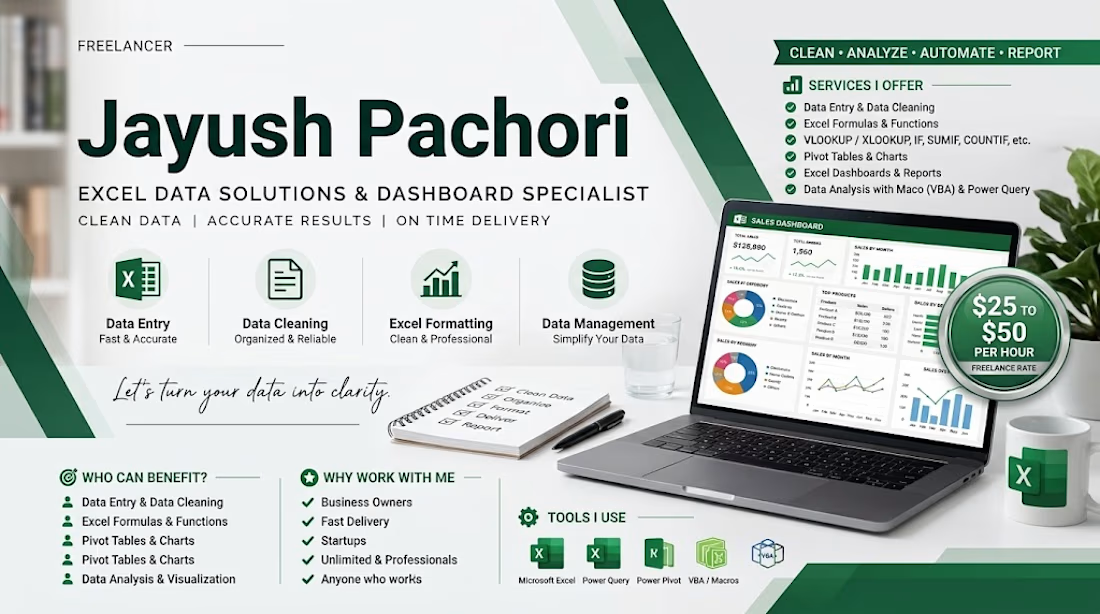
The network for creativity
Join 1.25M professional creatives like you
Connect with clients, get discovered, and run your business 100% commission-free
Creatives on Contra have earned over $150M and we are just getting started
Back to feedPost
Most dashboards don’t have a visualization problem.
They have a KPI problem.
I’ve reviewed dozens of reporting systems recently and the pattern is consistent:
Metrics are defined differently across sheets
“Revenue” means one thing in finance and another in marketing
KPIs are tracked… but not tied to decisions
Dashboards look clean but don’t answer operational questions
When metric logic isn’t aligned, teams don’t have a data problem.
They have a decision problem.
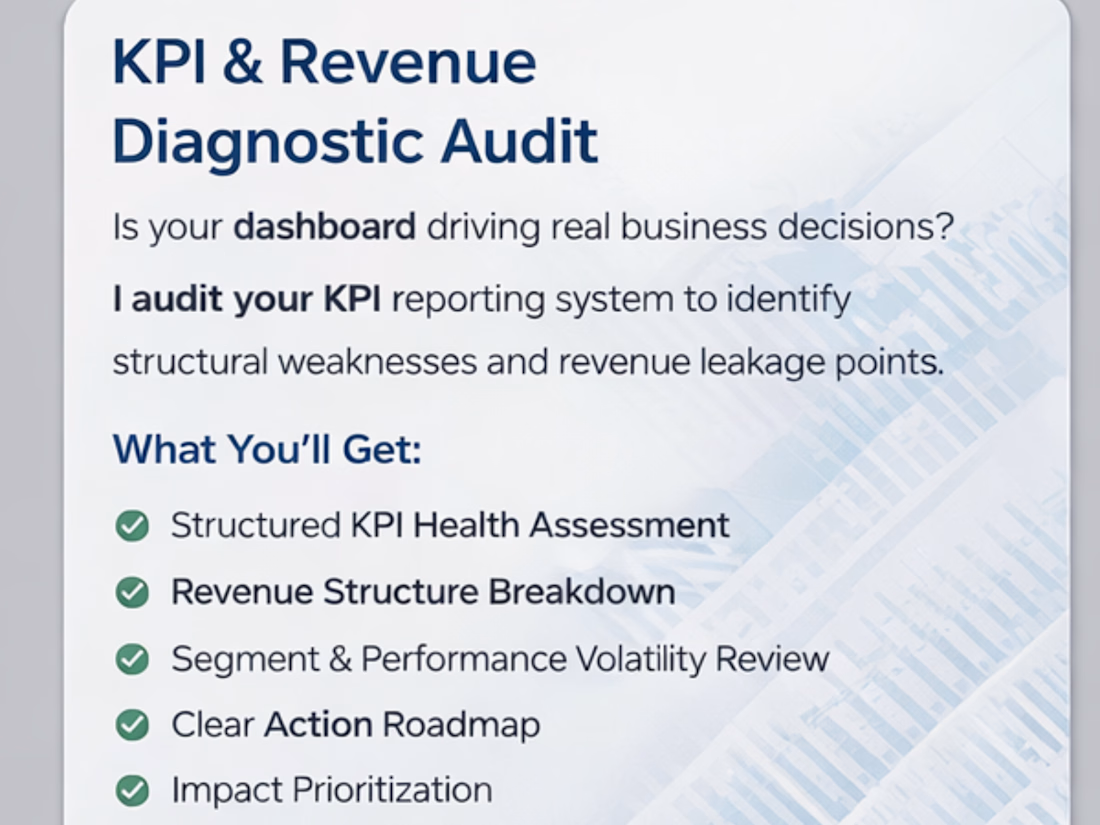
That’s why I’ve started offering a structured KPI & Revenue Diagnostic Audit — focused on:
• Metric consistency
• Reporting logic
• Revenue driver alignment
• Decision-readiness
If you're building dashboards or scaling reporting systems, this layer matters more than design.
exceldataanalyticsMicrosoft ExcelexceldashboardData AnalysisData VisualizationProduct Data AnalyticsGoogle SheetsMicrosoft Word



Completely agree. Most dashboards optimize for visuals, not decision velocity. If KPIs aren’t standardized across teams, you’re basically scaling confusion. The real leverage is in metric governance before visualization.

Exactly. Visualization should reduce friction, not decorate inconsistency.
If two teams calculate “active customer” differently, no chart will fix the downstream decisions.
Standard definitions + update logic > prettier dashboards.
Most reporting problems are governance problems in disguise.
Completely agree. When metric definitions drift, dashboards just amplify the confusion.
Alignment on semantics and update logic is usually the real leverage point — everything downstream becomes cleaner once that’s standardized.
Exactly. Once definitions are locked, reporting shifts from interpretation debates to performance conversations.
I’ve noticed most “data issues” disappear when teams document metric logic alongside ownership and refresh cadence. Clarity upstream removes noise downstream.

You’re absolutely right, Geethasree.
In my experience, most KPI misalignment isn’t just a reporting issue —
it becomes a capital signaling issue.
When “revenue” means different things across teams,
capital often gets allocated based on perception rather than structure.
That’s...
That’s a sharp way to frame it — capital signaling is where KPI misalignment becomes expensive.
When revenue, margin, or cohort value aren’t structurally defined, allocation follows narrative instead of economics.
Dashboards aren’t just reporting layers — they’re decision...

KPI matters a lot than anything else
The network for creativity
Join 1.25M professional creatives like you
Connect with clients, get discovered, and run your business 100% commission-free
Creatives on Contra have earned over $150M and we are just getting started
Trending
retrofuturism
Share your favorite designs from the past exploring the distant future. Or your own take on the aesthetic 🚀
halftone
Dots. Texture. Grain. Let's see your designs using the halftone technique.

Midjourney
Creatives are showing off what they're making with Midjourney.
colorgrade
Video editors sound off: How do you enhance the mood of your video in color grading?
Related posts

Most reporting problems don’t start with the dashboard.
They start with the data behind it.
Before I build a Power BI or Excel report, I usually check three things first:
• inconsistent categories and naming
• manual steps that can be automated
• KPIs being calculated differently across reports
Fixing these first usually makes the final dashboard simpler, more reliable and much easier to maintain.
Good reporting is not just about making charts look better.
It’s about creating numbers people can actually trust.

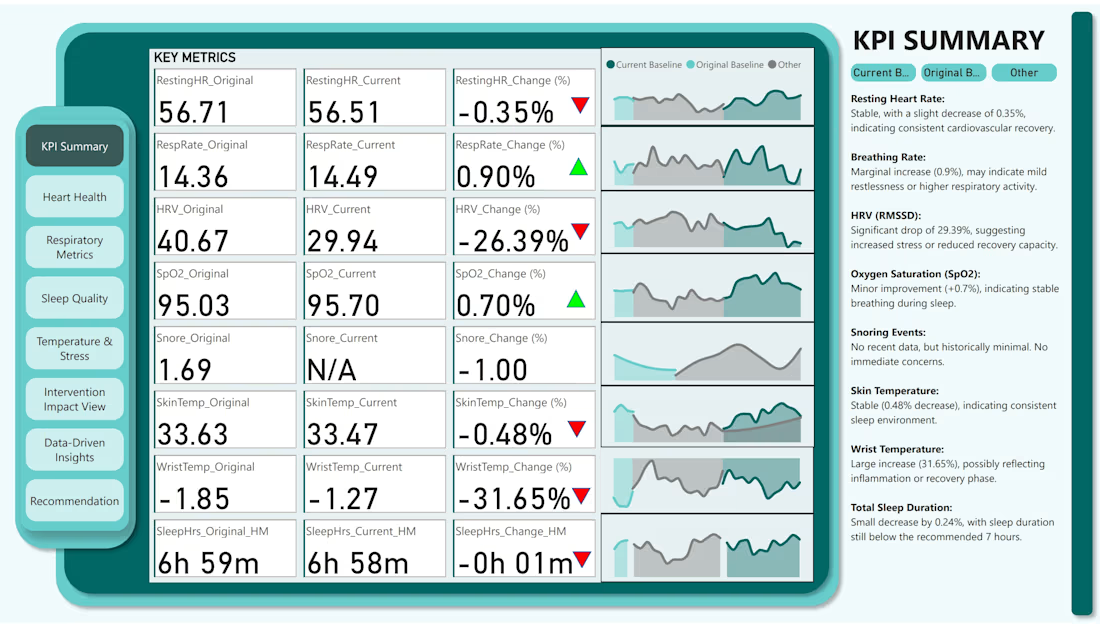
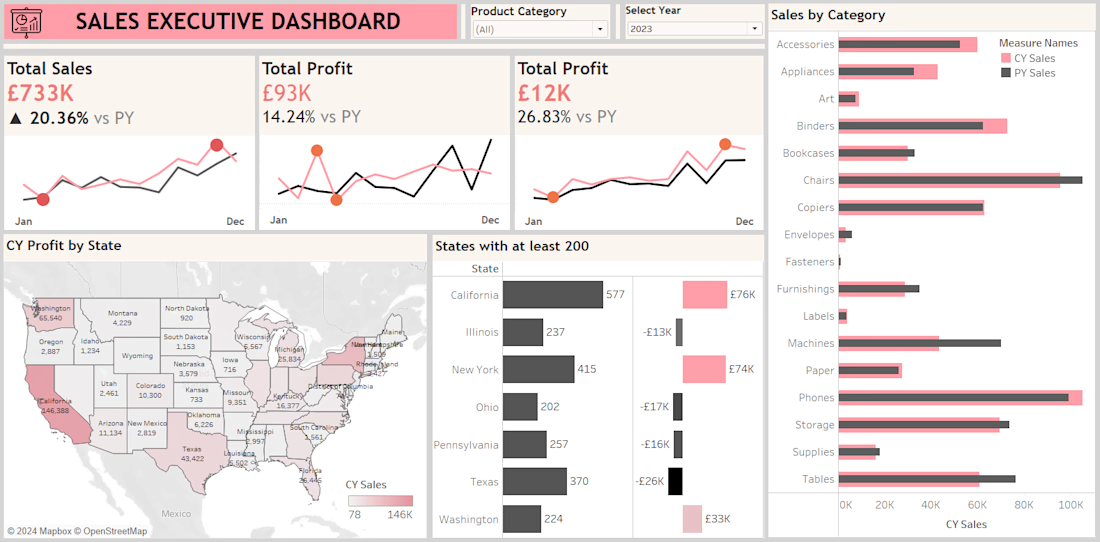
Created an executive Tableau dashboard to compare current- and prior-year sales and profit across product categories and US states. I used SQL to prepare the dataset and built interactive KPI, trend, geographic and category views for management reporting. The dashboard identified 20.36% year-over-year sales growth and 14.24% profit growth while exposing underperforming states and product lines, enabling users to move from headline performance to the areas requiring attention.

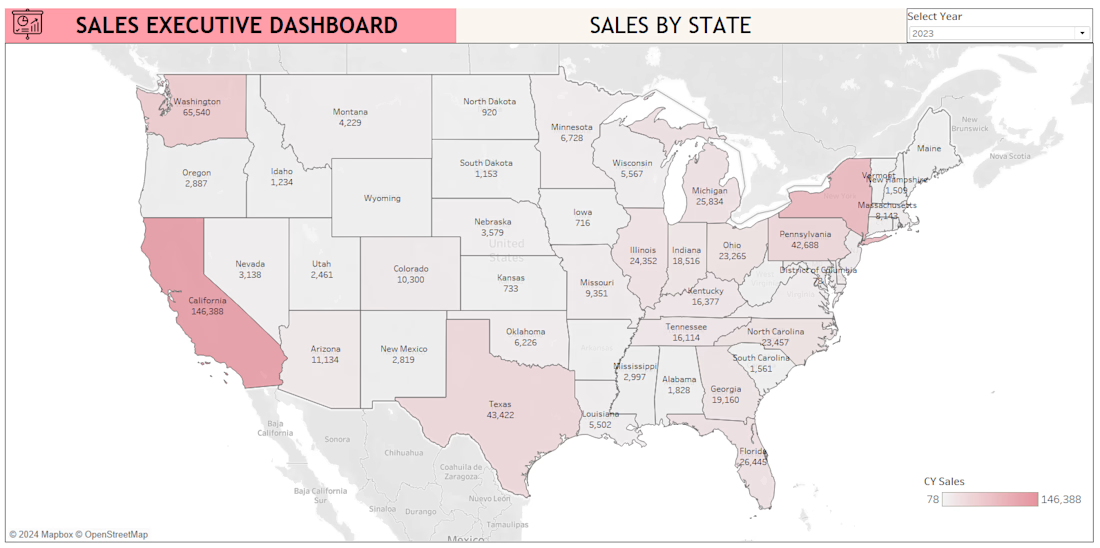

Got it! Here is the finalized, ready-to-paste text formatted perfectly for your Contra post:
Stop wasting hours on manual spreadsheets & messy data. 📊✨
Messy data and manual tracking cost businesses valuable time and money. I help founders, e-commerce brands, and teams turn chaotic spreadsheets into automated, clear, and powerful Excel dashboards.
Here is what I bring to your project:
Data Entry & Data Cleaning: 100% accurate, organized, and reliable datasets.
Advanced Excel Formulas: VLOOKUP, XLOOKUP, INDEX/MATCH, and custom formulas to streamline calculations.
Interactive Dashboards & Reporting: Visual insights that help you make better business decisions instantly.
Process Automation: Macros (VBA) & Power Query to save you hours of repetitive work every week.
Accounting & Financial Tracking: Organized bookkeeping, expense logs, and profit analysis.
⚡ Fast turnaround | 🎯 100% Accuracy | 🤝 Clear Communication
📩 Need your data cleaned, structured, or automated? Send an inquiry or drop a message to get started!