The network for creativity
Join 1.25M professional creatives like you
Connect with clients, get discovered, and run your business 100% commission-free
Creatives on Contra have earned over $150M and we are just getting started
Back to feedPost
Did you know your home reflects how much you read?
Not a metaphor. A literal one.
Add a book. Set a timer. Watch your apartment slowly come alive as you read. Dust clears in real time. Rooms bloom from neglect to warmth. Stop reading and watch it all fade back.
The Problem
Most reading trackers are lists. Cold. Forgettable. They record what you have not done without making you feel anything about it. You open the app, see a number, close the app. Nothing changes inside you.
Shelf Life is built around a different belief. Your habits should live somewhere. They should breathe. They should have consequences you can see.
Your bedroom holds the book you read before sleep. Your kitchen holds the article you meant to finish over coffee. Your study holds the essay you keep putting off. Read consistently and each space blooms back to life through an organic dust clearing animation driven by your actual reading time. Neglect your reading and the dust returns. Your home becomes a mirror of your habits. Honest and quiet and impossible to ignore.
I deliberately chose not to let users upload or read books inside the app. The moment you can read inside a tracker it stops being a tracker and starts competing with the experience of actually holding a book. Shelf Life honours the ritual of reading without replacing it.
How It Was Built
I started with a design philosophy before I started with a prompt. Warmth. Craft. Human first. Every decision was made to make the user feel something not just complete a task.
The isometric apartment and all ten room images including the neglected and bloomed states for each of the five rooms were generated entirely using Figma Weave. I used Figma for rapid design ideation and layout exploration before moving into Figma Make.
In Figma Make I built the full app in React and TypeScript. The core technical challenge was the dust clearing animation. It uses an SVG mask system with organic circular spots growing via requestAnimationFrame running in parallel with the reading timer. Each spot has its own delay and duration so the reveal feels natural and alive rather than mechanical. The same spots reverse in mirror order when the room returns to neglected. The animation runs both ways. Forward when you read. Backward when you stop.
Room specific ambient music plays in each space. The bedroom has soft rain and piano. The kitchen has morning acoustic warmth. The living room has fireplace crackle. The study is near silence. Each room sounds like it feels.
Tools Used
Figma Weave for AI image generation across all ten room backgrounds
Figma for design ideation and layout
Figma Make for the full app built in React and TypeScript
The Moment That Matters
Start a reading timer. Watch your room slowly clean itself in real time. Organic dust spots grow across the image revealing the bloomed version beneath. It is not a progress bar. It is not a percentage. It is your home breathing back to life because you chose to read.
When the timer ends the room holds its bloomed state then gradually returns to neglect. The direction of the animation tells you everything about your relationship with reading that week.
Most people go quiet when they watch it happen for the first time.


Excellent presentation and storytelling throughout the experience. Nicely done!

Thank you🙂
You are welcome


how fun! love the idea
Thank you Lillian 🙂

Wow, this is really fun and amazing. Amazing presentation as well. 👏
Thank you brother

The detail that really got me is the deliberate choice not to let people read inside the app. Most builders would see that as a missing feature. You saw it as the whole point. The SVG mask animation is clever too, dust clearing as an organic metaphor for progress rather than a progress bar.
That was the goal, thank you MD🙂

Thank you Harshad🙂

Excellent presentation 👏
Thank you Victor

amazing, great work!
Thank you so much

Your home becomes a mirror of your habits' — this is the most poetic brief I've read in this entire makeathon. The dust clearing animation concept is genius.
Thank you so much Abu

Amazing!
Thank you Sharon


Awesome work🔥👏👏
Thank you so much Picto

ohmygod i love thissss
I'm glad you do, thank you so much Micah

Love this. It feels less like a productivity app and more like an emotional experience built around reading.
That was the goal, thank you Emmanuel


Excellent
Thank you Subash

this looks absolutely incredible!
Thank you Nicolette

this is a cute idea love it!
Thank you Cecilia

The network for creativity
Join 1.25M professional creatives like you
Connect with clients, get discovered, and run your business 100% commission-free
Creatives on Contra have earned over $150M and we are just getting started
Trending

Claude
Claude has entered the design space. How are you using it?

Contra University
Learn from expert creatives how to earn more using next-gen AI tools.
Brand Design
The best brand designers are on Contra. Scroll to see what's trending in brand design. What are you building?
creativeaiflow
Creative AI workflows are evolving. What tools do you use, and what are their strengths and weaknesses?
freelancerlife
Freelancer life is wins, pivots, and everything in between. What’s yours right now?


Related posts



One of the best designs have seen so far today

Introducing KEEPS: A Digital Home for Physical Memories
KEEPS is a mobile app designed to preserve the physical objects that carry our memories.
While most memory apps are built around photos, KEEPS is built around everything else.
Concert tickets, boarding passes, receipts, handwritten notes, invitations, conference badges, and other small objects that people often keep long after their practical purpose has ended.
The idea came from a simple observation: many of us keep these items because they represent experiences, relationships, milestones, and moments we don’t want to forget. Over time, they become scattered across drawers, wallets, books, and boxes, making them difficult to revisit and easy to lose.
KEEPS transforms these physical keepsakes into digital artifacts.
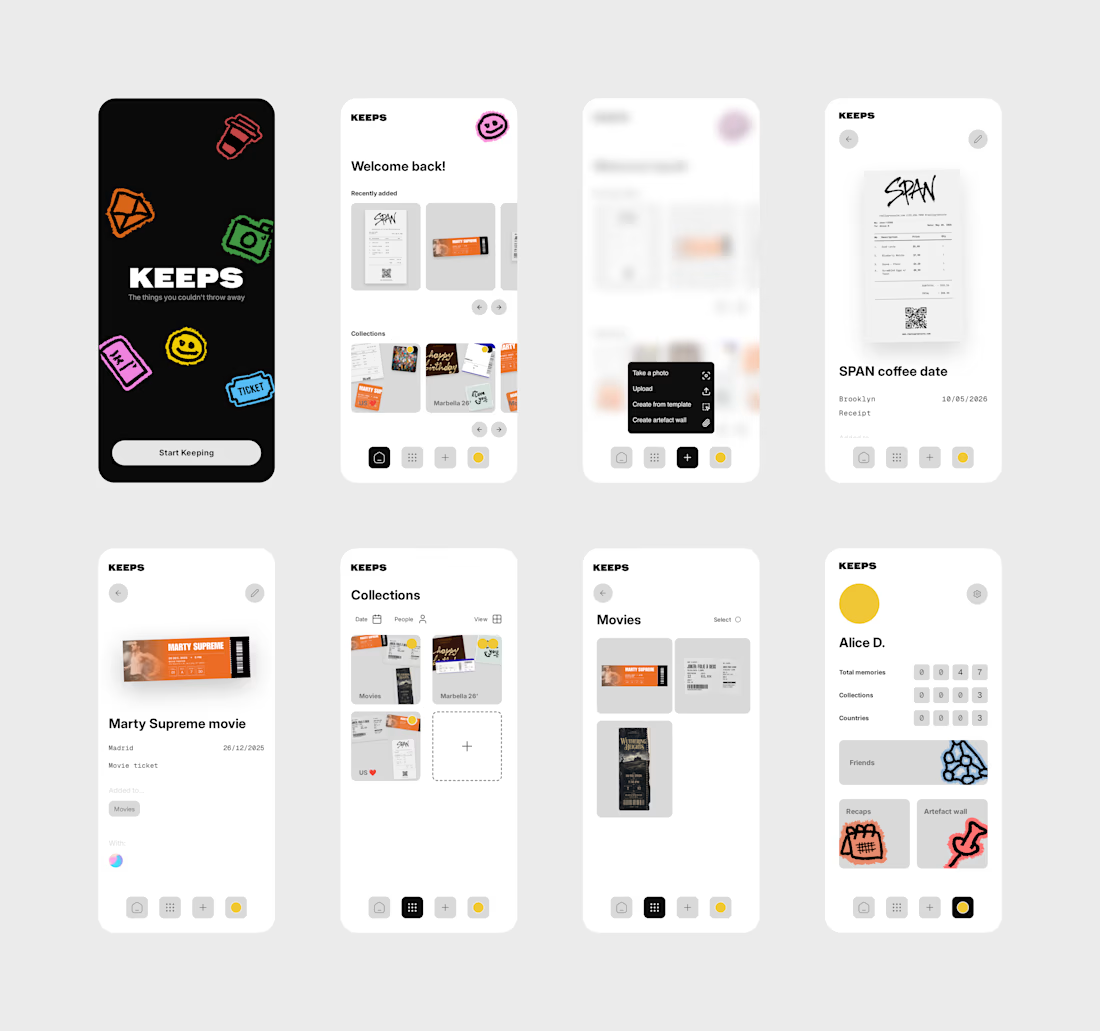
Users can scan real objects, remove backgrounds, add contextual information such as location, date, people, and personal notes, and organize them into custom collections. Artifacts can also be created from templates, allowing users to recreate memories that no longer exist physically.
The prototype includes onboarding, collections, artifact detail pages, discovery flows, creation flows, profile experiences, and a connected navigation system that allows users to move through their archive naturally.
Rather than generating the entire product in a single prompt, I used Flowstep as a design engineering tool.
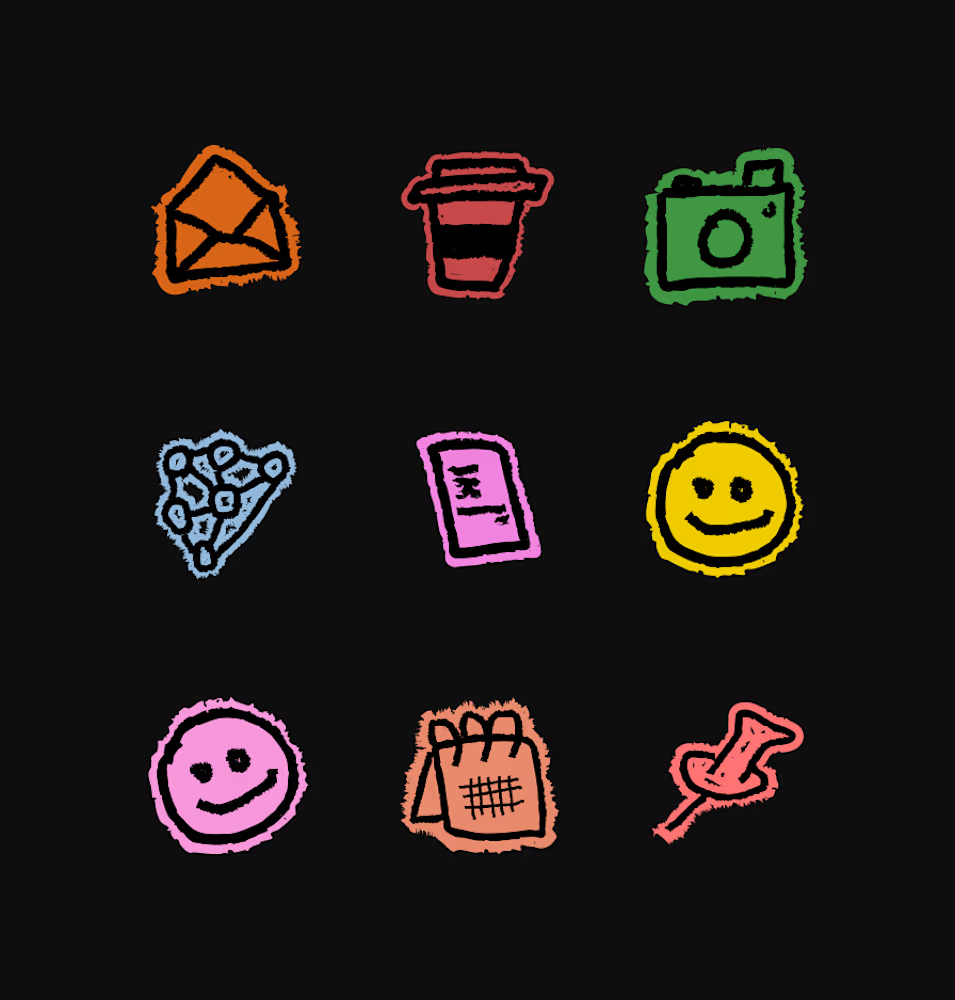
I started with a visual direction created in Figma, including custom illustrations, typography, layout systems, and the overall structure.
From there, I rebuilt the product inside Flowstep screen by screen, using detailed prompts to define hierarchy, spacing, interactions, navigation patterns, and user flows.
Each screen became the foundation for the next. Existing components were reused, refined, and expanded to create a cohesive design system across the entire application. The process was highly iterative: generating, reviewing, refining, and rebuilding until the product felt consistent both visually and functionally.
The result is not simply a collection of screens, but a connected prototype with clear user journeys, interaction logic, and product intent.
KEEPS is built around a simple belief:
The smallest objects often carry the biggest memories.
Flowstep file link: https://app.flowstep.ai/file?activeFileId=cb23715a-64af-4fb6-822a-c789fb99b461
The walkthrough, screen recording of the prototype working in Flowstep, my custom illustrations, and the screens designed in Flowstep are included below.


Love this!


Just found it! Who said design should be only for clients! I remember I had so much fun making these cards 🤩


Lovely gradients!