The network for creativity
Join 1.25M professional creatives like you
Connect with clients, get discovered, and run your business 100% commission-free
Creatives on Contra have earned over $150M and we are just getting started
Back to feedPost

A feature doesn’t exist in isolation. It exists in the context of your user’s journey.
When designing, you have to ask:
- Where is the user coming from?
- How familiar are they with the product?
- What mental models are they bringing in?
- How much have they already learned through previous actions?
Take one of my screens as an example. It’s filled with terms like: Atom. TVL. Tags. Contributors. To an outsider, it’s confusing. Almost unusable. But that screen wasn’t designed for an outsider.
It was designed for someone who:
- Has gone through onboarding
- Created their first identity
- Made their first claim
- Staked on something they believe in
- Spends time in the community (Discord, Twitter spaces, etc.)
They don’t just use the product. They live in it. And that’s the key. Good design isn’t about making everything universally simple. It’s about making it contextually clear for the right user, at the right time.
How do you get there? You track the journey:
- When users take key actions
- Where they drop off
- How their behavior evolves over time
That’s how you earn the confidence to design “complex” screens that actually feel intuitive. Designing products isn’t just about clarity. It’s about empathy, grounded in real user behavior.


The network for creativity
Join 1.25M professional creatives like you
Connect with clients, get discovered, and run your business 100% commission-free
Creatives on Contra have earned over $150M and we are just getting started





Related posts

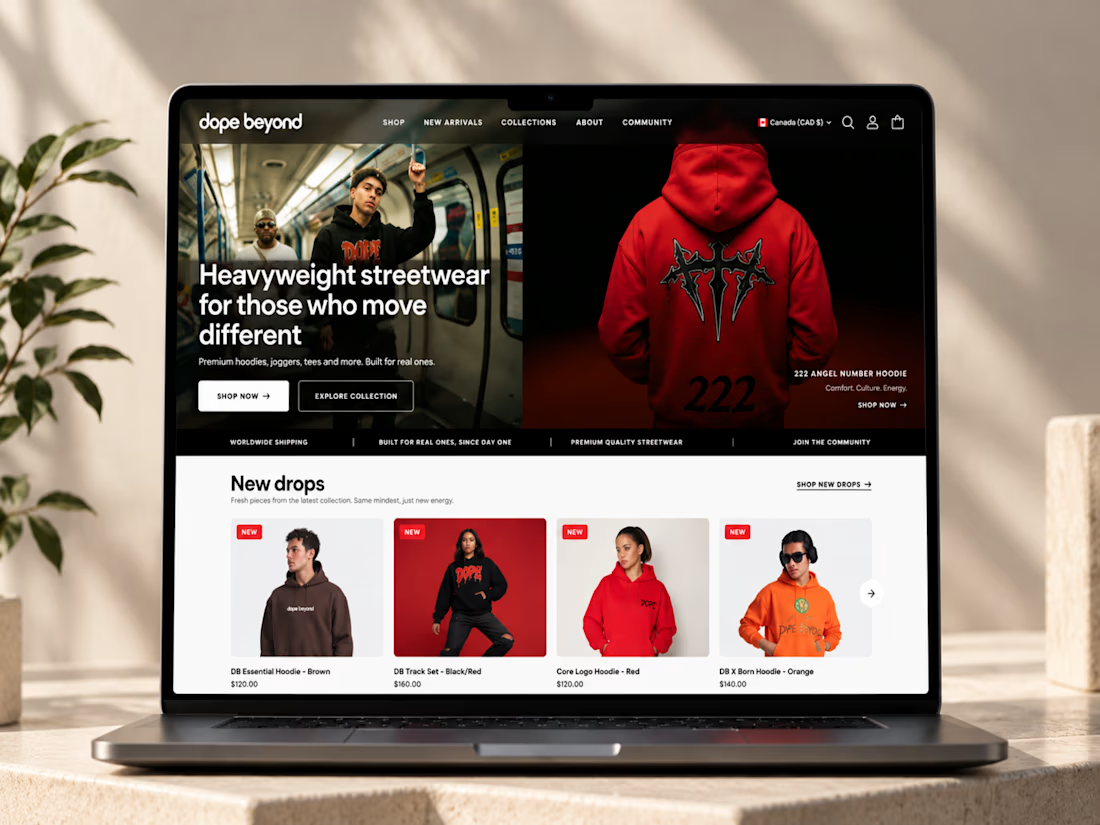
🔥 From streetwear to a standout Shopify experience.
I recently worked on DOPE BEYOND, building a bold e-commerce store for a streetwear brand using Shopify and the Palo Alto theme.
From mega menu navigation to size charts and color swatches, every detail was designed to make shopping easier while keeping the brand’s identity strong.
What do you think matters most in a fashion e-commerce store: design, user experience, or functionality? 👇


Ye le Jani Solomon wali post ke liye copy-ready:
Fire work Solomon! 🔥 DOPE BEYOND looks like a perfect fit for a bold streetwear brand — love how you took Shopify + Palo Alto theme and pushed it beyond the template with mega menu, size charts and color swatches. Those small UX...


Okaaaayy, new profile picture and a new project! 🥳
This is one i'm really proud of and shows the development in our studio. Not just a brand or a website, but 120+ app screens + full IOS development for Mercury 🌍
I'm super proud of this project! Please check it out :)) 👇


Huge congrats Chris! 🎉 120+ screens + full IOS dev for Mercury is massive! Love the growth of your studio - from brand to full product. The editorial typography card looks premium. Big inspiration for us building in the app space! Checking it out now 👏

My Recent Work -- Showreel