The network for creativity
Join 1.25M professional creatives like you
Connect with clients, get discovered, and run your business 100% commission-free
Creatives on Contra have earned over $150M and we are just getting started
Back to feedPost

The alert fires. Your engineer still has to open four tools before deciding what to do.
That context-gathering step is where I focused an n8n + OpenAI incident-triage workflow for a SaaS platform team.
Here’s how it works:
• Receive the Alertmanager alert.
• Collect relevant metrics, pod logs and recent deployments.
• Suggest a likely cause and matching runbook step.
• Bring the summary into Slack for review and escalation.
The important boundary: a model’s suggestion is not permission to change production. Actions need explicit controls, logging and a recovery path.
I’ve shared the workflow, guardrails and project details here:
https://contra.com/p/rvFWbkqZ-ai-incident-triage-agent-for-a-saa-s-platform-team-n8n-open-ai
If your SaaS team spends too much time investigating recurring alerts, message me with your monitoring stack and the step that slows you down. We can scope a focused automation project.


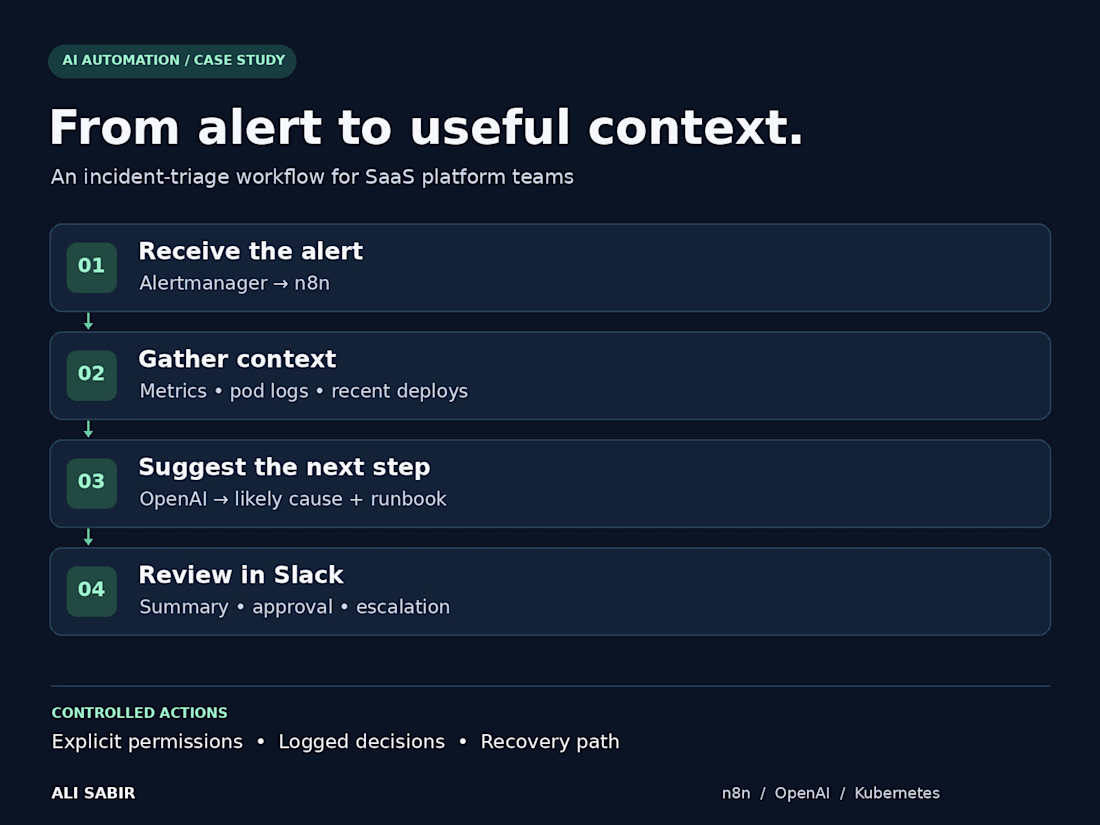

Pulling pod logs and recent deployments right after the alert gives the engineer a ready made snapshot before they start digging.
The network for creativity
Join 1.25M professional creatives like you
Connect with clients, get discovered, and run your business 100% commission-free
Creatives on Contra have earned over $150M and we are just getting started





Related posts


New case study: motion product film for a mobile streaming app. Some shots filmed on camera, some AI generated, the rest built in After Effects
Check it out


This is only high end

A high-impact Webflow experience for an industrial site-selection platform.


Industrial site selection on Webflow lives or dies on map and filter clarity. High impact usually means dense data still scans on mobile.


My first biggest project was developing a Framer website for https://libertinelondon.com
Charged $2.5k for development
they provided the design


congrats


