The network for creativity
Join 1.25M professional creatives like you
Connect with clients, get discovered, and run your business 100% commission-free
Creatives on Contra have earned over $150M and we are just getting started
Back to feedPost

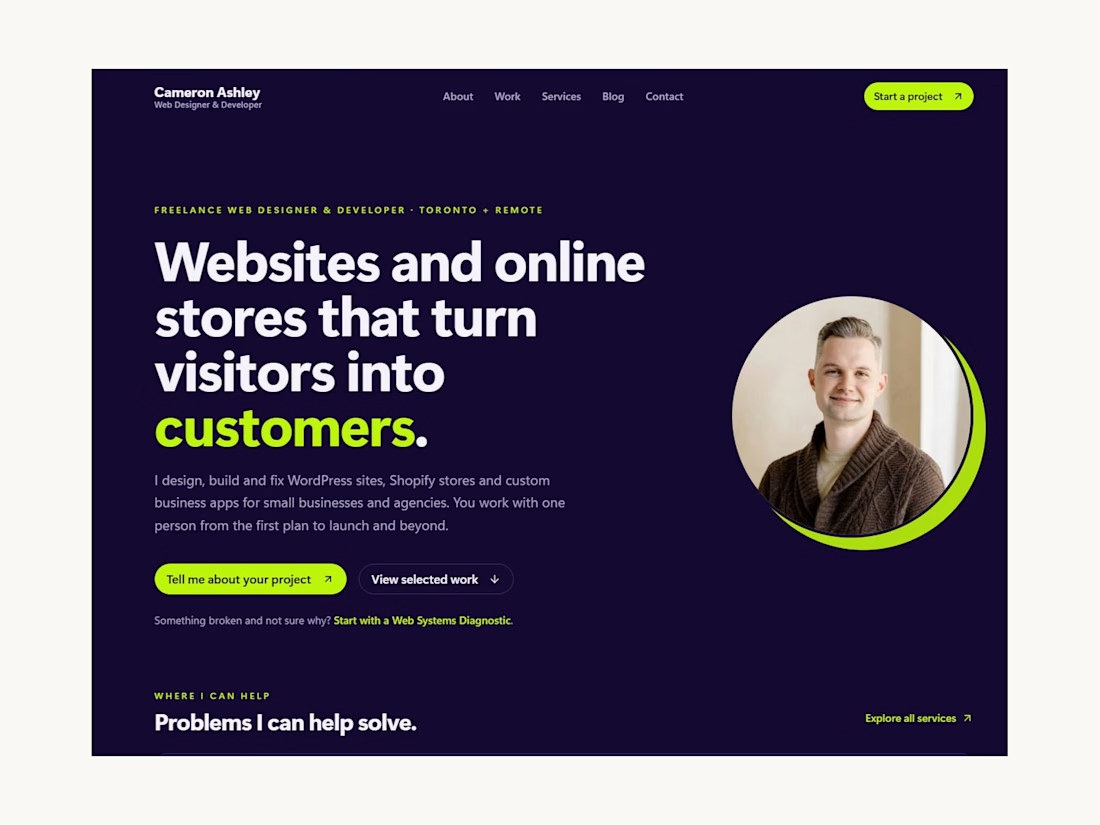
A portfolio should make three things easy to find: what you do, examples of your work, and how to start a project.
I built my custom-coded portfolio around those questions, with clear service pages, real project screenshots, and a direct enquiry path. I directed the design, development, debugging, and testing with AI support.
View the case study: https://contra.com/p/BPOl3los-cameron-ashley-custom-coded-portfolio-website
I help small businesses and agencies build, improve, and fix websites and online stores. If your site needs a clearer message or a better path to contact, send me your website and what you want to improve.

nice that the portfolio itself answers the three questions you listed at the top. are most of your clients small businesses around toronto, or all over?
The network for creativity
Join 1.25M professional creatives like you
Connect with clients, get discovered, and run your business 100% commission-free
Creatives on Contra have earned over $150M and we are just getting started







Related posts


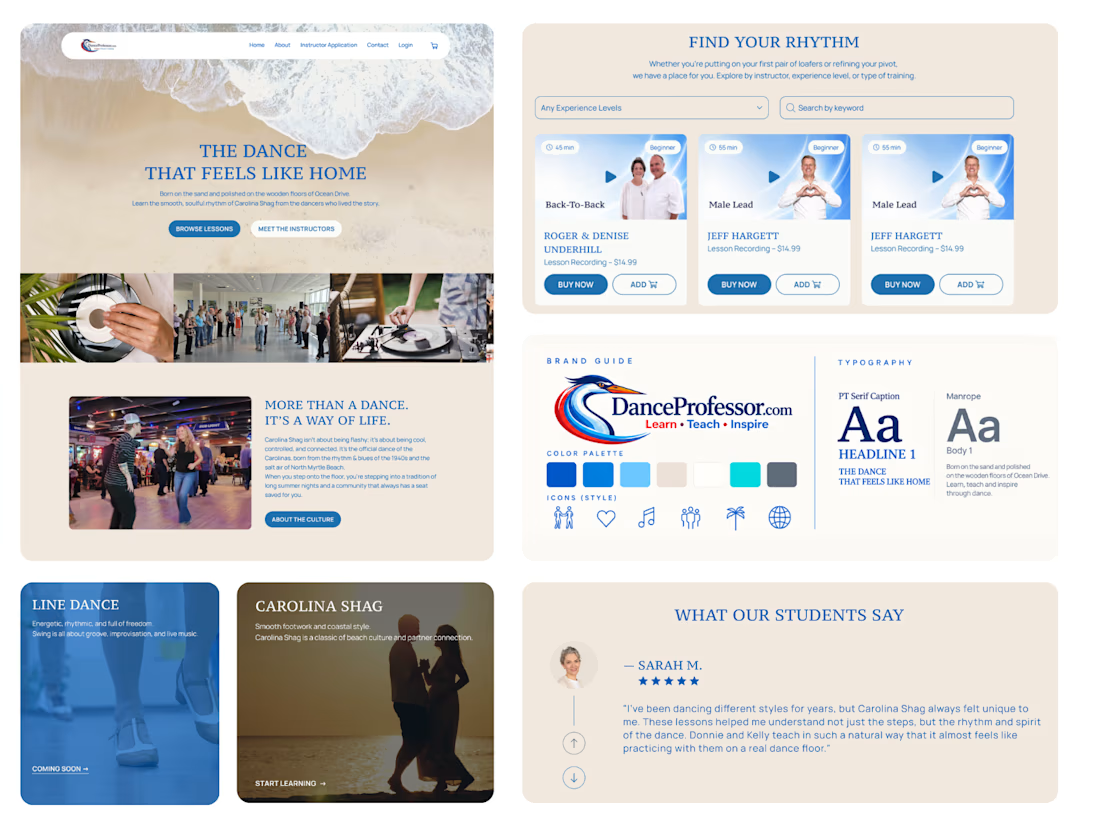
Another Kajabi project wrapped up! 🎉
We've noticed a common challenge across many of our recent projects: clients have a growing number of courses, but making them easy to browse isn't always straightforward.
Kajabi doesn't offer advanced course filtering out of the box, so for DanceProfessor, we built a custom solution.
It took quite a bit of time on both the design and development sides, but the result was worth it. The client is happy, and visitors can now easily find exactly what they're looking for.
Sometimes the most challenging features are the ones that make the experience feel the simplest.


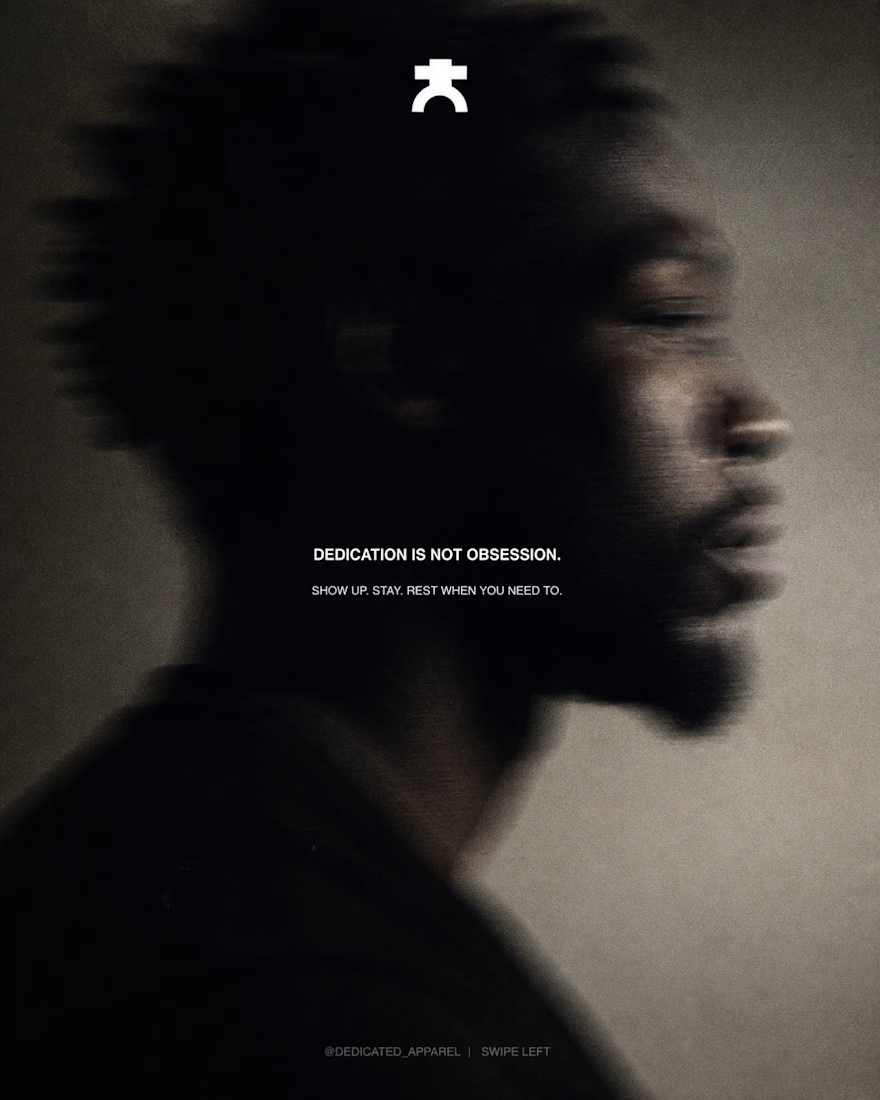
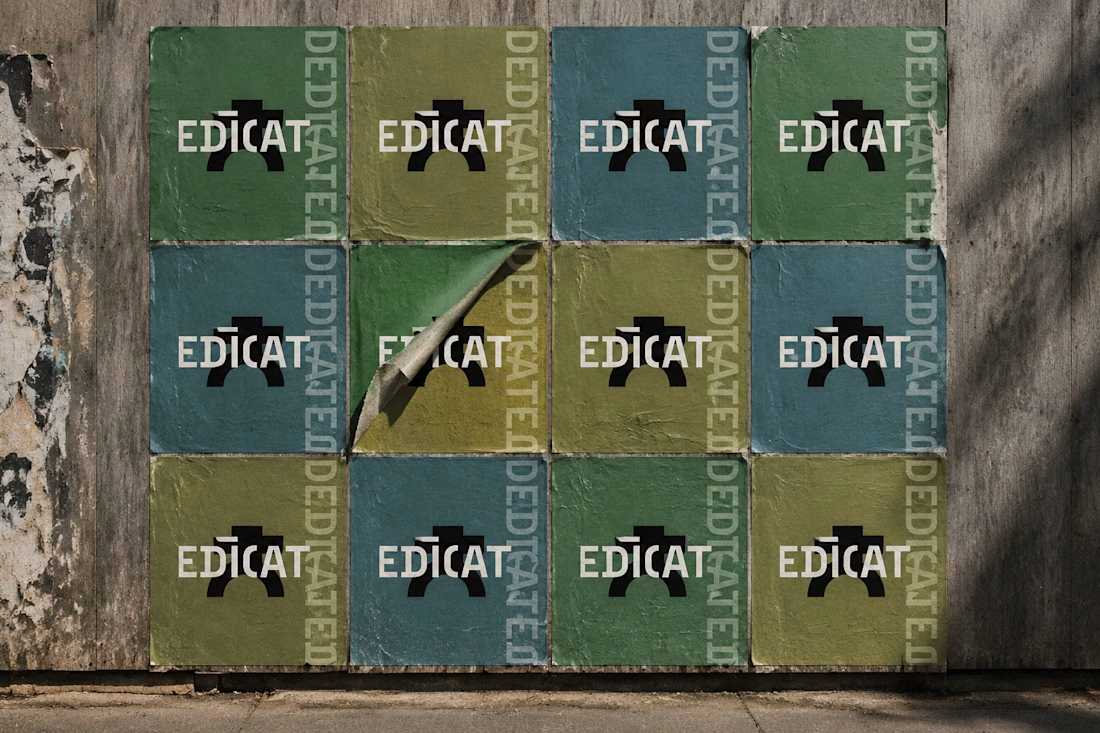
I took the face off the brand.
A square block on a shoulder bar. One arch for legs. No eyes, no smile, no pose.
Then I cut the wordmark down to EDICAT and let a single hard light do the rest.
Discipline isn’t a performance. It’s a stance.

this is such strong work & a brilliant concept to build, kudos to you!


Web3, but make it award-worthy! 🔥☯️
Our website for Daoism Systems just collected 9 awards:
Awwwards x1 · Orpetron x3 · FWA x1 · CSSDA x4
Daoism Systems is a web3 venture studio. We built the website around the Bagua, the eight trigrams of Daoist thought. Particles react as you move, ambient sound fills the space, and every section follows an ancient map.
→ Check out case study
More awards coming soon! 🤘🎸


That's impressive😍