
Briana Pole
Virtual Assistant for Inbox, Scheduling & Systems



Inbox & Scheduling System Setup (Sample Case Study)
0
0

Sample 4: VA / Organizational Case Study
Title: Case Study — Building an Inbox & Scheduling System from Scratch
The situation:
A household (or business) with a constant stream of incoming requests — appointments, deadlines, follow-ups — and no system to track any of it beyond memory. Things were getting missed, followed up on late, or duplicated.
What I did:
Triage first. I sorted incoming items into three categories: needs action today, needs action this week, and reference/no action needed. This alone cut visible "noise" by more than half.
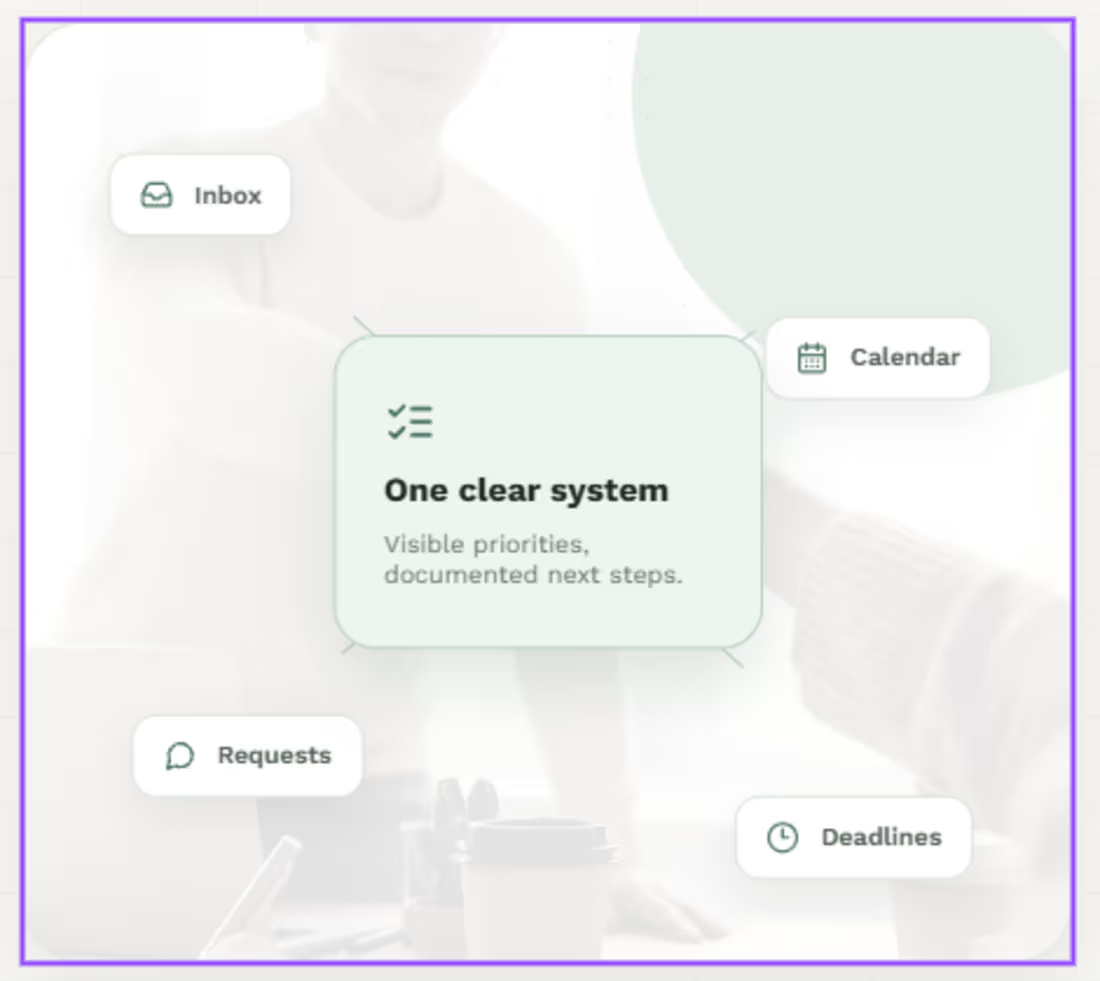
Built a single source of truth. Instead of tracking things across memory, sticky notes, and half-remembered conversations, I moved everything into one shared calendar and a simple running list — so nothing depended on any one person's memory holding up.
Set a recurring review rhythm. A 10-minute check-in at the same time each day to re-sort anything new and confirm nothing time-sensitive slipped through.
The result:
Missed follow-ups dropped to near zero. Response time on time-sensitive items improved because nothing was waiting to be "remembered" — it was already sorted and visible.
Why this matters for VA work:
This is the same skill set I bring to inbox management, calendar coordination, and admin support — building a system that doesn't rely on anyone's memory, so nothing falls through the cracks even on a chaotic day.
0
31
Quovyn — Independent Product Development Project
Developed an AI-powered life organization platform focused on helping people manage tasks, schedules, information, and everyday responsibilities. Worked on product planning, user research, feature development, organization systems, testing, documentation, and AI-assisted software development.
0
58
Sample 3: How-To Piece (Practical/Instructional)
Title: How to Build a Household System That Survives a Bad Week
Most organizational systems are designed for your best days — when you're rested, motivated, and have an hour to spare. They fall apart the moment life gets hard, which is exactly when you need them most. Here's how to build one that holds up anyway.
Design for your worst day, not your best one. Ask: "Will this still work if I only have 10 minutes and I'm exhausted?" If the answer is no, simplify it until it is.
Reduce decisions, not just tasks. A schedule that tells you what to do removes more mental load than a checklist you have to interpret. "Monday: kitchen" beats "wash dishes, wipe counters, sweep, take out trash" — same result, fewer decisions.
Make the system visible, not memorized. If a system only lives in your head, it dies the moment you're too tired to think. Post it. Write it down. Put it somewhere you'll see it without having to remember to look.
Build in a "good enough" version. Every task should have a stripped-down version for hard days — the 20% that matters most. A quick wipe-down still counts. Partial progress still counts.
Review and adjust monthly, not daily. Don't try to perfect the system in real time. Let it run, notice what keeps breaking, and adjust once a month. Systems that get redesigned every day never get the chance to actually work.
A system built for your best day will always fail you on your worst one. Build for the worst day, and the good days take care of themselves.
0
69