
Tinashe Nedi
Automating real estate risk and energy yield physics.
Ready for work
Tinashe is ready for their next project!
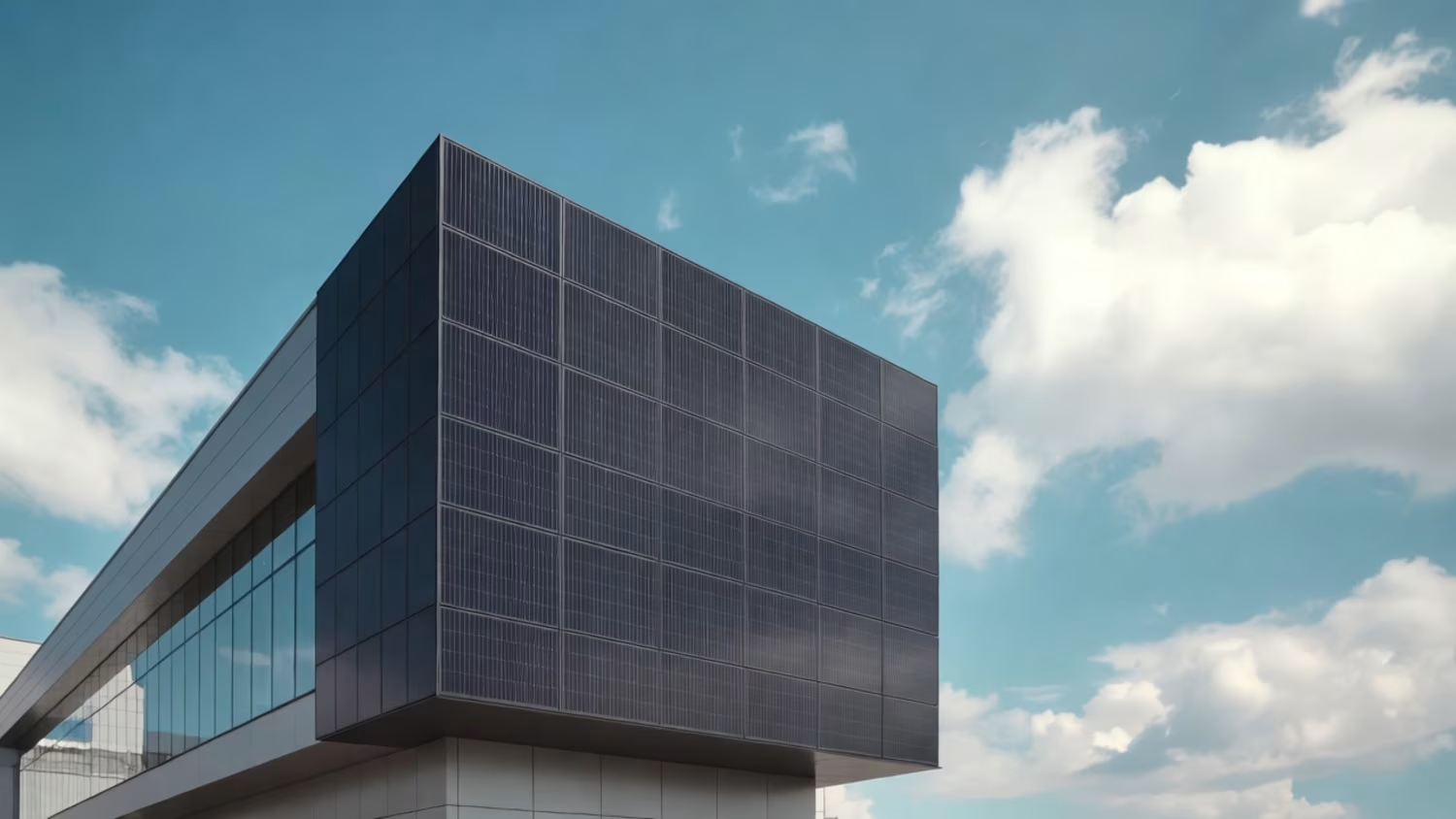
Your project’s IRR is a vanity metric. Lenders don't care about it.
I see too many C&I solar proposals with beautiful 25% IRR projections get absolutely shredded in the first round of the Investment Committee.
Why? Because a standard financial model assumes a "perfect" environment.
Lenders aren't buying your best-case scenario. They are underwriting your worst-case disaster.
They don't care about the upside; they care about the Debt Service Coverage Ratio (DSCR) during a crisis. If your project’s cash flow can’t survive a 20% spike in fuel costs and a 10% increase in CAPEX simultaneously, you haven't built an asset.
You’ve built an underwriting liability.
The Reality of Bankability
The IFC standard is crystal clear: a DSCR ≥ 1.30 is the benchmark for institutional bankability. Anything less, and you aren't building a power plant—you’re building a credit risk.
What amateur developers do: Run a static model, see a high IRR, and call it a day.
What elite teams do: Run a multi-variable sensitivity matrix to stress-test the project across critical risk factors (Fuel Volatility, Discount Horizons, and Asset Degradation).
Stop Guessing. Start Stress-Testing.
We’ve automated this entire stress-test into our API. It doesn't tell you if your project looks "pretty" on a pitch deck. It tells you if it’s bankable in the real world.
Stop pitching IRR to the board. Start pitching the DSCR stress-test.
👇 Watch how fast we stress-test a C&I model below.
#ProjectFinance #RenewableEnergy #Bankability #InvestmentCommittee #SolarEnergy #FinancialModeling #EnergyTransition
1
112
The $100k mistake in C&I solar modeling? Ignoring the "Wet-Stacking" threshold.
Most feasibility reports treat solar+BESS+Diesel as a simple math problem: [Demand - Solar - BESS = Diesel].
That’s how you design an asset that kills the engine.
If your simulation doesn't respect the 30% minimum load floor (ISO 8528-1:2005), you aren't optimizing for savings. You’re optimizing for engine failure.
When you force a diesel genset to run at 5% or 10% load to "maximize" solar, you cause wet-stacking—unburned fuel accumulating in the exhaust system. This leads to carbon buildup, increased maintenance, and premature engine retirement.
An institutional lender doesn't see "savings." They see a project with a high probability of mechanical default.
The only way to build a bankable hybrid system is through a deterministic Merit-Order Dispatch loop that treats the engine as a protected asset. (See the telemetry loop below).
If your modeling software can’t simulate the dispatch hierarchy to protect the engine floor, it’s not a feasibility tool. It’s a calculator that’s ignoring the physics of your infrastructure.
hashtag#SolarEngineering (https://www.linkedin.com/search/results/all/?keywords=%23solarengineering&origin=HASH_TAG_FROM_FEED) hashtag#ProjectFinance (https://www.linkedin.com/search/results/all/?keywords=%23projectfinance&origin=HASH_TAG_FROM_FEED) hashtag#C (https://www.linkedin.com/search/results/all/?keywords=%23c&origin=HASH_TAG_FROM_FEED)&I hashtag#EnergyTransition (https://www.linkedin.com/search/results/all/?keywords=%23energytransition&origin=HASH_TAG_FROM_FEED) hashtag#DispatchOptimization (https://www.linkedin.com/search/results/all/?keywords=%23dispatchoptimization&origin=HASH_TAG_FROM_FEED) hashtag#Infrastructure (https://www.linkedin.com/search/results/all/?keywords=%23infrastructure&origin=HASH_TAG_FROM_FEED) hashtag#Bankability (https://www.linkedin.com/search/results/all/?keywords=%23bankability&origin=HASH_TAG_FROM_FEED)
1
62
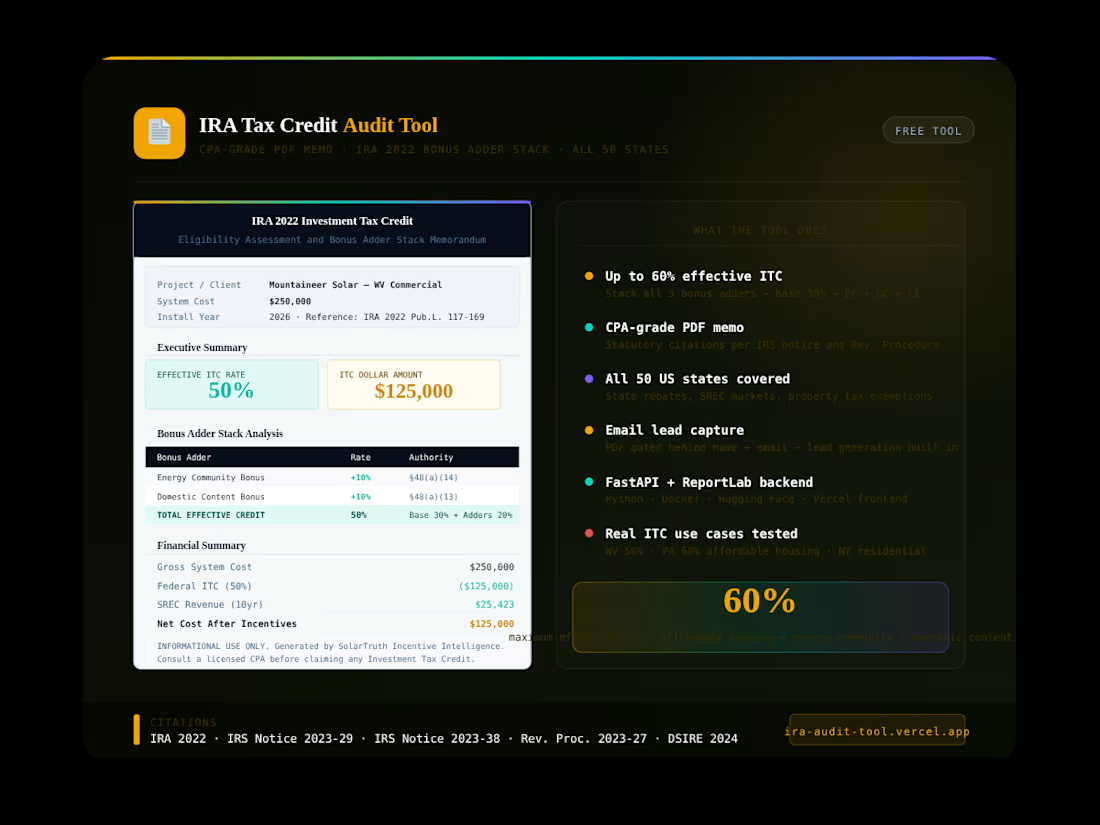
IRA Tax Credit Audit Tool — CPA-Grade PDF Memo Generator with Bonus Adder Stack Modelling
0
86
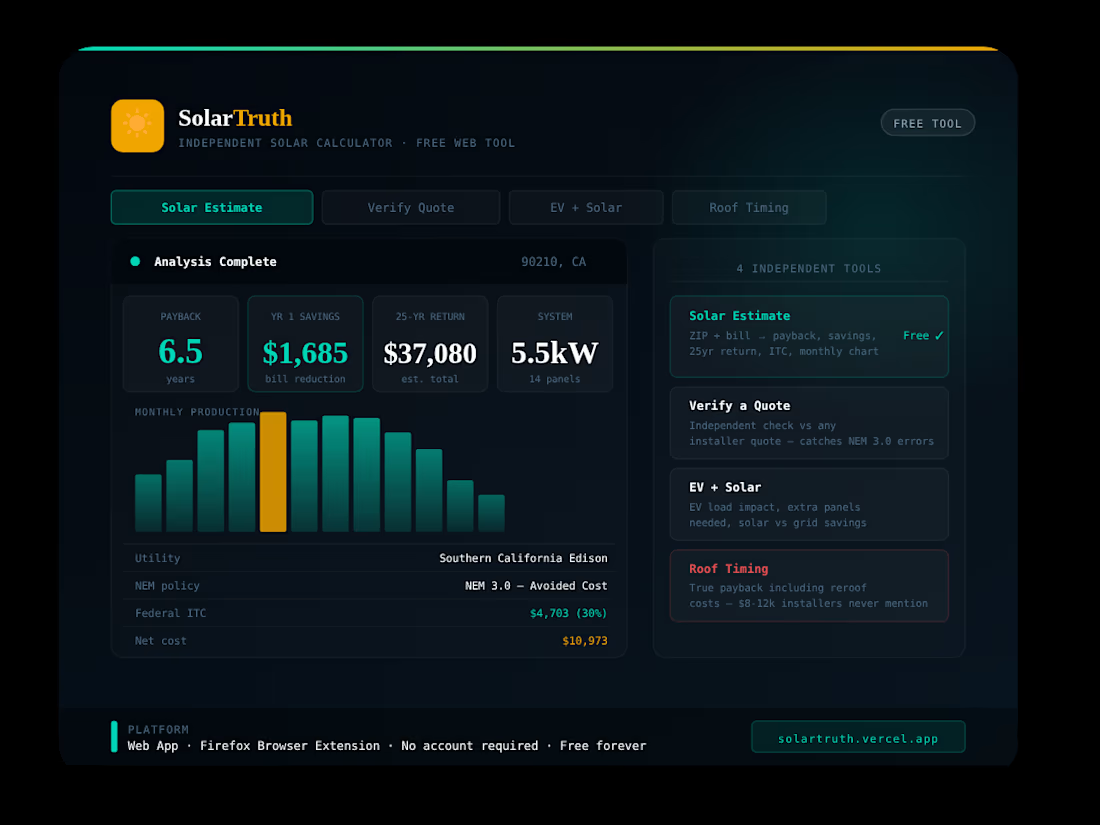
SolarTruth — Independent Solar Calculator with NEM 3.0, EV Co-Sizing, and Roof Timing Analysis
0
70