The network for creativity
Join 1.25M professional creatives like you
Connect with clients, get discovered, and run your business 100% commission-free
Creatives on Contra have earned over $150M and we are just getting started
Back to feedPost

Your project’s IRR is a vanity metric. Lenders don't care about it.
I see too many C&I solar proposals with beautiful 25% IRR projections get absolutely shredded in the first round of the Investment Committee.
Why? Because a standard financial model assumes a "perfect" environment.
Lenders aren't buying your best-case scenario. They are underwriting your worst-case disaster.
They don't care about the upside; they care about the Debt Service Coverage Ratio (DSCR) during a crisis. If your project’s cash flow can’t survive a 20% spike in fuel costs and a 10% increase in CAPEX simultaneously, you haven't built an asset.
You’ve built an underwriting liability.
The Reality of Bankability
The IFC standard is crystal clear: a DSCR ≥ 1.30 is the benchmark for institutional bankability. Anything less, and you aren't building a power plant—you’re building a credit risk.
What amateur developers do: Run a static model, see a high IRR, and call it a day.
What elite teams do: Run a multi-variable sensitivity matrix to stress-test the project across critical risk factors (Fuel Volatility, Discount Horizons, and Asset Degradation).
Stop Guessing. Start Stress-Testing.
We’ve automated this entire stress-test into our API. It doesn't tell you if your project looks "pretty" on a pitch deck. It tells you if it’s bankable in the real world.
Stop pitching IRR to the board. Start pitching the DSCR stress-test.
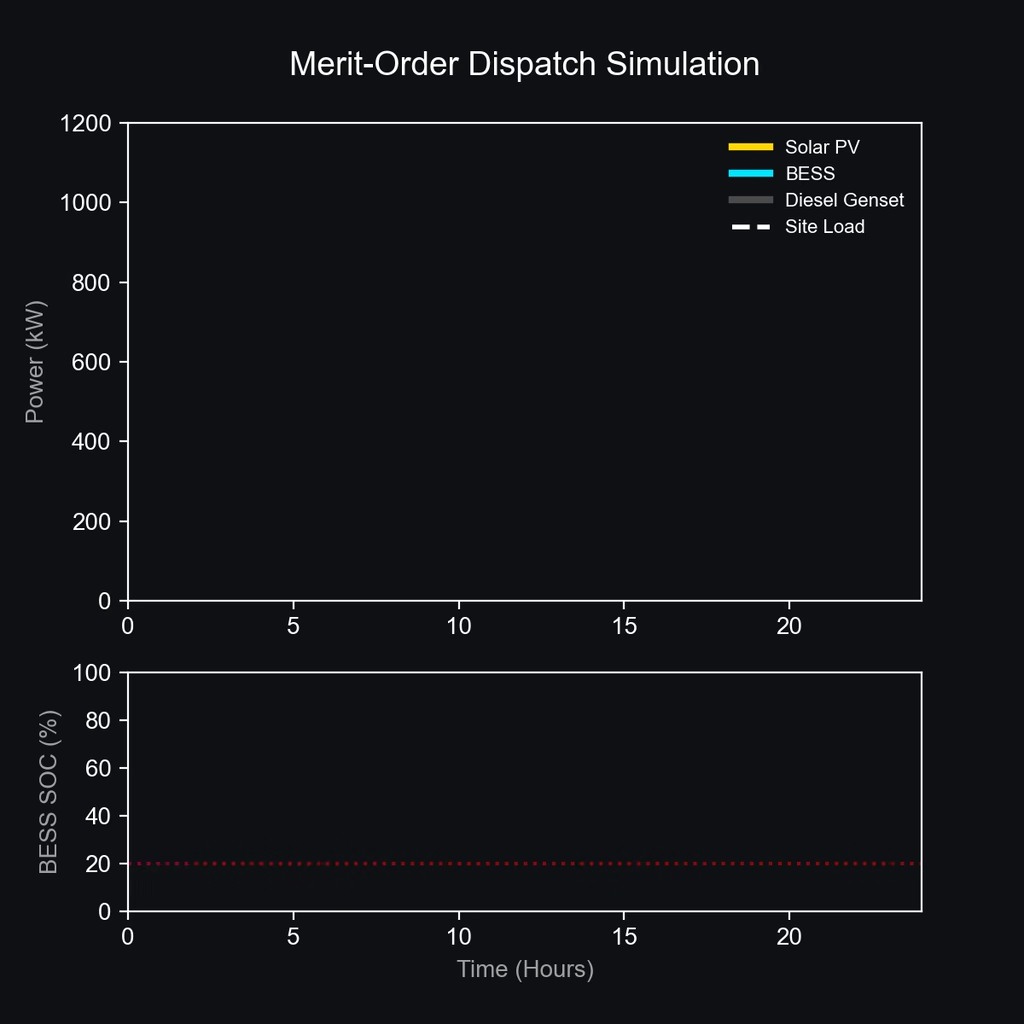
👇 Watch how fast we stress-test a C&I model below.
#ProjectFinance #RenewableEnergy #Bankability #InvestmentCommittee #SolarEnergy #FinancialModeling #EnergyTransition

The network for creativity
Join 1.25M professional creatives like you
Connect with clients, get discovered, and run your business 100% commission-free
Creatives on Contra have earned over $150M and we are just getting started





Related posts

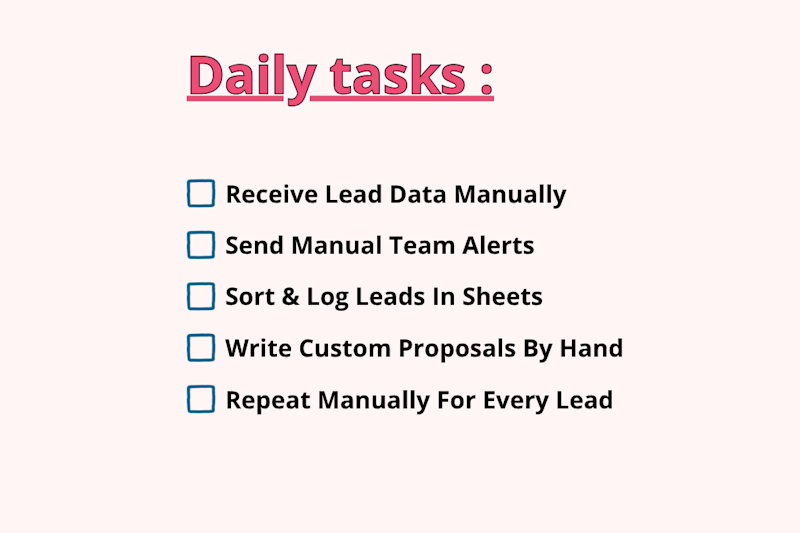
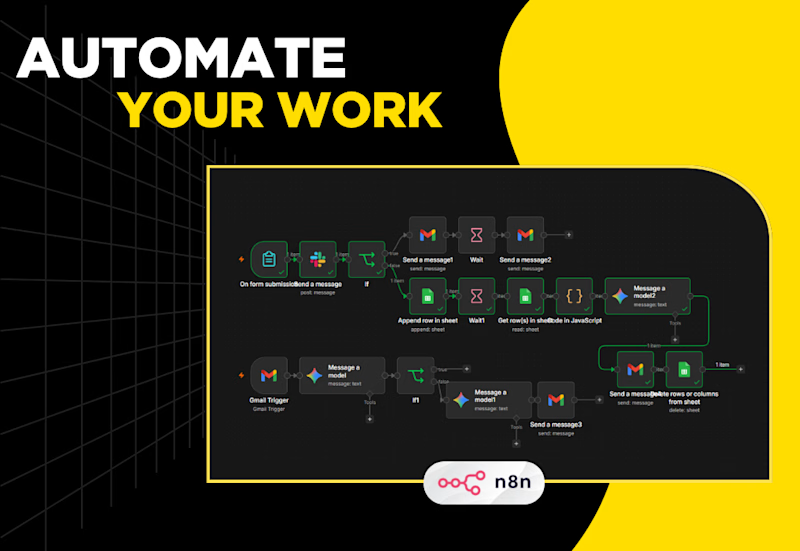
Managing investment inquiries manually takes hours of tedious, repetitive work. Every time a new client submits their details, you have to manually transfer their data into a Google Sheets tracker, notify your team, and spend hours writing custom proposals line by line.
Which one is faster, saves more time, and prevents mistakes ?


0 voted
0%
2 voted
100%
2 votes
Closed


which part did you automate first?

Discover Alpina, your gateway to exceptional living. Our newly launched website is designed to bring you closer to the dream home you’ve always imagined. From luxury estates to modern residences, Alpina curates the finest real estate options to match your unique lifestyle. Explore, envision, and begin your journey to finding the perfect property, where every detail is crafted for comfort, elegance, and quality living. Your future starts here.



This project focused on building and testing a practical AI security assessment lab for evaluating LLM defenses against prompt injection and jailbreak attacks.
I integrated Spikee by Reversec with a locally hosted cybersecurity model running through LM Studio, then added NVIDIA NeMo Guardrails to compare model behavior under three conditions: no guardrails, input filtering, and combined input/output protection.
The work included configuring the local model environment, building a custom FastAPI gateway, integrating NeMo Guardrails, troubleshooting model latency and timeout issues, creating a reusable Spikee target, and analyzing attack results using Spikee’s built-in reporting tools.
The project also explored different adversarial testing approaches, including prompt injection datasets, obfuscation, encoded attacks, Best-of-N testing, synthetic canary leakage tests, and structured benchmark comparisons.
The objective was to measure how much the guardrails reduced successful attacks while keeping the model, dataset, and testing conditions consistent.
Tools used: Spikee, NVIDIA NeMo Guardrails, LM Studio, Python, FastAPI, PowerShell, Parrot OS, local LLMs, JSONL datasets, and custom security testing scripts.
This project demonstrates a hands-on approach to LLM red teaming, AI safety testing, prompt-injection assessment, and guardrail validation for organizations deploying generative AI systems.


pretty cool tbh. testing the same attacks with different guardrail setups makes the results way more interesting.