The network for creativity
Join 1.25M professional creatives like you
Connect with clients, get discovered, and run your business 100% commission-free
Creatives on Contra have earned over $150M and we are just getting started
Back to feedPost

The $100k mistake in C&I solar modeling? Ignoring the "Wet-Stacking" threshold.
Most feasibility reports treat solar+BESS+Diesel as a simple math problem: [Demand - Solar - BESS = Diesel].
That’s how you design an asset that kills the engine.
If your simulation doesn't respect the 30% minimum load floor (ISO 8528-1:2005), you aren't optimizing for savings. You’re optimizing for engine failure.
When you force a diesel genset to run at 5% or 10% load to "maximize" solar, you cause wet-stacking—unburned fuel accumulating in the exhaust system. This leads to carbon buildup, increased maintenance, and premature engine retirement.
An institutional lender doesn't see "savings." They see a project with a high probability of mechanical default.
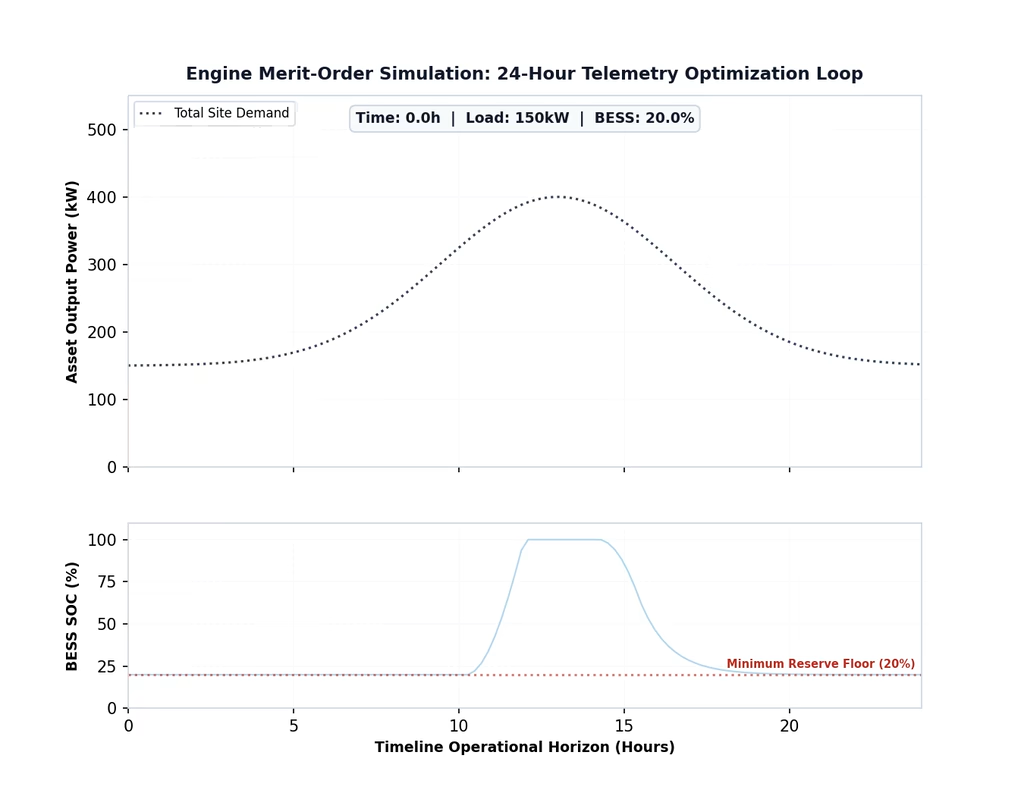
The only way to build a bankable hybrid system is through a deterministic Merit-Order Dispatch loop that treats the engine as a protected asset. (See the telemetry loop below).
If your modeling software can’t simulate the dispatch hierarchy to protect the engine floor, it’s not a feasibility tool. It’s a calculator that’s ignoring the physics of your infrastructure.
hashtag#SolarEngineering hashtag#ProjectFinance hashtag#C&I hashtag#EnergyTransition hashtag#DispatchOptimization hashtag#Infrastructure hashtag#Bankability


The network for creativity
Join 1.25M professional creatives like you
Connect with clients, get discovered, and run your business 100% commission-free
Creatives on Contra have earned over $150M and we are just getting started





Related posts

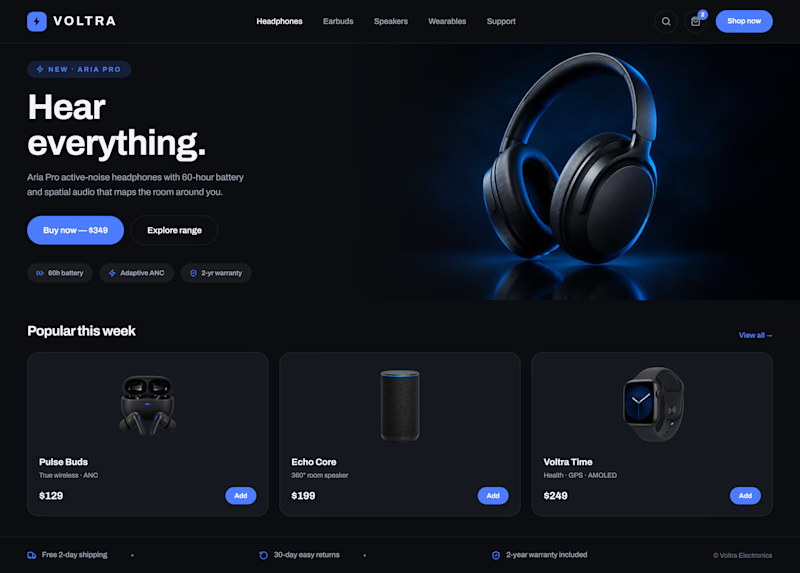
Working through the visual direction for Voltra.
The debate: does premium tech sell better in the shadows (Image 2) or in daylight (Image 1)?
Drop your pick below 👇

6 voted
43%

8 voted
57%
14 votes
Closed

I loved the option 1.

Which loader page did you guys go with? I created the concept and my client loved version 2. The project's called Layer8, so I played with the idea of layers loading up to eight to match the brand.

0 voted
0%
6 voted
100%
6 votes
Closed

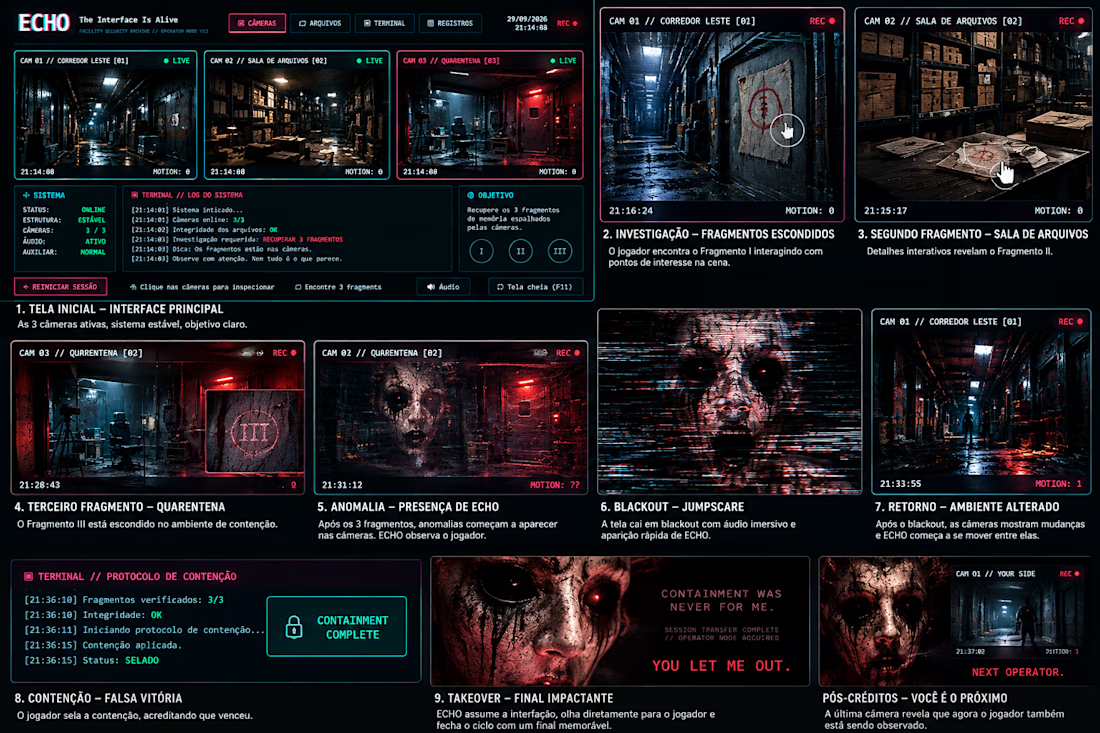
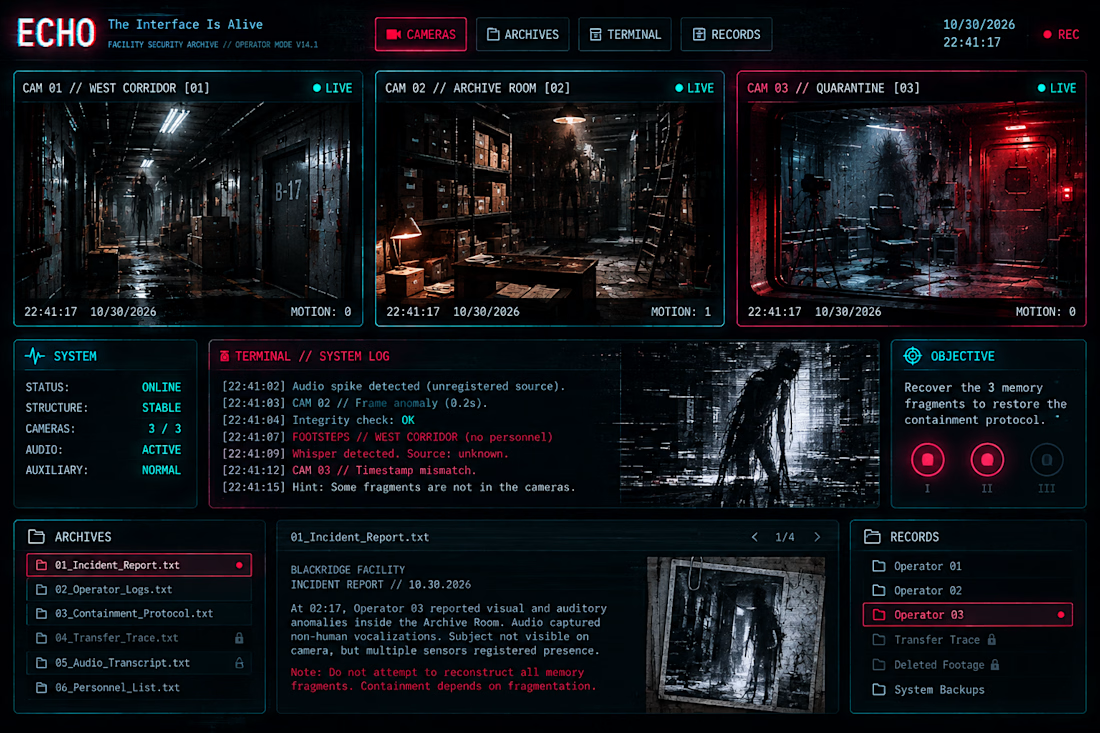
ECHO — The Interface Is Alive I built ECHO as an interactive psychological-horror experience where the interface itself becomes the antagonist.
The player investigates an abandoned facility through surveillance cameras, physical evidence, corrupted records and an interactive containment terminal. As the investigation progresses, ECHO begins to affect the system through visual interference, sound, environmental changes and unexpected behavior.
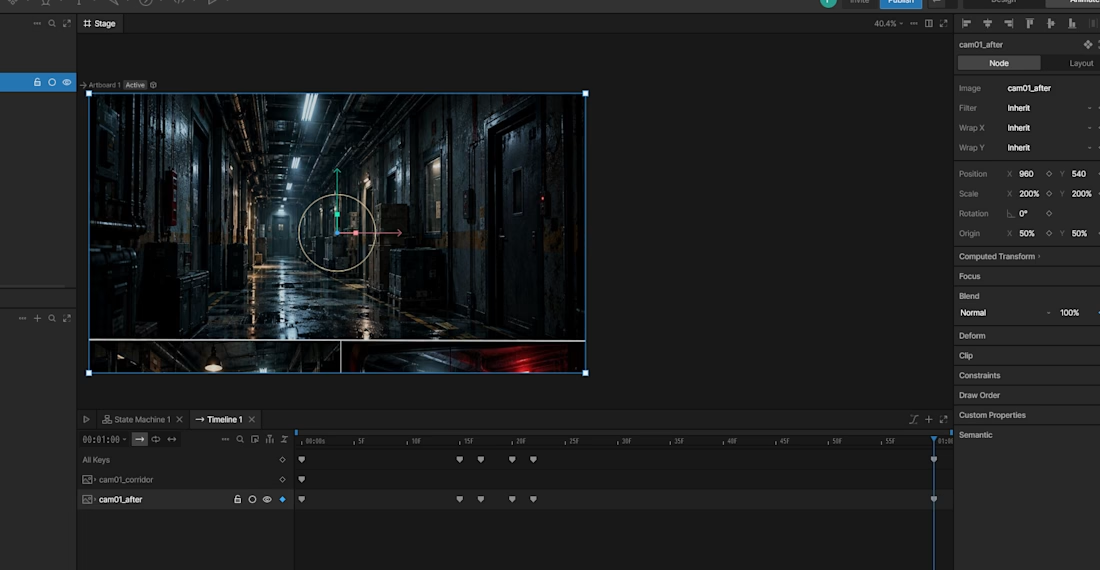
The project combines Rive CLI/RML, GPU Canvas/WGSL, Scripting, State Machines, Data Binding and View Models, together with a custom HTML/CSS/JavaScript/Web Audio game layer. I chose this hybrid architecture to go beyond a standalone animation and turn the interface into a playable horror environment.
ECHO is intentionally not constantly visible. Its presence grows with the player's actions until the apparent containment becomes a false victory.
You weren't investigating ECHO. ECHO was investigating you.



wonderful