
SVIATOSLAV VLASENKO
Turning sales metrics into P&L, cash flow and budget models
New to Contra
SVIATOSLAV is ready for their next project!


Title: From Raw Transactions to Management KPIs: A Recurring Financial Reporting System
Description:
Built a repeatable reporting system that turns raw operational data — sales, loan portfolio, transactions — into a standard set of financial KPIs management reviews every month, replacing ad hoc spreadsheet rebuilds with a consistent, repeatable process.
Challenge: Management wanted a reliable monthly view of business performance, but the underlying data lived across multiple raw exports with no single definition of each metric — every report was rebuilt by hand, and numbers didn't always match between departments.
Approach: Defined a single set of KPI formulas once (revenue, portfolio yield, collection rate, cost-income ratio, EBITDA margin), then built a structured process that pulls raw data, applies the same transformations every cycle, and outputs the same report format month after month.
What I did: Designed the data structure and metric definitions, standardized how raw fields map to each KPI, and built the process to be refreshed rather than rebuilt — a new month's numbers flow in without re-deriving the logic from scratch.
Outcome: Turned a multi-day manual reporting cycle into a same-day refresh, with every department working from the same numbers and the same definitions.
0
9
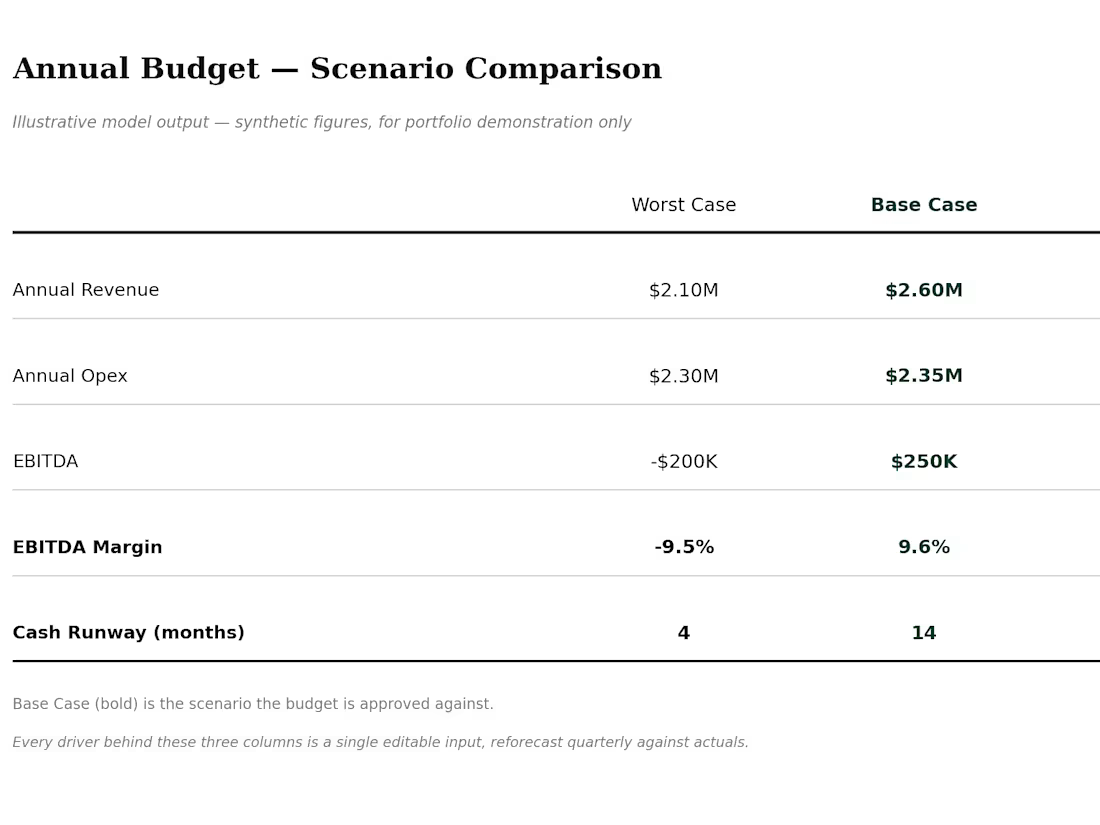
Title: Annual Budget with Scenario Planning: From Assumptions to a Board-Ready Model
Description:
Built an annual budget model with worst/base/best-case scenarios, driven by a small set of editable assumptions rather than hardcoded projections — designed to be reforecast quarterly against actuals without rebuilding the model each time.
Challenge: The business needed an annual budget the board could approve with confidence, but a single-point forecast hid how sensitive the outcome was to a handful of key assumptions — and any change meant rebuilding numbers from scratch.
Approach: Structured the budget around a small set of core drivers (revenue growth, cost ratios, headcount timing) that flow through to revenue, opex, EBITDA, and cash runway. Built worst/base/best cases as three versions of the same driver set, not three separate models, so scenarios stay consistent and auditable.
What I did: Designed the driver architecture, built the scenario toggle logic, and set up a quarterly reforecast cadence so actuals feed back into the model and next-quarter assumptions adjust automatically rather than through manual overrides.
Outcome: Gave the board a budget with visible downside and upside, not just a single number — and turned each quarterly review into a 30-minute update instead of a rebuild.
1
16
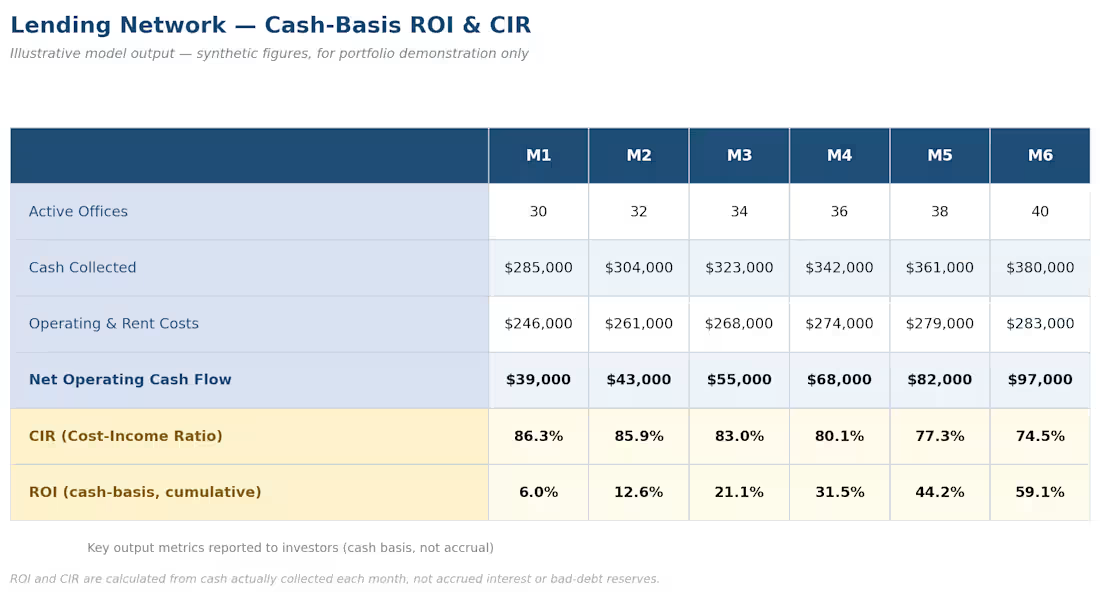
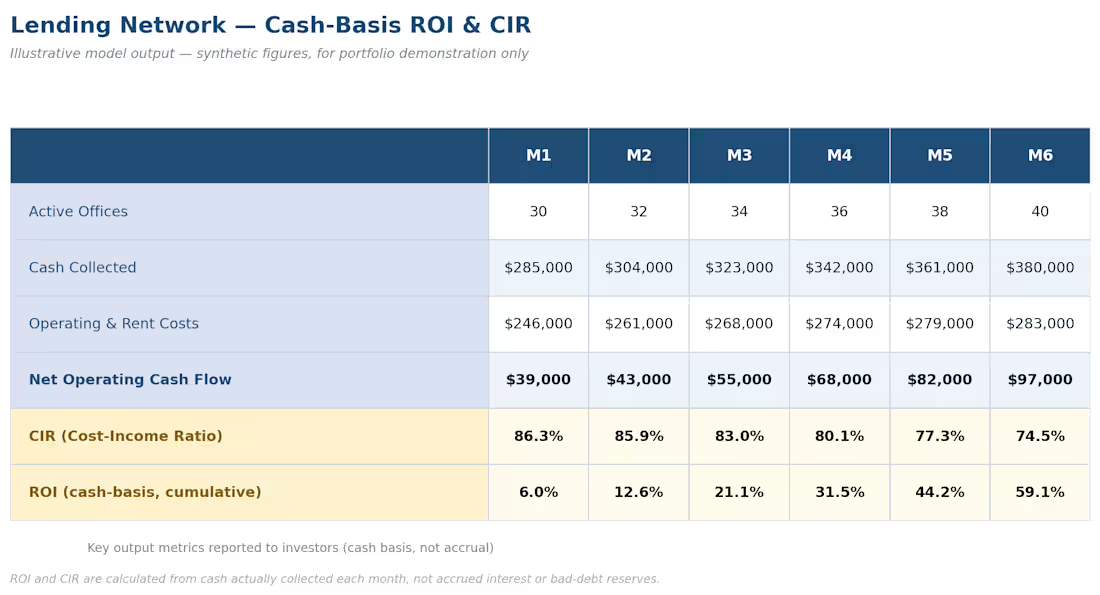
Title: Cash-Basis ROI & CIR: Valuation Model for a Lending Business Merger
Description:
Built a monthly cash-flow-based financial model to support a lending business preparing for a merger and new investor entry, replacing accrual-based ROI and Cost-Income Ratio calculations with cash-basis equivalents that reflect money actually collected rather than nominal accrued interest and bad-debt reserves.
Challenge: The business had run on the same monthly cash-flow model for years, but new investors needed ROI and CIR reported in a way that showed real cash performance — the existing metrics were accounting-based and didn't map cleanly onto what investors actually needed to evaluate.
Approach: Redesigned ROI and CIR to be calculated directly from cash collected rather than accrued income and reserve estimates, kept the model's proven monthly cash-flow structure intact, and deliberately avoided adding complexity (such as cohort/vintage analysis or splitting principal from interest collection) where multi-year data showed it wouldn't change the answer.
What I did: Modeled the full network expansion economics — existing vs. new locations, double-deposit lease terms for new sites, and staged investment tranches so the model works whether the investor commits the full amount upfront or a minimum viable share. Grounded key assumptions (loan markup multiple, collection-rate range) in eight years of the business's actual operating history, including how those metrics behaved through prior stress periods.
Outcome: Delivered a cash-basis valuation model that gave new investors a metric they could trust as "real," built on the same structure the business had relied on for years — de-risking the merger conversation without requiring the business to change how it operates day to day.
0
18
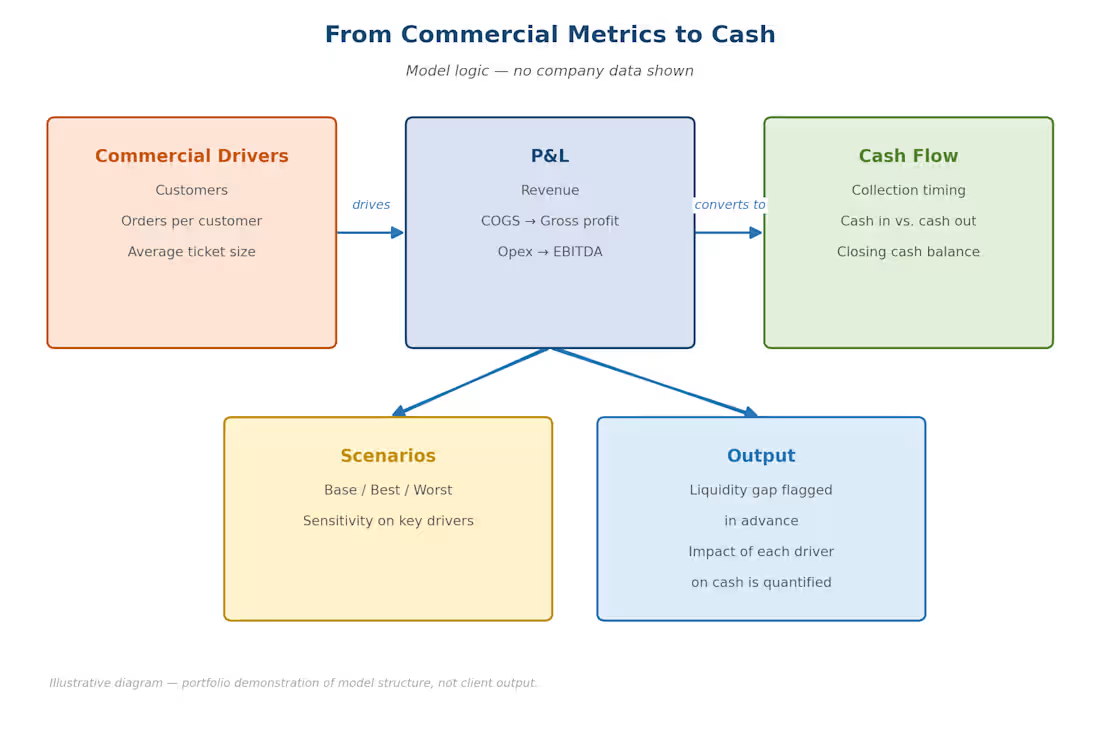
Title: From Sales Metrics to Cash Flow: Financial Model for a Volatile-Revenue Business
Description:
Built an integrated cash flow and P&L model driven by commercial metrics — sales volume, average ticket size, and customer base growth — rather than pre-aggregated financial figures, for a business with uneven or seasonal revenue.
Challenge: The company could see sales and customer numbers, but had no clear view of how much cash that would actually generate, or when — leaving liquidity planning largely reactive.
Approach: Commercial drivers flow through three linked layers — Commercial Metrics → P&L → Cash Flow — entirely on live formulas, so the model recalculates end-to-end when any input changes. Cash conversion is modeled with a collection-lag assumption (a share of revenue collected the same month, the rest the following month), which is what actually creates the liquidity gap between "profitable" and "cash-positive."
What it surfaced (illustrative figures): In the sample run, EBITDA turned positive by month 3, but the cash balance still dipped to a low point before recovering two months later — the gap between accounting profit and available cash that the business needed to plan around. Every driver (orders per customer, ticket size, collection speed) is a single editable input, so the same model reruns instantly for a different scenario.
Outcome: Turned a sales question into a cash planning answer, with the exact month and depth of the liquidity gap visible in advance instead of discovered after the fact.
1
19