Built with Kajabi
Frontbridge — Custom AI Frontends Connected to Kajabi

Kraig Mathias


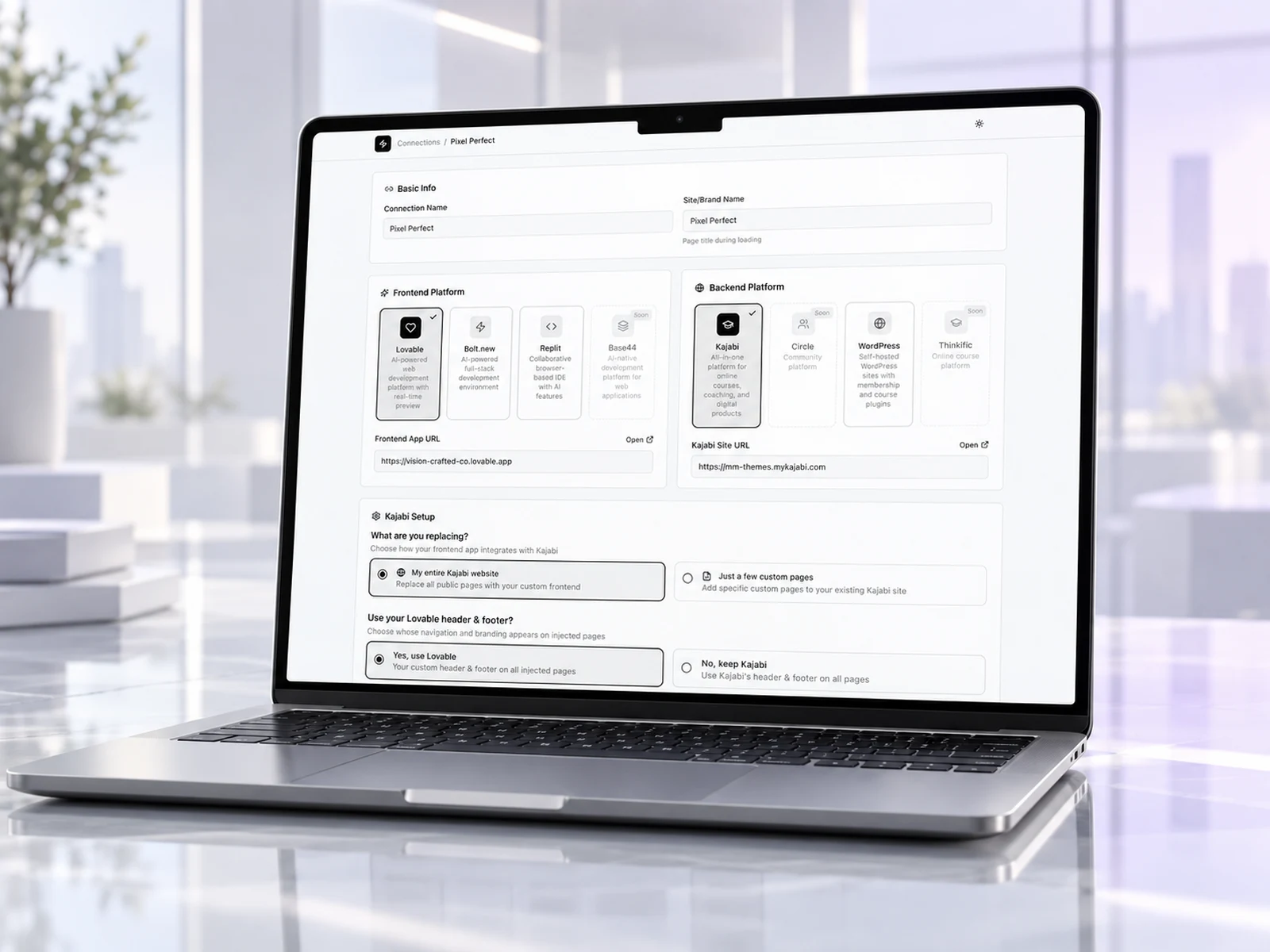
A custom frontend for an established Kajabi business
I built Frontbridge to connect independently designed AI frontends with established business platforms. For Kajabi users, the goal is to create a distinctive public website while keeping courses, checkouts, customer accounts, and member infrastructure in Kajabi.
As founder and developer, I led the product strategy, UX/UI, integration architecture, and full-stack implementation in Lovable.
The challenge
Businesses that have invested in Kajabi often want more control over their public website design. A new frontend still needs clear connections to the existing backend: page routes, navigation, sign-in, and the paths visitors take to offers and content.
What I built
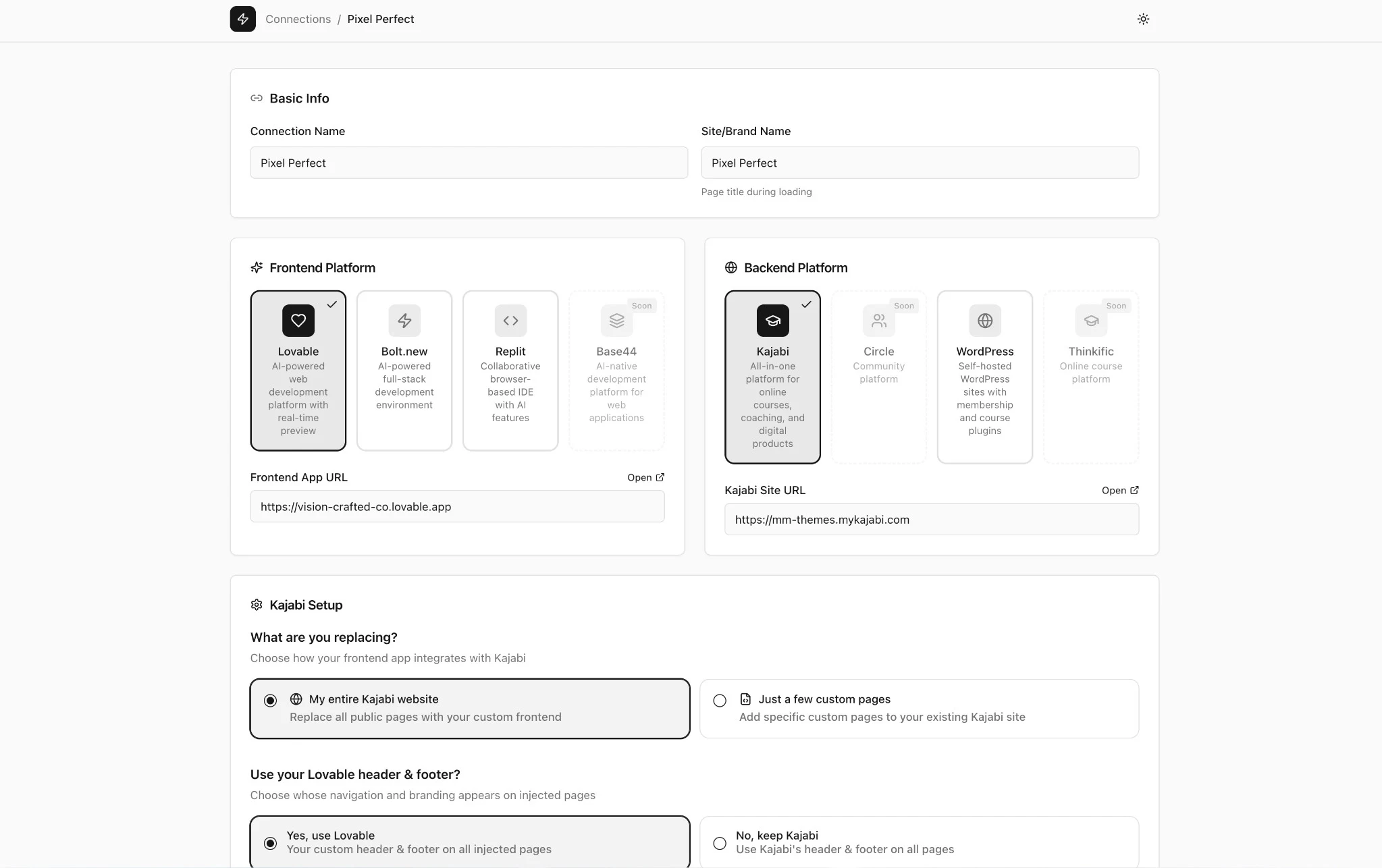
Frontbridge provides a dashboard for setting up and managing those connections. Users select their frontend and backend platforms, enter their site URLs, and configure how the two experiences work together.
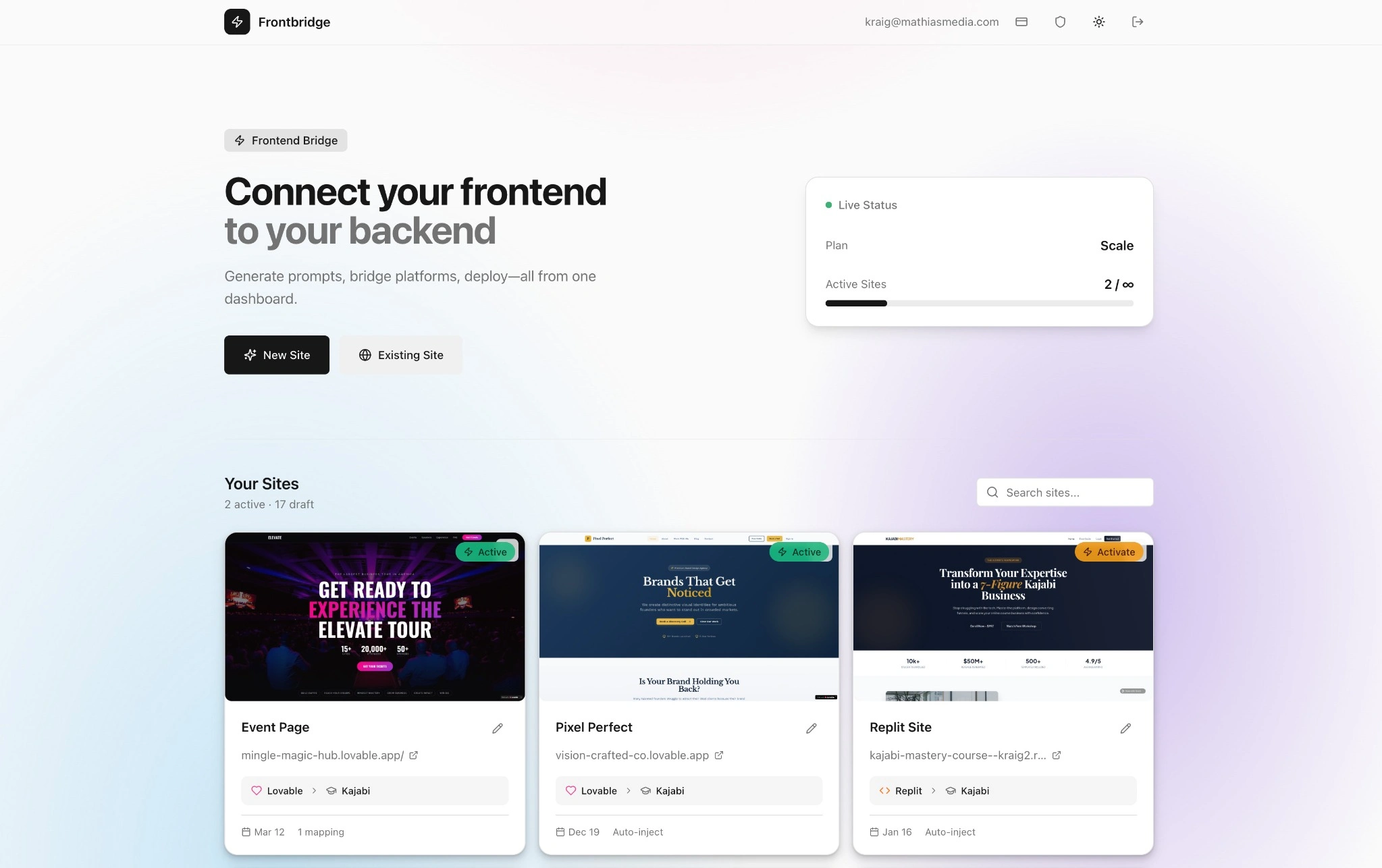
A connection dashboard for managing sites and platform pairings.
A Kajabi setup workflow for replacing an entire public website or adding selected custom pages.
Route mapping and navigation configuration.
Controls for choosing which site's header and footer appear on connected pages.
A bridge script for deploying the configured connection.
The Kajabi use case
A business can build its public frontend in Lovable and connect it to its existing Kajabi site. The setup makes the relationship between the two sites explicit, while preserving the Kajabi systems the business already uses. Frontbridge also supports other platform pairings, including WordPress.
The result
Frontbridge turns a recurring Kajabi integration problem into a reusable product: a practical way to connect a custom frontend to an established course and membership platform.
Inside Frontbridge
The dashboard brings connected sites and their status into one place.
The connection setup defines the frontend, Kajabi backend, and which pages are being replaced.
Like this project
Posted Sep 16, 2026
Built Frontbridge to connect custom AI frontends with Kajabi, preserving existing courses, checkouts, accounts, and member systems.