Folktales Around the World: Full-Stack Web App
Ciro



Folktales Around the World: Full-Stack Web App
“Tell me, O Muse, of that ingenious hero who traveled far and wide”
This quote belongs to Homer’s Odyssey. And what better way to introduce this project, which was born quite suddenly, since my original idea was something else…
At first, this project was going to be part of a series of applications called Shades of Green, which was meant to include three projects: Farm in New Zealand (Heritage Soil Station), Gardens of the World, and this one, which was initially titled Contemporary Irish Poetry.
However, the idea of creating an application focused on Irish poetry, for which I already had the roadmap and even the images, seemed less appealing when compared to building an app where users could contribute their own entries. It was destined for a smaller audience, unlike Folktales of the World, which had a much broader scope and could encompass different works, from Japanese tales to Scandinavian ones.
Secondly, I also changed the format of what I was creating. At first, all three were going to be mobile applications, but due to technical issues I had to switch to web applications instead.
This application could easily be used by Literature students, within the framework of studying folktales from around the world (or even from their own region).
Design and Tools
The application is divided into four sections: Home (where we have access to the other sections), Folktales (a gallery of six folktales with a short summary of each), Compare (a brief comparison between, on one side, the Brothers Grimm and, on the other, Hans Christian Andersen), and Share (a space for the user to submit a folktale created in class).
The tools used in this project are Node, Next, JavaScript, React, Tailwind, and of course, Visual Studio Code. Likewise, to send folktales in the Share section, I used Resend and set up an email (in this case, mine), so that the folktales could safely reach their destination. If used in a classroom, the teacher can enter their own email address instead.
Home
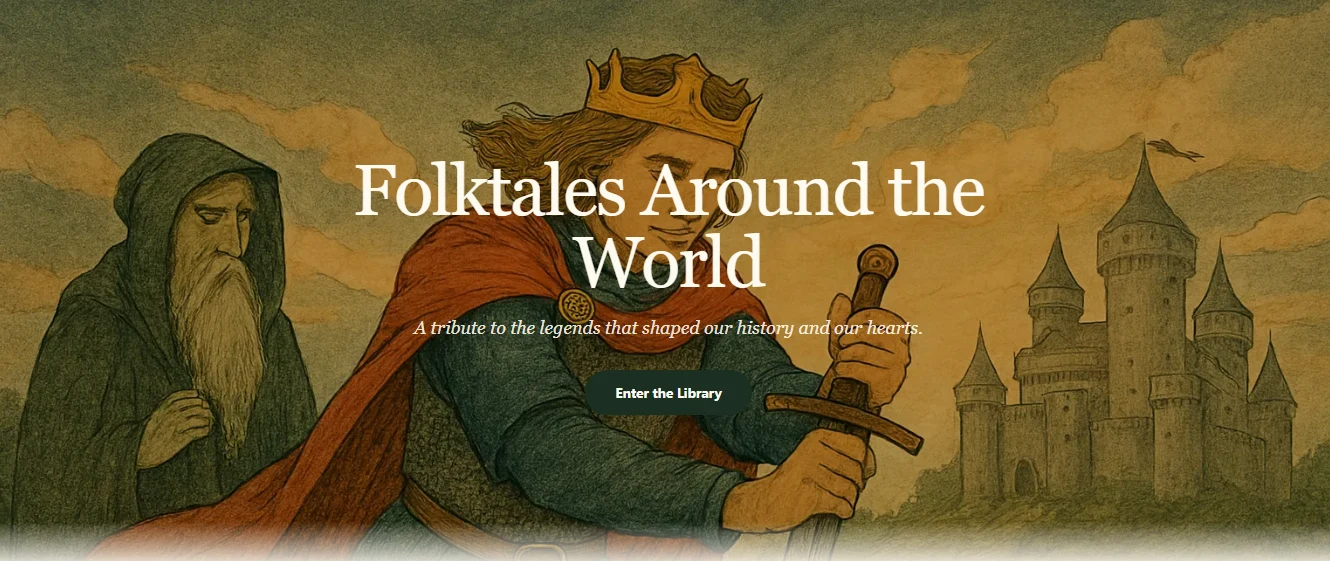
To begin, here we have the main image of the application. It is, of course, an image inspired by Arthurian legends, especially the moment when the sword is pulled from the stone. In addition, it also includes a button to access the Folktales section.
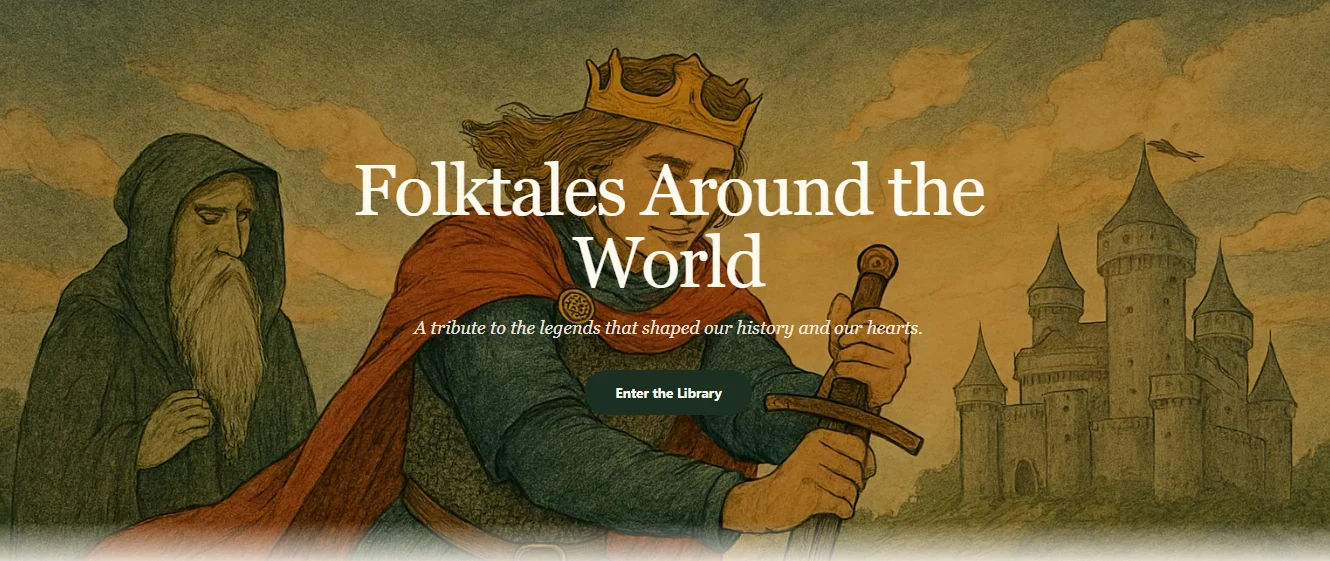
Hero Image - Arthurian Legends, my biggest inspiration!
Below the main image, we have three cards that allow entry into the different sections of the application.
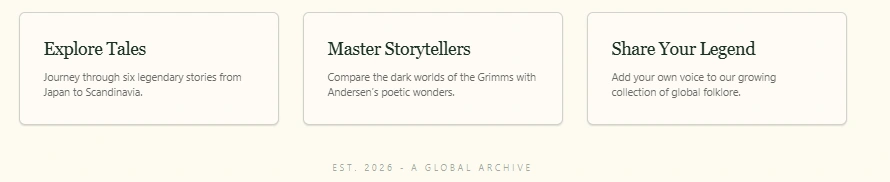
We can access the different sections in our app
Folktales
Next, we have the gallery where the inserted folktales are displayed. In this case, we have three (Chinese, Japanese, and Indian).
On the left margin, you can see a button that takes you back to the main page. This button is available in all sections, except for Home, of course.
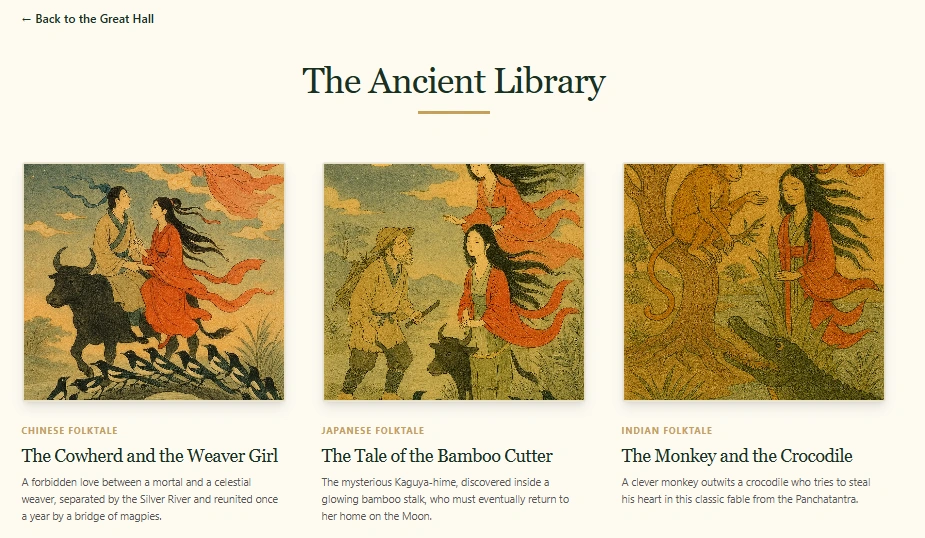
The Ancient Library - You can see three of the folktales
This image represents the remaining three folktales (Nordic, Celtic, and Germanic).
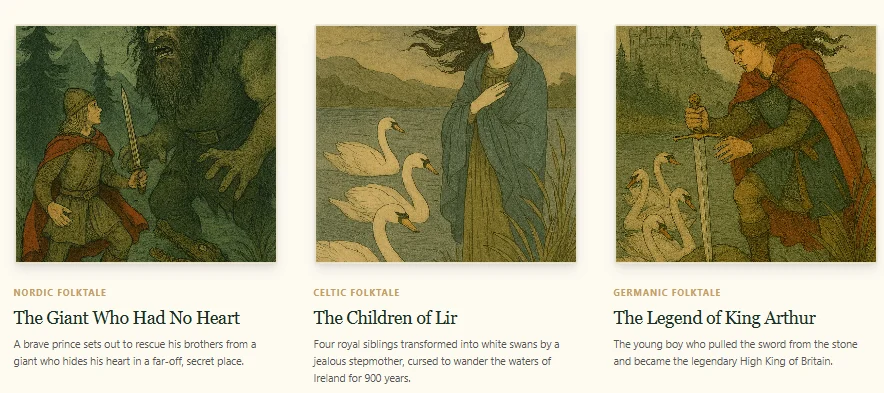
More folktales!
Compare
In this section, we pay tribute to two (well, three) of the great legends of contemporary literature. On one side, the Brothers Grimm (represented by an image inspired by Rapunzel), and on the other, Hans Christian Andersen (represented by an image of The Snow Queen).
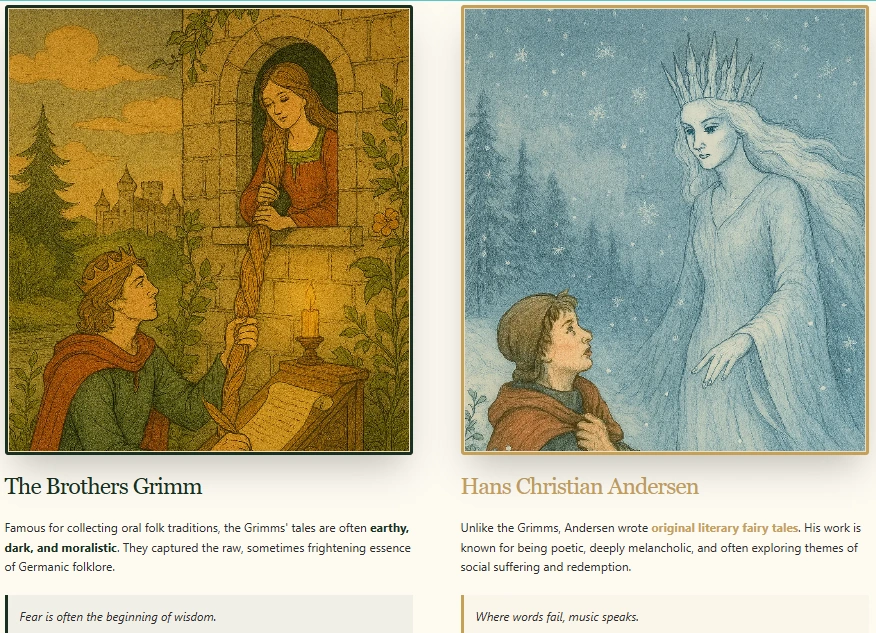
The Brothers Grimm or Hans Christian Andersen - Choose your Favorite!
Share
Finally, here we have the section where we can share our folktale. This is what the section looks like when opened:
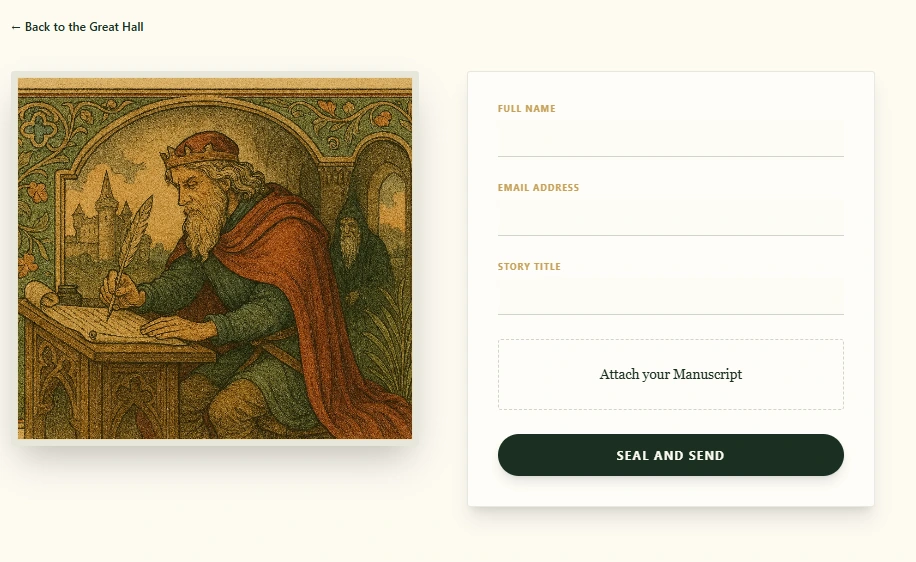
Color palette is quite modest here, greens, yellows, and even some cream background!
To send a folktale, we need to fill in our name, email address, the title of the story, and then attach the file. It only accepts PDF or DOC files. Once the file is attached, we press Seal and Send, and the file will be delivered. In this case, we attached a Mayan folktale, The Legend of the Aluxes.
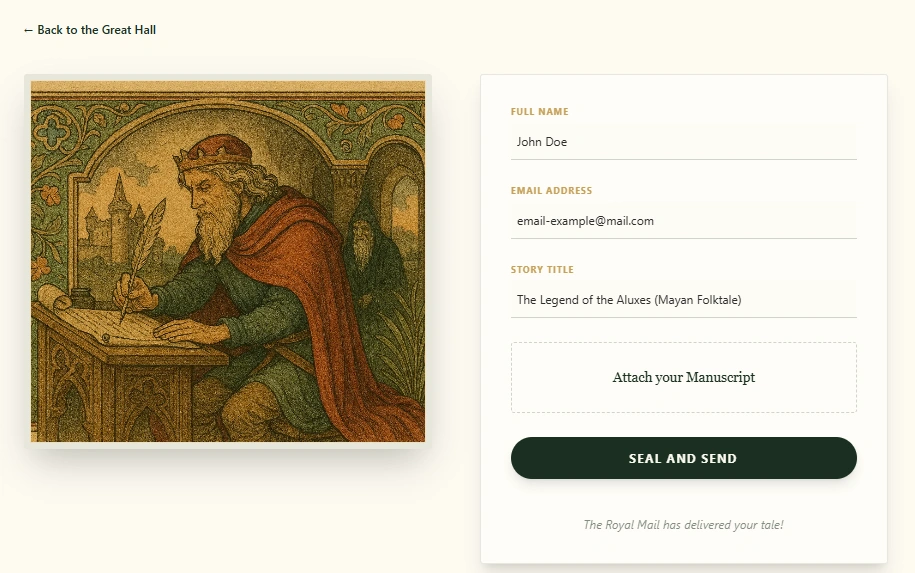
As you see, we've attached a Mayan Folktale, and the Royal Mail has delivered the tale!
Since I used Resend to facilitate data submission, and I inserted my own email address, I find this email in my inbox:
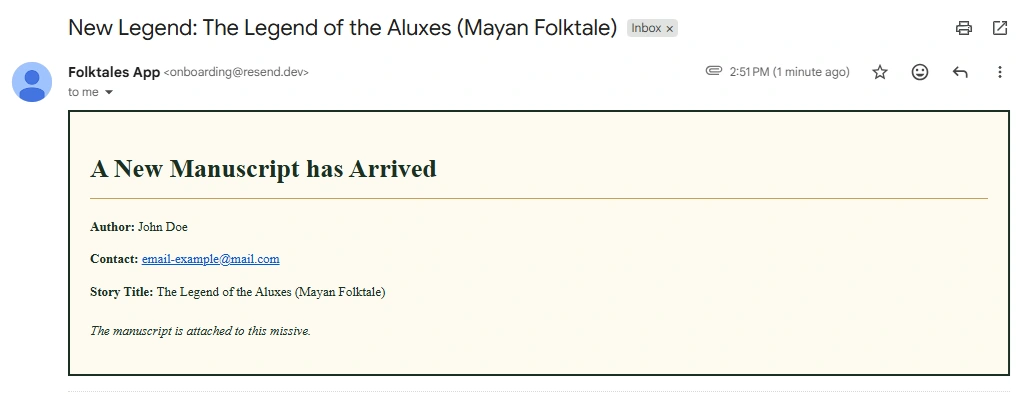
Thanks to Resend, I have this email in my inbox, and nowhere else!
Along with the following attached file:
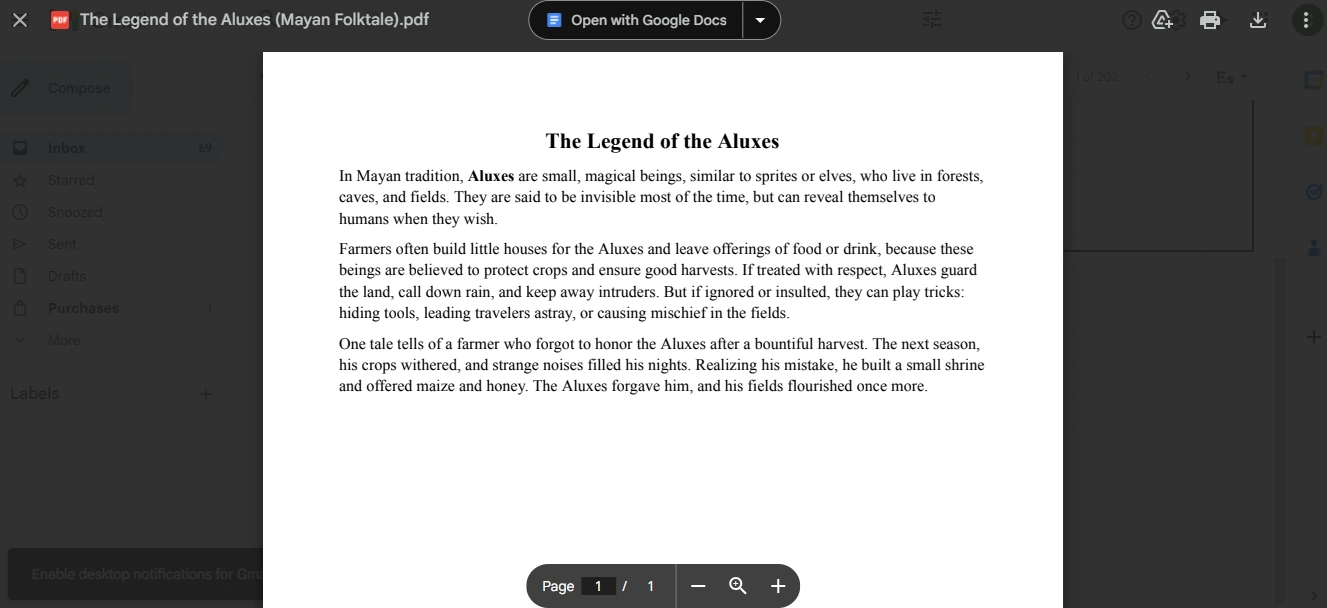
A screenshot of the PDF I received!
Conclusion
Creating this application has been a fabulous experience. First, searching for different folktales as examples, then selecting the images, and finally arriving at the design and development of the application.
This is only one example, since we could also create applications for adventure novels, plays, or even science fiction stories.
Like this project
Posted Feb 25, 2026
Developed a web app for global folktale exploration and sharing.
Likes
2
Views
2
Timeline
Feb 20, 2026 - Feb 23, 2026