
The problem
Decision paralysis does not need more analysis, it needs a different input. Tarot works for a lot of people for exactly that reason — but most tarot apps are either twee or they make you sign up before you can draw a card.
What I built
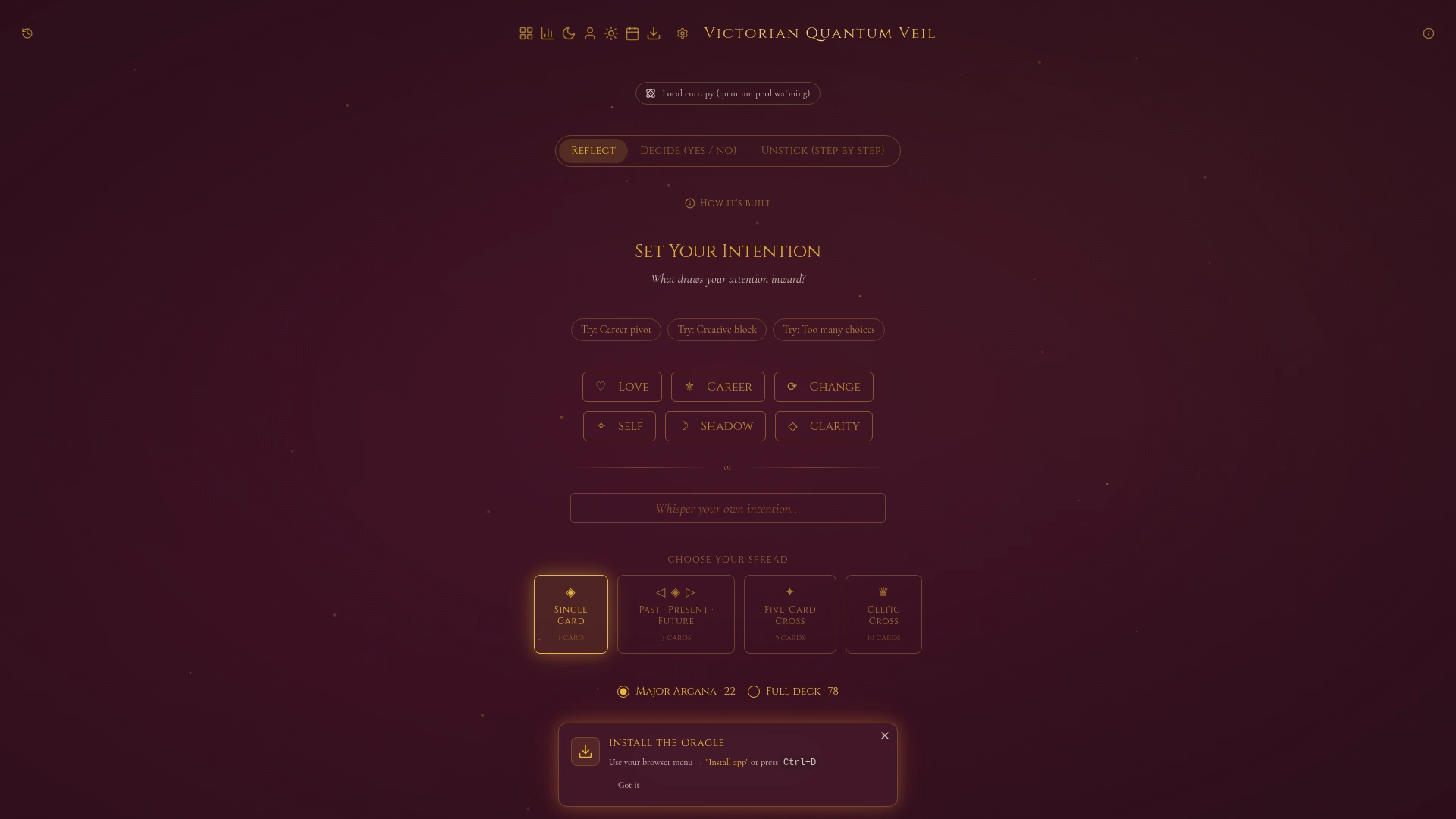
A tarot oracle designed for the moment of being stuck:
Three entry modes — Reflect, Decide (yes/no), Unstick (step by step), because the need differs depending on the day
Real spreads — single card, past/present/future, five-card cross, Celtic cross, on major arcana or the full 78
Entropy-seeded draws — the shuffle pulls from a local entropy pool rather than
Math.random(), so the draw is not a fixed rotation you learn to predictPattern analytics and a lunar calendar — the long view, for people who want to notice what keeps coming up
Installable PWA — full offline support, so it works on a phone with no signal and no account
Why offline mattered
The app is used at 2am, in bed, often in a bad state. A spinner or a login screen at that moment is an abandonment. Everything that can be local is local: the deck, the prompts, the draw, the history.
How it is built
React and TypeScript on Lovable, service worker for offline, Supabase for the records that need to persist across devices, no model calls in the draw path — the randomness comes from entropy, not from an API.
What it produced
A shipped, installable app with a real spread system, and the clearest example I have of building for a specific emotional moment instead of a feature list.
0 likes · 2 views · Nov 18, 2026
An installable tarot oracle for decision paralysis: entropy-seeded draws, yes/no and step-by-step modes, ND-affirming prompts, and full offline support.


