
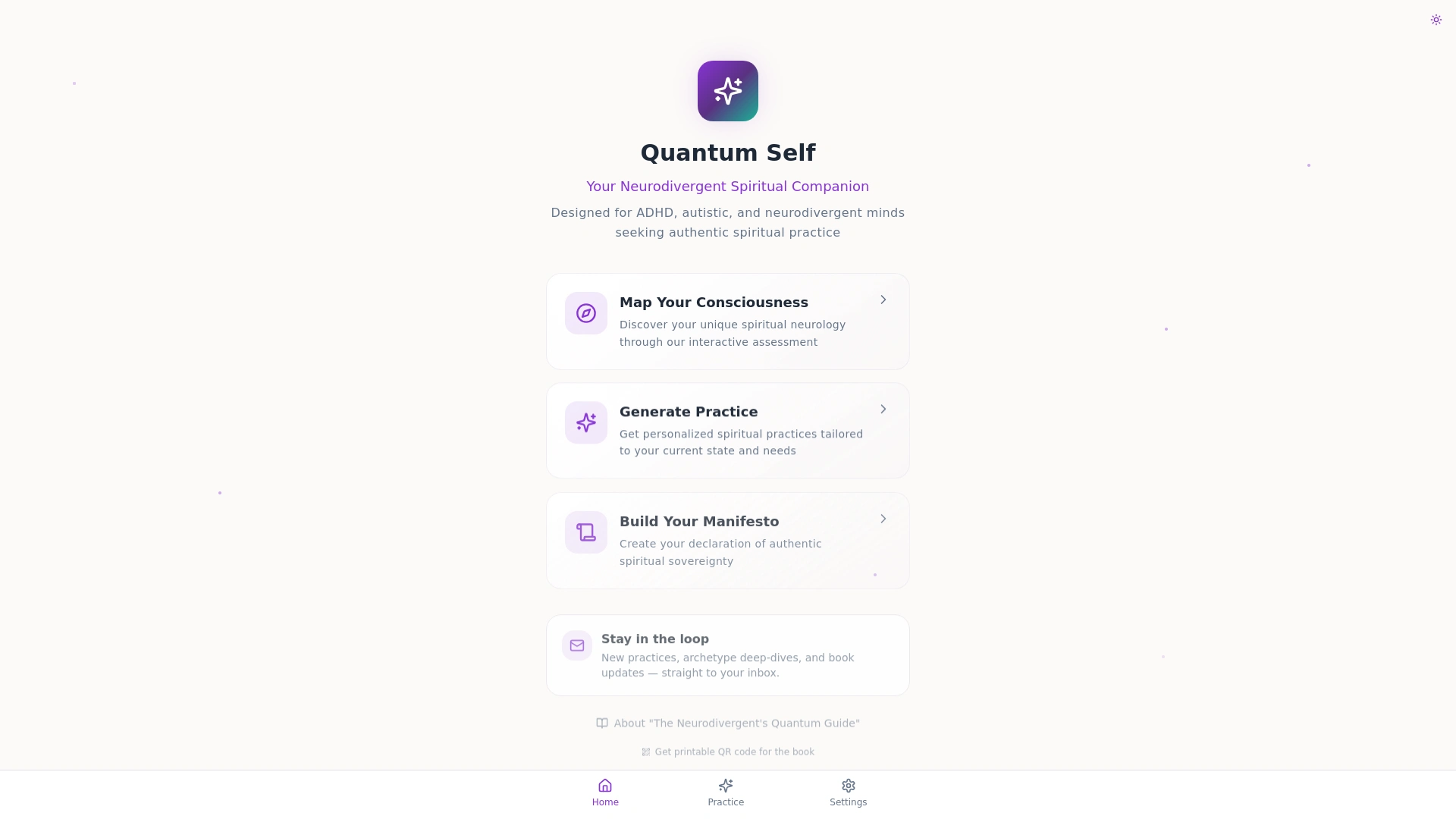
The problem
Every wellbeing app I tried asked for more input than it gave back. Streaks, check-ins, mood charts — all of it assumes a person with capacity to spend. The people who most need a practice are the ones least able to answer twenty questions about themselves.
What I built
A practice generator with exactly five inputs:
Energy — depleted, balanced, energised
Time — 5, 15, 30, 60+ minutes
Location — home, nature, office, transit
Need — grounding, clarity, joy, processing, connection
Available sense — visual, auditory, tactile, smell, movement
Twenty seconds of tapping returns one practice. Sessions persist locally so a person can return to what worked, without an account.
The design decision that mattered
It asks for the sense that is available, not the sense that would be ideal. On a bad day the answer is often "I can hear things but I can't look at anything" — so a visualisation practice is the wrong prescription no matter how good it is. Matching the practice to the available channel is the whole product.
How it is built
React and TypeScript on Lovable, with a deterministic rule engine mapping input combinations to practices. No model call per interaction: the published build has zero AI endpoints and stores state in localStorage, so a visitor costs nothing and the app keeps working offline. That was deliberate — a companion for depleted people should not be the thing that fails when the wifi does.
What it produced
A live, public app, and the pattern I now use for authors: take a framework, reduce it to the fewest possible inputs, and return one action instead of a dashboard.
0 likes · 1 view · Nov 18, 2026
A companion for depleted days: energy, time, location, need and available sense in; one doable practice out. No accounts, no streak guilt.
Timeline
Jan 26, 2026 - May 5, 2026


