Enterprise Skills Intelligence Platform

Casey Childs

Skills Intelligence Platform
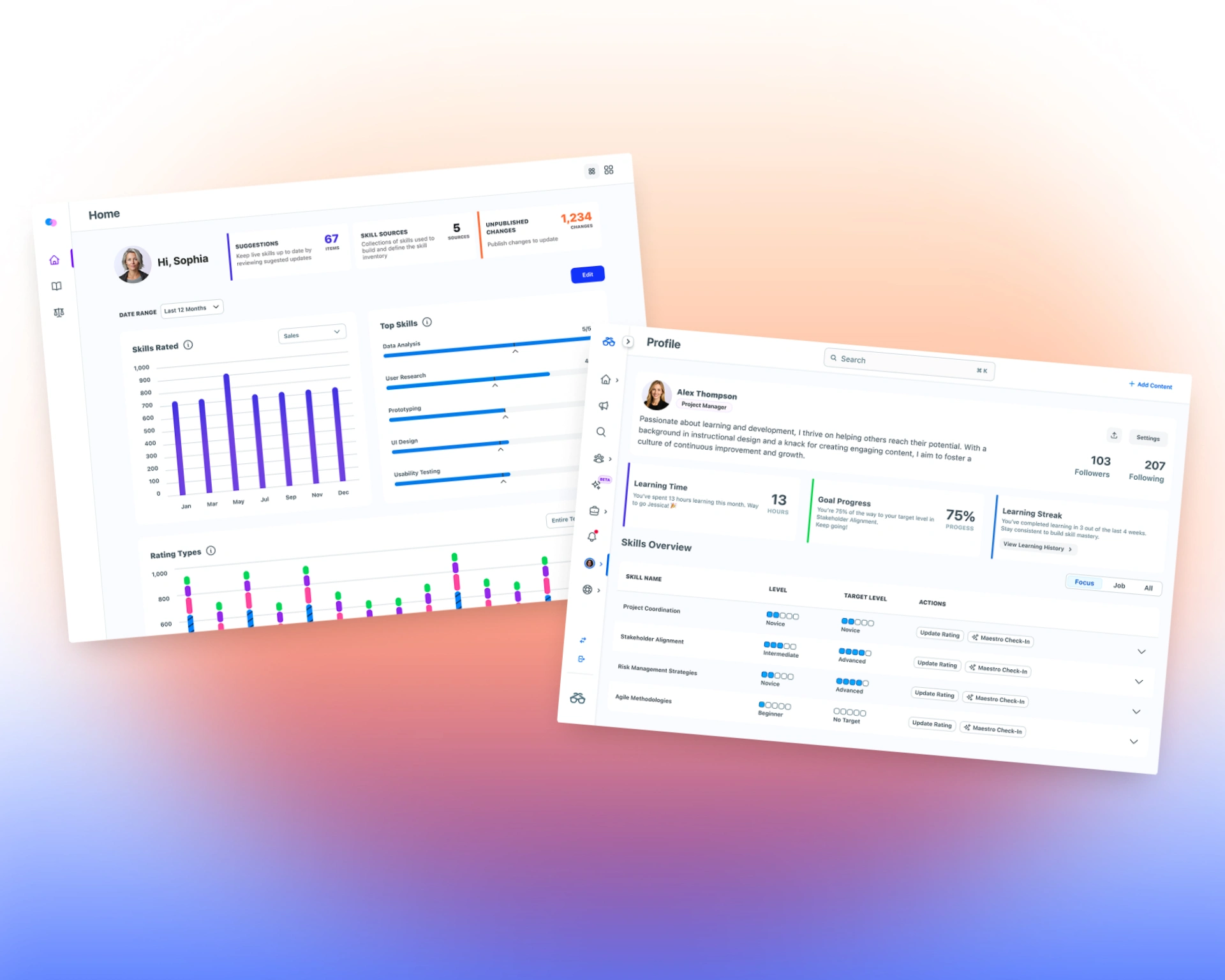
A net-new enterprise system that unified fragmented skill data across multiple platforms, giving leaders and learners a single source of truth.
Context & Role
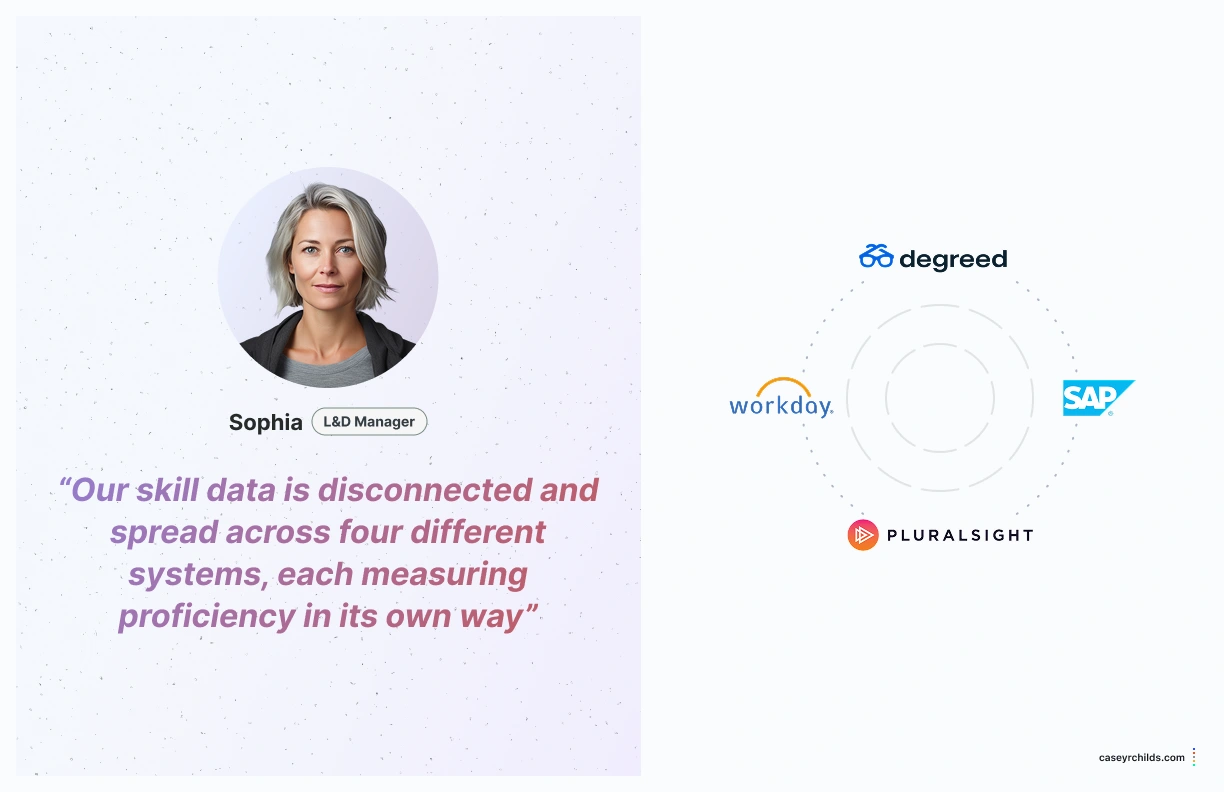
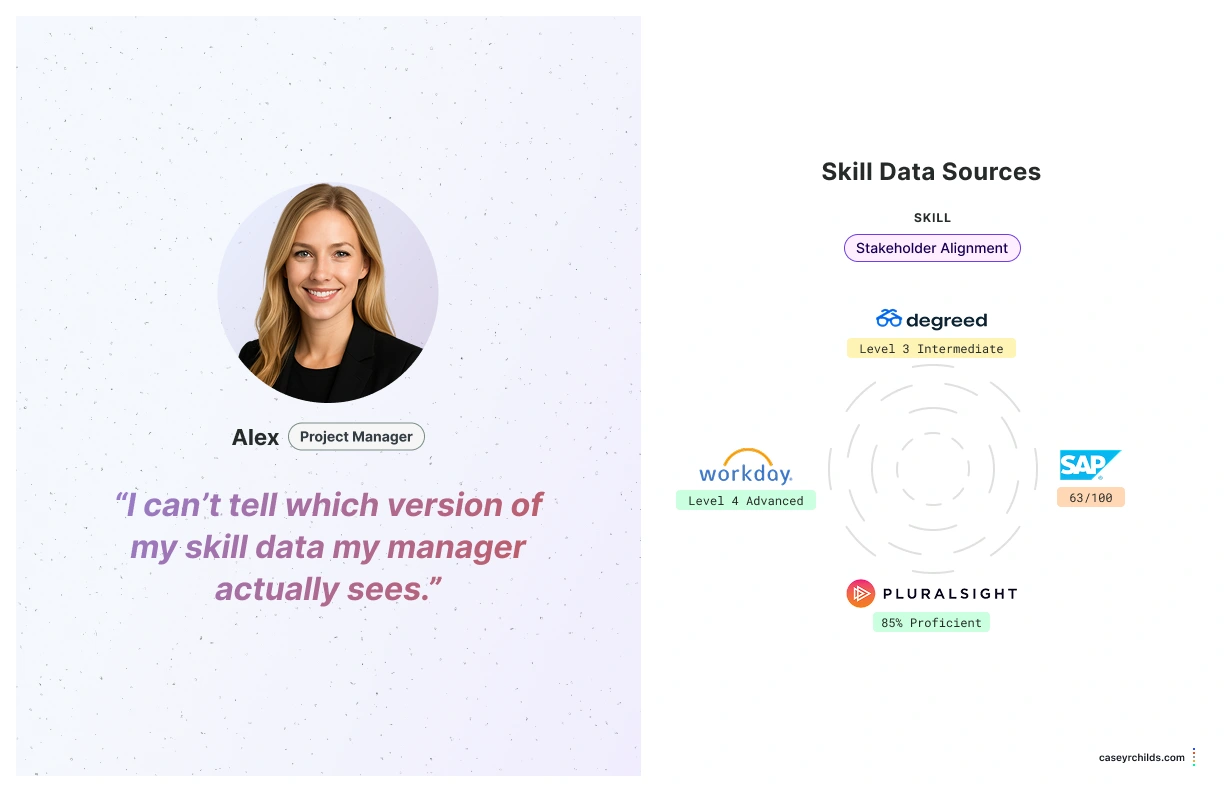
Many Degreed customers — companies like Verizon, Ericsson, TD Bank, and Volkswagen — faced the same challenge: their employees’ skills were scattered across multiple systems. Workday, SAP SuccessFactors, Pluralsight, and even Degreed all tracked proficiency differently.
This made it nearly impossible for leaders to see a reliable picture of workforce skills, and for learners to understand their own growth.
I was the lead product designer on a small team tasked with creating a new platform that could solve this.
Role: Lead designer
Timeline: 3–4 months for beta and MVP
Team: PM, engineers (backend, frontend, data science), design
Challenge: Normalize skill data across systems without losing trust or flexibility.
The Problem
For admins: Skill data was fragmented across tools, each with its own scales and taxonomies. Comparing data or making workforce decisions was nearly impossible.
For learners: The same skill might show up differently depending on the system — leading to inconsistent and confusing feedback.
Goals
Provide a single, reliable view of skills for both admins and learners.
Support any source format — numbers, percentages, letter grades, custom scales.
Build transparency and trust by showing how data was mapped.
Pilot a new frontend and backend tech stack that could influence Degreed’s platform long-term.
Approach
Early Exploration
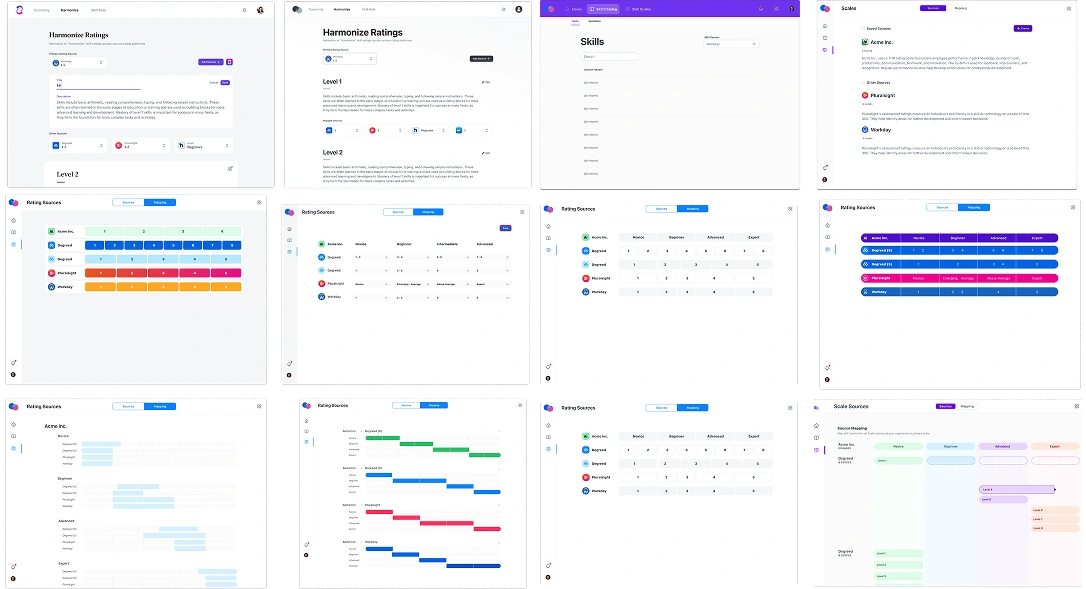
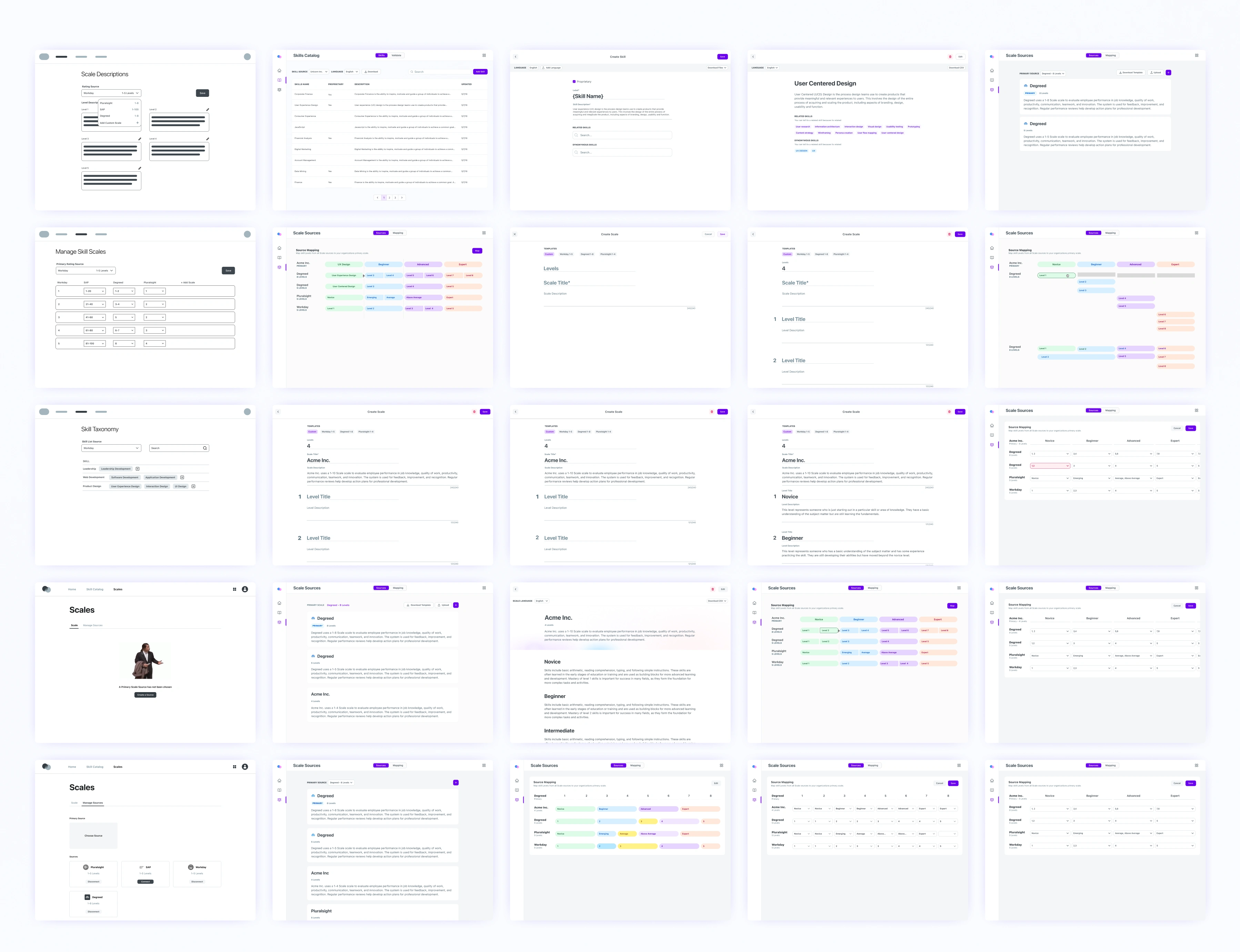
We started with customer workshops and sketches, quickly moving into wireframes. These weren’t just design artifacts — they doubled as blueprints for engineering, who began building APIs and database structures in parallel.
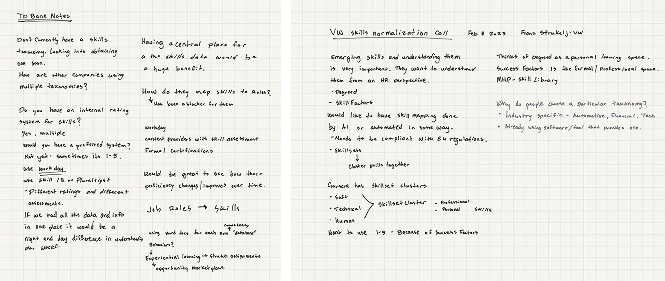
Customer call notes
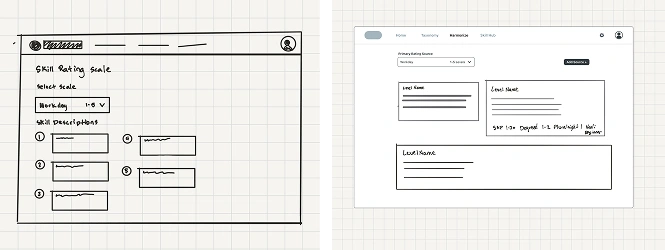
Early sketches and wireframes
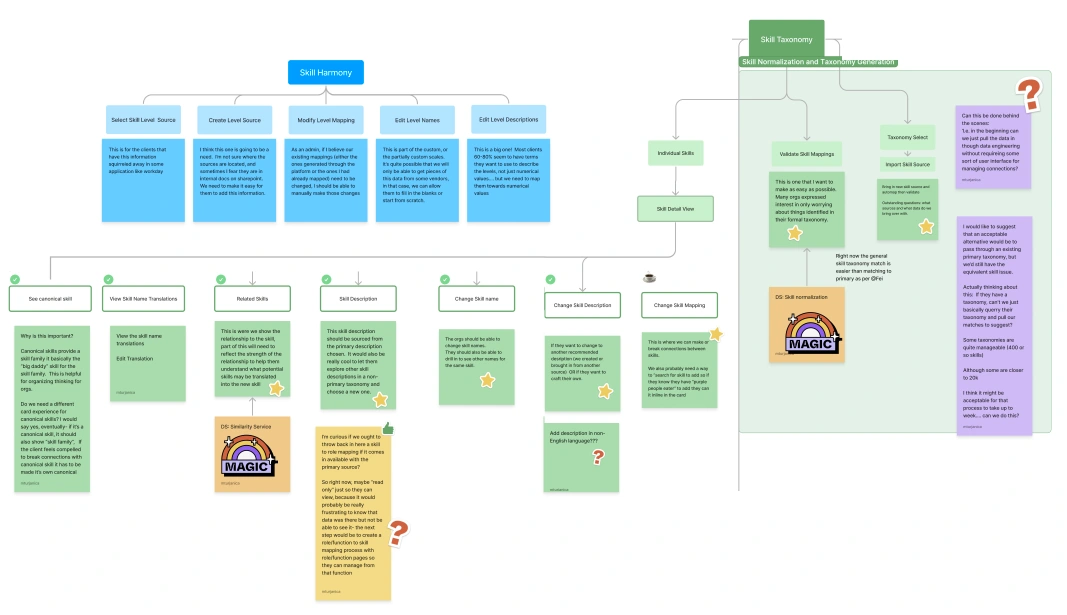
A small piece of the overall flow and diagram to help us understand what I needed to help build
Early explorations
Exploration & Iteration
Once workflows were clear, we shifted into heavy design exploration.
We tested a wide range of approaches — from dense data tables to colorful scale mappings to compact dropdown layouts.
Each iteration revealed something new:
How admins processed information
Where they slowed down
Which patterns scaled better for large datasets
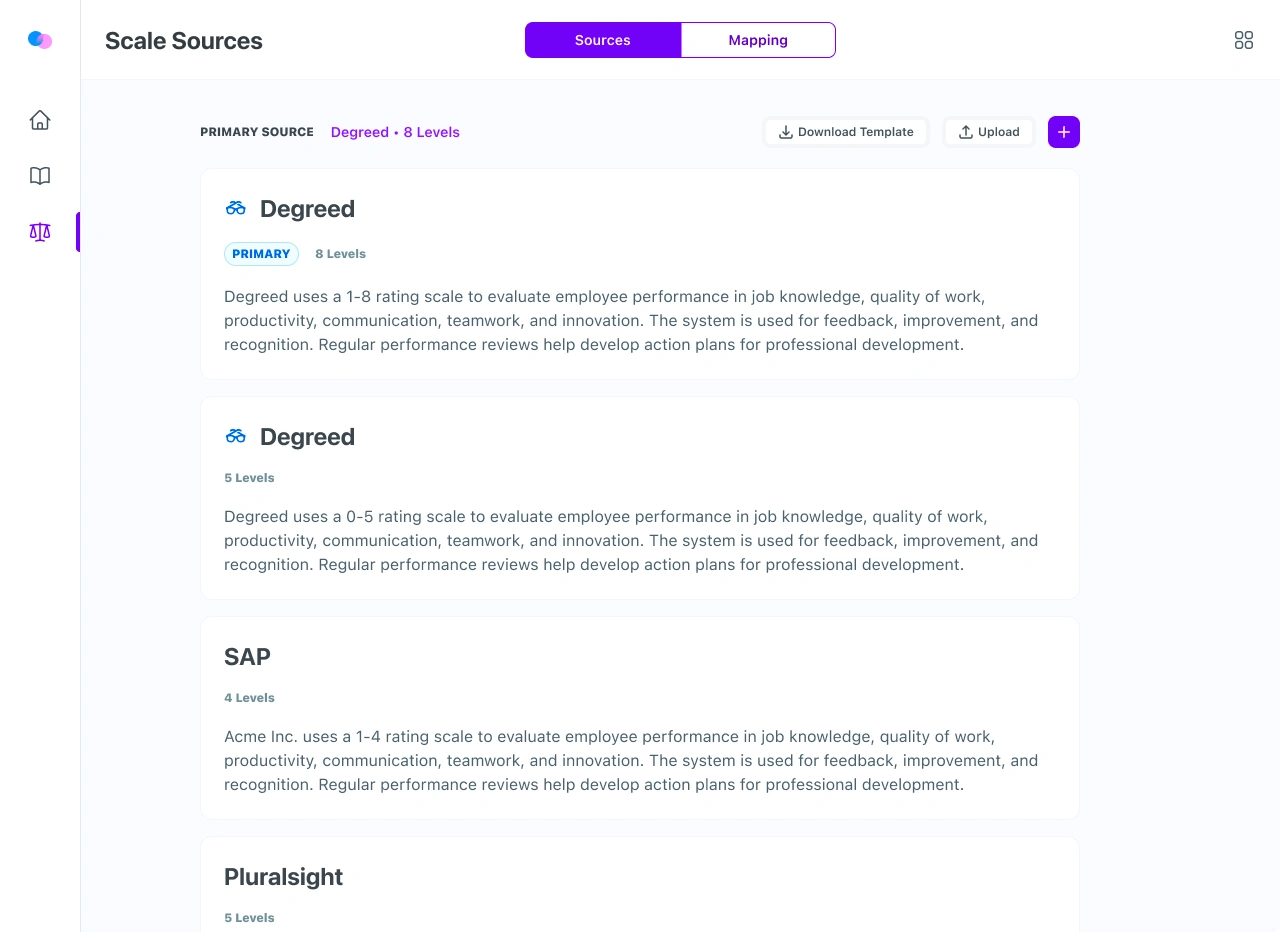
The goal wasn’t just polish — it was pressure testing. Could the interface handle the complexity of multiple skill sources while still feeling approachable and fast?
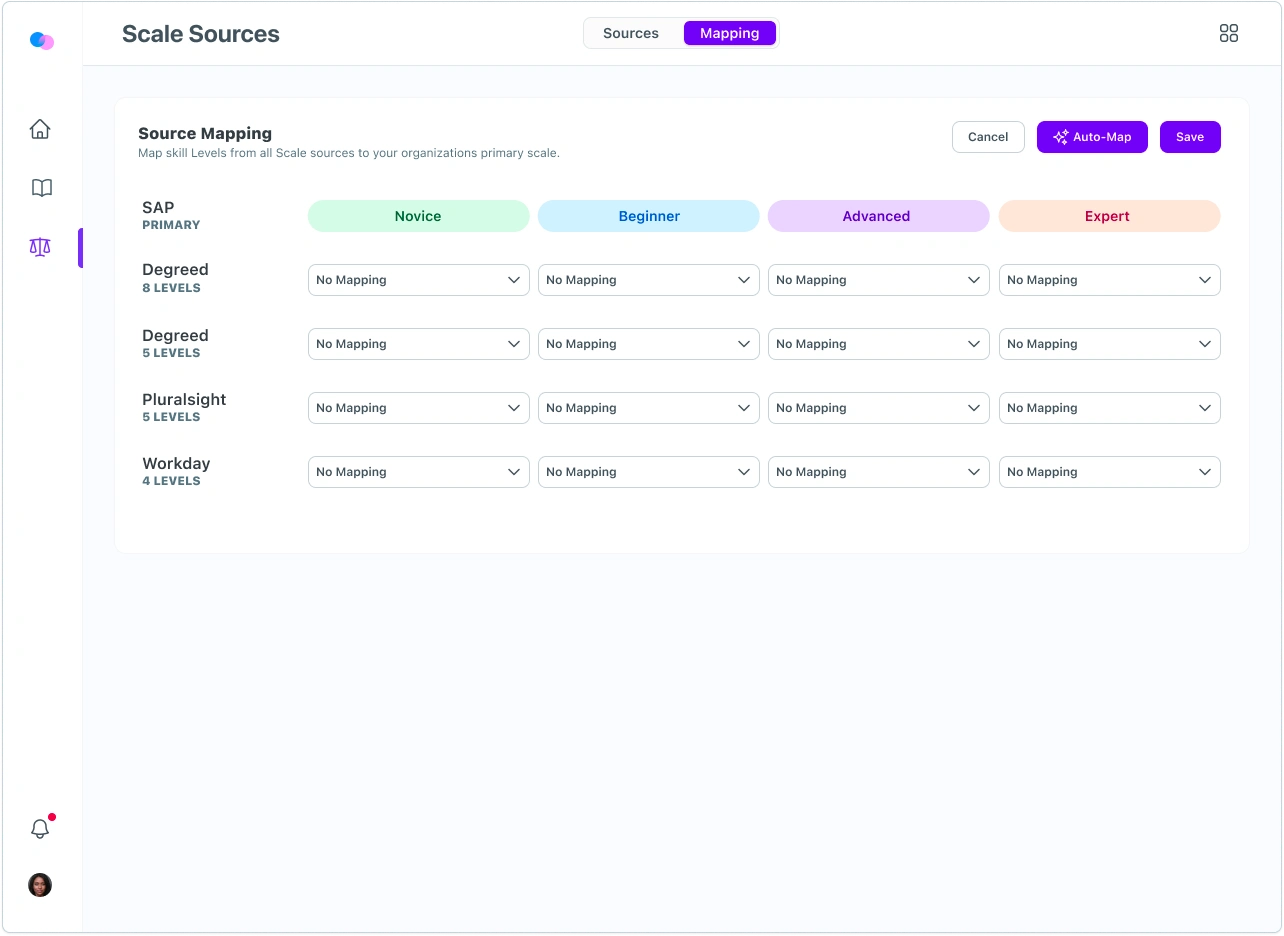
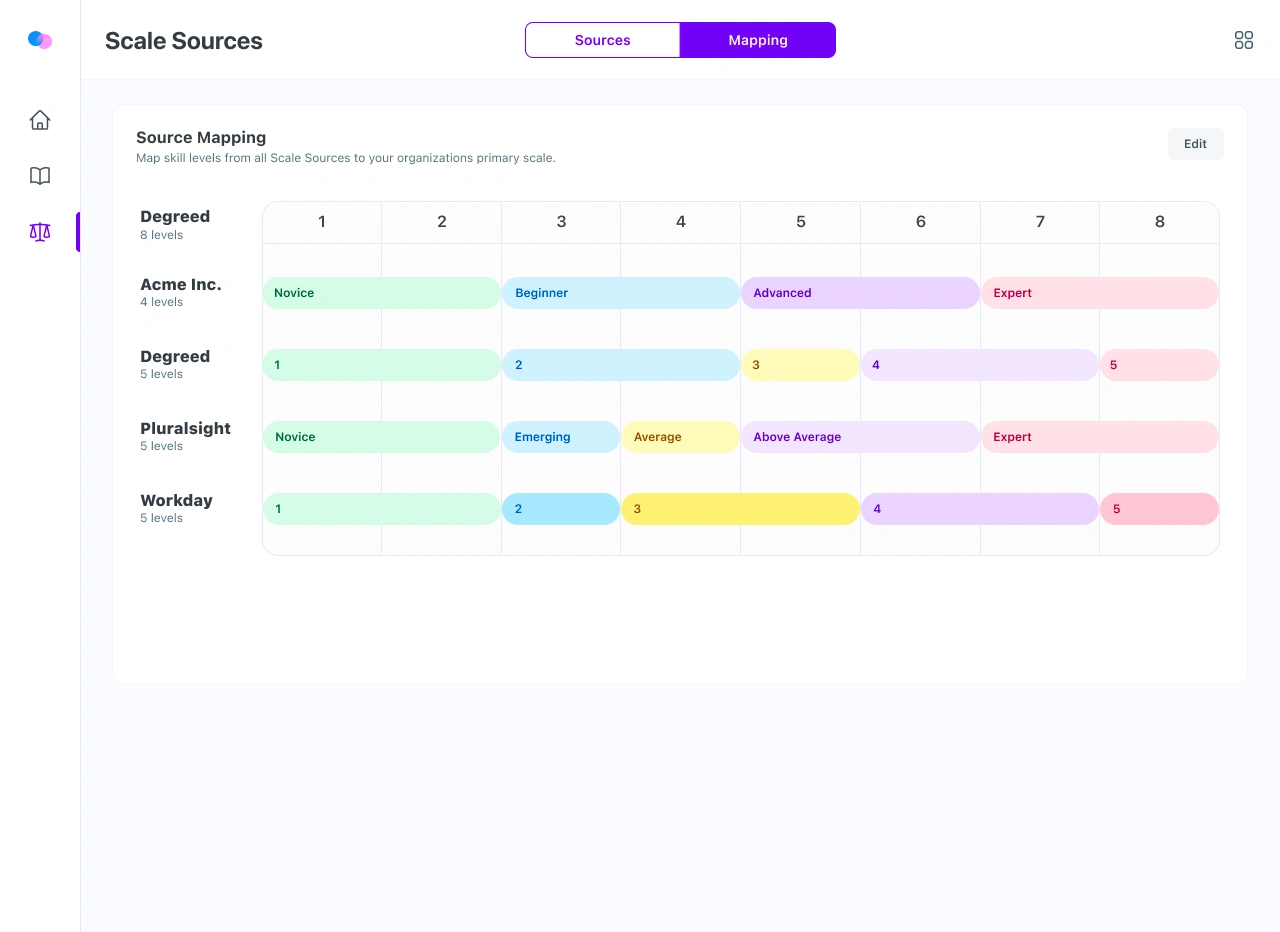
One insight rose above the rest: auto-mapping.
Instead of requiring admins to select the appropriate levels from a dropdown, auto-mapping made the process efficient and trustworthy. Clients loved it, and it became the turning point in our design direction.
Solution Highlights
Skill Source Mapping — connect and align scales across systems.
Taxonomy Management — import, edit, and unify skill lists.
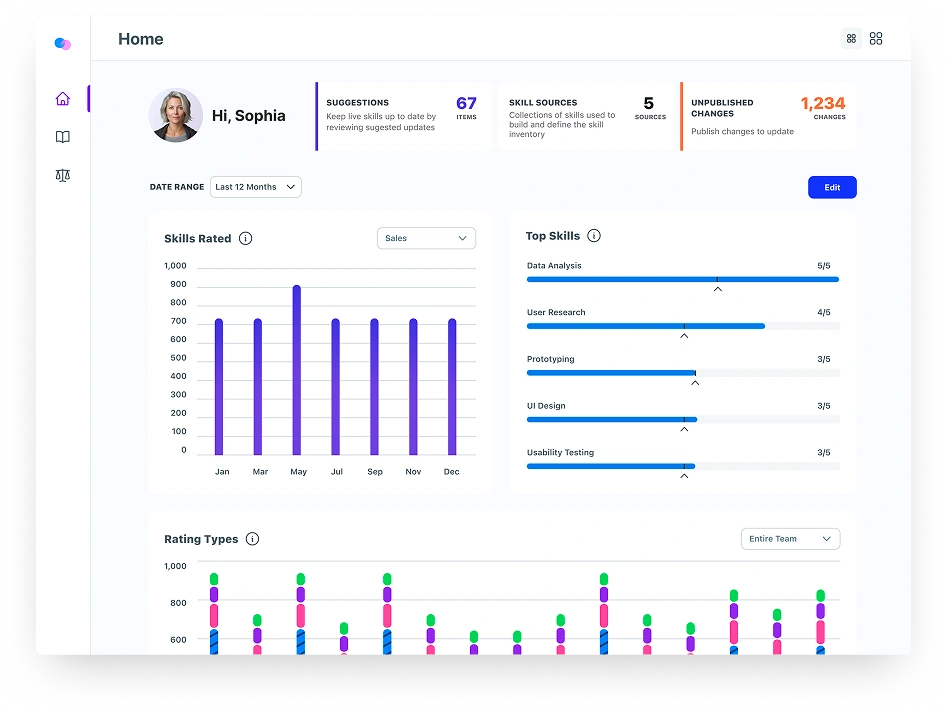
Admin Dashboard — track mapping activity and results.
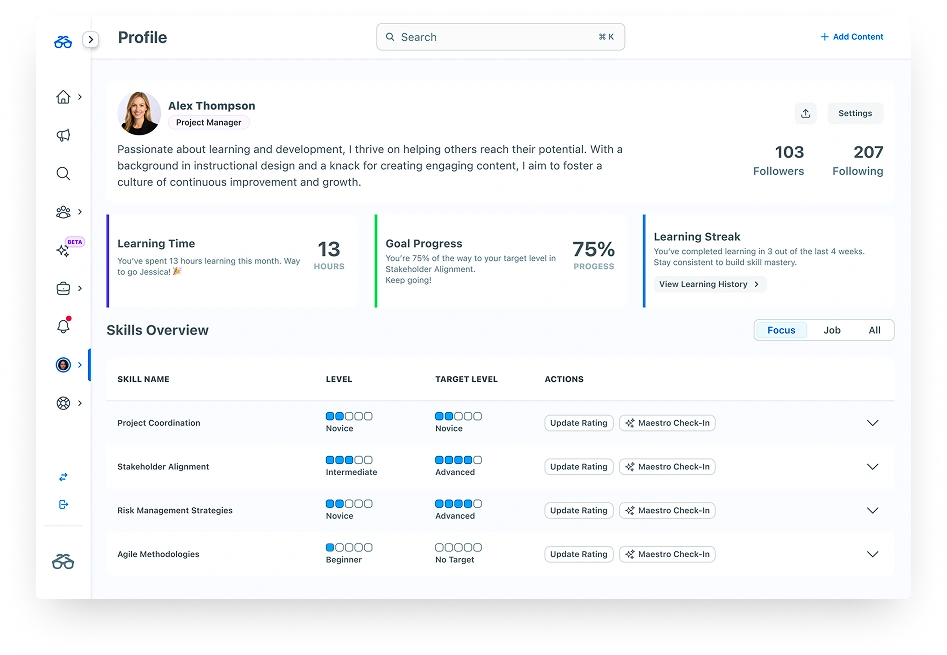
Unified Learner Profile — show a consistent skill story across all sources.
Outcome & Impact
Beta delivered in 3 months; MVP shortly after.
Customers could finally see skill data unified in one place.
Admins saved significant time and gained confidence in reporting.
Learners had a consistent view of their skills across all sources.
Degreed adopted the new design system and tech stack for the main platform.
Reflections
Weekly client calls with Verizon, Ericsson, TD Bank, and Volkswagen kept the solution grounded in real workflows.
Designing for trust in data proved just as important as designing for usability.
Auto-mapping showed how AI/ML can drive efficiency while keeping humans in control.
If I could go further, I would add stronger visualization tools to help leaders plan workforce development at scale.
Like this project
Posted Jun 23, 2025
While working at Degreed I worked with a small team and conceptualized a tool to standardize enterprise skill rating systems into one unified source.