The Neuroscience of Sad Music and Creativity

Obed Isaac


The Brief
Write a research-backed article exploring why sad music unlocks creativity, written from the perspective of a creative writer. The piece needed to feel personal and conversational while being grounded in actual neuroscience.
My Approach
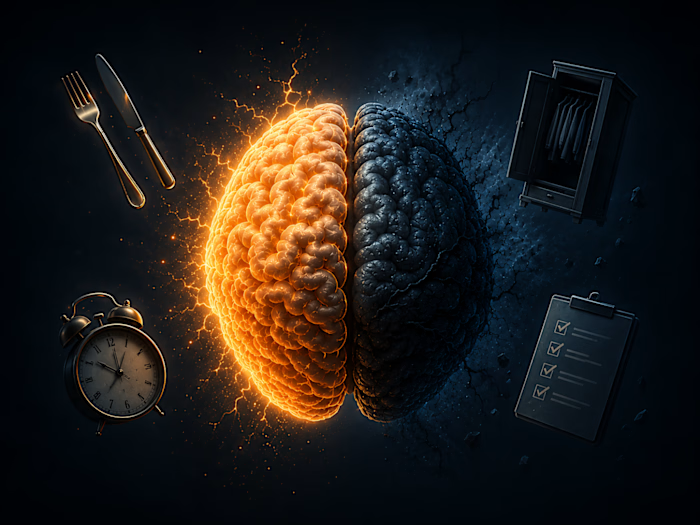
This was a research-heavy project. I needed to bridge two worlds: hard neuroscience (dopamine, the default mode network, emotional processing) and the lived experience of a writer who puts on a sad playlist before a writing session.
Here's how I built it:
Deep research — I used Perplexity to surface peer-reviewed studies on music and cognitive function, emotional regulation, and the neuroscience of creativity. I cross-referenced findings across multiple sources to make sure I wasn't cherry-picking.
Narrative framing — Instead of writing a dry summary of studies, I framed the article as a personal exploration. The reader follows along as the writer discovers why the thing they've always done actually works.
Conversational science writing — I translated neuroscience concepts into language that doesn't require a biology degree. Terms like "default mode network" got explained through analogy, not definition.
The Result
The final article reads like a conversation between a curious writer and the science behind their creative habits. It's research-backed without feeling academic, and personal without being unsubstantiated.
The piece demonstrates my ability to take complex, technical subject matter and make it accessible and engaging for a general audience.
Like this project
Posted Jul 28, 2026
A research-backed, conversational article exploring the neuroscience behind why sad music unlocks creativity. Written for a general audience from a creative writer's perspective.
Likes
0
Views
11