Built with Webflow
Village Global Website Development

Roman Avshalumov
Verified


Village Global — build case study
Design and copy by Carrara · Webflow · 2026
A fund site that opens its pages like folders, on a CMS that wasn't built to do that.
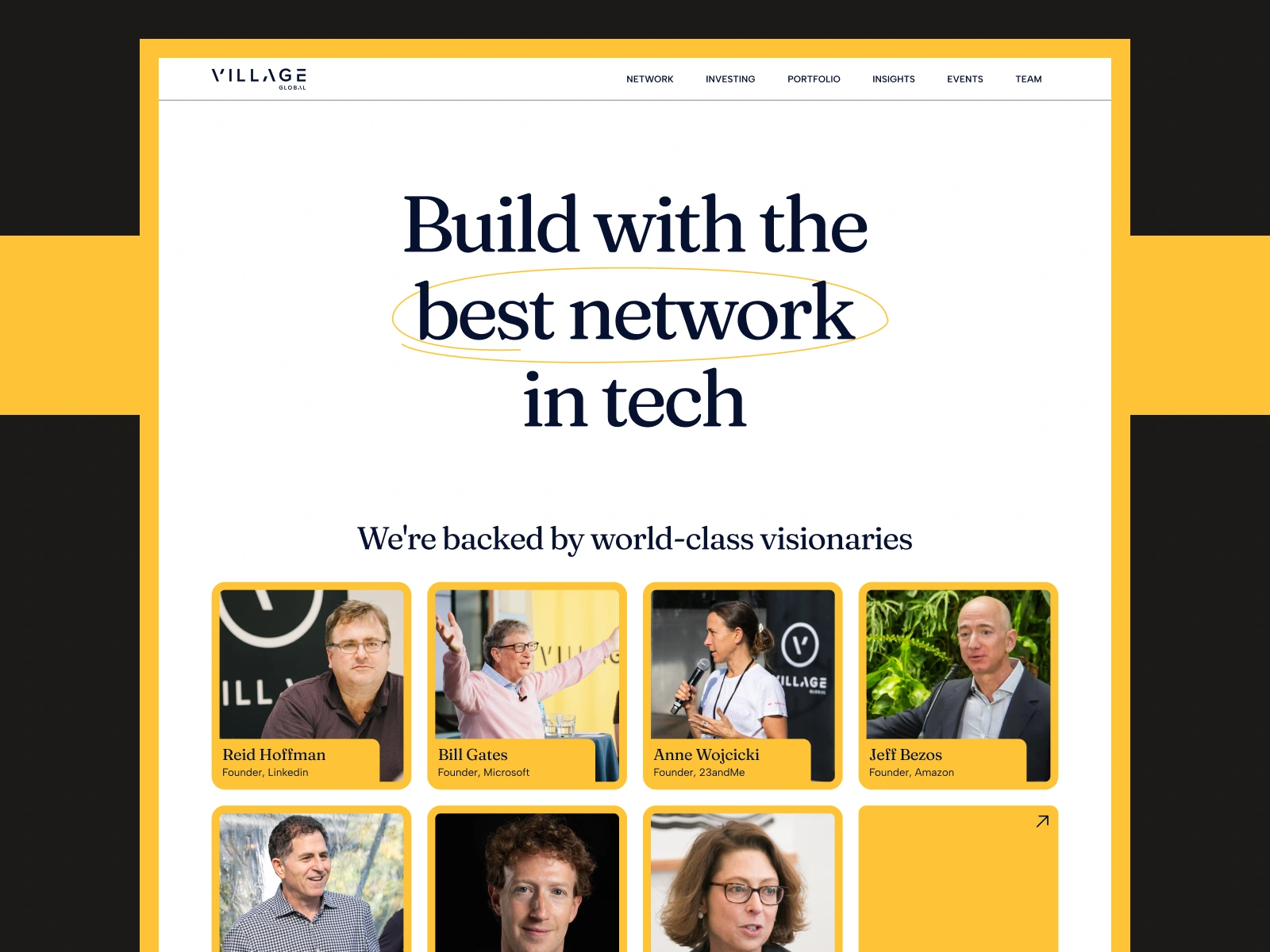
Village Global is an early-stage venture fund. Its LPs include Reid Hoffman, Bill Gates, Jeff Bezos and Mark Zuckerberg, and its portfolio runs from pre-seed to unicorn. The site has to look as considered as the people named on it, and it has to stay easy for a small team to keep current.
Carrara designed the site and wrote its copy. The look, the structure and every word of it are theirs. I built it, in close collaboration with their team from the first file to launch: they decided what the site says and how it should feel, and I made Webflow deliver it. The work below is the build half of a joint effort, and it only exists because the design team gave it their all.
What was hard, and how I solved it
1. Pages that open over the page
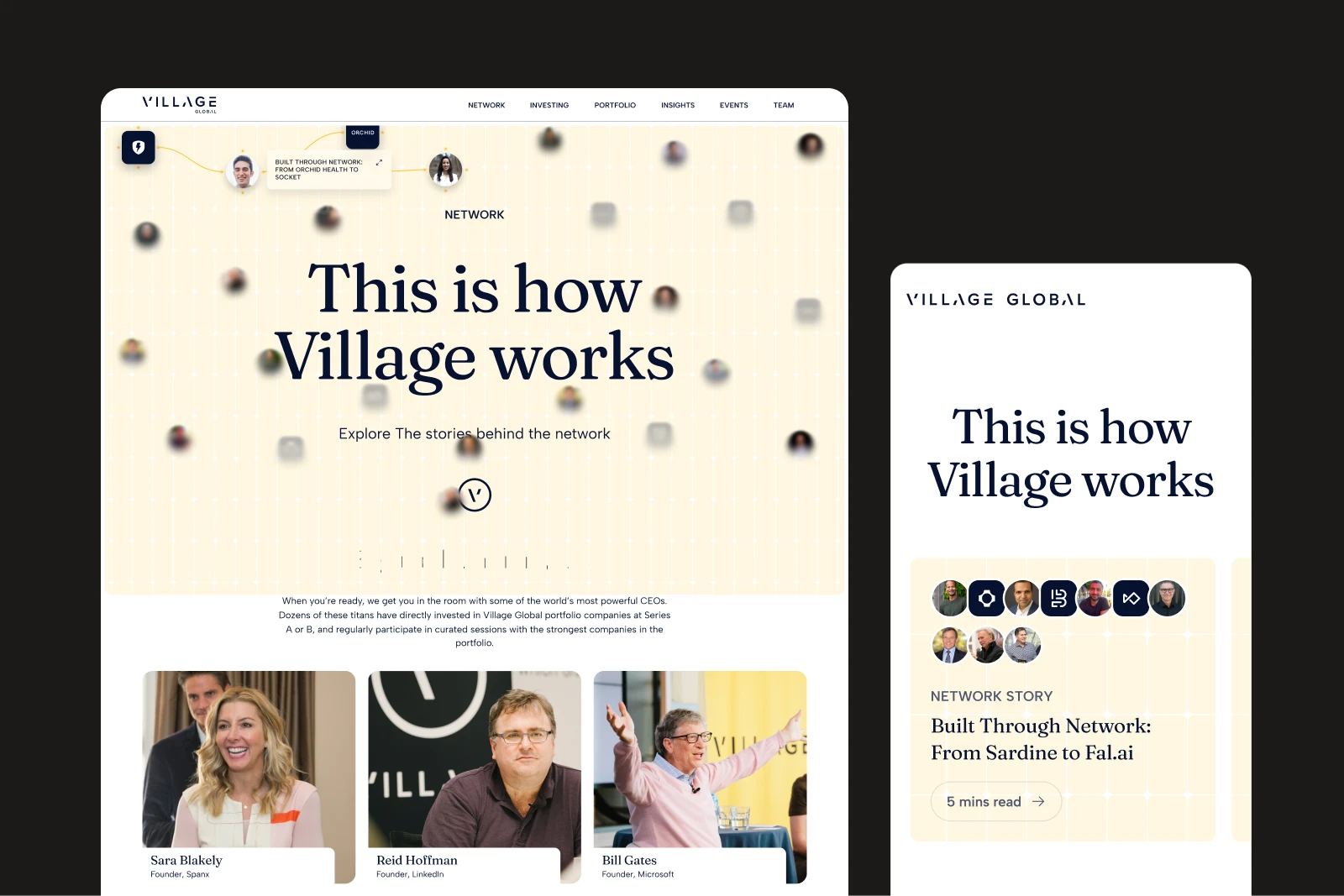
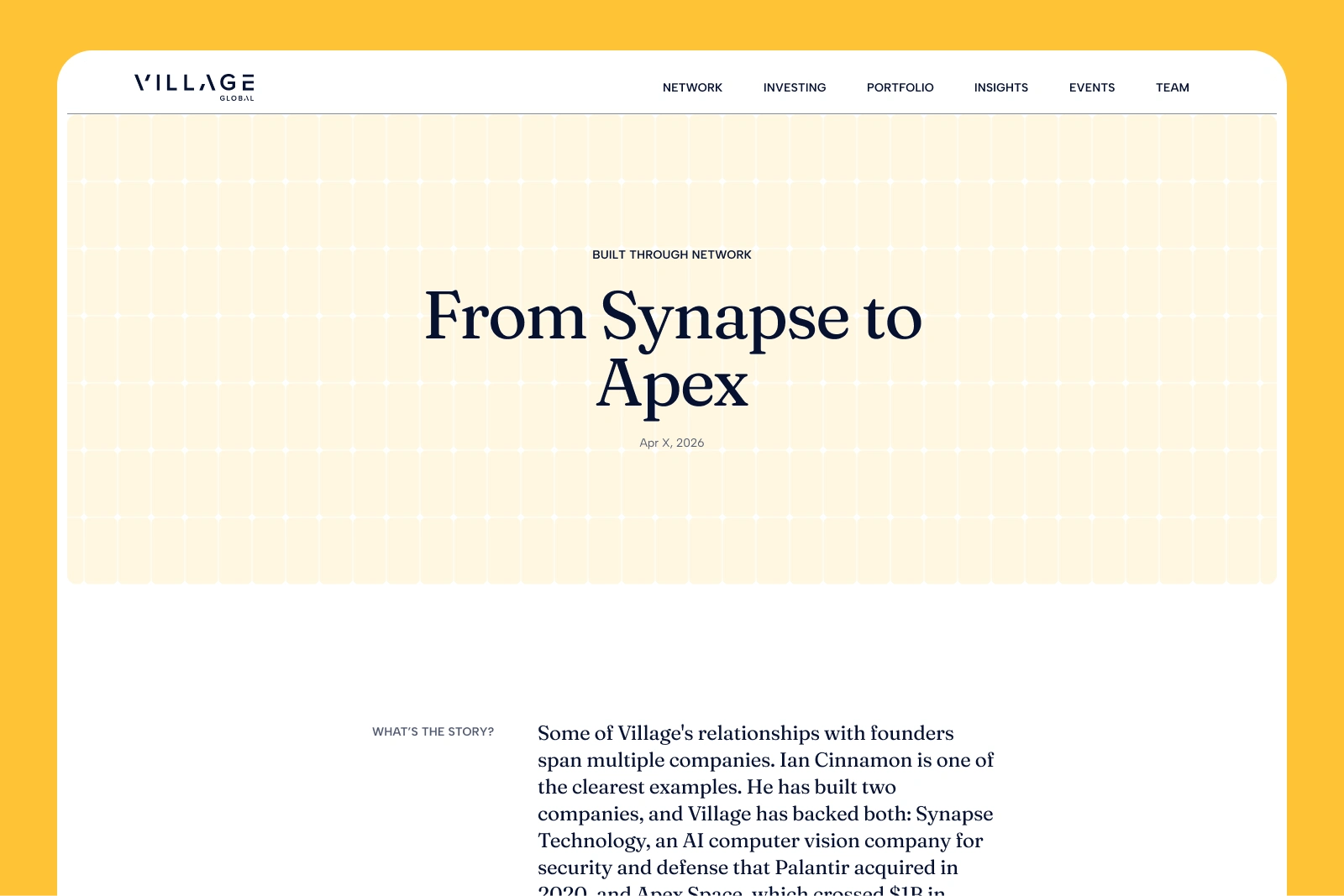
Open a partner's bio or an article and it doesn't load a new page. It slides up as a sheet over the page you were on, in under half a second. Close it and the sheet drops away, leaving you at the exact point you'd scrolled to. The browser's back button does the same.
Webflow assumes every page is a fresh load, so swapping content in place breaks it quietly. Interactions stop firing, CMS lists render as a single template card, and a stalled animation can leave the page frozen under your finger. I rebuilt the page lifecycle around the transition:
Webflow's interactions and page data are re-initialized on every swap, and the outgoing page's hooks are stripped so nothing fires twice.
The founders slider is a CMS list that doesn't rebuild itself after a swap. It's rebuilt only when it's still empty, and hidden while it does, so the broken template card never shows.
The outgoing page is pinned in place at its scroll position while the sheet rises over it. Scroll positions are stored per page, so closing and going back both land where you left.
A failsafe unlocks the page after 1.5 seconds if a transition ever stalls. The animation library's tweens look like promises but never resolve as one, which once left pages unscrollable; each transition now returns a real promise.
2. A portfolio that filters by more than one thing
Forty-eight companies, eight sectors, and most companies sit in more than one. Applied Intuition is enterprise and AI; Sardine is fintech and AI. Each company carries its sectors as a multi-reference, so filtering by AI/ML shows every AI company without duplicating entries. Exits carry their own badge. Above the list, a featured slider pulls founders from a second collection for each company, a list nested inside a list.
3. One insights feed, four kinds of content, four destinations
About 125 entries live in one collection: announcements, event recaps, podcast episodes and essays. They share a card, but not a destination. An essay opens as a sheet; a podcast goes to YouTube or Spotify; a thread goes to X. Each tab — All, Announcements, Events, Podcasts — filters the same collection and loads more on demand, so the team publishes once and the entry lands in the right places.
4. Editors write plain text; the site builds the structure
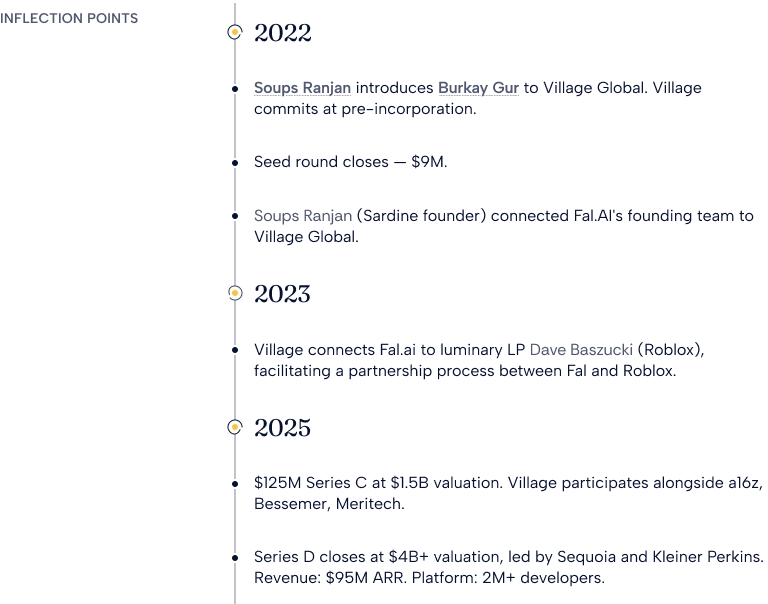
Some layouts are too structured for a rich-text field: a timeline with year and month markers, rows pairing people and company logos with a story, a stacked row of avatars. Asking editors to build these by hand would mean they get built wrong. So editors write ordinary rich text, and the site turns it into structure on load. Headings become years. Images become people or logos, told apart by their alt text. Repeated faces are counted once, and a long row ends in "+4".
A system, not a set of pages
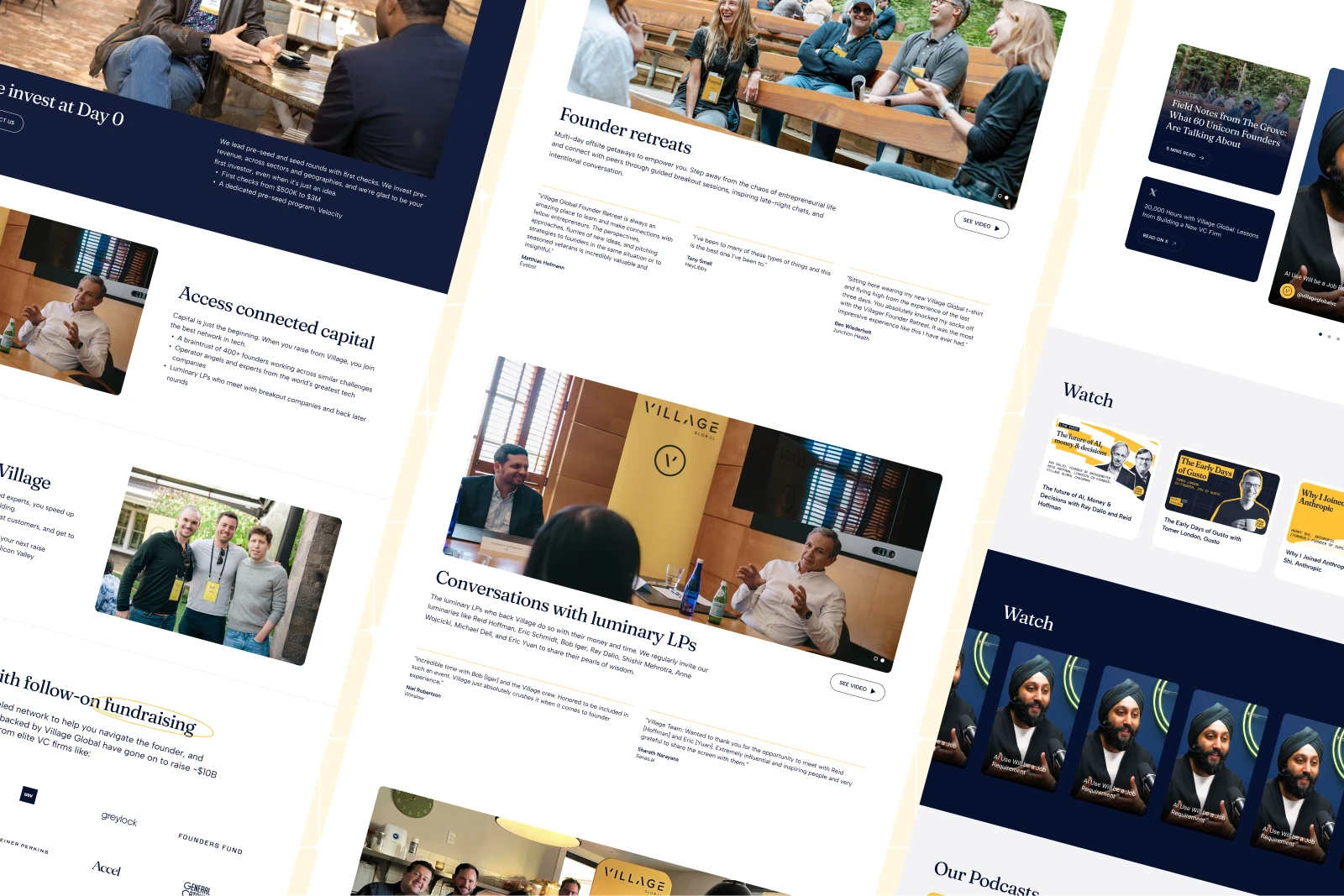
Colors, type and spacing are Webflow variables in two layers: a raw palette of navy and yellow, and semantic names on top (primary text, secondary background, inverse). Headings in Fraunces, body in Albert Sans, a type scale from 12 to 120px, spacing from 8 to 160px. A new section is built from names, not hex codes, which is what keeps a site this visible consistent after the build team has gone.
Learn more about my work at romans.design
Like this project
Posted Sep 29, 2026
Developed a dynamic and interactive site for Village Global using Webflow, designed and written by Carrara.
Likes
1
Views
3
Timeline
Apr 23, 2026 - Jun 23, 2026
Clients
Carrara