GOV / NHS Digital Evaluation

Anton Drachuk

GOV / NHS Digital Evaluation
Enabling evidence-led digital project funding and impact measurement for the NHS.
Millions of £
Funding Saved
Thousands
Users
Alpha & Beta
Project Phase
Passed
GDS Assessment
Objective
Enable Public Health England and the NHS to better demonstrate the impact, cost-effectiveness and benefit of digital health interventions to public health through a standardized evaluation framework.
The Challenge
Anton's Role
Team & Partners
The Mission: Evidence-Led Digital Health
Enable Public Health England (PHE) and the NHS to better demonstrate the impact, cost-effectiveness, and benefit of digital health interventions. Historically, millions were spent on digital tools with little to no evaluation of their actual effect on public health outcomes. Our goal was to change that by building a service that makes evaluation accessible, standardized, and rigorous.
The Challenge: Fragmented Evaluation
Evaluation in the public sector was historically fragmented and often not built into digital projects from the start. This led to:
Resource Misallocation: Funding unviable or low-impact projects that lacked a clear theory of change.
Traceability Gap: Difficulty in tracing a product's effect on health outcomes (e.g., does a notification actually lead to weight loss?).
Data Inconsistency: Fragmented data that made comparison across the NHS portfolio impossible.
Research & Design Process
Our approach followed the GDS (Government Digital Service) standards, moving through Discovery and Alpha phases with a heavy emphasis on co-creation and academic rigor.
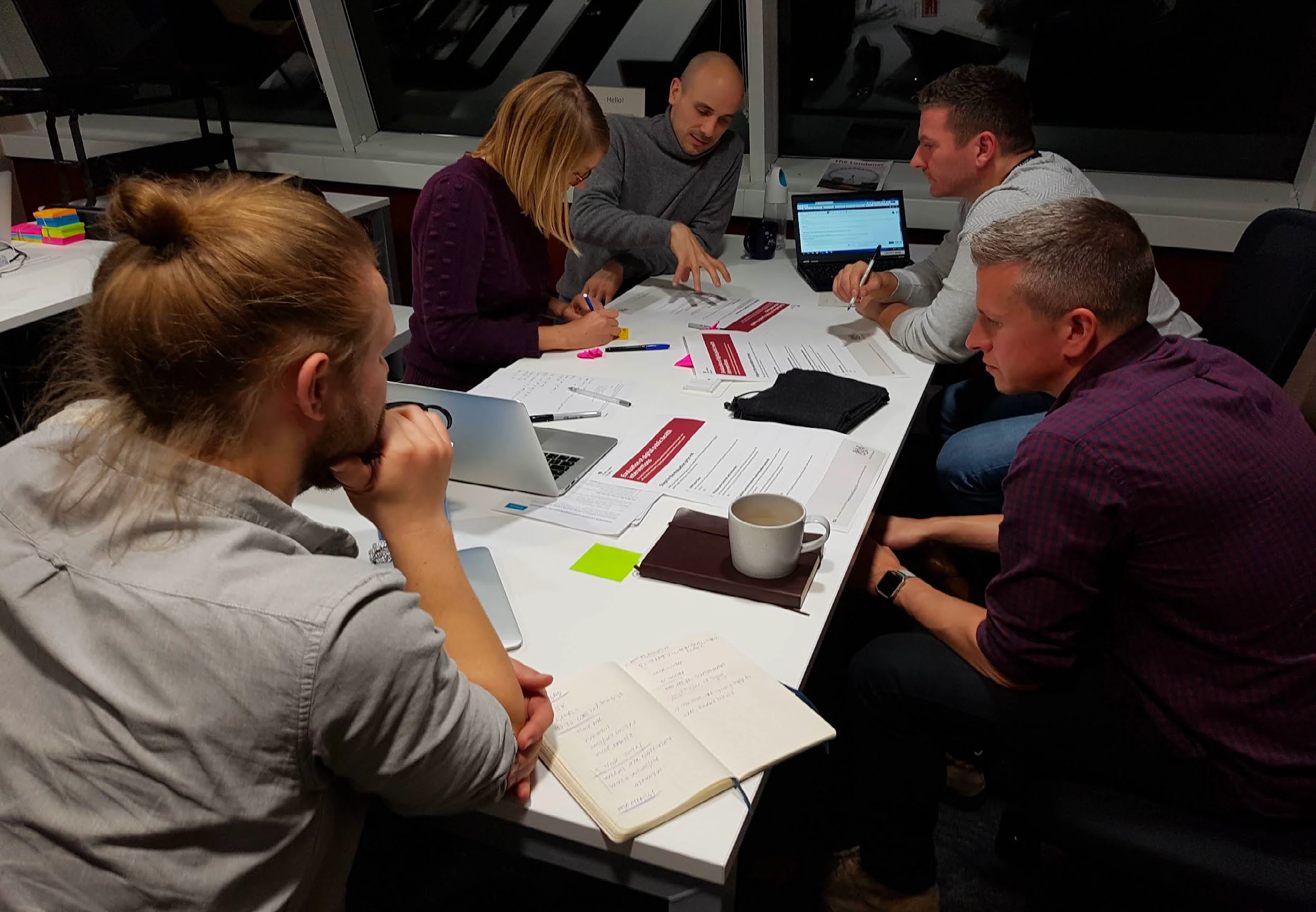
1. Discovery: Mapping the Landscape
We mobilised a multidisciplinary team including academics, health professionals, and designers. We conducted:
Stakeholder Mapping: Identifying the needs of PHE leads, project managers, and academic evaluators.
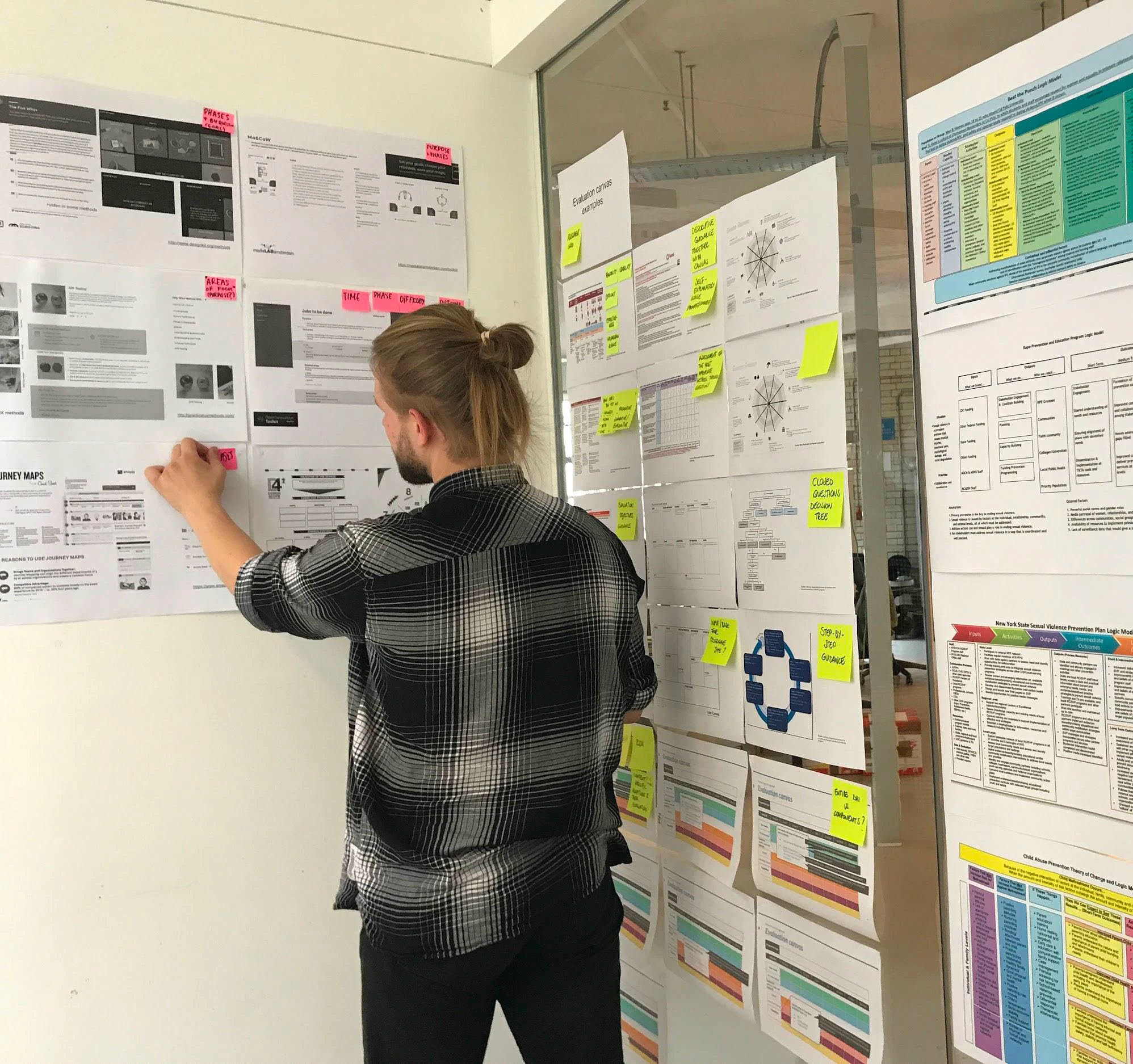
Methodology Review: Mapping over 100 existing evaluation methods, tools, and metrics to find commonalities.
User Research: Understanding the barriers that prevented teams from evaluating their work, such as lack of time or technical expertise.
2. Alpha: Prototyping the Service
In Alpha, we developed concepts to integrate evaluation capability into PHE teams at the start of a project.
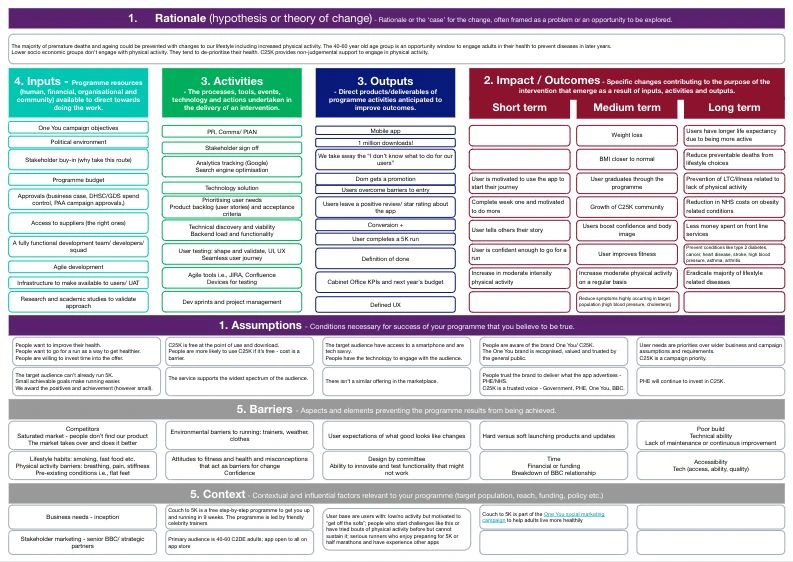
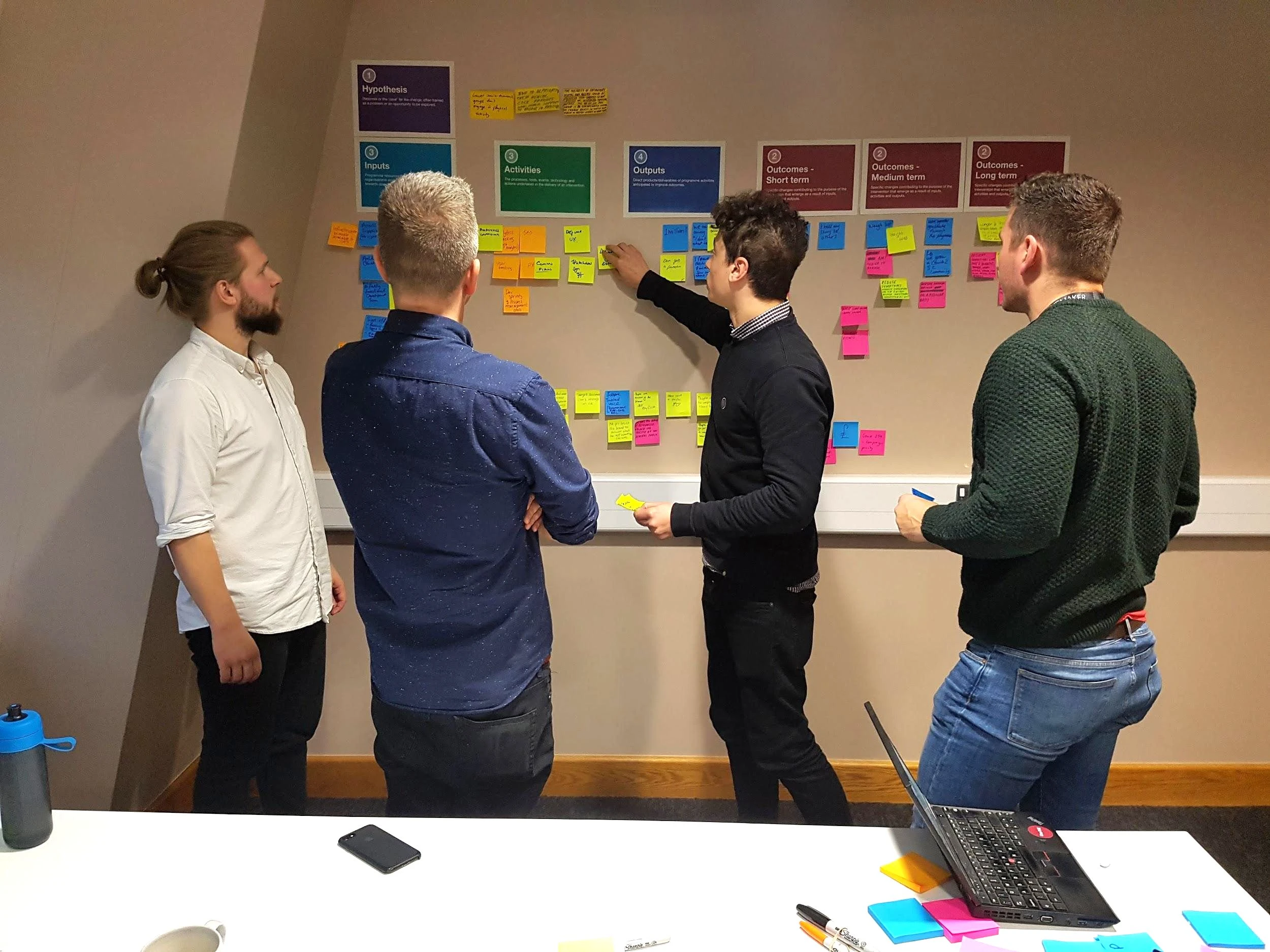
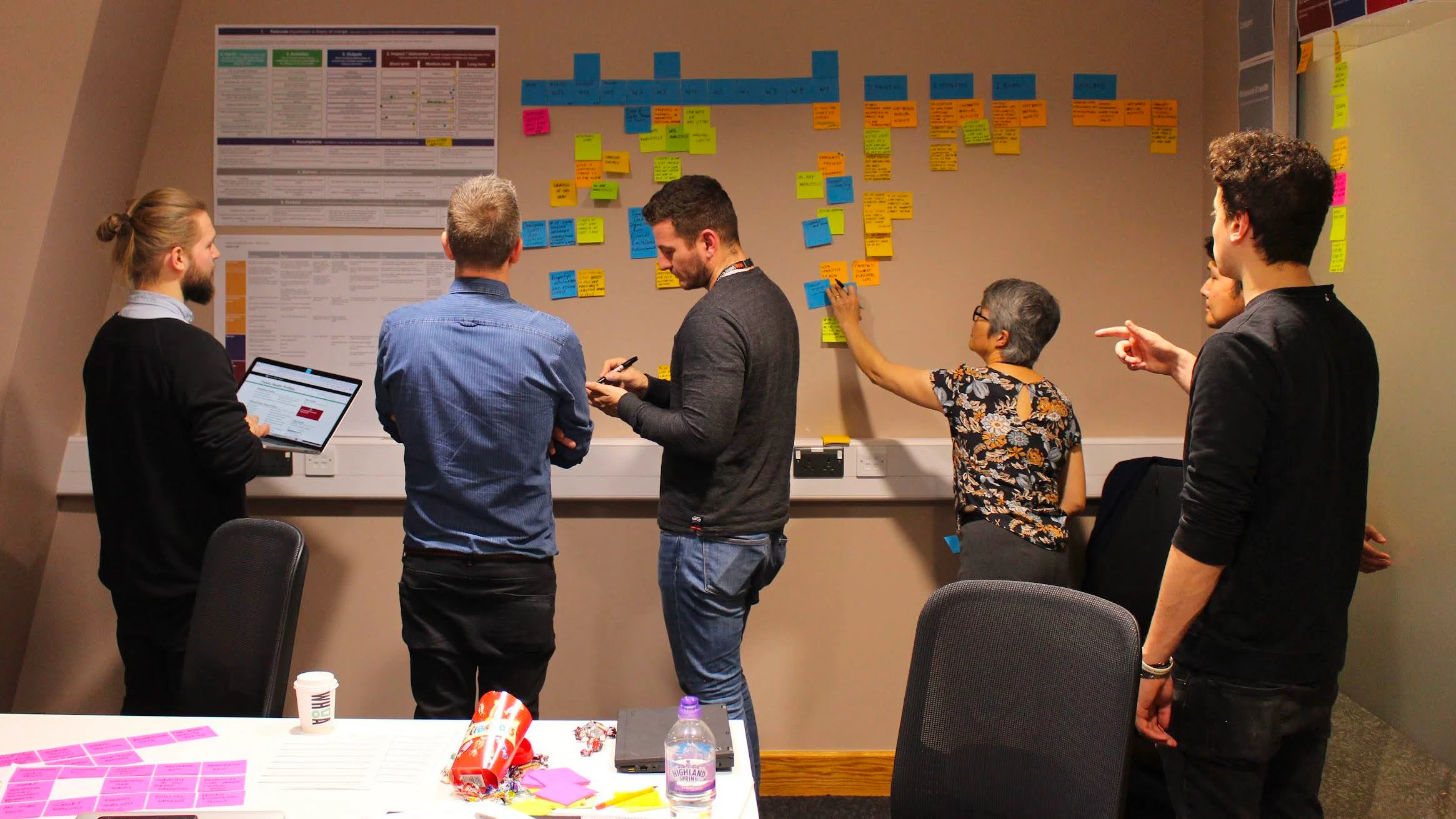
Co-creation Workshops: We ran intensive sessions to build "Logic Models" for digital health—mapping how a technical feature leads to a behavioral change and finally a health outcome.
Framework Design: I designed the logic for a "Method Filter" that recommends the best evaluation method (e.g., Randomized Control Trial vs. Qualitative Interviews) based on the project's stage and budget.
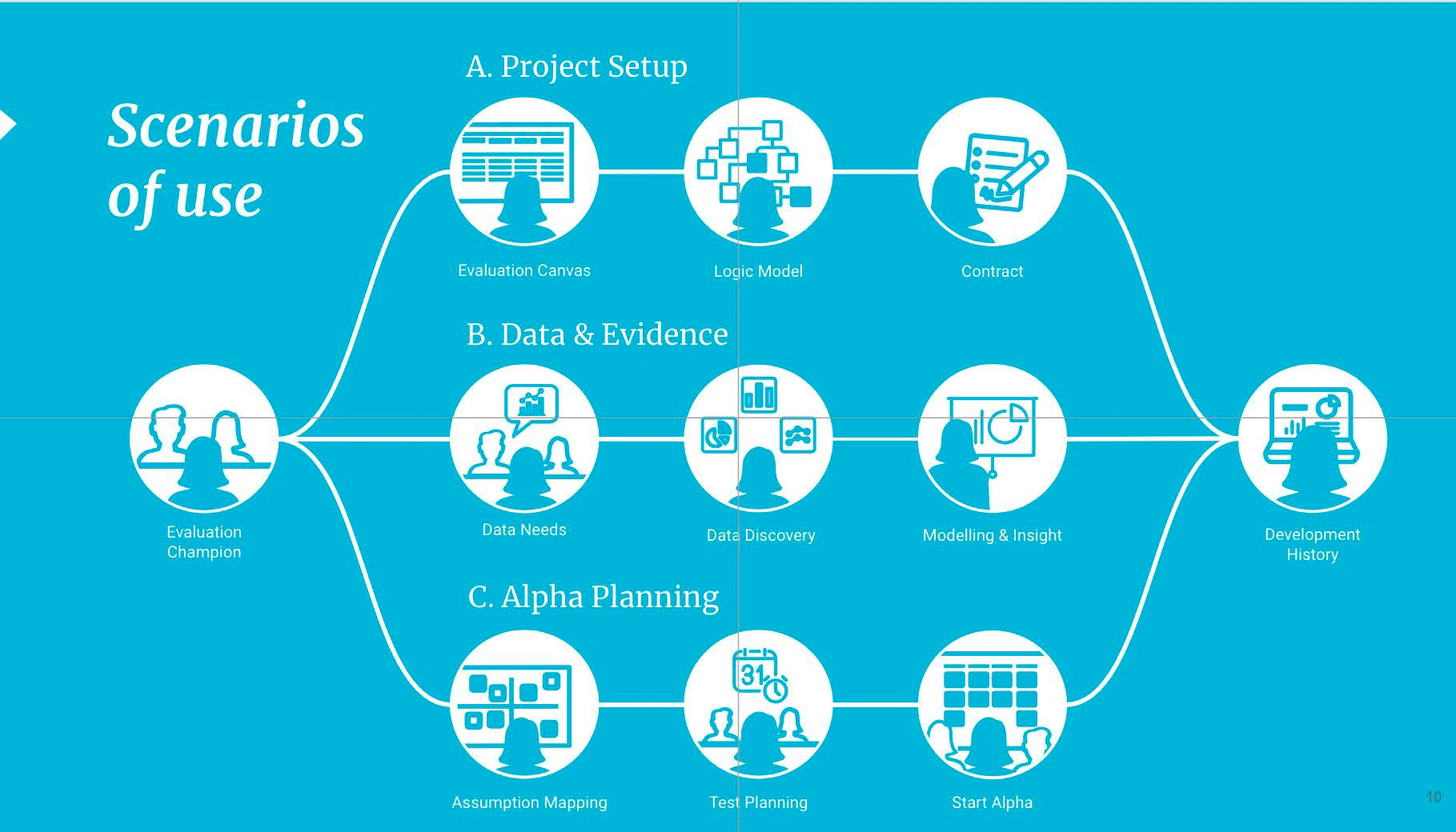
The Final Service: 7 Steps to Strategy
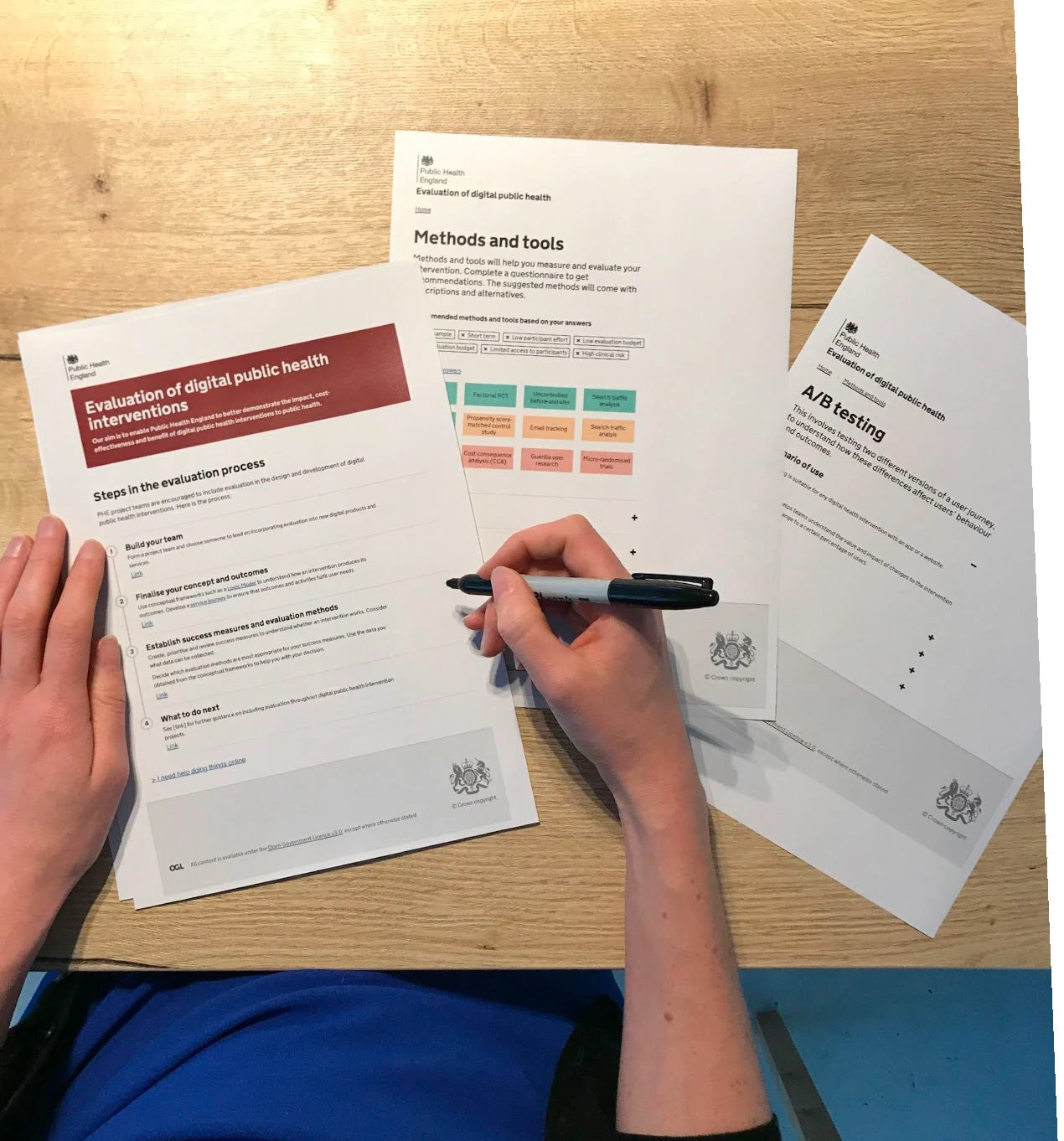
The service guides teams through seven critical steps to build their evaluation strategy:
Build your team: Formalising the role of evaluators and identifying necessary expertise.
Develop a logic model: Understanding the "Theory of Change"—how the product is supposed to work.
Develop a service blueprint: Linking user needs to technical activities and health outcomes.
Establish indicators: Defining success measures from existing or new data sources.
Establish methods: Selecting relevant research tools via an automated questionnaire.
Integrate data: Outlining what needs to be collected, how, and ensuring privacy compliance.
Output and next steps: Receiving a comprehensive digital report and roadmap for the Beta phase.
Proof of Concept: Couch to 5K
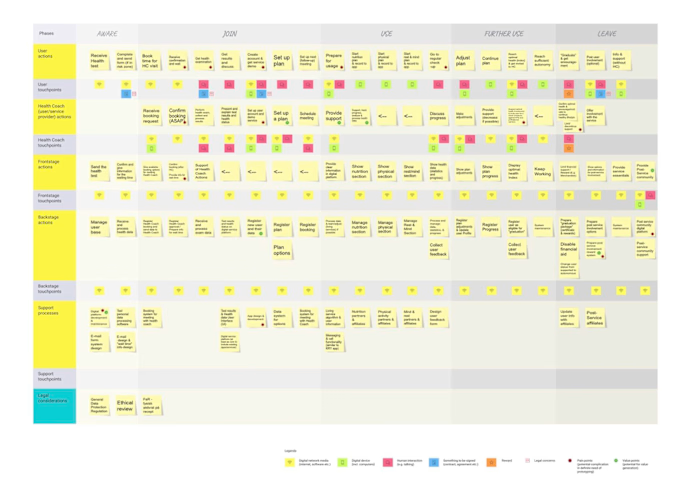
We tested our approach with internal teams, including the popular Couch to 5K app. We built a logic model and service blueprint to understand the relationship between app features (like audio coaching) and health outcomes (like increased physical activity and weight loss). This validated that the framework could be applied to even the most complex and widely-used digital health tools.
Impact and Outcomes
The service is now live on GOV.UK, used by thousands of teams, and has fundamentally changed how digital health is funded and measured in the UK.
Financial Impact: Saved millions in public funding by filtering likely unviable projects early in the process.
Strategic Impact: Provided a comprehensive, evidence-based way for valuable services to get the support they need to develop.
Standardization: Created a unified language for evaluation across the NHS and PHE.
Client
Public Health England / NHS
Team
Anton Drachuk (Service, Framework & Assets Designer), Gene Libow (Lead SD), Lilli Graf (Senior SD & PM), Ben Reason (Co-lead SD) + PHE / NHS + Unboxed (Tech) + Academic experts
Duration
2018 - 2019
Links
Interested?
Let's discuss how similar approaches can work for your organization.
Like this project
Posted Jun 29, 2026
Evidence-led evaluation framework for NHS digital health interventions, saving millions and improving funding.
Likes
0
Views
2