200,000+ users moved off Bubble in four months, no downtime

Gautier Le Poher


Evaboot, April 2026 to July 2026
Situation: Bubble was holding back the roadmap.
The app ran on Bubble and had more than 200,000 users at the time of the migration. The roadmap pushed Bubble to its limits: deeper integrations with HubSpot, Salesforce and other CRMs, regular releases, A/B tests and autonomous AI agents.
Another problem: it is hard to find Bubble developers. And the platform cost was getting too high as the product grew.
The founders decided to rebuild the app on Django and AWS. The main risk was the data: years of accounts, exports, credits and billing, which had to arrive intact while customers kept paying.
Mission: map the app, then migrate the data.
Before the new version existed, the backend developer needed a complete map of the app to rebuild from. Then every record had to move to the new database, with both systems kept in sync until the switch.
Actions
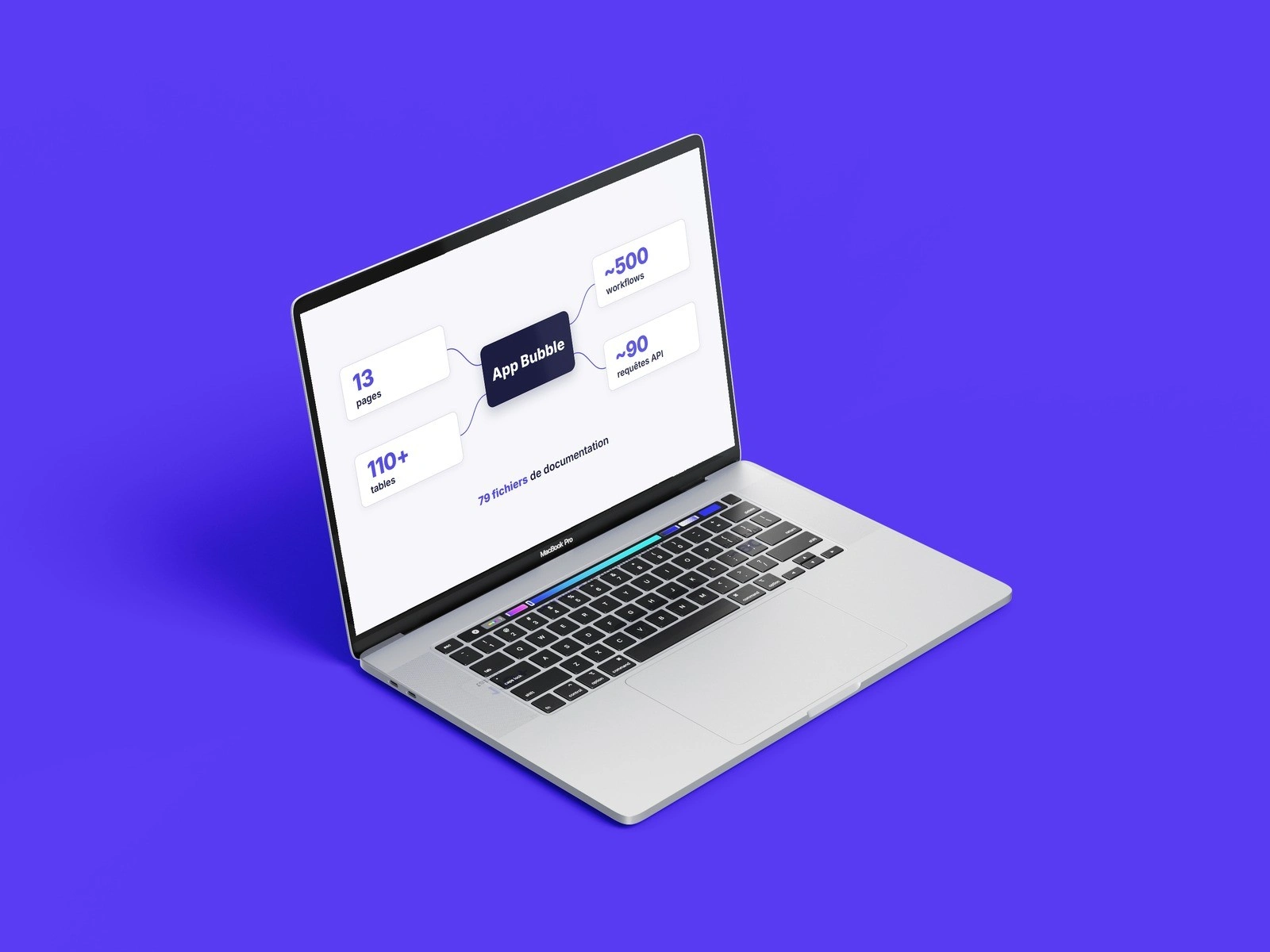
A complete map of the app. Every page, workflow, table and field, documented with the help of a Bubble analysis agent.
The scope settled. In April 2026, the backend developer and I went through the open questions: what to keep, what to drop, what to merge. Fields that no user had ever filled in were dropped.
A full load. The whole Bubble export went into the new database in one pass.
An hourly sync. Every record changed on Bubble after the load followed to the new database, so both systems stayed identical until the switch.
A switch planned with the team. The developer, the founders and I agreed on the cut-over steps together.
I wrote the migration scripts with AI agents. The backend developer built the new app.
What I learned: Bubble's limits set the pace of the migration
Bubble's API is slow to read data back. A full check after each sync would have taken days. So I checked records in batches, which let me verify every sync without stopping the service.
The map of the app paid off twice. It answered the backend developer's questions during the rebuild, and it sped up decisions, because every field already had a name and a use.
Results
Before. One app on Bubble: no deep CRM integrations, slow releases, no A/B tests, no AI agents, hard to hire developers for this stack, and a bill that rose with usage.
After. The whole product (front end and back end) on Django and AWS.
The switch. Users saw no interruption.
The team. A backend developer hired after the move to code.
Client feedback
"I worked with Gautier for 3 years on Evaboot. He was the Product Manager and the developer of our SaaS, which grew from 1M€ to 2M€ in revenue over that period. He took us from an MVP to a stable, secure application, then added many features to it.
In 2026, he helped us leave Bubble by migrating the data of our 200,000 users to our new stack, with no downtime. He then built our MCP server and our CLI with AI coding agents (Claude Code).
He understands the product as well as the technology, always delivers on time and responds fast to every request. If you are looking for a top-level technical Product Manager, I highly recommend him."
Jean-Baptiste Jézéquel, Co-founder, Evaboot (translated from French)
Like this project
Posted Oct 20, 2026
A B2B SaaS leaves Bubble (no-code) for Django. I mapped the whole app for the rebuild and migrated the data while the team kept selling.
Likes
0
Views
2
Timeline
Apr 1, 2026 - Jul 31, 2026
Clients
Evaboot