ScopeGuard — Kill scope creep, get paid

Emmanuel Chukwudebere


A self-initiated product, designed and shipped end-to-end. Live at https://scope-guard-orpin.vercel.app
The problem
Every freelancer knows the slow bleed of scope creep — the "quick extra tweak" that becomes three weeks of unpaid work. The root cause is almost always the same: the project was never written down clearly in the first place. Client notes live in scattered chats and voice messages, and writing a proper statement of work (SOW) is tedious enough that most people skip it.
What I built
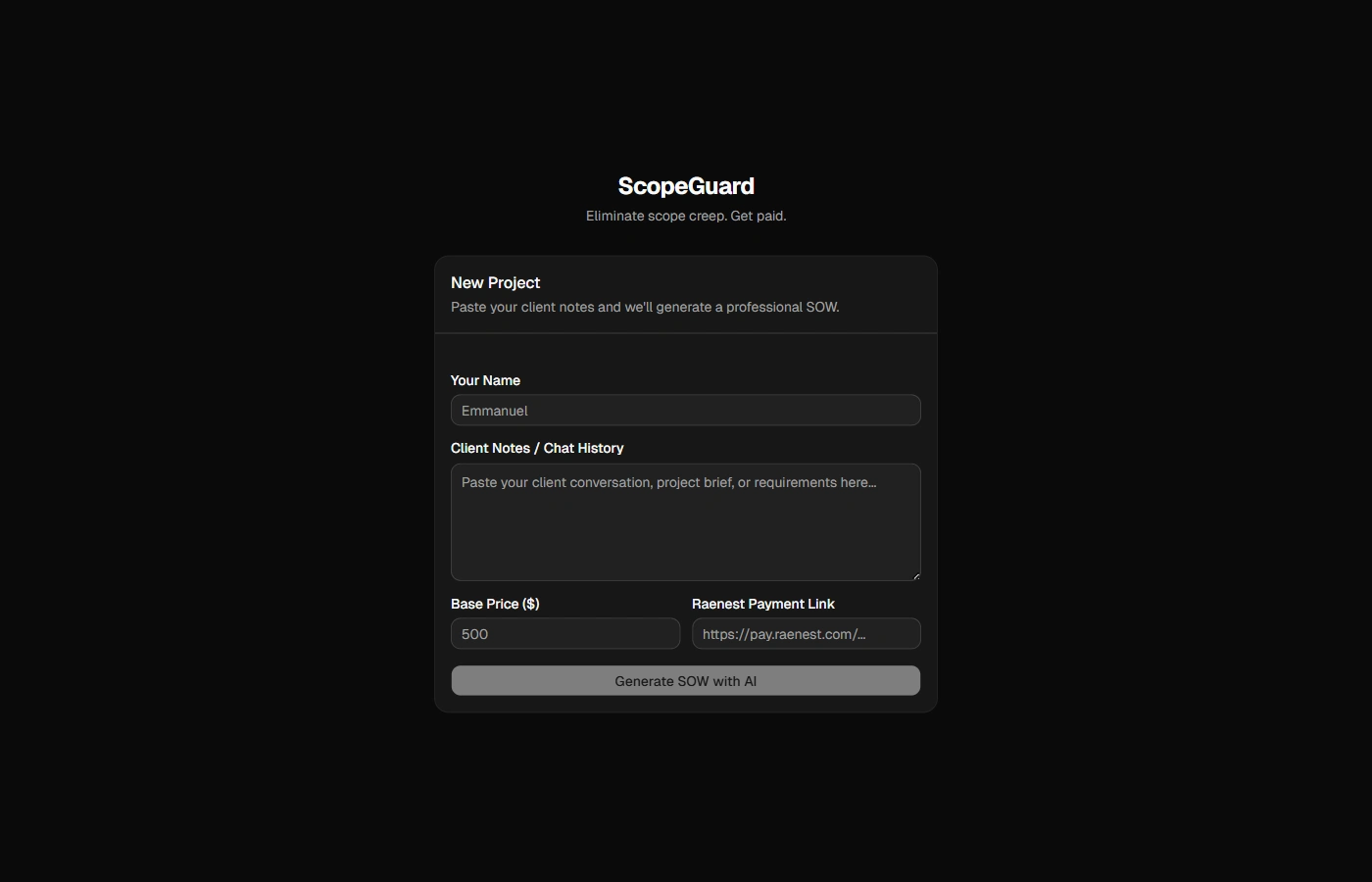
ScopeGuard takes the raw mess — pasted client notes, chat history, a project brief — and turns it into a clean, professional SOW in seconds. You paste the conversation, set a base price, drop in a payment link, and it generates a structured scope you can share and get approved.
Under the hood it runs a clear loop: capture the brief → use AI to extract and structure the deliverables → let the freelancer review and approve → share a clean scope link → flag anything that falls outside the agreed scope later. There's a client-facing portal and shareable project links so the agreement lives in one place both sides can point to.
How it's made
Design: end-to-end product and UI design — a focused, dark, single-purpose interface that gets out of the way
Build: Next.js, React, TypeScript, Tailwind, shadcn/ui
AI: Mistral AI to parse unstructured notes into a structured scope and draft the SOW
Infra: Upstash Redis for state and shareable links, deployed on Vercel, with a payment-link integration for getting paid
Process: spec-first — I wrote the product spec and flows before building, then implemented with an AI-assisted workflow
Why it matters
ScopeGuard is a small product that does one job well, and it's a clear example of how I work: start from a real, painful problem, design the simplest interface that solves it, and ship a working tool — not a mockup. The whole thing, design through deploy, was built solo.
Like this project
Posted Jun 29, 2026
A shipped web app that turns messy client notes into a clear, AI-generated statement of work — so freelancers stop doing free work and get paid for what they agreed to.