Match AI SDK Landing Page Design

Raja Zeeshan Ali


Match | Monetizing AI Conversations Without Breaking UX
Overview
Match is a conversational ads SDK for AI products. It lets builders offset LLM costs by embedding native ads into chat, without breaking trust or flow.
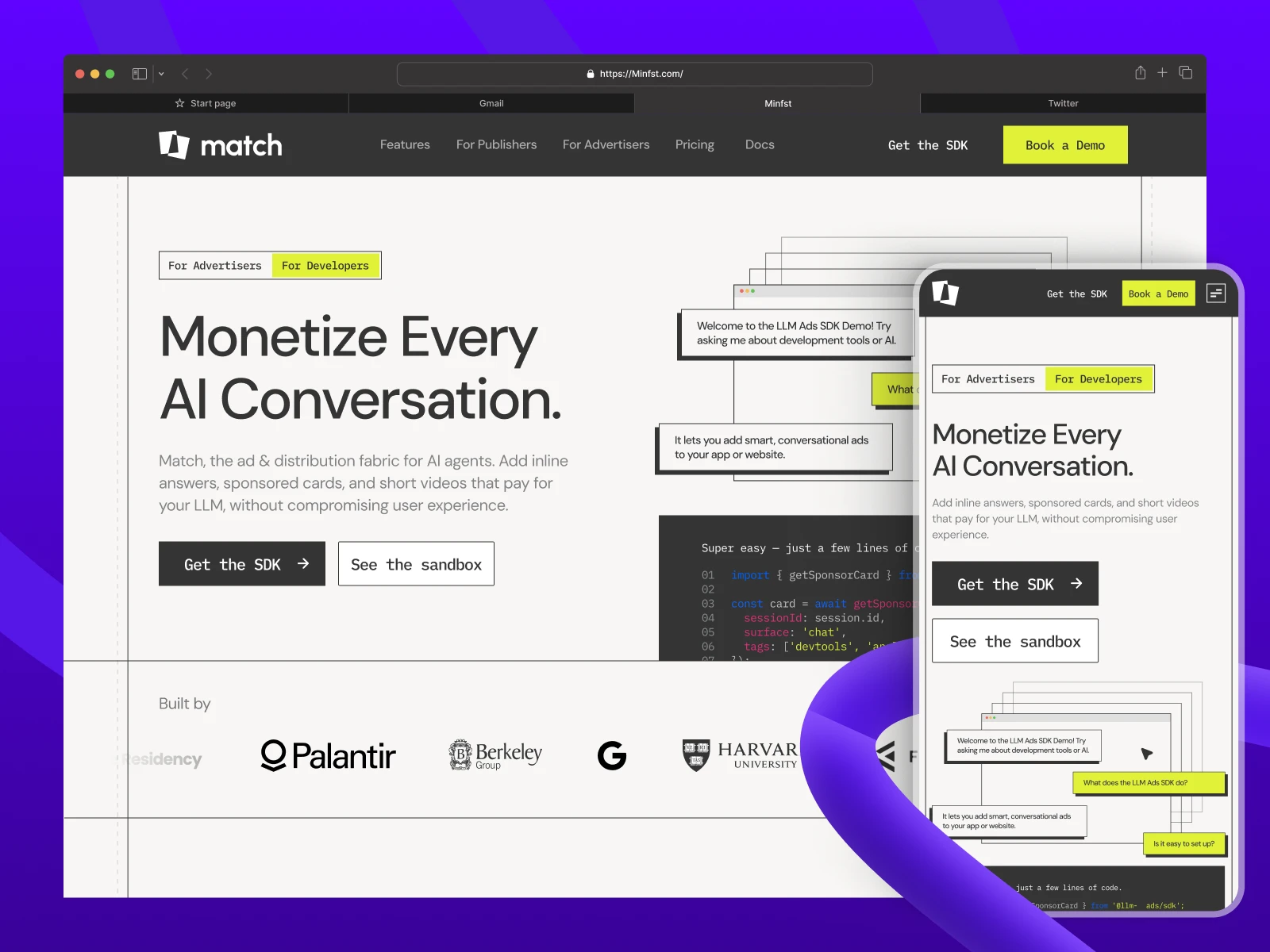
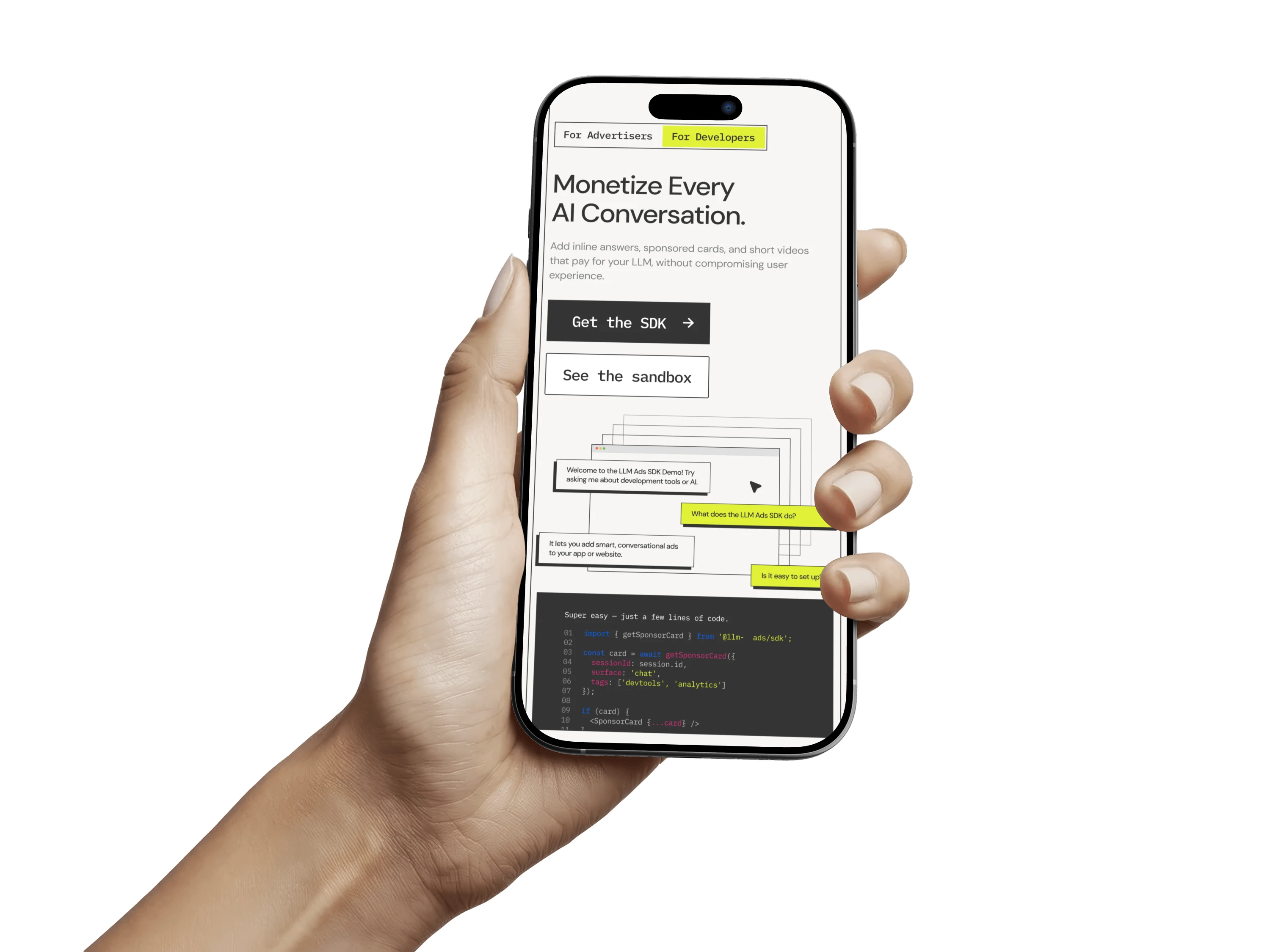
I designed the landing page, translating a complex technical SDK into a clear, conversion-focused experience for developers and product teams.
The Challenge
AI products operate differently than websites or apps. Traditional ads, banners, pop-ups, display units,kill conversational flow and erode trust. But teams still need to offset infrastructure costs without degrading UX.
The core problem: Explain an entirely new advertising paradigm, prove monetization can coexist with quality UX, and drive SDK adoption, all without overwhelming developers with complexity.
Strategy & Approach
Show, Don't Tell
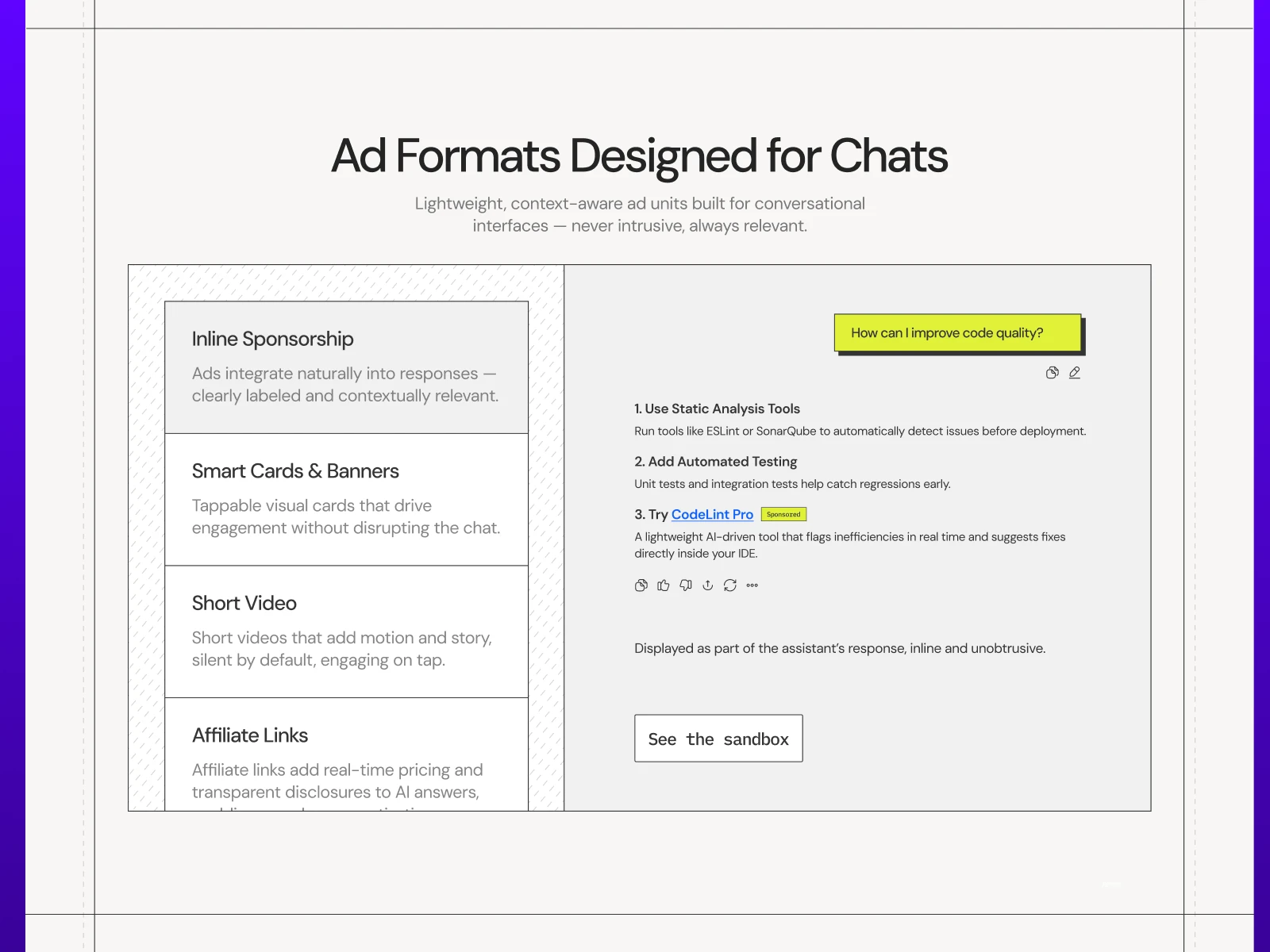
Instead of abstract descriptions, I designed realistic chat examples showing ads in context: sponsored responses, product cards, videos, and affiliate links. Users see the product working before reading a single word about it.
Lead With Outcomes
The page opens with business impact "Offset LLM costs. Keep your users.", not technical jargon. Revenue first, complexity second.
Kill Integration Anxiety
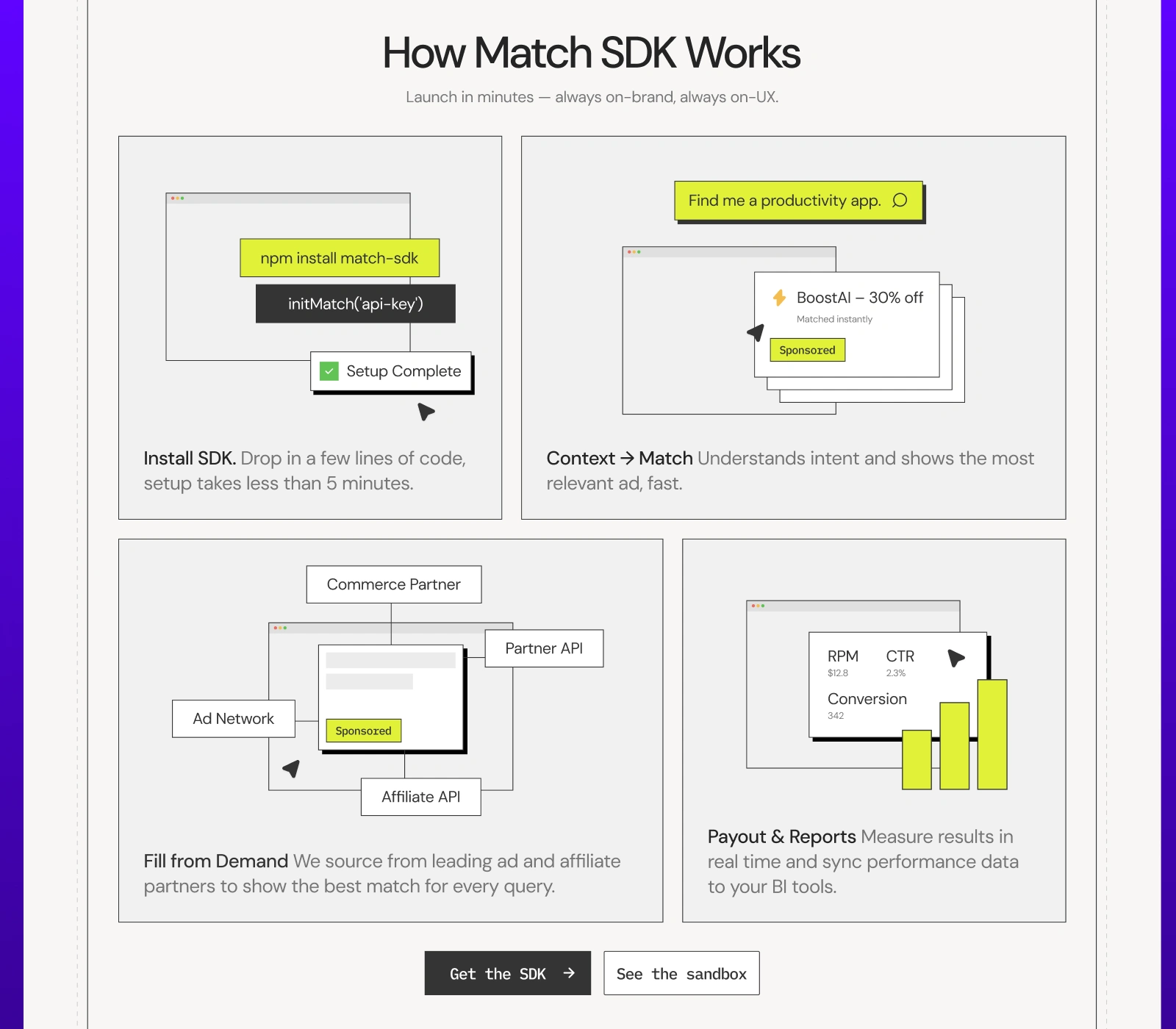
Positioned the SDK as plug-and-play: 4 lines of code, compatible with OpenAI/Anthropic, sandbox ready. No sales calls, no waitlists.
Build Trust Through Transparency
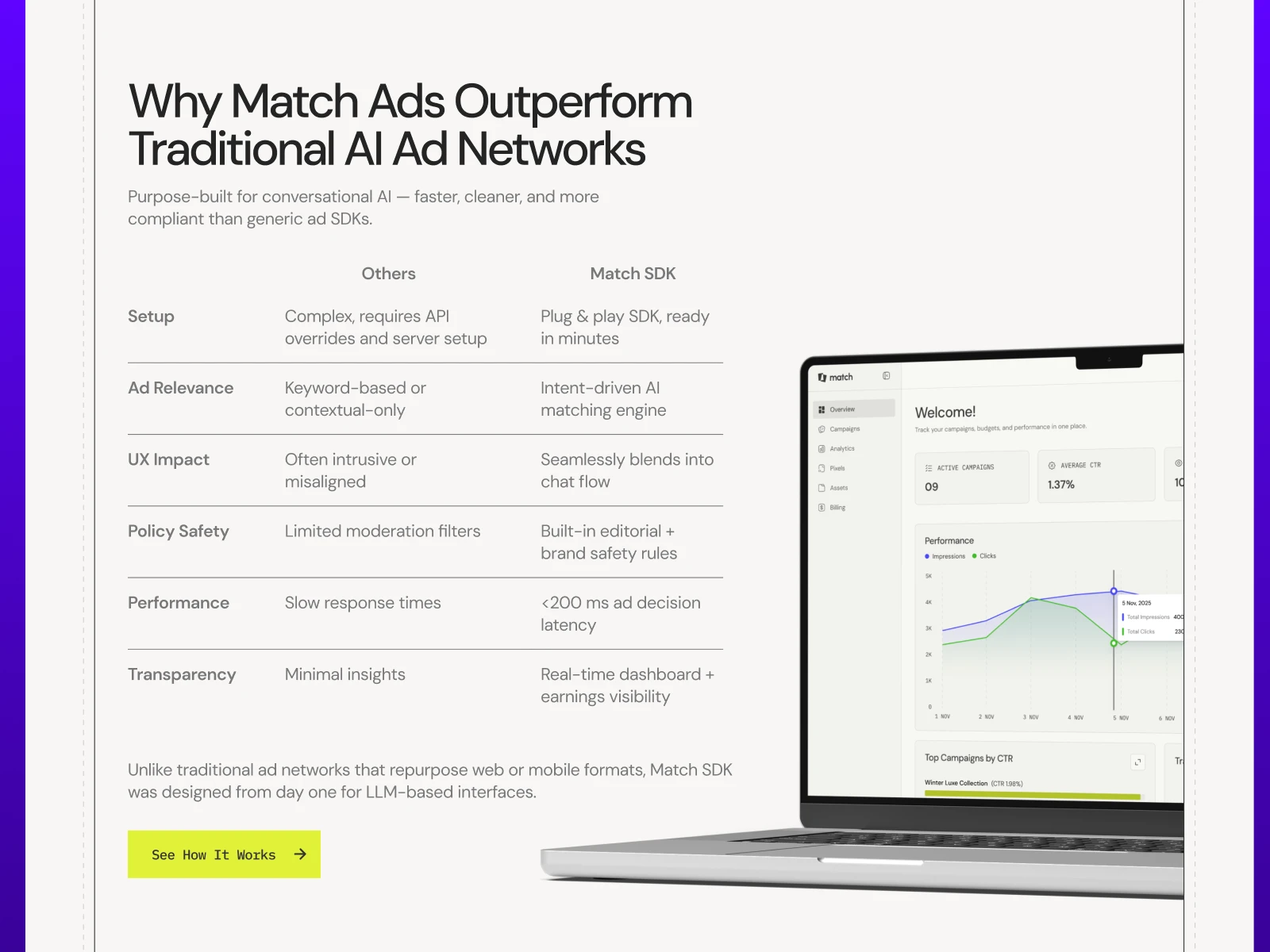
Every ad example includes visible "Sponsored" labels. Brand safety policies upfront. Latency impact (<100ms) called out explicitly. Transparency isn't hidden—it's a feature.
Design Execution
Visual System: Developer-First Clarity
Borrowed from modern dev tools, clean, modular, high-contrast. Monospace for code, sharp typography, minimal chrome. The aesthetic signals quality and technical rigor.
Conversational UI Throughout
Chat interfaces aren't just in examples, they're the design language of the page. This creates immediate alignment between marketing and product experience.
Progressive Disclosure
Information reveals in layers:
Hero: Value prop + live chat example
Proof: Multiple ad formats in realistic conversations
Integration: Code snippet + sandbox CTA
Trust: Performance metrics + brand safety
Action: Clear path to SDK
First-time visitors get it in 30 seconds. Technical users can go deep.
CTA Strategy
Three tiers: "Get SDK" (primary), "Try Sandbox" (secondary), "Read Docs" (tertiary). High-contrast buttons, no forms, no friction. Direct links to GitHub and sandbox.
Key Design Decisions
Hero Section
Live chat example with a contextual ad appearing mid-conversation. Users see exactly what Match delivers in 3 seconds.
Ad Format Examples
Four interactive scenarios showing sponsored text, product cards, video, and affiliate links, each in realistic conversation context.
Integration Section
Dark mode code block, 4-line integration, copy-to-clipboard button. Message: "This is easy."
Metrics Section
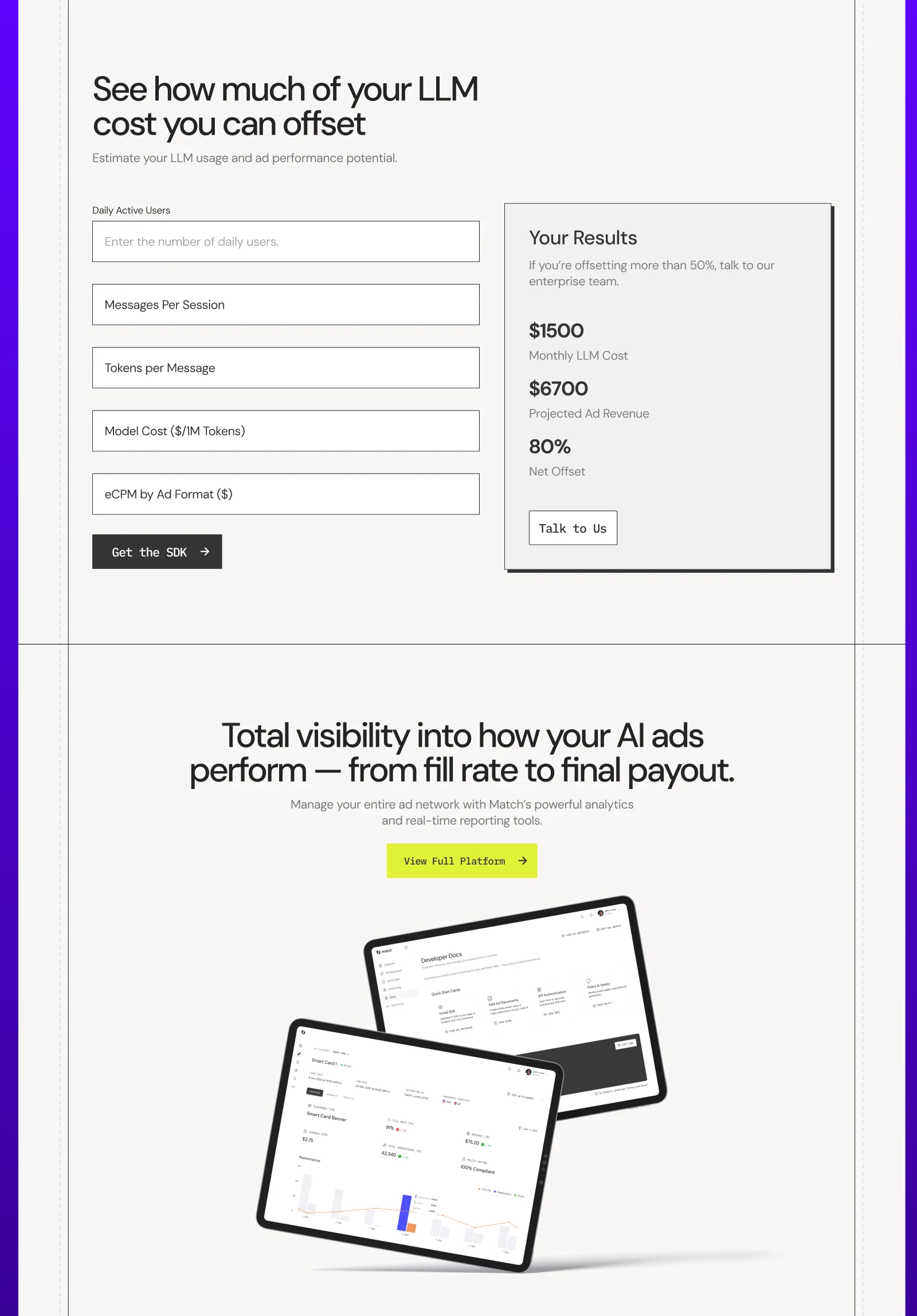
Three stats, large and readable: <100ms latency, always-visible labels, real-time reporting. Data builds confidence.
Outcomes & Impact
The landing page redefined how developers think about ads in AI products, not as interruptions, but as native, intentional features.
Results:
Developers immediately understood how monetization works and impacts UX
SDK positioned as infrastructure, not compromise
Primary acquisition channel for new integrations
Design referenced in dev communities as "ads that don't suck"
Business Impact:
The page proves that with intentional design, transparency, and UX focus, monetization can scale revenue without sacrificing trust or product quality.
Key Takeaway
Monetization isn't a bolt-on, it's a design problem.
When you build transparency, trust, and native integration from day one, ads stop being interruptions and start being infrastructure. Match proved AI products can be profitable and user-first. You just have to design for both.
Like this project
Posted Dec 28, 2025
Designed landing page for Match, showcasing native ad integration in AI products.
Likes
0
Views
6
Timeline
Nov 1, 2025 - Nov 30, 2025